The Quick Answer
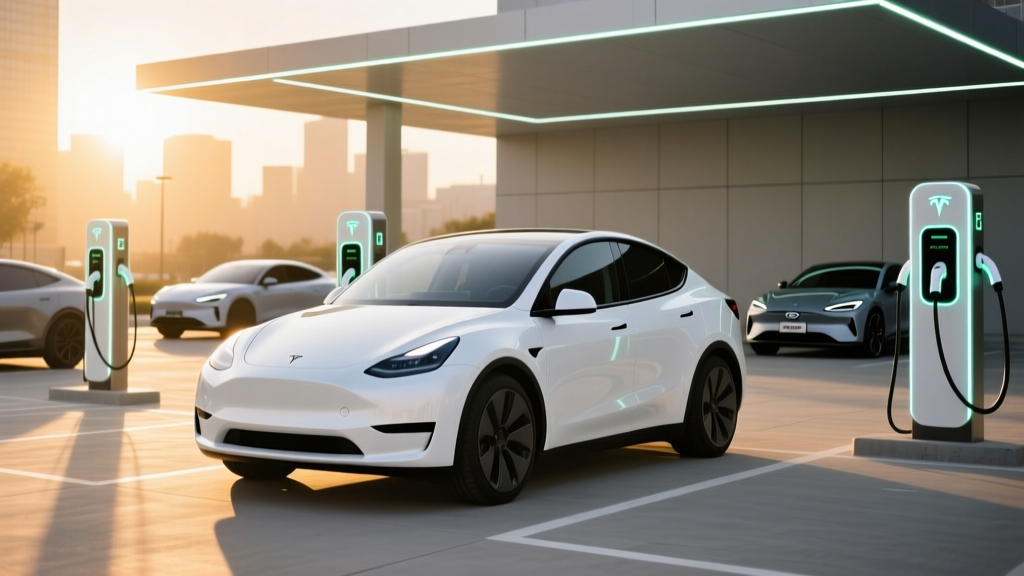
The Tesla Model Y remains the most popular EV in the United States for 2026, outselling every other electric vehicle by a wide margin. Its formula hasn't changed: strong EPA range (up to 320 miles on the Long Range AWD), access to the 17,000+ Supercharger network, and a starting MSRP that undercuts most rivals after the federal tax credit. But popularity doesn't automatically mean it's the best choice for your situation. Read on for the real-world numbers, ownership costs, and a decision framework that accounts for your driving patterns, climate, and charging access.
Why the Model Y Dominates EV Sales
The Model Y's sales dominance comes down to three factors: price-to-range ratio, charging infrastructure, and brand recognition. At a base MSRP of $44,990 for the Long Range AWD (before incentives), it delivers 320 miles of EPA-estimated range from its 75 kWh (usable) NMC battery pack. That's $140 per mile of range — a figure few competitors match in the midsize crossover segment.
For 2026, Tesla has updated the Model Y with the "Juniper" refresh, adding a slightly larger battery option, improved thermal management for faster DC charging in cold weather, and a revised interior with ventilated front seats and ambient lighting. The Performance trim starts at $48,990 and drops the 0-60 mph time to 3.5 seconds.
| Spec | Long Range AWD | Performance |
|---|---|---|
| EPA Range | 320 mi | 295 mi |
| Battery (usable) | 75 kWh, NMC | 75 kWh, NMC |
| Peak DC Charge Rate | 250 kW | 250 kW |
| 10-80% DC Fast Charge | ~25 min | ~25 min |
| Level 2 Charge Rate | 11.5 kW (44 mi/hr) | 11.5 kW (44 mi/hr) |
| 0-60 mph | 4.8 sec | 3.5 sec |
| Horsepower | 384 hp | 456 hp |
| Cargo Volume | 76 cu ft (rear seats folded) | 76 cu ft |
| Base MSRP | $44,990 | $48,990 |
| Battery Warranty | 8 yr / 120,000 mi | 8 yr / 120,000 mi |
Real-World Range Reality Check
EPA Sticker: 320 miles (Long Range AWD)
Expect in practice: 270-290 miles on mixed highway driving at 70-75 mph; 220-250 miles in freezing temperatures (below 32°F) due to cabin heating demand and battery resistance. The heat pump on the Juniper model helps, but cold-weather range loss of 20-30% is physics, not a Tesla-specific flaw.
EV vs. Gas Crossover: The Cost Comparison
Most Model Y buyers are cross-shopping against gas-powered midsize SUVs like the Toyota RAV4 or Honda CR-V. Here's how the numbers stack up over five years and 75,000 miles, assuming the national average electricity rate of $0.17/kWh and gasoline at $3.40/gallon.
| Cost Category | 2026 Tesla Model Y LR | 2026 Toyota RAV4 AWD (Gas) |
|---|---|---|
| Purchase Price (MSRP) | $44,990 | $34,500 |
| Federal Tax Credit (§30D) | -$7,500 (if eligible)* | $0 |
| Effective Purchase | $37,490 | $34,500 |
| Fuel/Energy (75k mi) | $3,825 (27 kWh/100mi avg) | $8,925 (28 MPG combined) |
| Maintenance (5 yr) | ~$1,200 | ~$3,500 |
| Insurance (5 yr avg) | ~$11,500 | ~$8,200 |
| 5-Year Total | $54,015 | $55,125 |
*The §30D federal tax credit has income caps ($150k single / $300k joint), MSRP caps ($55k for SUVs), and battery-sourcing requirements that change annually. As of 2026, the Model Y qualifies for the full $7,500, but you should verify current eligibility on irs.gov before purchasing. The credit can now be transferred at point of sale, reducing your purchase price directly.
The takeaway: the Model Y's higher purchase price and insurance premiums are offset by dramatically lower fuel and maintenance costs. Over five years, the total cost of ownership is roughly comparable — but the Model Y pulls further ahead the longer you keep it, as electric motors have far fewer wear components than internal combustion engines.
What First-Time EV Buyers Need to Know
If the Model Y would be your first EV, here are the ownership realities that don't show up in brochures:
Home Charging Is Non-Negotiable for Most Owners
Over 80% of EV charging happens at home. Without access to Level 2 home charging (a 240V circuit delivering 7-11.5 kW), daily EV ownership becomes a chore of public-charger hunting. A Level 2 home charger installation typically costs $800-$2,500 including equipment, electrical labor, and permits — but can reach $4,000+ if your electrical panel needs an upgrade from 100A to 200A service. If you live in an apartment without charging access, a PHEV like the Toyota RAV4 Prime (42 miles electric-only range) may be a more practical bridge.
Charging Speed Is About the Curve, Not the Peak
The Model Y peaks at 250 kW at a V3 Supercharger, but that peak is only sustained from roughly 10-30% state of charge. Above 50%, the charge rate tapers significantly — you might see 80 kW at 70% SoC. This is why manufacturers quote 10-80% times (~25 minutes for the Model Y) rather than 0-100% times. For road trips, plan stops around the 10-80% window to minimize time plugged in.
Tires Wear Faster on EVs
The Model Y's instant torque and ~4,400-lb curb weight eat through tires faster than a comparable gas SUV. Expect to replace tires every 25,000-35,000 miles rather than the 40,000-50,000 miles typical for ICE vehicles. Budget $800-$1,200 for a set of EV-rated touring tires (look for low rolling resistance and foam-lined options for noise reduction).
Common EV Misconceptions — Fact vs. Fiction
| Myth | Fact |
|---|---|
| "EV batteries need replacing every few years" | Tesla's battery warranty covers 8 years/120,000 miles with at least 70% capacity retention. Real-world degradation data shows most Model Y packs retain 88-92% capacity at 100,000 miles. Full replacement (rarely needed) runs $12,000-$16,000. |
| "EVs are worse in cold weather" | Range drops 20-30% in sub-freezing temps — real and worth planning for. But EVs start instantly in cold (no cranking a frozen engine), and preconditioning the battery while plugged in restores most charging speed and range. |
| "The power grid can't handle EVs" | Most EV charging occurs overnight when grid demand is lowest. A single Model Y charging at 11.5 kW draws roughly the same as a central AC unit. Utility time-of-use rates reward off-peak charging with electricity as low as $0.06-$0.09/kWh in many regions. |
| "EVs aren't actually cleaner" | Even on the dirtiest US grid mixes, an EV produces fewer lifetime CO₂ emissions than a comparable gas car within 1-2 years of driving, per EPA analysis. On cleaner grids (Pacific Northwest, upstate NY), the payback is months. |
| "Public charging is unreliable" | Tesla's Supercharger network averages 99.5%+ uptime — the most reliable public network in the US. Non-Tesla networks (Electrify America, EVgo) have improved but still lag. The Model Y's NACS connector now has the widest DC fast-charging access of any EV sold in America. |
Tax Credit and Incentive Breakdown for 2026
The federal §30D Clean Vehicle Credit remains a major purchase factor, but eligibility is specific. Here's the checklist for the Model Y in 2026:
- MSRP Cap: Vehicle MSRP must not exceed $80,000 for SUVs — Model Y qualifies at $44,990-$48,990.
- Buyer Income Cap: Modified AGI must not exceed $150,000 (single), $225,000 (head of household), or $300,000 (joint). Check your prior-year or current-year AGI, whichever is lower.
- Battery Sourcing: A percentage of critical minerals and battery components must be sourced from the US or FTA partners. Tesla's supply chain has adapted, and the Model Y currently qualifies for the full $7,500 — but this can change mid-year as IRS sourcing rules tighten.
- Point-of-Sale Transfer: You can transfer the credit to the dealer at purchase, reducing your out-of-pocket cost by $7,500 immediately rather than waiting to claim it on your tax return.
- State Incentives: Many states stack additional credits (e.g., California's CVRP, Colorado's $5,000 credit). These vary by jurisdiction — check your state energy office or fueleconomy.gov for current programs.
Decision Framework: Is the Model Y Right for You?
Choose the Tesla Model Y If:
- You have (or can install) Level 2 home charging and drive under 250 miles daily.
- You road-trip 2+ times per year and want the most reliable DC fast-charging network (Superchargers).
- You value over-the-air updates, strong resale value, and a large service center network.
- Your household income qualifies for the §30D credit and you want the point-of-sale price reduction.
- You prefer a minimalist interior with a single 15.4" touchscreen controlling most vehicle functions.
Look at Alternatives If:
- No home charging access: Consider a PHEV like the RAV4 Prime or a Hyundai Ioniq 5 with broader CCS/NACS charging access and apartment-friendly charging partnerships.
- You need 3-row seating: The Model Y's optional third row is cramped (best for small children). Look at the Kia EV9 (300 mi range, $54,900 base) or the Rivian R1S.
- You want physical buttons and a traditional cabin: The Hyundai Ioniq 5 or Ford Mustang Mach-E offer more conventional interiors with comparable range and charging speeds.
- You're in extreme cold (-20°F regularly): All EVs lose range, but models with larger battery buffers (like the Rivian R1T or Ford F-150 Lightning) provide more absolute miles after the cold-weather penalty.
- Towing is a priority: The Model Y tows 3,500 lbs. If you need 5,000+ lbs, consider the F-150 Lightning or R1T.
Frequently Asked Questions
How long does it take to charge a Model Y at home?
On a Level 2 home charger at 11.5 kW, you'll add roughly 44 miles of range per hour. A full charge from 10% to 100% takes about 7 hours — easily done overnight. On a standard 120V outlet (Level 1), you'll gain only 3-4 miles per hour, which works for low-mileage drivers (under 30 miles/day) but is impractical for most.
Does the Model Y qualify for the full $7,500 federal tax credit in 2026?
As of early 2026, yes — the Model Y meets MSRP, income, and battery-sourcing requirements for the full $7,500 under §30D. However, sourcing rules are subject to change. Always verify on irs.gov before finalizing your purchase. You can transfer the credit at point of sale to reduce your purchase price immediately.
What does Model Y insurance actually cost?
National average for a Model Y is $2,200-$2,600/year for full coverage, depending on your state, driving record, and age. That's 30-50% higher than a RAV4. Tesla offers its own insurance product in many states, which uses real-time driving data and can be 15-25% cheaper for safe drivers. Always get quotes from multiple carriers before purchasing.
How does the Supercharger network compare to Electrify America or EVgo?
Tesla's Supercharger network has 17,000+ stalls in the US with 99%+ uptime and consistent 150-250 kW speeds. Electrify America and EVgo have expanded significantly but still experience more downtime and inconsistent speeds, particularly at older 50-150 kW stations. For road-trip-heavy owners, Supercharger access remains the Model Y's single largest competitive advantage. Note: many non-Tesla EVs now have NACS adapters granting Supercharger access, but availability and pricing can differ from Tesla-native charging.
What's the real-world efficiency of the Model Y?
The EPA rates the Long Range AWD at 122 MPGe combined (28 kWh/100 mi). In real-world highway driving at 70-75 mph, expect 30-33 kWh/100 mi. In city driving with regenerative braking, you can achieve 24-26 kWh/100 mi. At $0.17/kWh national average, that's roughly $0.047-$0.056 per mile for electricity — compared to $0.12-$0.14 per mile for a 28 MPG gas SUV at $3.40/gallon.
Should I wait for a newer model or buy now?
The Juniper-refreshed Model Y launched for 2025-2026 and won't see a major redesign until at least 2028. If the current specs meet your needs, there's no compelling reason to wait. Tesla frequently adjusts pricing mid-year, so monitoring their configurator and third-party deal trackers can surface temporary price cuts or inventory discounts.