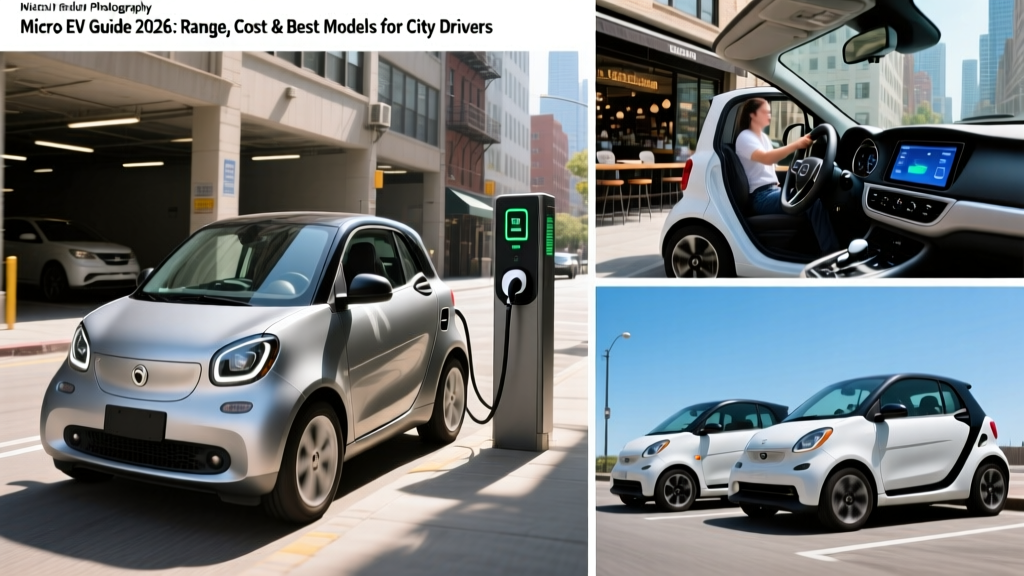
Quick Answer: A micro EV is a compact, lightweight electric vehicle designed primarily for urban commuting, typically offering 60–150 miles of EPA range, a battery between 15–40 kWh, and a base MSRP under $35,000. In 2026, the best micro EVs deliver 110–130 MPGe, charge from 10–80% in 25–40 minutes on DC fast chargers (peak 50–80 kW), and cost roughly $0.04–$0.06 per mile to fuel at home. They are ideal for single commuters or couples with short daily drives (under 40 miles round-trip), reliable home Level 2 charging access, and mild-to-moderate climates. They are not suitable as a sole household vehicle for road trips, families needing cargo space, or drivers in regions with harsh winters and sparse public charging.
What Exactly Is a Micro EV (and What It Isn't)
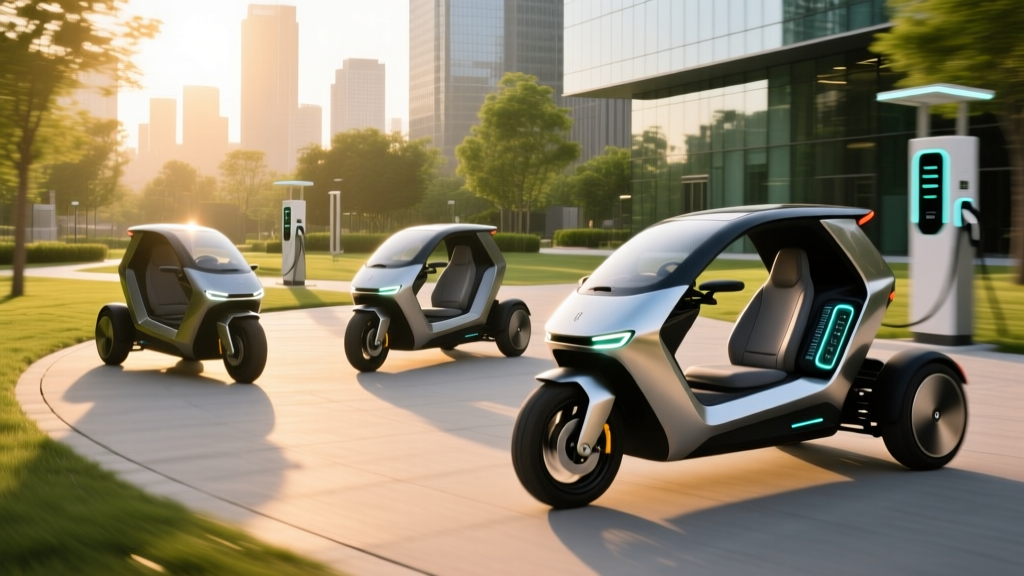
The term "micro EV" covers a spectrum of small, purpose-built electric vehicles that prioritize efficiency and affordability over range and performance. In the U.S. market, these generally fall into two categories:
- Neighborhood Electric Vehicles (NEVs) / Low-Speed Vehicles (LSVs): Federally limited to 25 mph top speed, restricted to roads with speed limits of 35 mph or less. Examples include the GEM e2 and various Chinese-market imports. These lack crash-test ratings from NHTSA and are not highway-legal.
- Full-speed subcompact EVs: Highway-capable vehicles with standard safety equipment, airbags, and crash-test compliance. Think of models like the Chevrolet Bolt EV (discontinued after 2023 but representative of the segment's upper end), the Nissan Leaf S, and newer entrants targeting the affordable urban-EV space.
This guide focuses on the second category — full-speed, highway-legal micro and subcompact EVs — because these are what most U.S. buyers actually consider when searching for a small, affordable electric car.
2026 Micro EV Spec Snapshot: What the Numbers Actually Look Like
| Spec | Typical Micro EV Range (2026) | Subcompact EV (Upper End) |
|---|---|---|
| EPA Range | 60–110 miles | 130–160 miles |
| Real-World Highway Range | 45–85 miles | 100–130 miles |
| Battery Capacity (usable) | 15–25 kWh (LFP common) | 30–40 kWh (NMC or LFP) |
| DC Fast Charge Peak | 40–55 kW | 70–85 kW |
| 10–80% DC Charge Time | 30–45 minutes | 25–35 minutes |
| Level 2 Charge Rate | 6.6–7.2 kW | 7.2–11 kW |
| 0–60 mph | 9.0–12.0 seconds | 6.5–8.5 seconds |
| Horsepower | 65–110 HP | 130–200 HP |
| Base MSRP | $18,000–$28,000 | $28,000–$36,000 |
| Battery Warranty | 8 years / 100,000 miles | 8 years / 100,000 miles |
A critical note on real-world range: EPA estimates assume a mix of city and highway driving at moderate temperatures. In practice, sustained highway speeds (70+ mph) reduce range by 15–25%. Cold weather (below 32°F) can cut range by an additional 20–35%, especially in micro EVs that may lack a heat pump for cabin heating. A micro EV rated at 100 miles EPA might deliver only 55–65 miles on a cold winter highway commute.
Real-World Range Reality Check: A 100-mile EPA micro EV driven in stop-and-go city traffic at 45°F will likely deliver 80–90 miles. That same car on a 75-mph highway in 20°F weather may manage only 55–65 miles. Plan your daily route around the worst-case scenario, not the EPA sticker.
Micro EV vs Gas Car vs Hybrid: The Real Cost Comparison
The core ownership question is whether a micro EV saves you money compared to a fuel-efficient gas car or hybrid. The answer depends heavily on your driving distance, electricity rates, and whether you can charge at home.
| Cost Factor | Micro EV (100 mi EPA) | Gas Subcompact (35 MPG) | Compact Hybrid (52 MPG) |
|---|---|---|---|
| Base MSRP (2026) | $24,000 | $22,000 | $28,000 |
| Fuel/Energy Cost per Mile | $0.045 (home, $0.15/kWh) | $0.10 (gas at $3.50/gal) | $0.067 (gas at $3.50/gal) |
| Annual Fuel Cost (12,000 mi) | $540 | $1,200 | $808 |
| Annual Maintenance | ~$200 | ~$650 | ~$550 |
| 5-Year Fuel + Maintenance Total | $3,700 | $9,250 | $6,790 |
| Federal Tax Credit (§30D) | $0–$7,500* | $0 | $0 |
*The IRS §30D credit has strict eligibility rules: buyer income caps ($150K single / $300K joint), vehicle MSRP caps ($55K cars), and battery critical-mineral and component sourcing requirements. Not every micro EV qualifies. Verify eligibility on the IRS website before purchasing, and note that the credit can be transferred to the dealer as a point-of-sale discount.
The math is clear: over five years and 60,000 miles, a micro EV charged at home saves roughly $4,000–$5,500 in fuel and maintenance versus a gas subcompact. That savings narrows or disappears if you rely exclusively on public DC fast charging (which can cost $0.30–$0.50/kWh in many markets, pushing per-mile costs to $0.10–$0.15).
The Charging Equation: Home Access Is Non-Negotiable
Micro EV ownership lives or dies on your charging situation. Here's why:
Level 1 (120V standard outlet): Adds roughly 3–5 miles of range per hour. For a 20 kWh battery, a full charge from empty takes 5–7 hours. This is viable overnight for daily commutes under 30 miles but painfully slow if you need a mid-day top-up.
Level 2 (240V home charger): Adds 20–30 miles per hour at 6.6–7.2 kW. A full charge of a 25 kWh battery takes 3.5–4 hours. Installation typically costs $500–$2,000 depending on your electrical panel, wiring distance, and local permit fees. If your panel needs an upgrade from 100A to 200A service, expect $1,500–$3,500 additional.
DC Fast Charging (public): Micro EVs typically peak at 40–55 kW, meaning a 10–80% charge takes 30–45 minutes. However, charge curves taper significantly above 80% — the last 20% can take as long as the first 60%. Public charging costs vary wildly: $0.30–$0.50/kWh on networks like Electrify America or EVgo, making it nearly as expensive as gasoline per mile.
| Charging Level | Power (kW) | Miles Added/Hour | Full Charge Time (25 kWh) | Cost per kWh |
|---|---|---|---|---|
| Level 1 (120V) | 1.2–1.4 kW | 3–5 mi | 18–22 hours | $0.12–$0.18 (home) |
| Level 2 (240V) | 6.6–7.2 kW | 20–30 mi | 3.5–4 hours | $0.12–$0.18 (home) |
| DC Fast (public) | 40–55 kW peak | N/A (session-based) | 10–80% in 30–45 min | $0.30–$0.50 |
Bottom line: if you cannot install a Level 2 charger at home or do not have reliable overnight access to one (apartment/condo dwellers, take note), a micro EV becomes a daily logistics challenge rather than a convenience.
Micro EV Myths vs Facts: Clearing Up the Confusion
| Myth | Fact |
|---|---|
| "Micro EVs are basically golf carts" | Full-speed micro EVs are highway-legal, crash-tested vehicles with airbags, ABS, and stability control. NEVs/LSVs are different and restricted to low-speed roads. |
| "100 miles of range is useless" | The average U.S. daily commute is under 35 miles round-trip per fueleconomy.gov data. A 100-mile EV covers most daily needs with a comfortable buffer — if you can charge at home nightly. |
| "The battery will need replacing in a few years" | Modern LFP and NMC batteries in micro EVs are warrantied for 8 years/100,000 miles at a minimum 70% capacity retention. Real-world degradation data shows most EV batteries retain 85–92% capacity after 5 years and 60,000 miles. |
| "Micro EVs can't handle winter" | They can, but range drops 20–35% in freezing temperatures. Preconditioning the battery while plugged in mitigates some loss. A 100-mile EV becomes a 65–80 mile EV in deep cold — plan accordingly. |
| "I'll get the full $7,500 tax credit" | Many affordable EVs fail the critical-mineral or battery-component sourcing requirements under current IRS §30D rules. Always verify the specific model and trim on the IRS qualified vehicles list before committing. |
Insurance, Depreciation, and the Hidden Costs
Purchase price and fuel savings tell only part of the story. Micro EV ownership includes costs that first-time buyers often overlook:
Insurance: EV insurance premiums run 15–25% higher than equivalent gas cars, driven by higher repair costs for battery packs and specialized body components. For a $24,000 micro EV, expect annual premiums of $1,400–$2,000 depending on your state, driving record, and coverage levels.
Depreciation: Small EVs have experienced steeper depreciation than larger EVs and hybrids. A micro EV purchased at $24,000 may retain only 35–45% of its value after five years, versus 50–55% for a comparable hybrid. This gap is narrowing as battery confidence grows, but it remains a factor in total cost of ownership.
Tires: EVs wear tires 15–25% faster than gas cars due to instant torque and heavier curb weight relative to their size (the battery is dense). Budget for a tire replacement every 30,000–40,000 miles at $400–$700 for a set of four on a micro EV.
Registration: Some states charge additional EV registration fees ($50–$225/year) to offset lost gas-tax revenue. Check your state's DMV before purchasing.
Who Should Buy a Micro EV (and Who Shouldn't)
Buy a micro EV if:
- Your daily round-trip commute is under 40 miles and mostly city/suburban
- You have a garage, driveway, or dedicated parking spot where you can install a Level 2 charger
- This is a second vehicle in a multi-car household (or your sole vehicle for a car-light lifestyle)
- You live in a mild-to-moderate climate, or you're prepared for 25–35% winter range loss
- You want the lowest possible per-mile fuel cost and minimal maintenance
Skip the micro EV and consider a larger EV, PHEV, or hybrid if:
- You regularly drive more than 60 miles one-way or take frequent road trips
- You live in an apartment or condo without EV charging access and cannot install a home charger
- You need cargo space for groceries, gear, or child seats on a daily basis
- You live in a region with extreme cold (sub-zero winters) and limited public charging infrastructure
- This will be your only vehicle and you need versatility for long trips, towing, or passenger hauling
Frequently Asked Questions
Can a micro EV be my only car?
It can, but only if your lifestyle fits within its constraints: short commutes, home charging, minimal cargo needs, and no regular long-distance travel. For most U.S. households, a micro EV works best as a dedicated commuter or second car alongside a larger vehicle or a PHEV that covers road-trip duty.
Are micro EVs safe in a crash?
Highway-legal full-speed micro EVs must meet the same federal crash-test standards as larger vehicles, including frontal and side-impact requirements monitored by NHTSA. However, physics matters — a 2,500-lb micro EV will fare worse in a collision with a 5,000-lb SUV than a midsize sedan would. Check IIHS and NHTSA ratings for specific models.
Do micro EVs qualify for the $7,500 federal tax credit?
Some do, but eligibility is not guaranteed. Under current IRS §30D rules, the vehicle must meet battery critical-mineral sourcing and component manufacturing requirements, the buyer must fall under income caps ($150K single, $300K joint), and the MSRP must be under $55,000 for cars. Many imported or budget micro EVs fail the sourcing requirements. Always verify on the IRS qualified vehicle list before purchasing.
How long does a micro EV battery last?
Federal law mandates that EV batteries carry a warranty of at least 8 years/100,000 miles with a minimum 70% capacity retention threshold. LFP chemistry batteries, increasingly common in micro EVs, tend to degrade more slowly than NMC and can sustain 2,000–3,000+ charge cycles before reaching 80% capacity. In practical terms, most micro EV batteries should outlast 100,000 miles with 80–90% of original capacity intact.
What happens if I run out of charge on the road?
Unlike a gas car that can be rescued with a $5 fuel can, a depleted EV requires a tow to the nearest charger or a mobile charging service (available in some metro areas). Most EVs provide low-charge warnings at 10%, 5%, and 1% remaining, and will enter a reduced-power "limp mode" to stretch the last miles. Plan routes with a 15–20% buffer above your expected consumption.