Quick Answer: Are Michelin EV Tires Worth It?
Yes — if your priority is maximizing range and minimizing road noise. Michelin's EV-optimized tires (the e·Primacy and Pilot Sport EV lines) deliver 5–8% better rolling resistance than standard all-season tires, translating to roughly 12–25 extra miles of EPA range on a 300-mile EV. Expect to pay $220–$340 per tire depending on size and model, which is a 15–30% premium over conventional equivalents. The trade-off: EV-specific tires can wear 10–15% faster on heavy EVs (5,000+ lbs) if you drive aggressively, due to instant torque and added vehicle weight.
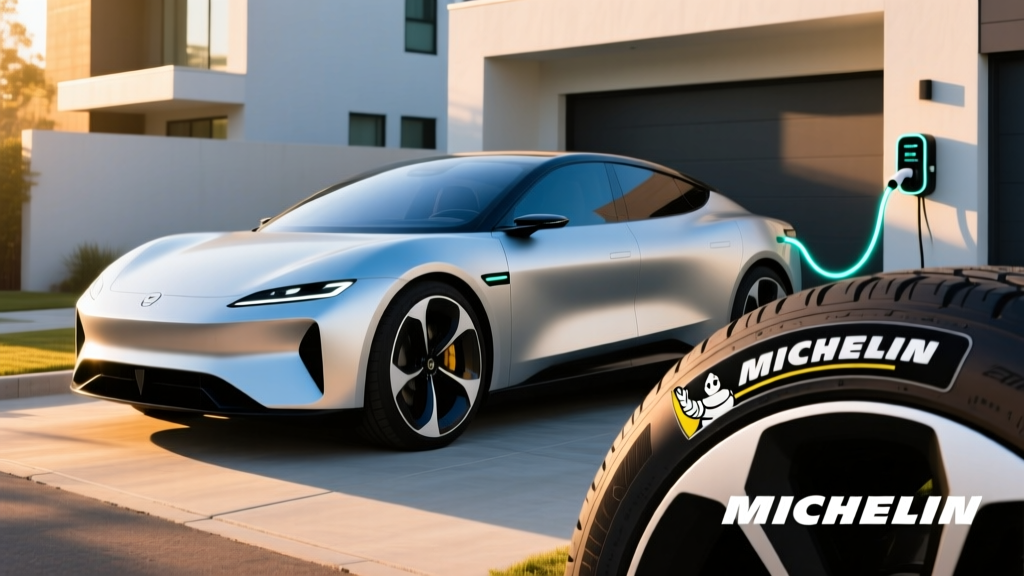
Electric vehicles put unique demands on tires that most buyers don't consider until their first replacement set. EVs are 500–1,000 lbs heavier than comparable gas cars, deliver instant torque that scrubs rubber at launch, and lack engine noise — making tire road roar the dominant sound in the cabin. Michelin has responded with a dedicated EV tire lineup engineered around three priorities: low rolling resistance for range, acoustic dampening for quietness, and reinforced sidewalls for heavy-vehicle stability.
This guide breaks down Michelin's current EV tire offerings with real cost data, range impact numbers, and a practical framework for deciding whether EV-specific rubber fits your driving pattern and budget.
Michelin's EV Tire Lineup: What's Available in 2026
Michelin segments its EV-compatible tires into three categories based on driving priorities. Here's how they stack up:
| Tire Model | Category | Rolling Resistance | Noise Rating | Treadwear Warranty | Price Range (per tire) |
|---|---|---|---|---|---|
| Michelin e·Primacy | Efficiency / Touring | Lowest (A-rated EU label) | Very Low (acoustic foam available) | 40,000 mi / 6 years | $220–$270 |
| Michelin Pilot Sport EV | Performance / Summer | Low (B-rated) | Low (ElectricNoise Technology) | 30,000 mi / 6 years | $280–$340 |
| Michelin Pilot Sport All-Season 4 (EV sizes) | All-Season Performance | Medium (C-rated) | Moderate | 45,000 mi / 6 years | $240–$300 |
| Michelin CrossClimate 2 (EV sizes) | All-Weather / Grand Touring | Medium-Low (B-rated) | Low-Moderate | 60,000 mi / 6 years | $250–$310 |
Key distinction: The e·Primacy and Pilot Sport EV are purpose-built for electric vehicles with foam-inlaid acoustic dampening and compounds tuned for low rolling resistance. The CrossClimate 2 and Pilot Sport All-Season 4 are conventional tires offered in EV-relevant sizes (typically 19"–22") and carry higher load ratings (XL or HL) needed for heavier EVs.
How Michelin EV Tires Affect Your Real-World Range
Rolling resistance is the second-largest energy drain on an EV after aerodynamic drag at highway speeds. According to fueleconomy.gov, tire rolling resistance accounts for roughly 15–20% of total energy consumption in a typical EV at 65 mph.
Here's what that means in practice:
| Scenario | Standard All-Season Tire | Michelin e·Primacy (EV-Optimized) | Difference |
|---|---|---|---|
| EPA Range (300-mi rated EV) | ~300 mi | ~315–325 mi | +15–25 mi (+5–8%) |
| Highway 70 mph, 75°F | ~270 mi real-world | ~285 mi real-world | +15 mi |
| Highway 70 mph, 30°F (cold) | ~215 mi real-world | ~230 mi real-world | +15 mi |
| Efficiency (kWh/100 mi) | ~28 kWh/100 mi | ~26 kWh/100 mi | −2 kWh/100 mi |
The range gain is real but modest. On a 300-mile EPA-rated vehicle like a Tesla Model Y Long Range or Hyundai Ioniq 5, switching to the e·Primacy might recover 15–25 miles of range — meaningful for commuters near their daily range ceiling, less critical for drivers with short commutes and home charging.
Cold weather caveat: Tire compounds stiffen below 40°F, increasing rolling resistance regardless of tire type. The e·Primacy's advantage narrows slightly in winter, though the gap remains. For drivers in northern climates, the CrossClimate 2 (an all-weather tire with 3PMSF snow certification) is often the more practical year-round choice — you sacrifice a few miles of range for genuine winter capability without swapping to dedicated snow tires.
Total Cost of Ownership: EV Tire vs. Standard Tire
The upfront premium for EV-specific tires is real. Here's a realistic 4-year / 48,000-mile cost comparison for a mid-size EV crossover (e.g., Ford Mustang Mach-E, Tesla Model Y):
| Cost Factor | Standard All-Season (e.g., Michelin Defender 2) | Michelin e·Primacy (EV-Specific) | Michelin CrossClimate 2 |
|---|---|---|---|
| Tire set (4 tires, 235/55R19) | $840 ($210 each) | $1,020 ($255 each) | $1,080 ($270 each) |
| Expected tread life (EV weight/torque) | ~42,000 mi | ~36,000 mi | ~52,000 mi |
| Sets needed over 48,000 mi | 1.14 sets | 1.33 sets | 0.92 sets |
| Total tire cost (48k mi) | ~$960 | ~$1,360 | ~$995 |
| Energy savings (range gain) | Baseline | ~$85–$120 saved | ~$40–$60 saved |
| Net cost after energy savings | $960 | ~$1,240–$1,275 | ~$935–$955 |
The math reveals a counterintuitive result: the e·Primacy costs roughly $280–$315 more over 48,000 miles even after factoring in energy savings. The CrossClimate 2 actually costs less overall because its longer tread life offsets the per-tire premium.
When the e·Primacy makes financial sense: If you drive 15,000+ miles annually on highways, charge primarily on paid DC fast chargers ($0.30–$0.48/kWh), and can use every mile of recovered range. At $0.40/kWh, saving 2 kWh/100 mi over 48,000 miles yields ~$384 in energy savings — enough to nearly close the cost gap.
EV vs. Gas Car: Why Tire Choice Matters More for Electric
On a gas car, tire choice barely registers in your fuel budget. A 5% efficiency gain on a 30-MPG sedan saves roughly $65/year at $3.50/gallon over 12,000 miles. On an EV, that same 5% gain saves proportionally more because:
- EVs convert energy more efficiently — 85–90% of battery energy reaches the wheels vs. 20–25% in a gas car, so rolling resistance improvements show up more directly in range.
- Noise amplification — Without an internal combustion engine masking road noise, tire acoustics directly affect cabin comfort. Michelin's ElectricNoise Technology (polyurethane foam bonded inside the tire) reduces interior noise by 3–6 dB measured at 60 mph, which is perceptibly quieter.
- Weight and torque accelerate wear — A Tesla Model Y weighs ~4,400 lbs; a comparably-sized Toyota RAV4 weighs ~3,600 lbs. That extra 800 lbs, combined with instant motor torque, can reduce tire life by 20–30% compared to the same tire on a gas vehicle.
Common Michelin EV Tire Misconceptions
| Myth | Fact |
|---|---|
| "You must buy EV-specific tires for an electric car." | No. Any tire with the correct load rating (XL or HL) and size works. EV-specific tires optimize range and noise but aren't required. |
| "EV tires wear out twice as fast." | Exaggerated. Expect 10–20% faster wear on heavy EVs with aggressive driving. Conservative drivers on highway commutes see minimal difference. |
| "Michelin EV tires void your warranty." | False. As long as the tire meets OEM size and load specifications, aftermarket tires do not affect your vehicle or battery warranty. |
| "Low rolling resistance tires have worse grip." | Partially true for older designs. Modern EV tires like the Pilot Sport EV maintain strong wet/dry braking while reducing resistance — but extreme-track grip trades off against efficiency. |
Noise, Comfort, and the Acoustic Foam Difference
Michelin's ElectricNoise Technology embeds a layer of polyurethane foam inside the tire cavity. This foam absorbs cavity resonance — the hollow "boom" frequency (typically 180–220 Hz) that amplifies through the vehicle structure. Independent testing shows a 3–6 dB reduction in interior noise at highway speeds with foam-lined tires.
Since a 3 dB reduction represents a halving of perceived loudness, this is a meaningful comfort upgrade — especially in vehicles like the Tesla Model 3 or Hyundai Ioniq 6, which already prioritize aerodynamic efficiency (and thus have less wind noise to mask tire sound).
Practical note: Foam-lined tires require specific repair procedures. Not every tire shop has the equipment to properly patch a foam-lined tire from the inside. If you get a puncture on a road trip, confirm the shop can handle acoustic-foam tires before authorizing a repair. A standard plug from the outside will work temporarily but may not seal the foam layer properly long-term.
Decision Framework: Which Michelin Tire Fits Your EV?
Choose the Michelin e·Primacy if:
- You commute 40+ miles daily and want every mile of range
- You drive primarily on smooth highways in moderate climates
- You charge at paid DC fast chargers regularly (higher $/kWh makes efficiency savings add up)
- Cabin quietness is a top priority
Choose the Michelin Pilot Sport EV if:
- You drive a performance EV (Tesla Model 3 Performance, Porsche Taycan, BMW i4 M50)
- You prioritize dry/wet grip and handling over maximum range
- You live in a warm climate with rare freezing temperatures (this is a summer tire)
- You accept a 30,000-mile treadwear warranty as a trade-off for performance
Choose the Michelin CrossClimate 2 if:
- You experience real winters with snow and ice (3PMSF certified)
- You want one tire year-round without seasonal swaps
- Long tread life (60,000-mile warranty) is your top financial priority
- You drive a heavier EV (Rivian R1S, Ford F-150 Lightning) and need durable compound life
Choose the Pilot Sport All-Season 4 if:
- You want sporty handling with year-round usability (including light snow)
- You drive a performance-oriented EV but need all-season versatility
- You prioritize tread life (45,000 mi warranty) over peak efficiency
Real-World Ownership Tips for EV Tire Buyers
Check your load rating. EVs require XL (Extra Load) or HL (High Load) rated tires. The load index is printed on the tire sidewall — for a Tesla Model Y, you need at minimum a 105 load index (2,039 lbs per tire). Installing standard-load tires on a heavy EV risks premature failure and may void insurance coverage in an accident.
Rotate every 5,000–6,000 miles. EVs wear front tires faster due to weight bias (motors and battery) and regenerative braking forces. Without regular rotation, front tires can wear 30–40% faster than rears. Many EV owners discover uneven wear only when they feel vibration at highway speed — by then, the tires may be past the point of even correction.
Alignment matters more on EVs. The extra weight amplifies the effect of even minor alignment drift. A 0.5° toe-out misalignment that would barely register on a 3,200-lb gas sedan will visibly feather the inner tread of a 4,800-lb EV within 8,000 miles. Get alignment checked annually or after any pothole impact.
Tire pressure monitoring. EVs are especially sensitive to under-inflation because it compounds rolling resistance losses. A 3 PSI drop below recommended pressure can cost 2–4% of range. Check pressures monthly (or rely on your TPMS), and inflate to the door-jamb placard spec — not the tire sidewall maximum.
Frequently Asked Questions
Do Michelin EV tires fit all electric vehicles?
Michelin offers EV-specific tires (e·Primacy, Pilot Sport EV) in the most common EV wheel sizes: 18", 19", 20", and 21". They fit Tesla Model 3/Y, Hyundai Ioniq 5/6, Ford Mustang Mach-E, BMW i4/iX, Rivian R1T/R1S, and most other mainstream EVs. Always verify the exact tire size, load index, and speed rating match your vehicle's door-jamb placard.
How much range can I realistically gain from Michelin EV tires?
Expect a 5–8% range improvement over standard all-season tires in moderate temperatures on highway driving. For a 300-mile EPA-rated EV, that's roughly 15–25 extra miles. In city driving with heavy regenerative braking, the benefit shrinks to 2–4% since aero and rolling resistance matter less at low speeds.
Are Michelin EV tires more expensive to replace?
Yes, by roughly 15–30% per tire. A set of four e·Primacy tires costs $880–$1,080 depending on size, compared to $720–$880 for a comparable standard Michelin all-season. Over a 48,000-mile ownership period, the total cost premium is approximately $280–$400 after accounting for slightly shorter tread life on EVs.
Can I use regular (non-EV) Michelin tires on my electric car?
Yes. As long as the tire matches your vehicle's required size, load index (XL or HL), and speed rating, any quality tire works on an EV. You'll sacrifice some range efficiency and may experience more road noise, but the vehicle will function normally. The CrossClimate 2 — while not marketed as "EV-specific" — is one of the most popular tires among EV owners for its durability and all-weather capability.
Where can I buy Michelin EV tires, and does installation differ?
Michelin EV tires are available through Michelin's direct site, Tire Rack, Discount Tire, Costco, and most independent tire shops. Installation is identical to standard tires, but if you choose a foam-lined model (ElectricNoise Technology), confirm your preferred shop can handle internal foam repairs in case of puncture. Mounting and balancing require no special equipment.