The Quick Answer: Is a Luxury Electric Sedan Worth It?
A luxury electric sedan delivers 300–516 miles of EPA range, 0–60 times under 4 seconds, and $500–$1,200 annual fuel savings versus a comparable gas flagship — but only if you have reliable Level 2 home charging. Expect to pay $52,000–$130,000 before incentives, with insurance running 15–25% higher than gas equivalents. The best value in 2026: the BMW i5 eDrive40 ($58,000 MSRP, 295 mi range). The range king: Lucid Air Pure (419 mi EPA). Choose a plug-in hybrid like the BMW 550e xDrive if you lack home charging or regularly drive 400+ miles in remote areas.
Defining the Luxury Electric Sedan Segment in 2026
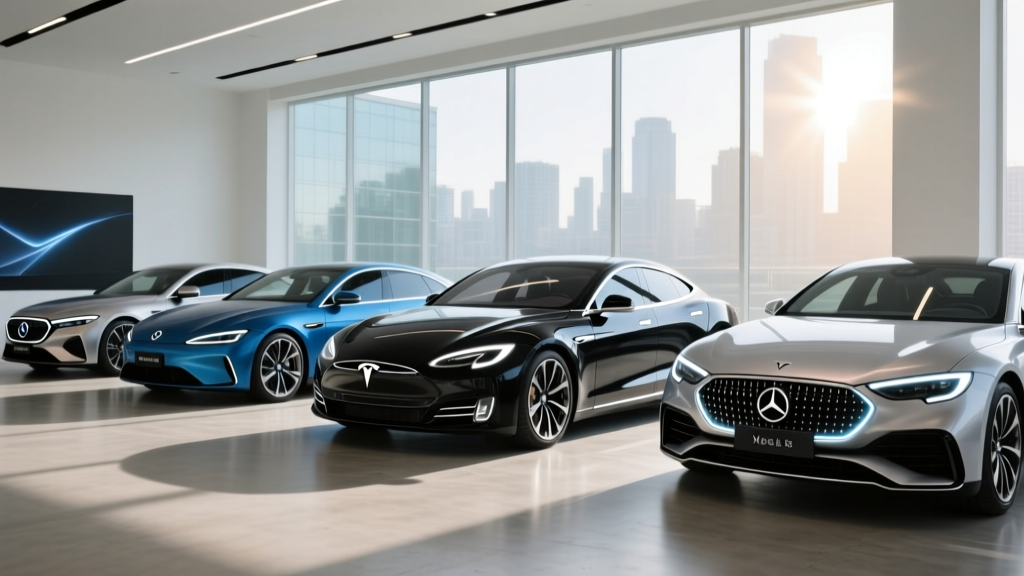
The luxury electric sedan market has matured past early-adopter novelty into a competitive, spec-driven battleground. Buyers cross-shopping a Tesla Model S, BMW i5, Lucid Air, Mercedes-Benz EQE, and Audi e-tron GT are evaluating vehicles with fundamentally different philosophies: Tesla prioritizes charging infrastructure and software; BMW and Mercedes lean into build quality and ride refinement; Lucid focuses on efficiency and range. What unites them is a price floor around $52,000, a range floor around 270 miles EPA, and the expectation of premium materials, advanced driver-assistance (SAE Level 2), and DC fast charging above 150 kW.
Unlike SUVs, sedans in this segment prioritize aerodynamic efficiency — which directly translates to range. The Lucid Air's drag coefficient of 0.197, for example, helps it achieve over 4 miles per kWh, while boxier luxury EVs manage closer to 3.0–3.5 mi/kWh. This matters when you're spending $70,000+ and want to minimize charging stops on road trips.
Spec Showdown: 2026 Luxury Electric Sedans Side by Side
| Spec | Tesla Model S LR | BMW i5 eDrive40 | Lucid Air Pure | Mercedes EQE 350+ | Audi e-tron GT quattro |
|---|---|---|---|---|---|
| Base MSRP | $72,990 | $57,900 | $69,900 | $74,900 | $106,500 |
| EPA Range | 402 mi | 295 mi | 419 mi | 305 mi | 238 mi |
| Battery (usable kWh) | ~100 kWh (NMC) | 81.2 kWh (NMC) | 88 kWh (NMC) | 90.6 kWh (NMC) | 83.7 kWh (NMC) |
| Peak DC Charge kW | 250 kW | 205 kW | 220 kW | 170 kW | 270 kW |
| 10–80% DC Time | ~25 min | ~30 min | ~25 min | ~32 min | ~23 min |
| Level 2 Rate (kW) | 11.5 kW | 11 kW | 19.2 kW | 9.6 kW | 11 kW |
| 0–60 mph | 3.1 sec | 5.7 sec | 5.2 sec | 6.2 sec | 3.9 sec |
| Horsepower | 670 hp | 335 hp | 430 hp | 288 hp | 522 hp |
| MPGe (combined) | 120 MPGe | 105 MPGe | 146 MPGe | 97 MPGe | 85 MPGe |
| Drivetrain | AWD | RWD | RWD | RWD | AWD |
| Battery Warranty | 8 yr / 150k mi | 8 yr / 100k mi | 8 yr / 100k mi | 10 yr / 155k mi | 8 yr / 100k mi |
Sources: EPA fueleconomy.gov, manufacturer press sites. Specs reflect 2026 model year where published; some figures carry over from 2025.
Real-World Range Reality Check
EPA numbers are measured on a controlled dynamometer cycle. In real-world highway driving at 70–80 mph, expect to lose 10–15% from the EPA sticker. In cold weather (below 30°F), battery chemistry and cabin heating can reduce range by 20–35%. The Lucid Air Pure's 419-mile EPA rating may deliver ~340–360 miles on a summer road trip and ~280–310 miles in freezing conditions. The Audi e-tron GT's 238-mile EPA figure becomes roughly 180–200 miles in winter highway driving — a genuine limitation for road-trippers.
Charging Speed Demystified: kW vs. kWh and the Charge Curve
The most common confusion for luxury EV sedan buyers is the difference between kW (power — how fast energy flows into the battery) and kWh (energy — the total capacity of the battery). Think of kW as the width of a hose and kWh as the size of the bucket.
A Lucid Air Pure has an 88 kWh battery (bucket) and can accept up to 220 kW (hose width). But here's the critical detail manufacturers bury: peak charge rate is not sustained. Lithium-ion batteries accept charge fastest between roughly 10–50% State of Charge (SoC). Above 80%, the charge rate tapers sharply to protect cell longevity. That's why we measure 10–80% time rather than 0–100%.
| Charging Level | Power (kW) | Miles Added per Hour | Typical Use Case |
|---|---|---|---|
| Level 1 (120V outlet) | 1.0–1.4 kW | 3–5 mi/hr | Overnight top-up; emergency only for luxury sedans |
| Level 2 (240V home/public) | 7.2–19.2 kW | 25–70 mi/hr | Daily home charging; full overnight refill |
| DC Fast Charge | 50–350 kW | 150–800 mi/hr (peak) | Road trips; 10–80% in 20–35 min |
For a luxury electric sedan with a large 80–100 kWh battery, Level 1 charging is impractical — it would take 60–100 hours for a full charge. A Level 2 home charger at 11.5 kW (like the Tesla Wall Connector) refills a Model S from 10–100% in about 9 hours, easily covering overnight. The Lucid Air's available 19.2 kW onboard charger is a segment standout, cutting that to ~5 hours — but requires a 100-amp dedicated circuit, which may necessitate a panel upgrade.
Total Ownership Cost: Luxury Electric Sedan vs. Gas Equivalent
Let's compare the BMW i5 eDrive40 ($57,900) against the BMW 540i xDrive gasoline sedan ($60,900) over 5 years and 60,000 miles.
| Cost Category (5 yr / 60k mi) | BMW i5 eDrive40 (EV) | BMW 540i xDrive (Gas) |
|---|---|---|
| Purchase Price (MSRP) | $57,900 | $60,900 |
| Federal Tax Credit (§30D) | $0–$7,500* | $0 |
| Fuel / Electricity | $3,600 (home charging at $0.15/kWh) | $9,450 (premium gas at $4.50/gal, 25 MPG) |
| Maintenance | $1,200 (cabin filter, wipers, tire rotation) | $4,500 (oil, brakes, filters, spark plugs) |
| Insurance (avg annual) | $2,800/yr × 5 = $14,000 | $2,200/yr × 5 = $11,000 |
| Estimated Depreciation | $28,000 (~48%) | $30,000 (~49%) |
| Total 5-Year Cost | ~$73,700 (with credit) / ~$81,200 (without) | ~$85,850 |
*The IRS §30D credit requires meeting battery critical-mineral and component sourcing thresholds, buyer income caps ($150k single / $300k joint AGI), and an MSRP cap of $55,000 for sedans. The BMW i5 eDrive40 at $57,900 MSRP exceeds the sedan cap — buyers would need to negotiate below $55,000 or rely on state-level incentives. Always verify current-year rules with a tax professional.
The takeaway: even without the federal credit, the i5 EV breaks even or saves modestly over 5 years through fuel and maintenance reductions. With a state rebate (California's CVRP, for example, offers up to $2,000 for income-qualified buyers), savings widen. But insurance is consistently higher for luxury EVs — plan for 15–25% premium increases due to repair costs and battery replacement risk.
Federal Tax Credit and Incentive Landscape (2026)
The §30D New Clean Vehicle Credit remains complex. For luxury electric sedans, the key constraints are:
- MSRP Cap: Sedans must be ≤$55,000. This disqualifies most luxury EV sedans at sticker — the Tesla Model S, Lucid Air, Mercedes EQE, and Audi e-tron GT all exceed it. The BMW i5 base trim may qualify if dealer pricing falls under the cap.
- Income Caps: Modified AGI must not exceed $150,000 (single), $225,000 (head of household), or $300,000 (joint).
- Battery Sourcing: Increasing percentages of critical minerals and battery components must be sourced from the US or FTA partners. For 2026, 80% of critical minerals and 100% of battery components must qualify — a threshold that eliminates several models with Chinese-sourced cells.
- Point-of-Sale Transfer: Buyers can transfer the credit to the dealer for an immediate price reduction rather than claiming it at tax filing.
- FEOC Restriction: Vehicles with battery components from a "foreign entity of concern" (primarily Chinese manufacturers) are disqualified entirely.
Practically, this means most luxury electric sedan buyers in the $70,000+ range should not count on the $7,500 federal credit. State incentives vary widely — check your state energy office or AFDC's state incentive database for specifics.
Real-World Ownership: What First-Time Luxury EV Buyers Must Know
Home Charging Is Non-Negotiable
If you cannot install a Level 2 charger at home (or at a dedicated workplace station), a luxury electric sedan becomes a daily inconvenience. Public DC fast charging costs $0.35–$0.55/kWh at networks like Electrify America or EVgo — comparable to premium gasoline on a per-mile basis — and availability varies wildly. Apartment dwellers without charging access should strongly consider a PHEV like the BMW 550e xDrive (35 miles electric-only, then gas) instead.
Home Charger Installation Costs
| Item | Cost Range |
|---|---|
| Level 2 Charger (hardwired, 48A) | $400–$750 |
| Electrician (240V/50A circuit run, 30 ft) | $800–$2,500 |
| Permit & inspection | $100–$400 |
| Panel upgrade (if needed, 200A service) | $1,500–$4,000 |
| Total typical install | $1,300–$3,650 (without panel upgrade) |
Older homes with 100-amp electrical panels may require a service upgrade before adding a 48-amp EV charger circuit. Get a quote from a licensed electrician before purchasing the vehicle.
Cold-Weather Range Loss
Luxury sedans with heat pumps (standard on the BMW i5, available on the Lucid Air) mitigate winter range loss to roughly 20%. Vehicles relying on resistive PTC heaters can lose 30–35%. Preconditioning the battery while plugged in — a feature in all five sedans above — warms the cells before driving, preserving range and enabling faster DC charging. If you live where temperatures regularly drop below 25°F, subtract 20–30% from EPA range for winter trip planning.
Tire Wear
Luxury EV sedans are heavy (4,500–5,300 lbs) and produce instant torque. Expect tire replacement every 25,000–35,000 miles — roughly half the lifespan of tires on a comparable gas sedan. Budget $1,200–$2,000 per set for the 20–21 inch performance tires these vehicles typically wear.
Common Misconceptions About Luxury Electric Sedans
| Myth | Fact |
|---|---|
| "The battery will need replacing in 5 years for $20,000" | Modern NMC batteries degrade roughly 1–2% per year. At year 8, expect 85–92% capacity retention. All manufacturers warrant the battery for 8 years / 100,000+ miles at ≥70% capacity. Full replacement is rare and covered under warranty during that period. |
| "Autopilot / Driving Assistant means the car drives itself" | Every luxury EV sedan sold in 2026 uses SAE Level 2 driver-assistance. The driver must remain attentive with hands on or near the wheel. Tesla's FSD (Supervised), BMW's Driving Assistant Professional, and Mercedes' Driver Assistance Package are all Level 2 — not autonomous. Only Waymo-style robotaxis operate at Level 4. |
| "I can charge at any public station" | Connector compatibility matters. Tesla uses the NACS connector; BMW, Lucid, and Mercedes use CCS1 (though most 2025+ models now include NACS or offer adapters). Always verify your vehicle's connector matches the station. Adapters add $200–$400 and may limit charge speed. |
| "EVs are worse for the environment because of battery mining" | Lifecycle analyses from the ICCT and Argonne National Laboratory show EVs produce 50–70% fewer lifecycle emissions than gas cars over 150,000 miles, even on coal-heavy grids. Battery recycling (Redwood Materials, Li-Cycle) is recovering 90%+ of critical minerals from end-of-life packs. |
| "Luxury EVs depreciate terribly" | Depreciation has stabilized for established models. The Tesla Model S and BMW i5 retain roughly 48–55% of value at 5 years — comparable to gas luxury sedans. Niche or low-volume models (EQE, e-tron GT) may depreciate faster due to limited demand. |
SAE Automation Levels — What Your Luxury Sedan Actually Does
Level 0: No automation. Warnings only.
Level 1: Single-axis assist (adaptive cruise OR lane-keeping).
Level 2: Combined steering + speed assist. Driver must supervise at all times. This is where Tesla Autopilot, BMW Driving Assistant Pro, Mercedes Driver Assistance, and Audi Adaptive Cruise all sit.
Level 3: Conditional automation — the car handles driving in specific scenarios (e.g., Mercedes DRIVE PILOT on approved highways below 40 mph in certain states). Driver can look away but must be ready to resume.
Level 4: Full automation in defined areas — Waymo robotaxis. No consumer luxury sedan is Level 4.
Decision Framework: Which Luxury Electric Sedan Should You Buy?
Choose Based on Your Situation
Choose the Lucid Air Pure if: You prioritize maximum range (419 mi EPA), regularly drive 300+ mile routes, and value efficiency (146 MPGe). Best for California and Southwest road-trippers with access to Electrify America or Tesla Superchargers (via adapter).
Choose the BMW i5 eDrive40 if: You want the best balance of price ($57,900), build quality, ride comfort, and adequate range (295 mi). Ideal for daily commuting with occasional 200-mile trips. BMW's dealer network and service infrastructure are strong nationwide.
Choose the Tesla Model S Long Range if: You value the Supercharger network (20,000+ stalls, highest reliability), want the fastest acceleration (3.1 sec 0–60), and prefer over-the-air software updates. Trade-off: interior materials and panel-gap quality lag BMW and Mercedes at this price point.
Choose the Mercedes-Benz EQE 350+ if: Ride quality, cabin silence, and brand prestige matter most. The 10-year / 155,000-mile battery warranty is the segment's best. Accept the lower range (305 mi) and slower charging (170 kW peak) as the cost of refinement.
Choose the Audi e-tron GT if: You want Porsche Taycan underpinnings with Audi styling, and your driving is mostly under 200 miles daily. The 238-mile EPA range and $106,500 price make it a design-first, practicality-second choice.
Choose a PHEV (BMW 550e xDrive) instead if: You lack home charging, live in a region with sparse public DC infrastructure, or regularly drive 400+ miles through rural areas. The 550e offers 35 miles of electric-only range for commuting and a gas engine for unlimited range — no charging anxiety.
Frequently Asked Questions
What does a luxury electric sedan cost to insure?
Expect $2,400–$3,600 annually for a luxury EV sedan, 15–25% above a gas equivalent. Insurers price in higher repair costs (specialized body shops, battery damage protocols) and replacement-part pricing. The Tesla Model S tends to be the most expensive to insure; the BMW i5 is closer to gas-sedan rates. Get quotes from at least three insurers before purchasing — GEICO, Progressive, and State Farm vary significantly on EV premiums by state.
How long does the battery last, and what does replacement cost?
Based on degradation data from Tesla fleet reports and independent testing by Recurrent Auto, NMC batteries in luxury EV sedans retain 85–92% capacity after 8 years / 100,000 miles. Out-of-warranty replacement for an 80–100 kWh pack runs $12,000–$22,000 including labor — but full replacements are rare. Most warranty claims involve individual module replacements at much lower cost. The NHTSA monitors battery safety recalls; check your VIN at nhtsa.gov/recalls periodically.
Can I charge a non-Tesla luxury EV at a Supercharger?
Yes, with conditions. Tesla has opened select Superchargers to non-Tesla EVs via the built-in Magic Dock (NACS connector) or through adapters. BMW, Lucid, Mercedes, and Audi vehicles with CCS1 connectors need a CCS-to-NACS adapter ($200–$300) or must find a Magic Dock-equipped station. Charging speed may be limited to 150 kW even if your vehicle supports more. The transition to NACS as the standard connector means most 2026+ luxury EVs now ship with NACS ports natively.
Is a luxury electric sedan practical without home charging?
It's possible but not recommended. Relying on public DC fast charging exclusively costs $0.35–$0.55/kWh — roughly $0.10–$0.14 per mile, comparable to a 30 MPG gas car on premium fuel. You'll also spend 30–45 minutes charging 2–3 times per week. If you cannot install a home Level 2 charger, a plug-in hybrid delivers the EV commuting experience with gas-engine flexibility and no charging dependency.
Do luxury EV sedans qualify for any tax credits in 2026?
Most do not qualify for the full $7,500 federal §30D credit due to the $55,000 MSRP cap on sedans and increasingly strict battery-sourcing rules. The BMW i5 eDrive40 is the closest to qualifying if negotiated below the cap. State incentives fill some gaps — California, Colorado, Massachusetts, New York, and others offer $1,000–$5,000 rebates, often with income qualifications. Check IRS §30D guidance and your state's energy office before relying on incentive math in your purchase decision.