Quick Answer: Which Kia All Electric Car Should You Buy?
If you need a practical daily commuter with easy home charging, the Kia Niro EV (EPA 239 miles, ~$40,000) is the budget-friendly entry point. If you want the best combination of range, fast charging, and performance, the Kia EV6 (EPA up to 310 miles, 800V architecture, 10–80% in ~18 min) is the standout. If you need three rows and family hauling, the Kia EV9 (EPA up to 304 miles, starts ~$55,000) is the only all-electric three-row SUV in Kia's lineup. All three qualify for varying levels of the federal §30D tax credit depending on battery sourcing, your income, and MSRP caps — details below.
The 2026 Kia All Electric Car Lineup at a Glance
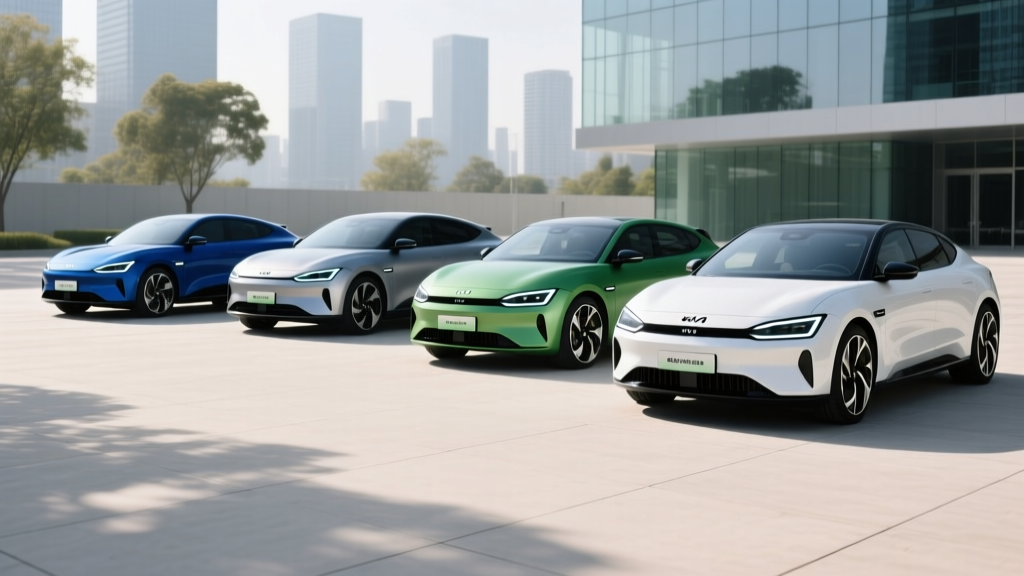
Kia currently sells three fully electric models in the U.S. market, each targeting a different buyer profile. Here's how they stack up on the numbers that matter most:
| Spec | 2026 Kia Niro EV | 2026 Kia EV6 | 2026 Kia EV9 |
|---|---|---|---|
| EPA Range | 239 mi | 310 mi (LR RWD) | 304 mi (LR RWD) |
| Battery (usable) | 64.8 kWh (NMC) | 77.4 kWh (NMC) | 100.0 kWh (NMC) |
| Peak DC Fast Charge | ~85 kW | ~240 kW | ~210 kW |
| 10–80% DCFC Time | ~43 min | ~18 min | ~24 min |
| Level 2 Charge Rate | 11 kW | 10.9 kW | 11 kW |
| Horsepower | 201 hp | 320 hp (LR AWD) | 379 hp (AWD) |
| 0–60 mph | 7.2 sec | 4.5 sec (LR AWD) | 5.0 sec (AWD) |
| MPGe (combined) | 113 MPGe | 117 MPGe (LR RWD) | 88 MPGe (AWD) |
| Starting MSRP | ~$40,925 | ~$44,500 | ~$55,925 |
| Battery/Powertrain Warranty | 10 yr / 100,000 mi | 10 yr / 100,000 mi | 10 yr / 100,000 mi |
Sources: EPA / fueleconomy.gov, Kia America. Real-world range will vary — expect 15–25% reduction in sustained highway driving at 75+ mph and up to 30% loss in sub-freezing temperatures.
Real-World Range vs. EPA Sticker: What You'll Actually Get
EPA range estimates are measured under controlled lab conditions. In real-world ownership, several factors shrink that number:
Kia EV6 Long Range RWD — Real-World Expectations
- EPA sticker: 310 miles
- Mixed driving (city + suburban): ~280–300 miles
- Sustained highway (70–75 mph): ~250–270 miles
- Cold weather (below 32°F, highway): ~210–235 miles
The EV6's heat pump (standard on most trims) helps mitigate cold-weather losses compared to EVs without thermal management, but physics still wins in deep winter.
The Niro EV's 239-mile EPA range is adequate for commutes under 80 miles round-trip with home charging, but road-trippers will find themselves stopping more often. The EV9's large 100 kWh battery delivers solid range for its size, but its boxy aerodynamics and 4,600+ lb curb weight cut into highway efficiency — expect closer to 240–260 miles on a long interstate run.
Charging Speed: Where Kia's 800V Platform Pays Off
This is where the EV6 and EV9 separate sharply from the Niro EV — and from most competitors at similar prices.
The EV6 and EV9 use Hyundai Motor Group's E-GMP platform with 800V architecture. This allows peak DC fast-charge rates of 240 kW (EV6) and 210 kW (EV9) at compatible 350 kW chargers. The result: a 10–80% charge in roughly 18–24 minutes under ideal conditions.
The Niro EV, on a conventional 400V architecture, peaks around 85 kW. That means a 10–80% session takes roughly 43 minutes — not terrible, but noticeably slower on road trips.
Charging-curve reality check: Peak kW is not sustained kW. The EV6 hits ~240 kW only between roughly 10–35% SoC, then tapers progressively. Expect an average rate closer to 150–170 kW across the full 10–80% session. At Electrify America or Tesla Supercharger (with NACS adapter, now included with new Kia EVs), you'll still add roughly 180–200 miles in 20 minutes.
| Charging Level | Power | Niro EV (mi/hr) | EV6 (mi/hr) | EV9 (mi/hr) |
|---|---|---|---|---|
| Level 1 (120V household) | ~1.4 kW | ~4 mi/hr | ~4 mi/hr | ~3 mi/hr |
| Level 2 (240V home) | ~11 kW | ~32 mi/hr | ~35 mi/hr | ~29 mi/hr |
| DC Fast (peak) | 85–240 kW | ~190 mi/hr* | ~530 mi/hr* | ~460 mi/hr* |
*Peak rate, not sustained. Actual miles added depend on SoC, temperature, and charger capability.
Kia EV vs. Gas vs. Hybrid: The Cost Comparison
Let's put real numbers behind the ownership decision. We'll compare the EV6 Long Range against the gasoline Kia Sportage and the Kia Sportage Hybrid over five years and 75,000 miles of driving.
| Cost Factor (5 yr / 75k mi) | Kia EV6 LR | Kia Sportage (Gas) | Kia Sportage HEV |
|---|---|---|---|
| Purchase Price (base MSRP) | $44,500 | $28,500 | $31,500 |
| Est. Federal Tax Credit (§30D) | Up to $7,500* | $0 | $0 |
| Effective Purchase Price | $37,000 | $28,500 | $31,500 |
| Fuel / Charging Cost | ~$3,400† | ~$7,900‡ | ~$5,200§ |
| Maintenance (est.) | ~$1,200 | ~$3,500 | ~$3,200 |
| Insurance (est. 5-yr total) | ~$9,800 | ~$7,600 | ~$7,900 |
| 5-Year Total Cost | ~$51,400 | ~$47,500 | ~$47,800 |
*§30D credit eligibility depends on battery sourcing, buyer income caps ($150k single / $300k joint), and MSRP caps ($55k SUVs). Verify at IRS.gov. †Based on $0.14/kWh national avg, home charging primarily. ‡Based on $3.50/gal, 28 MPG combined. §Based on 43 MPG combined.
The EV6 costs more upfront even after the tax credit, but its dramatically lower fueling and maintenance costs close the gap. Over 10 years or 150,000 miles, the EV pulls ahead on total cost. The break-even point typically falls around year 4–6 depending on your local electricity rates and gas prices.
Tax Credit Eligibility for Kia EVs in 2026
The federal §30D clean vehicle credit offers up to $7,500, but qualifying is not automatic. Here's the checklist for Kia's EV lineup:
- MSRP cap: Vans/SUVs must be under $80,000; sedans under $55,000. The EV6 (classified as a sedan by the IRS for the credit cap) must be under $55,000 MSRP — most trims qualify, but top-tier GT-Line may push close to the limit.
- Buyer income cap: AGI must not exceed $150,000 (single), $225,000 (head of household), or $300,000 (joint).
- Battery sourcing: A percentage of critical minerals and battery components must be sourced from the U.S. or FTA partners. Kia has been working to shift sourcing, but eligibility can change mid-year — always verify the specific VIN at fueleconomy.gov.
- Point-of-sale transfer: As of 2024, you can transfer the credit to the dealer at purchase, reducing your out-of-pocket cost immediately rather than waiting for tax filing.
- Final assembly: Must occur in North America. The EV6 and EV9 sold in the U.S. are assembled in South Korea, which currently disqualifies them from the new-vehicle §30D credit. However, they may qualify under the used EV credit (§25E) if purchased pre-owned. The Niro EV, assembled in South Korea, faces the same assembly requirement.
Important caveat: Because Kia's EVs are currently assembled outside North America, they do not qualify for the new-vehicle §30D credit as of this writing. They may qualify if Kia shifts production (the Georgia plant is anticipated for future models) or if you purchase a qualifying used unit under §25E (up to $4,000 credit, income caps apply). Always check the latest VIN eligibility on fueleconomy.gov and consult a tax professional.
Common Misconceptions About Kia EVs — Myth vs. Fact
| Myth | Fact |
|---|---|
| "The battery will need replacing in 5 years and cost $20,000." | Kia warranties its EV batteries for 10 years / 100,000 miles with a 70% capacity retention threshold. Real-world degradation data from E-GMP vehicles shows ~5–8% loss over 100,000 miles. Full replacements are rare and covered if under warranty. |
| "You can't road-trip in an EV — charging takes too long." | The EV6 adds ~180 miles in 20 minutes at a 350 kW charger. With the expanding NACS/Supercharger network access (included via adapter), route planning is viable for most corridors. The Niro EV is slower, making it better suited as a commuter. |
| "EVs don't work in cold weather." | Cold reduces range 15–30%, but the EV6 and EV9 include heat pumps and battery preconditioning. Owners in northern states drive these daily through winter — the range is reduced, not eliminated. |
| "Home charging requires a $5,000 electrical upgrade." | Most Level 2 home installations on an existing 240V circuit (like a dryer outlet) run $500–$1,500. A panel upgrade (to 200A) adds $1,500–$3,000, but only ~20% of homes need it. Get a quote from a licensed electrician before assuming the worst. |
| "EV insurance is unreasonably expensive." | EV insurance premiums are typically 15–25% higher than equivalent gas cars due to repair costs and battery replacement risk. For the EV6, expect ~$1,800–$2,200/year depending on your profile — shop multiple carriers. |
Decision Framework: Which Kia EV Fits Your Life?
Choose the Kia Niro EV if:
- Your daily commute is under 80 miles round-trip
- You have reliable home Level 2 charging
- You rarely take road trips over 200 miles
- Budget is a primary concern (~$40k starting)
- You value cargo practicality (28.5 cu ft behind rear seats)
Choose the Kia EV6 if:
- You want the fastest charging in the Kia lineup (10–80% in ~18 min)
- You take regular road trips and need DCFC speed
- Performance matters (4.5 sec 0–60 in LR AWD)
- You want the best efficiency-to-range ratio (117 MPGe, 310 mi EPA)
- You're willing to pay ~$44–55k depending on trim
Choose the Kia EV9 if:
- You need three rows of seating (up to 7 passengers)
- You tow occasionally (up to 5,000 lbs with AWD)
- You want a large-battery EV with 300+ mile range
- Your budget starts at ~$55k and up
- You value V2L (vehicle-to-load) capability for camping or backup power
Skip all three and consider a PHEV (like the Kia Niro PHEV) if:
- You have no home charging access and rely on street parking
- You regularly drive 300+ miles in rural areas with sparse charging
- You want electric commuting but gas flexibility for long trips
First-Time EV Buyer Checklist
Before signing a purchase agreement on any Kia EV, work through these practical steps:
- Verify home charging feasibility. Check your electrical panel for capacity (a 200A panel handles a 48A Level 2 charger easily). Budget $800–$2,000 for professional installation of a hardwired Level 2 unit, or $300–$600 if you already have a 240V NEMA 14-50 outlet near your parking spot.
- Test-charge at a public DCFC. Ask the dealer for a demo charge at a nearby Electrify America or Tesla Supercharger station. Experience the charge curve, connector handling, and app activation before you own the car.
- Check your commute's round-trip distance against real-world range. Subtract 20% from the EPA number for a safe daily buffer. If your commute is 160 miles round-trip, the Niro EV's real-world ~190 miles is cutting it close — the EV6 is the safer choice.
- Confirm tax credit eligibility for your specific VIN. Use fueleconomy.gov's credit lookup tool and discuss point-of-sale transfer with the dealer.
- Get insurance quotes before purchase. Call your carrier and two competitors. EV premiums vary widely — Geico, Progressive, and State Farm often differ by $400+/year on the same vehicle.
- Download the Kia Connect app. Set up scheduled charging (off-peak rates save 30–50% on electricity), preconditioning, and remote climate control — these features are central to the EV ownership experience.
Frequently Asked Questions
Does Kia make a fully electric SUV?
Yes. The Kia EV9 is a three-row all-electric SUV with up to 304 miles of EPA range, and the Kia EV6 is a crossover-style EV with up to 310 miles. The Niro EV is a compact crossover with 239 miles of range.
How long does it take to charge a Kia EV at home?
On a Level 2 (240V) home charger at ~11 kW, the EV6 charges from 10–100% in roughly 7.5 hours — easily overnight. The EV9's larger 100 kWh battery takes about 9–10 hours. A standard 120V outlet (Level 1) adds only ~4 miles per hour and is only practical as a supplement.
Is the Kia EV6 better than the Hyundai Ioniq 5?
They share the E-GMP platform and similar specs. The EV6 has slightly more range (310 vs. 303 miles), a sportier driving position, and Kia's 10-year warranty vs. Hyundai's similar coverage. The Ioniq 5 offers a more spacious rear seat and retro-futuristic design. Drive both before deciding — the mechanical differences are minor.
Will Kia EVs get the Tesla NACS charging port natively?
Starting with 2025–2026 model years, Kia is transitioning to the NACS port on new vehicles, with a CCS-to-NACS adapter included for current owners. This grants access to Tesla's Supercharger network (17,000+ stalls in the U.S.), significantly expanding fast-charging options.
What happens if the battery degrades significantly?
Kia's battery warranty guarantees 70% capacity retention for 10 years or 100,000 miles. If your battery drops below that threshold within the warranty period, Kia will repair or replace it at no cost. Independent data from E-GMP vehicles shows typical degradation of 5–8% at 100,000 miles — well within the warranty buffer.