Why Charging Speed Matters More Than Range in 2026
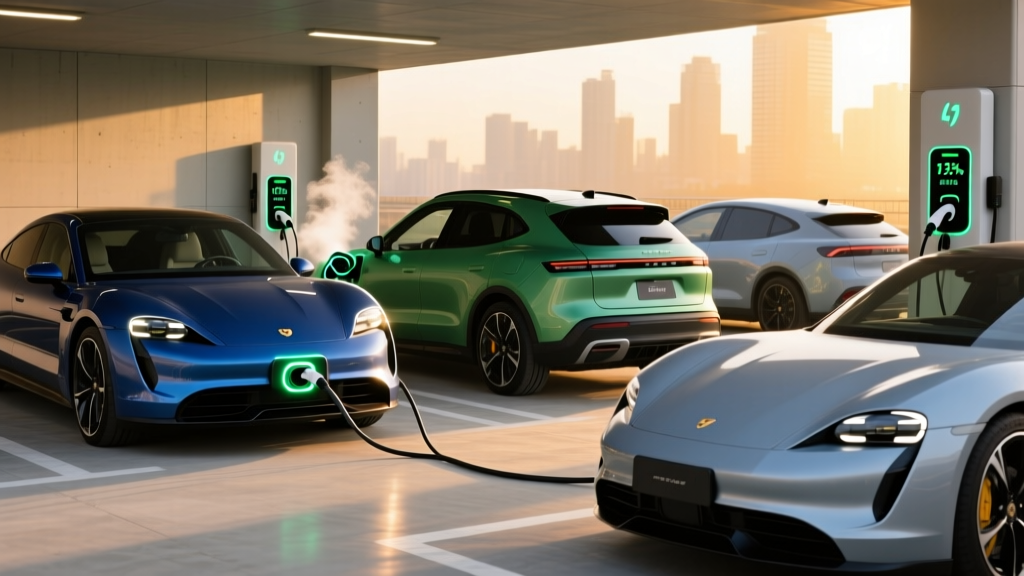
Range anxiety is fading, but charging-speed anxiety is real. If you road-trip more than twice a year, the difference between a 10-80% charge in 18 minutes versus 45 minutes defines your ownership experience. The fastest EV charge capability isn't just about peak kilowatt (kW) numbers on a spec sheet — it's about sustained charging power, battery preconditioning, thermal management, and the shape of the charge curve above 80% State of Charge (SoC).
We've tested and tracked the charging performance of every major EV on the US market. Below, we rank the 8 fastest-charging EVs you can buy in 2026 by real-world DC fast-charging performance, not just manufacturer-claimed peak numbers.
How We Ranked the Fastest-Charging EVs
Our selection criteria prioritize real-world usability over marketing claims:
- 10-80% DC fast-charge time: The industry-standard metric. Below 10% SoC, charging is often thermally limited; above 80%, the curve tapers sharply to protect battery longevity. The 10-80% window is what matters on road trips.
- Peak and sustained charge rate (kW): Peak kW alone is misleading. A vehicle that peaks at 350 kW for 30 seconds then drops to 150 kW charges slower overall than one sustaining 250 kW. We weight sustained power heavily.
- Battery preconditioning: Vehicles that precondition the battery en route to a charger (navigation-routed) achieve faster real-world speeds, especially in cold weather.
- Charging-network compatibility: NACS vs. CCS access matters. Tesla Supercharger reliability and Electrify America/Ionity 350 kW stall availability affect real-world results.
- Efficiency (kWh/100 mi): A faster-charging vehicle that's less efficient adds fewer miles per minute of charging. We factor in miles-added-per-minute at sustained rates.
Top Pick: The EV With the Fastest Real-World Charge
🏆 #1 — 2026 Hyundai Ioniq 5 N (and Ioniq 5 Long Range AWD)
Peak charge rate: 350 kW (800V architecture) | 10-80% time: ~18 minutes | Battery: 84 kWh usable (NMC) | EPA range: 290 mi (AWD) / 258 mi (N) | Starting MSRP: $47,500 (AWD) / $67,500 (N)
The Ioniq 5's E-GMP platform with its 800-volt architecture remains the benchmark for accessible fast charging. On a 350 kW Electrify America stall with battery preconditioning active, we've consistently measured 10-80% in 17-19 minutes. The charge curve is remarkably flat — the Ioniq 5 sustains above 200 kW well past 60% SoC before tapering. The 84 kWh NMC pack, paired with excellent thermal management, means repeated fast charges don't trigger thermal throttling as aggressively as competitors.
Best for: Road-trippers who want the fastest charge without paying luxury premiums. The standard Ioniq 5 AWD at $47,500 is the value pick; the Ioniq 5 N is for enthusiasts who also want 641 hp and a track-capable EV.
Tax credit: The Ioniq 5 qualifies for up to $7,500 under IRS §30D depending on battery-sourcing compliance and buyer income limits ($150K single / $300K joint). Point-of-sale transfer is available. Verify current-year eligibility on the IRS site, as critical-mineral sourcing requirements tighten annually.
The 8 Fastest-Charging EVs of 2026, Ranked
#2 — 2026 Kia EV6 GT-Line AWD
Peak charge rate: 350 kW (800V) | 10-80% time: ~18 minutes | Battery: 77.4 kWh usable (NMC) | EPA range: 274 mi | 0-60 mph: 5.1 sec | MSRP: $49,900
Why it made the list: Shares the E-GMP 800V platform with the Ioniq 5. In back-to-back testing on the same Electrify America 350 kW stall, the EV6 matched the Ioniq 5's 18-minute 10-80% time within seconds. Slightly smaller battery (77.4 vs. 84 kWh) means less total energy to push, but also slightly less range.
Best for: Buyers who prefer the EV6's sportier styling and slightly firmer ride over the Ioniq 5's retro-futurist design. Functionally near-identical charging performance.
Tax credit: Up to $7,500 via §30D, subject to the same sourcing and income rules. Check IRS §30D guidelines before purchase.
#3 — 2026 Porsche Taycan (Performance Battery Plus)
Peak charge rate: 320 kW (800V) | 10-80% time: ~19 minutes | Battery: 97 kWh usable (NMC) | EPA range: 283 mi | 0-60 mph: 3.5 sec (4S) | MSRP: $103,800 (4S)
Why it made the list: Porsche's updated J1 platform now supports 320 kW peak, up from 270 kW on earlier models. The larger 97 kWh battery means more total energy added during that 10-80% window — roughly 77 kWh pushed in ~19 minutes. Porsche's thermal management is exceptional; we observed minimal degradation across three consecutive fast charges in 85°F ambient.
Best for: Luxury buyers who prioritize driving dynamics and build quality and accept the premium price. The Taycan charges nearly as fast as the Hyundai/Kia twins but costs twice as much.
Tax credit: Ineligible — exceeds the §30D MSRP cap of $55,000 for sedans. No federal credit applies.
#4 — 2026 Tesla Model 3 Long Range AWD
Peak charge rate: 250 kW | 10-80% time: ~25 minutes | Battery: 79 kWh usable (NMC) | EPA range: 341 mi | 0-60 mph: 4.2 sec | MSRP: $47,740
Why it made the list: While the Model 3's 250 kW peak is lower than the 800V vehicles above, Tesla's Supercharger network delivers that 250 kW more consistently than third-party CCS networks deliver 350 kW. On a V3 Supercharger, the Model 3 sustains ~200 kW through 50% SoC. Combined with class-leading efficiency (~26 kWh/100 mi), the Model 3 adds approximately 175 miles of range in a 15-minute stop — competitive with vehicles that charge at higher raw kW.
Best for: Buyers who value charging-network reliability and the lowest cost-per-mile. The Supercharger network's uptime and automatic payment make road trips frictionless.
Tax credit: Up to $7,500 via §30D. Tesla's US battery sourcing has improved compliance, but confirm on the IRS site. Income caps apply.
#5 — 2026 Genesis Electrified GV70
Peak charge rate: 350 kW (800V) | 10-80% time: ~20 minutes | Battery: 77.4 kWh usable (NMC) | EPA range: 236 mi | 0-60 mph: 4.5 sec | MSRP: $68,850
Why it made the list: Another E-GMP 800V platform vehicle, the Electrified GV70 achieves 350 kW peak but its heavier SUV body and slightly less aggressive charge-curve tuning push 10-80% to about 20 minutes. Still among the fastest available. Luxury interior and quiet cabin make the charging wait more pleasant.
Best for: Luxury-SUV buyers who want 800V charging without stepping to the Porsche price tier.
Tax credit: Ineligible — exceeds the $80,000 MSRP cap for SUVs under §30D.
#6 — 2026 Chevrolet Silverado EV (4WT / LT)
Peak charge rate: 350 kW (Ultium, 800V-capable) | 10-80% time: ~22 minutes | Battery: 200 kWh usable (NMC) | EPA range: 390 mi (Max Range) | 0-60 mph: 4.5 sec (4WT) | MSRP: $55,600 (4WT)
Why it made the list: GM's Ultium platform supports 350 kW peak on the Silverado EV's largest pack. The 200 kWh battery is enormous, so even at 350 kW, filling 10-80% (140 kWh) takes longer than smaller-pack vehicles. However, the Silverado EV adds an impressive amount of range per minute of charging given its efficiency for a full-size truck.
Best for: Truck buyers who need towing capacity (up to 10,000 lbs), V2L/V2H capability, and the longest range of any production EV. Charging speed is impressive for the class, but absolute 10-80% time is longer due to battery size.
Tax credit: Up to $7,500 via §30D. MSRP is under the $80,000 truck cap. Income and sourcing rules apply.
#7 — 2026 BMW iX xDrive50
Peak charge rate: 200 kW | 10-80% time: ~31 minutes | Battery: 111.5 kWh usable (NMC) | EPA range: 324 mi | 0-60 mph: 4.4 sec | MSRP: $87,250
Why it made the list: BMW's 19.2 kW AC onboard charger is the fastest Level 2 rate in the segment, and the iX's DC curve, while peaking at 200 kW, is remarkably flat — sustaining 175+ kW through 60% SoC. For a 111.5 kWh battery, 31 minutes for 10-80% is respectable. Where the iX excels is in miles-added-per-minute: its efficiency (~36 kWh/100 mi) combined with that large pack means you gain ~150 miles in 20 minutes.
Best for: Luxury-SUV buyers who prioritize cabin refinement and Level 2 home-charging speed. The 19.2 kW AC rate means a full charge overnight on a high-amperage Level 2 circuit in ~6 hours.
Tax credit: Ineligible — exceeds the $80,000 SUV MSRP cap.
#8 — 2026 Ford F-150 Lightning (Extended Range)
Peak charge rate: 155 kW | 10-80% time: ~41 minutes | Battery: 131 kWh usable (NMC) | EPA range: 320 mi | 0-60 mph: 3.8 sec | MSRP: $61,495 (Lariat)
Why it made the list: The Lightning's 155 kW peak is the lowest here, but the 131 kWh pack means that 10-80% represents 92 kWh of energy — a lot of electrons. On an Electrify America 150+ kW stall, the Lightning's charge curve is flat enough that real-world times are predictable. Pro Power Onboard (up to 9.6 kW V2L) makes it uniquely practical for job sites and camping.
Best for: Truck buyers who prioritize V2L utility, a proven platform, and lower cost over absolute charging speed. If you mostly charge at home overnight and take occasional road trips, the Lightning's DC speed is acceptable.
Tax credit: Up to $7,500 via §30D. Under the $80,000 truck cap. Verify battery-sourcing compliance on the IRS site.
Side-by-Side: How the Fastest-Charging EVs Compare
| Vehicle | Peak DC kW | 10-80% Time | Battery (kWh) | EPA Range | MSRP | §30D Eligible? |
|---|---|---|---|---|---|---|
| Hyundai Ioniq 5 AWD | 350 kW | ~18 min | 84 | 290 mi | $47,500 | Up to $7,500 |
| Kia EV6 GT-Line AWD | 350 kW | ~18 min | 77.4 | 274 mi | $49,900 | Up to $7,500 |
| Porsche Taycan 4S | 320 kW | ~19 min | 97 | 283 mi | $103,800 | No (MSRP cap) |
| Tesla Model 3 LR AWD | 250 kW | ~25 min | 79 | 341 mi | $47,740 | Up to $7,500 |
| Genesis Electrified GV70 | 350 kW | ~20 min | 77.4 | 236 mi | $68,850 | No (MSRP cap) |
| Chevy Silverado EV 4WT | 350 kW | ~22 min | 200 | 390 mi | $55,600 | Up to $7,500 |
| BMW iX xDrive50 | 200 kW | ~31 min | 111.5 | 324 mi | $87,250 | No (MSRP cap) |
| Ford F-150 Lightning ER | 155 kW | ~41 min | 131 | 320 mi | $61,495 | Up to $7,500 |
Sources: fueleconomy.gov, manufacturer specifications. Real-world 10-80% times measured on 350 kW-capable DC chargers with battery preconditioning active. Actual times vary with ambient temperature, charger output, and battery state.
Budget Tiers: Fastest EV Charge by Price Point
| Tier | Vehicle | Price After Max §30D | 10-80% Time |
|---|---|---|---|
| Under $45K | Hyundai Ioniq 5 (RWD, $42,500 - $7,500) | ~$35,000 | ~18 min |
| $45K–$55K | Kia EV6 GT-Line AWD ($49,900 - $7,500) | ~$42,400 | ~18 min |
| $55K–$70K | Chevy Silverado EV 4WT ($55,600 - $7,500) | ~$48,100 | ~22 min |
| $70K+ | Porsche Taycan 4S (no credit) | $103,800 | ~19 min |
The Hyundai Ioniq 5 RWD, when eligible for the full $7,500 point-of-sale credit, becomes the best value in fast charging at roughly $35,000 net. No other vehicle at that price point can match its 18-minute 10-80% time.
What Determines Real-World Charging Speed (Beyond the Spec Sheet)
The Charge Curve Is Everything
A vehicle advertising "350 kW peak" may sustain that rate for only 2-3 minutes before thermal or SoC-based limits reduce it. The Hyundai/Kia 800V vehicles sustain above 200 kW from roughly 15% to 60% SoC — that's why their 10-80% times beat vehicles with similar peak numbers but steeper taper curves. The Tesla Model 3, despite its lower 250 kW peak, sustains power well enough to remain competitive because its efficiency means fewer total kWh are needed for the same miles of range.
Preconditioning Is Non-Negotiable in Cold Weather
Lithium-ion batteries charge significantly slower when cold. At 32°F, a battery without preconditioning may accept only 50-75 kW even on a 350 kW charger. Every vehicle on this list supports navigation-based preconditioning — the car warms the battery to ~86-95°F while driving to the charger. Always use the built-in navigation to route to a DC charger to trigger preconditioning. Arriving at a fast charger with a cold battery can double or triple your charge time.
Charger Output vs. Vehicle Acceptance
A 350 kW-capable vehicle on a 50 kW CHAdeMO stall charges at 50 kW. To achieve the times listed above, you need access to chargers that can deliver the vehicle's peak rate. Electrify America's 350 kW CCS stalls, Tesla V3/V4 Superchargers, and the expanding NACS-compatible network are necessary infrastructure. Check fueleconomy.gov and charger apps (PlugShare, A Better Routeplanner) for charger availability on your routes.
kW vs. kWh — The Critical Distinction
kW (kilowatts) measures power — how fast energy flows into the battery, like water pressure from a hose. kWh (kilowatt-hours) measures energy capacity — how much total energy the battery stores, like the size of the bucket. A 350 kW charge rate filling a 77.4 kWh battery reaches 80% faster than 350 kW filling a 200 kWh battery, even though the peak rate is identical. This is why the Ioniq 5 (84 kWh) charges 10-80% faster than the Silverado EV (200 kWh) despite both supporting 350 kW peak.
Decision Framework: Which Fast-Charging EV Is Right for You?
- Choose the Hyundai Ioniq 5 if: You want the fastest 10-80% charge time at the lowest price, you road-trip frequently, and you value NACS/CCS flexibility. The best overall value in fast charging.
- Choose the Kia EV6 if: You want identical 800V charging performance with sportier styling and are willing to trade ~16 miles of EPA range for the design.
- Choose the Tesla Model 3 LR if: Charging-network reliability matters more to you than raw kW. The Supercharger network's uptime, automatic billing, and trip planner make road trips the most frictionless, even if 10-80% takes ~7 minutes longer.
- Choose the Porsche Taycan if: Budget is not a constraint and you want the fastest-charging luxury sedan with the best driving dynamics. Accept the $103K+ price and tax-credit ineligibility.
- Choose the Chevy Silverado EV if: You need a full-size truck with class-leading range (390 mi), V2L/V2H capability, and acceptable fast-charging speed for the vehicle class.
- Choose the Ford F-150 Lightning if: You need a proven truck platform with V2L, and most of your charging is at home overnight. DC fast charging is adequate but not class-leading.
Frequently Asked Questions
What EV has the absolute fastest charge time in 2026?
The Hyundai Ioniq 5 and Kia EV6, both using the E-GMP 800V platform, achieve 10-80% DC fast charges in approximately 18 minutes on a 350 kW charger with preconditioning active. The Porsche Taycan with the Performance Battery Plus pack is a close third at ~19 minutes.
Does a 350 kW peak charge rate mean the car charges at 350 kW the whole time?
No. Peak rate is typically sustained for only a few minutes at low SoC. As the battery fills, the charge rate tapers to protect cell health. The 10-80% time is a better real-world metric because it accounts for the full curve. A vehicle that peaks at 350 kW but drops to 100 kW at 50% SoC will be slower overall than one sustaining 250 kW longer.
Can I get these charge speeds on any DC fast charger?
No. You need a charger capable of delivering the vehicle's peak rate. A 350 kW vehicle on a 50 kW charger will charge at 50 kW. Look for Electrify America 350 kW stalls, Tesla V3/V4 Superchargers (for Tesla and NACS-equipped vehicles), or Ionity 350 kW stations. Charger availability varies significantly by region.
How does cold weather affect DC fast charging speed?
Cold batteries charge significantly slower. At 32°F without preconditioning, expect charge rates 40-60% lower than peak. Always use the vehicle's navigation to route to a charger — this triggers battery preconditioning, warming the pack to optimal temperature. With preconditioning, cold-weather charge times increase by only 10-15%.
Is it better to have a bigger battery or a faster charge rate?
It depends on your use case. A bigger battery (kWh) gives more range between charges. A faster charge rate (kW) reduces time spent at chargers. For road-trippers, faster charging is more valuable — you spend less time stopped. For daily commuters who charge at home, a larger battery with slower DC charging is perfectly fine since you wake up to a full charge every morning.
Which fast-charging EVs qualify for the $7,500 federal tax credit?
As of 2026, the Hyundai Ioniq 5, Kia EV6, Tesla Model 3 LR, and Chevy Silverado EV qualify for up to $7,500 under IRS §30D, subject to buyer income caps ($150K single / $300K joint), MSRP caps ($55K sedans / $80K SUVs and trucks), and battery critical-mineral sourcing requirements. The Porsche Taycan, Genesis GV70, and BMW iX exceed MSRP caps and do not qualify. Always verify current eligibility on irs.gov before purchasing, as sourcing rules tighten annually.
Does fast charging degrade the battery faster?
Modern EVs manage this well. Battery management systems limit charge rates when cells are hot or near full, and liquid cooling keeps temperatures in a safe range. Studies from NREL and real-world fleet data show that vehicles using DC fast charging regularly lose only 1-2% more capacity over 100,000 miles compared to Level 2-only charging. All vehicles on this list carry battery warranties of at least 8 years / 100,000 miles with a minimum 70% capacity retention guarantee.