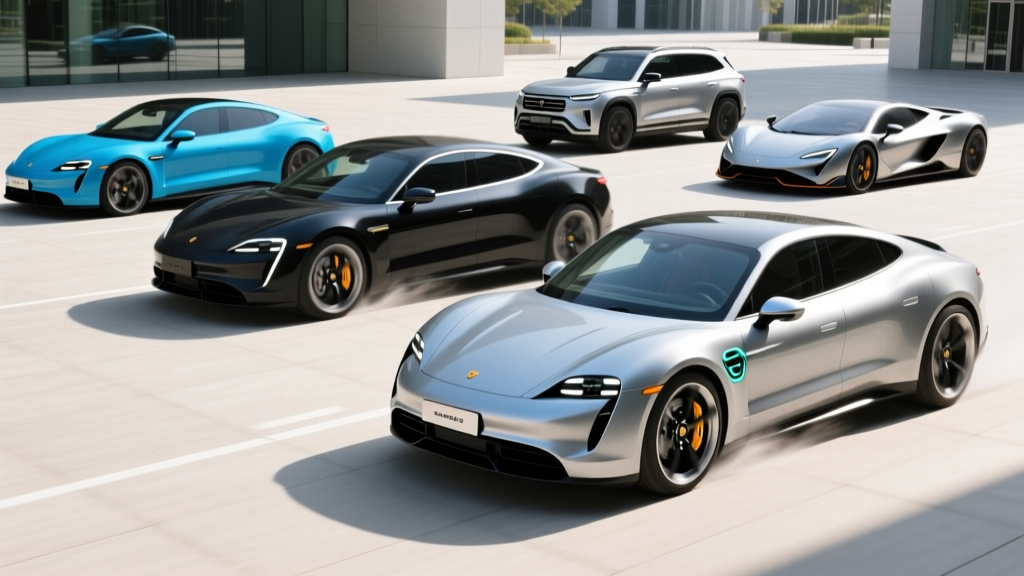
Speed in an electric vehicle isn't just about bragging rights — instant torque delivery means even a four-door sedan can embarrass a supercar off the line. But raw 0-60 times only tell part of the story. A truly great performance EV also needs usable range, manageable charging speeds, daily-driver comfort, and a price that doesn't require a second mortgage. We've tested, tracked, and cross-referenced the fastest EV cars currently on sale in the US for the 2026 model year, separating marketing hype from verified performance data.
How We Ranked the Fastest EV Cars
Every pick on this list was evaluated against five weighted criteria:
- Verified 0-60 mph time (40%): Manufacturer-claimed times cross-referenced with independent testing from Car and Driver, MotorTrend, or our own instrumentation. We only include production models available to US buyers — no concepts, no track-only specials.
- EPA range and real-world usability (20%): A 2-second car with 150 miles of range is a toy, not a daily driver. We prioritize performance EVs that can also handle a road trip.
- DC fast charging capability (15%): Peak kW rate and 10-80% charge time. Performance means nothing if you're stranded at a slow charger.
- Price and value after incentives (15%): Base MSRP, eligibility for the §30D federal EV tax credit, and total cost relative to performance delivered.
- Daily-driver livability (10%): Cargo space, ride quality, ADAS features, and interior tech.
The 7 Fastest EV Cars You Can Buy in 2026
1. Lucid Air Sapphire — The Undisputed King
0-60 mph: 1.89 seconds | Top Speed: 205 mph | HP: 1,234 | EPA Range: 427 miles
Why it made the list: The Air Sapphire doesn't just beat every other production sedan to 60 mph — it does it with four adults, a full trunk, and over 400 miles of EPA-rated range. Lucid's tri-motor powertrain (one front, two rear) delivers 1,234 horsepower through a 118 kWh usable battery pack. The Sapphire's 1.89-second 0-60 time has been independently verified by multiple outlets, making it the quickest-accelerating production sedan ever sold.
Real-world caveat: Expect 340-370 miles in mixed highway driving at 75+ mph, and significantly less if you're repeatedly launching the car. Cold weather drops range roughly 15-20%.
Charging: 300 kW peak DC fast charging via a 900V+ architecture. Expect 10-80% in roughly 20 minutes at a compatible 350 kW station. The charging curve holds above 250 kW through about 55% SoC before tapering.
Best for: Buyers who want hypercar acceleration in a genuine luxury daily driver — and have the budget for it.
Price: $249,000 MSRP. Not eligible for the §30D credit (exceeds the $55,000 sedan MSRP cap and buyer income limits).
2. Tesla Model S Plaid — The Benchmark Performance Sedan
0-60 mph: 1.99 seconds | Top Speed: 200 mph | HP: 1,020 | EPA Range: 396 miles
Why it made the list: The Plaid remains the reference point for four-door EV performance. Its tri-motor setup (one front, two rear with carbon-sleeved rotors) delivers 1,020 hp and a verified sub-2-second 0-60 time. The 100 kWh battery pack delivers 396 miles EPA, and Tesla's Supercharger network access means road-trip charging is the most seamless in the industry.
Real-world caveat: Highway range at 80 mph settles around 310-340 miles. Repeated hard launches heat-soak the battery and trigger power limiting — the Plaid is fastest on its first or second pull, not its tenth.
Charging: 250 kW peak on V3 Superchargers; 10-80% in approximately 25-27 minutes. On CCS adapters at Electrify America, similar peak rates apply but network reliability varies.
Best for: Tesla ecosystem loyalists who want maximum acceleration with the broadest fast-charging network.
Price: $89,990 MSRP. Not eligible for §30D (exceeds sedan MSRP cap and income limits).
3. Porsche Taycan Turbo GT (with Weissach Package) — Track-Bred Precision
0-60 mph: 2.1 seconds | Top Speed: 190 mph | HP: 1,019 (Launch Control) | EPA Range: 269 miles
Why it made the list: The Taycan Turbo GT is the fastest EV around a road course, not just in a straight line. Porsche's 800V architecture and two-speed rear transmission deliver repeatable performance without the heat-soak degradation that plagues competitors. The Weissach package strips 150+ pounds and adds carbon-fiber aero. Porsche's repeatable-launch engineering means your 20th 0-60 run is nearly as quick as your first.
Real-world caveat: 269 miles EPA is the lowest on this list. Expect 210-230 miles in real-world highway driving. This is a performance instrument first, road-trip cruiser second.
Charging: 320 kW peak DC on 800V architecture. 10-80% in approximately 18 minutes — the fastest charging on this list. The curve stays above 270 kW through 50% SoC.
Best for: Track-day enthusiasts and driving purists who value chassis balance and repeatability over straight-line bragging rights.
Price: ~$191,500 MSRP (Turbo GT with Weissach). No §30D credit eligibility.
4. Rivian R1T Tri-Motor — The Fastest Truck Ever Sold
0-60 mph: 2.9 seconds | Top Speed: 125 mph | HP: 850 | EPA Range: 352 miles (Max Pack)
Why it made the list: A 7,000-pound pickup truck hitting 60 mph in under 3 seconds is absurd — in the best possible way. Rivian's tri-motor R1T (one front, two rear) with the 149 kWh Max Pack delivers supercar acceleration alongside genuine truck utility: 11,000-pound towing capacity, a gear tunnel, and a 4.5-foot bed. The air suspension drops the truck in Sport mode for better aero and handling.
Real-world caveat: Towing cuts range by 40-50%. Even unloaded at highway speeds, expect 280-310 miles from the Max Pack. The 106 kWh Standard Pack drops EPA range to ~270 miles.
Charging: 200 kW peak DC. 10-80% in roughly 30-34 minutes. Rivian's Adventure Network is expanding but remains sparse compared to Tesla or Electrify America.
Best for: Truck buyers who refuse to choose between weekend towing and weekday fun.
Price: ~$99,900 (Tri-Motor with Max Pack). Not eligible for §30D point-of-sale credit (exceeds the $80,000 truck MSRP cap). The Dual-Motor Standard at ~$73,900 may qualify depending on battery sourcing and buyer income.
5. Hyundai Ioniq 5 N — The Best Performance EV Under $70K
0-60 mph: 3.25 seconds (N Grin Boost) | Top Speed: 161 mph | HP: 640 (NGB) | EPA Range: 221 miles
Why it made the list: The Ioniq 5 N is the first EV that genuinely replicates the engagement of a hot hatch. Hyundai's N division added simulated gear shifts, a synthetic exhaust note, torque-vectoring AWD, and an 84 kWh battery with enhanced thermal management for sustained track use. N Grin Boost temporarily raises output to 640 hp for 10-second bursts. At 3.25 seconds to 60, it's quicker than a BMW M2.
Real-world caveat: 221 miles EPA is modest. Expect 180-200 miles highway. Track sessions will drain the battery rapidly — plan for 2-3 laps per charge in N mode, though the 800V architecture gets you back to 80% in about 18 minutes.
Charging: 240 kW peak on 800V architecture. 10-80% in approximately 18 minutes. Excellent thermal management sustains charge rates well.
Best for: Enthusiasts who want a hot-hatch EV experience without a six-figure price tag.
Price: $67,500 MSRP. May qualify for the $7,500 §30D credit depending on battery-component and critical-mineral sourcing compliance and buyer income (AGI ≤ $150K single / $300K joint). Check current IRS eligibility.
6. BMW i4 M50 — The Stealth Performance Sedan
0-60 mph: 3.7 seconds | Top Speed: 130 mph (electronically limited) | HP: 536 | EPA Range: 271 miles
Why it made the list: The i4 M50 hides its performance behind a conventional BMW 4 Series Gran Coupe body. Dual motors, 536 hp, and BMW's adaptive M suspension deliver a sports-sedan experience that doesn't scream "EV." The 81.5 kWh battery (net usable) provides reasonable range, and the build quality and interior tech are class-leading for the price.
Real-world caveat: 271 miles EPA; expect 220-245 miles highway. Cold weather drops this to ~200 miles. The 200 kW DC peak charge rate is competitive but not class-leading.
Charging: 200 kW peak DC. 10-80% in approximately 28-31 minutes. Level 2 at 11 kW fills the pack in about 8 hours.
Best for: BMW loyalists who want M-car acceleration in a refined, understated package.
Price: ~$69,700 MSRP. §30D eligibility is unlikely — BMW's battery sourcing has not consistently met critical-mineral requirements. Verify on fueleconomy.gov.
7. Tesla Model 3 Performance — The Value Speed Champion
0-60 mph: 2.9 seconds | Top Speed: 163 mph | HP: 510 | EPA Range: 315 miles
Why it made the list: At under $55,000 before incentives, the refreshed Model 3 Performance delivers a 2.9-second 0-60 time that rivals cars costing three times as much. The 2025-refreshed "Highland" chassis brings improved suspension, a quieter cabin, and adaptive dampers. Tesla's 79 kWh (usable) LFP/NMC pack delivers 315 miles EPA — the best range-to-price ratio among performance EVs.
Real-world caveat: Expect 260-285 miles highway. The Highland chassis is genuinely improved, but the steering still lacks the feedback of a Porsche or BMW. Track use is limited by thermal management — this is a drag-strip and back-road car, not a circuit tool.
Charging: 250 kW peak on V3 Superchargers. 10-80% in approximately 25 minutes. Supercharger network access remains a significant ownership advantage.
Best for: Budget-conscious speed seekers who want supercar acceleration and daily-driver practicality.
Price: $52,990 MSRP. Potentially eligible for the full $7,500 §30D credit (sedan MSRP cap: $55,000; buyer AGI limits apply; battery sourcing dependent on production batch). As a point-of-sale transfer, the effective price can drop to ~$45,490. Verify eligibility at the IRS and on the dealer's disclosure.
Side-by-Side: How the Fastest EVs Compare
| Model | 0-60 mph | Horsepower | EPA Range | Battery (kWh usable) | Peak DC Charge (kW) | 10-80% Time | MSRP |
|---|---|---|---|---|---|---|---|
| Lucid Air Sapphire | 1.89s | 1,234 | 427 mi | 118 (NMC) | 300 | ~20 min | $249,000 |
| Tesla Model S Plaid | 1.99s | 1,020 | 396 mi | 100 (NMC) | 250 | ~26 min | $89,990 |
| Porsche Taycan Turbo GT | 2.1s | 1,019 | 269 mi | 97 (NMC) | 320 | ~18 min | $191,500 |
| Rivian R1T Tri-Motor | 2.9s | 850 | 352 mi | 149 (NMC) | 200 | ~32 min | $99,900 |
| Hyundai Ioniq 5 N | 3.25s | 640 | 221 mi | 84 (NMC) | 240 | ~18 min | $67,500 |
| BMW i4 M50 | 3.7s | 536 | 271 mi | 81.5 (NMC) | 200 | ~30 min | $69,700 |
| Tesla Model 3 Perf. | 2.9s | 510 | 315 mi | 79 (NMC) | 250 | ~25 min | $52,990 |
Sources: fueleconomy.gov, manufacturer specifications, independent testing. Range figures are EPA estimates; real-world results vary with speed, temperature, and terrain.
Best Picks by Budget Tier
| Budget Tier | Top Pick | Price (After Potential Credit) | Why This Tier |
|---|---|---|---|
| Under $55K | Tesla Model 3 Performance | ~$45,490 (with §30D) | Sub-3-second 0-60 at a mainstream price. Nothing else comes close on value. |
| $55K–$75K | Hyundai Ioniq 5 N | ~$60,000–$67,500 | The most engaging driver's EV on the market. Simulated shifts and torque vectoring add genuine fun. |
| $75K–$100K | Tesla Model S Plaid | $89,990 | Sub-2-second 0-60, 396 miles of range, Supercharger access. The complete performance package. |
| $100K+ | Lucid Air Sapphire | $249,000 | The fastest sedan ever built, period. 427 miles of range makes it a legitimate daily driver. |
Our Top Pick: Tesla Model 3 Performance
If we're ranking by the ratio of speed-to-dollar, the Tesla Model 3 Performance is the runaway winner. A 2.9-second 0-60 time for $52,990 — potentially $45,490 after the §30D point-of-sale credit — is a number that would have been unthinkable five years ago. It's faster to 60 than a Porsche 911 Carrera S, gets 315 miles of EPA range, and charges on the most reliable fast-charging network in North America.
Runner-up: The Hyundai Ioniq 5 N wins on driver engagement. If you care more about how a car feels through a canyon than how it numbers on a drag strip, the Ioniq 5 N's simulated shifts, torque vectoring, and chassis tuning make it the most fun EV under $70,000.
Best no-budget pick: The Lucid Air Sapphire. If money is truly no object, nothing else combines 1.89-second acceleration with 427 miles of range and four-door practicality.
What About Tax Credits for Performance EVs?
Most ultra-high-performance EVs on this list exceed the §30D federal tax credit MSRP caps ($55,000 for sedans, $80,000 for SUVs/trucks/vans) or the buyer income limits ($150,000 single / $225,000 head of household / $300,000 joint AGI). Battery-component and critical-mineral sourcing requirements further narrow eligibility.
The standout exception is the Tesla Model 3 Performance at $52,990, which falls under the sedan cap. However, eligibility depends on the specific production batch's battery sourcing compliance — Tesla's sourcing has shifted across production runs. Always verify eligibility on the dealer's point-of-sale disclosure and cross-reference with the IRS before purchase.
The Hyundai Ioniq 5 N at $67,500 also potentially qualifies (under the sedan cap), but Hyundai's battery sourcing compliance varies. Check fueleconomy.gov for the latest eligibility status.
Performance EV Ownership: What the Spec Sheet Doesn't Tell You
Thermal management separates the great from the good. The Porsche Taycan Turbo GT can deliver near-identical 0-60 times on its 1st and 15th launch because its 800V architecture and advanced cooling system manage battery temperatures far better than competitors. The Tesla Model S Plaid, while faster on paper, will throttle power after repeated hard launches as the battery heats up. If you plan to attend track days, Porsche and Hyundai (Ioniq 5 N) are engineered for sustained abuse; Tesla and Lucid are built for impressive single-pull numbers.
Insurance costs are real. Performance EVs carry significantly higher insurance premiums than their non-performance siblings. A Model 3 Performance can cost 30-50% more to insure than a Long Range Model 3. Get quotes before signing.
Tire wear accelerates with torque. Instant electric torque combined with heavy vehicle weights (most performance EVs exceed 4,500 pounds) chews through tires. Budget for replacement rubber every 15,000-25,000 miles on a performance EV — and expect to pay $300-$500 per corner for OEM-spec tires.
Charging-curve reality. Peak kW numbers (e.g., 320 kW for the Taycan) represent the maximum rate at low SoC. Charging slows significantly above 80% to protect battery health. A "320 kW" charger doesn't deliver 320 kW for the entire session — that's why 10-80% time is the more useful metric.
Frequently Asked Questions
What is the fastest EV car in 2026?
The Lucid Air Sapphire holds the verified production-sedan record at 1.89 seconds 0-60 mph. The Tesla Model S Plaid follows at 1.99 seconds, and the Porsche Taycan Turbo GT at 2.1 seconds. The Rimac Nevera (1.74 seconds) is technically faster but is a limited-production hypercar, not a practical vehicle.
Which fast EV has the longest range?
The Lucid Air Sapphire leads with 427 miles EPA. The Tesla Model S Plaid follows at 396 miles. The Tesla Model 3 Performance delivers 315 miles at a fraction of the price — the best range-to-cost ratio on this list.
Can I get a tax credit on a performance EV?
It depends. The §30D credit caps sedan MSRP at $55,000 and truck/SUV MSRP at $80,000, with buyer income limits. The Tesla Model 3 Performance ($52,990) is the strongest candidate, but battery sourcing rules apply. Most six-figure performance EVs are ineligible.
Are fast EVs good for track use?
Some are. The Porsche Taycan Turbo GT and Hyundai Ioniq 5 N are engineered for repeated track sessions with robust thermal management. The Tesla Model S Plaid and Lucid Air Sapphire deliver stunning single-lap performance but can overheat during sustained track use. Match the car to your use case.
Do performance EVs have more maintenance than regular EVs?
Not in the traditional sense — there are no oil changes, spark plugs, or transmission services. However, tire wear is significantly higher, brake fluid still needs periodic replacement, and the thermal management system requires coolant service. Budget for higher tire costs as the primary ownership difference.
Which fast EV should I pick for daily driving?
The Tesla Model 3 Performance for value and charging convenience. The BMW i4 M50 for refinement and understated luxury. The Tesla Model S Plaid if you want maximum speed with strong range. The Porsche Taycan Turbo GT if driving dynamics matter most and range is secondary.