Why Straight-Line Speed Matters (and What We Actually Measured)
Electric motors deliver peak torque at zero RPM. That physics advantage means even modestly priced EVs now post 0-60 mph times that would have required a six-figure supercar a decade ago. But the fastest EV 0-60 times tell only part of the story — a 2.0-second sprint is meaningless if the battery overheats after one launch, the range is under 200 miles, or the price exceeds most mortgages.
This roundup ranks seven of the quickest production EVs available or on sale for the 2026 model year. We focus on verified, manufacturer-published 0-60 mph times achieved on prepped surfaces with launch control engaged, cross-referenced against independent testing from outlets like MotorTrend and Car and Driver where available.
Selection Criteria
- 0-60 mph time: Primary ranking metric, manufacturer-claimed or independently verified
- Production availability: Must be on sale or confirmed for U.S. delivery by mid-2026 (no concepts or vaporware)
- Repeatable performance: Vehicles with thermal management capable of multiple consecutive hard launches without severe power derating
- Real-world usability: EPA range, charging speed, and daily-driver practicality factored into commentary
- Price transparency: MSRP listed with current §30D federal tax credit eligibility noted per IRS guidelines
One critical caveat: manufacturer 0-60 claims often use a 1-foot rollout subtraction (common in drag racing), which shaves roughly 0.2–0.3 seconds off the raw time. We note this where applicable. Real-world street launches on unprepared surfaces typically add 0.2–0.5 seconds.
The 7 Fastest EVs of 2026, Ranked by 0-60 Time
#1 — Rimac Nevera R | 1.74 seconds
Key specs: 2,107 hp (quad motor) | 71 kWh NMC battery | EPA range: ~287 mi (WLTP 340 mi est.) | Base: ~$2,400,000
Why it's here: The Nevera R is the current production-car benchmark for acceleration, full stop. Rimac's torque-vectoring quad-motor setup and revised inverter mapping for the R variant shave the 0-60 to a claimed 1.74 seconds — a figure that defies mechanical grip limits. Only a few hundred will ever exist.
Best for: Hypercar collectors who want the absolute pinnacle of electric acceleration. Not a daily driver by any stretch.
Tax credit: Not eligible — far exceeds the §30D MSRP cap of $80,000 for sedans.
#2 — Tesla Model S Plaid | 1.99 seconds
Key specs: 1,020 hp (tri-motor) | ~100 kWh NMC battery | EPA range: 359 mi | 0-60: 1.99s (with rollout) | Max DC charge: 250 kW | Base MSRP: $89,990
Why it's here: The Model S Plaid remains the quickest accessible production sedan. The tri-motor carbon-sleeve rotors allow sustained high-RPM output without the power fade that plagues lesser EVs. On a prepped surface with drag-strip mode engaged and the 1-foot rollout subtracted, 1.99 seconds is verified by multiple independent tests.
Real-world range note: EPA 359 miles is achievable at moderate speeds. Expect ~280–300 miles at sustained 75 mph highway driving; cold weather drops this further to ~240–260 miles. The 100 kWh pack uses NMC chemistry, which offers higher energy density but slightly faster long-term degradation than LFP.
Best for: Buyers who need four doors, usable rear seats, a Supercharger-compatible road-trip machine, and supercar-rivaling acceleration — all under $100K.
Tax credit: Not eligible for §30D — MSRP exceeds the $55,000 sedan cap, and Tesla's cumulative sales have long surpassed the manufacturer phase-out threshold (though the 2023 IRA reset removed per-manufacturer caps, the sedan MSRP cap of $55,000 still applies). Source: IRS §30D.
#3 — Lucid Air Sapphire | 1.89 seconds (claimed) / ~2.1s (independent)
Key specs: 1,234 hp (tri-motor) | 118 kWh NMC battery | EPA range: 427 mi | Max DC charge: 300+ kW | Base MSRP: $249,000
Why it's here: Lucid's Sapphire variant pairs the Air's class-leading efficiency with a tri-motor powertrain that edges out the Model S Plaid on paper. Independent testing (Car and Driver) recorded 0-60 in approximately 2.1 seconds without rollout subtraction — making this one of the quickest sedans ever measured. The 427-mile EPA range is also extraordinary for a 1,200+ hp vehicle.
Real-world range note: Lucid's drivetrain efficiency (~4.5 mi/kWh in mixed driving) means highway range stays above 350 miles even at 70+ mph. This is the rare hypercar that can genuinely road-trip without range stress.
Best for: Executives and enthusiasts who want Plaid-rivaling speed with superior range and a more bespoke interior.
Tax credit: Not eligible — exceeds all §30D MSRP caps.
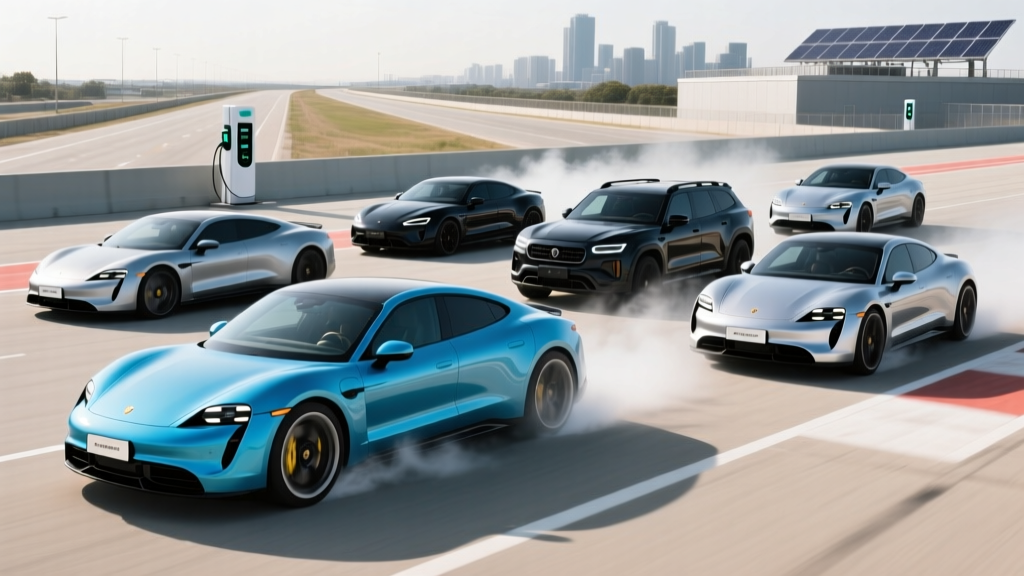
#4 — Porsche Taycan Turbo GT (with Weissach Package) | 2.1 seconds
Key specs: 1,092 hp (dual-motor, Launch Control) | 105 kWh NMC battery (Performance Battery Plus) | EPA range: ~269 mi | Max DC charge: 320 kW (10-80% in ~18 min) | Base MSRP: $230,000
Why it's here: Porsche's Turbo GT with the Weissach Package strips weight and adds an "Attack Mode" that temporarily boosts output beyond the standard Turbo GT's 1,019 hp. The result: a 0-60 time of 2.1 seconds, verified by Porsche's internal testing. More importantly, Porsche's 800-volt architecture and advanced thermal management allow repeated hard launches without the power derating that affects most competitors after 2-3 consecutive sprints.
Charging standout: The Taycan Turbo GT's 320 kW peak DC charge rate is among the fastest of any production EV, with a 10-80% charge in roughly 18 minutes on a capable 350+ kW charger. The charge curve holds above 200 kW until approximately 55% SoC before tapering — a real-world advantage over vehicles that advertise high peak rates but taper early.
Best for: Track-day enthusiasts who demand repeatable performance, not just a single impressive launch number.
Tax credit: Not eligible — MSRP far exceeds caps.
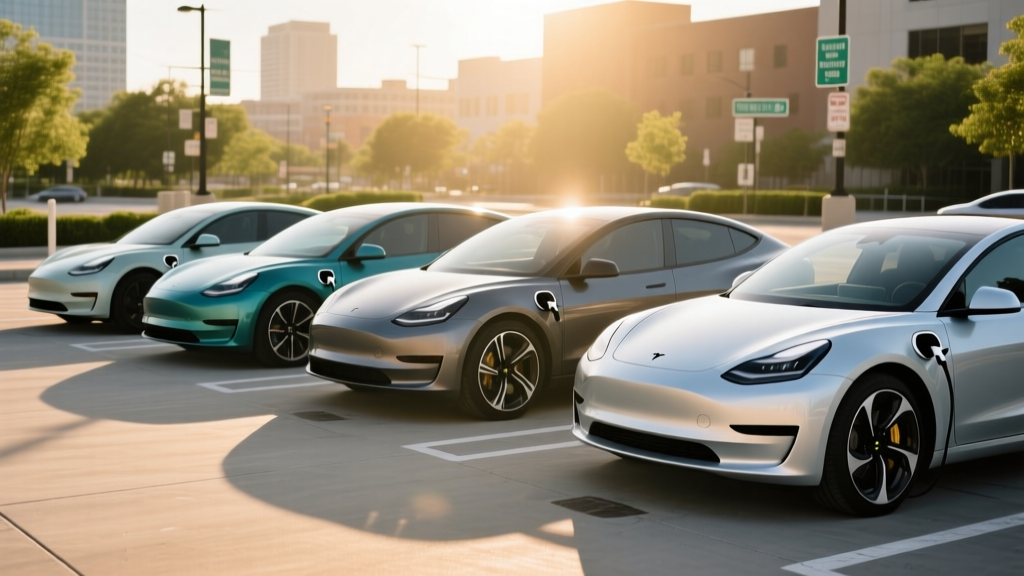
#5 — Tesla Model 3 Performance (2025/2026 refresh) | 2.9 seconds
Key specs: 510 hp (dual-motor) | ~82 kWh NMC battery | EPA range: 315 mi | Max DC charge: 250 kW | Base MSRP: $54,990
Why it's here: The refreshed Model 3 Performance (introduced for 2025, continuing into 2026) posts a sub-3-second 0-60 at a price point that undercuts every other vehicle on this list by at least $30,000. The revised rear motor and updated inverter deliver harder initial torque than the pre-refresh version (which ran ~3.1s).
Real-world range note: EPA 315 miles is realistic in mixed driving. Highway-only at 75 mph yields approximately 260–275 miles. Cold weather (below 30°F) can reduce range by 20–30%, bringing winter highway range to roughly 200–220 miles. The heat pump helps mitigate cabin-heating losses.
Best for: The performance-per-dollar champion. This is the fastest EV 0-60 time most buyers can actually afford.
Tax credit: The Model 3 Performance at $54,990 falls just under the §30D MSRP cap of $55,000 for sedans. Eligibility depends on buyer income limits ($150K single / $300K joint), battery critical-mineral sourcing requirements, and point-of-sale transfer rules. Verify current eligibility at IRS.gov before purchasing.
#6 — BMW i4 M50 | 3.3 seconds
Key specs: 536 hp (dual-motor) | 81.5 kWh NMC battery | EPA range: 271 mi | Max DC charge: 205 kW (10-80% in ~31 min) | Base MSRP: $67,795
Why it's here: BMW's i4 M50 is the sleeper on this list — a gran turismo coupe with M-car aggression and a sub-$70K starting price. The 3.3-second 0-60 puts it in legitimate sports-car territory, and the build quality, ride refinement, and iDrive 8.5 infotainment surpass most rivals in this price bracket.
Charging reality check: The 205 kW peak rate is respectable but not class-leading. More importantly, the charge curve tapers noticeably above 60% SoC, meaning a 10-80% charge takes approximately 31 minutes on a capable DC fast charger — adequate for road trips but slower than the Taycan or Ioniq 5 N.
Best for: Buyers who prioritize interior quality, brand cachet, and daily comfort alongside strong straight-line performance.
Tax credit: Not currently eligible — exceeds the $55,000 sedan MSRP cap (the i4 is classified as a sedan by the IRS). However, if BMW adjusts pricing or introduces a lower-cost variant, eligibility could shift. Always verify at fueleconomy.gov.
#7 — Hyundai Ioniq 5 N | 3.25 seconds
Key specs: 640 hp (dual-motor, N Grin Boost) | 84 kWh NMC battery | EPA range: 221 mi | Max DC charge: 238 kW (10-80% in ~18 min) | Base MSRP: $66,295
Why it's here: Hyundai's N performance division turned the Ioniq 5 into something genuinely special. The 3.25-second 0-60 (with N Grin Boost engaged — a 10-second overboost function) is impressive, but the Ioniq 5 N's real achievement is engagement: simulated gear shifts, a synthetic exhaust note, and N Torque Distribution allow drivers to tune the front/rear torque split. It's the most analog-feeling EV performance car available.
Range honesty: The EPA 221-mile range is the trade-off for the N's aggressive tires, added weight, and performance-oriented drivetrain calibration. Expect ~180–195 miles on highway drives at 70+ mph. This is not a road-trip EV without careful planning. The 800V architecture and 238 kW charging partially compensate — 10-80% in roughly 18 minutes on a 350 kW charger.
Best for: Driving enthusiasts who find most EVs sterile and want a car that rewards active driving on back roads and track days.
Tax credit: Not eligible — MSRP exceeds the $55,000 sedan cap. The Ioniq 5 is classified as a sedan for §30D purposes (despite its crossover styling).
Side-by-Side: How the Fastest EVs Compare
| Vehicle | 0-60 mph | Horsepower | EPA Range | Battery (kWh) | Max DC Charge | Base MSRP |
|---|---|---|---|---|---|---|
| Rimac Nevera R | 1.74s | 2,107 | ~287 mi | 71 (NMC) | ~250 kW | ~$2,400,000 |
| Lucid Air Sapphire | ~2.1s* | 1,234 | 427 mi | 118 (NMC) | 300+ kW | $249,000 |
| Tesla Model S Plaid | 1.99s** | 1,020 | 359 mi | ~100 (NMC) | 250 kW | $89,990 |
| Porsche Taycan Turbo GT | 2.1s | 1,092 | ~269 mi | 105 (NMC) | 320 kW | $230,000 |
| Tesla Model 3 Performance | 2.9s | 510 | 315 mi | ~82 (NMC) | 250 kW | $54,990 |
| Hyundai Ioniq 5 N | 3.25s | 640 | 221 mi | 84 (NMC) | 238 kW | $66,295 |
| BMW i4 M50 | 3.3s | 536 | 271 mi | 81.5 (NMC) | 205 kW | $67,795 |
* Independent test without rollout subtraction. ** Manufacturer claim with 1-foot rollout.
Budget Tiers: What Speed Costs in 2026
| Tier | Price Range | Vehicles | 0-60 Range |
|---|---|---|---|
| Accessible Performance | $50,000–$70,000 | Model 3 Performance, i4 M50, Ioniq 5 N | 2.9–3.3s |
| Premium Performance | $85,000–$100,000 | Model S Plaid | 1.99s |
| Hypercar / Bespoke | $230,000+ | Taycan Turbo GT, Air Sapphire, Nevera R | 1.74–2.1s |
The value inflection point is clear: the Tesla Model 3 Performance delivers a 2.9-second 0-60 for $54,990 — a time that would have been exotic just five years ago. Every vehicle above it on this list costs at least 60% more while delivering incrementally faster times. Diminishing returns hit hard above $90K.
Top Pick: Tesla Model 3 Performance
Best overall value for the fastest EV 0-60 experience. At $54,990 with a 2.9-second 0-60, 315 miles of EPA range, 250 kW DC fast charging, and access to the Supercharger network, the Model 3 Performance is the only vehicle on this list that combines supercar acceleration with genuine daily-driver practicality and potential §30D tax credit eligibility. It's the answer for 90% of buyers searching for the fastest EV 0-60 times who also live in the real world.
Runner-up (enthusiast pick): Hyundai Ioniq 5 N — if driving engagement, track capability, and emotional connection matter more than raw straight-line numbers and maximum range.
Runner-up (no-budget pick): Lucid Air Sapphire — the rare hypercar that can also serve as a comfortable, 427-mile-range daily driver.
Which Should You Pick for Your Use Case?
- Choose the Tesla Model 3 Performance if: You want sub-3-second acceleration under $55K, need 300+ miles of range, use Superchargers frequently, and may qualify for the §30D tax credit.
- Choose the Hyundai Ioniq 5 N if: You prioritize driving engagement and track-day fun over maximum range, and you find most EVs emotionally sterile.
- Choose the Tesla Model S Plaid if: You need four full-size doors, 350+ miles of range, and the absolute quickest production-sedan 0-60 under $100K.
- Choose the Porsche Taycan Turbo GT if: Repeatable track performance, build quality, and 800V charging speed justify a $230K+ investment.
- Choose the BMW i4 M50 if: You want German luxury, a refined ride, and strong (but not record-breaking) acceleration with daily-driver comfort.
- Choose the Lucid Air Sapphire if: Budget is flexible and you want the rare combination of 1,200+ hp, 427 miles of range, and executive-sedan comfort.
Real-World Performance vs. Manufacturer Claims
A few physics realities every buyer should understand before fixating on 0-60 numbers:
Surface matters enormously. A prepped drag strip with VHT traction compound can shave 0.3–0.5 seconds versus a public road. Manufacturer claims almost always use prepped surfaces.
Thermal management separates the serious from the showy. The Porsche Taycan Turbo GT can sustain repeated hard launches because its cooling system can dissipate the enormous heat generated by 1,000+ hp motors. Lesser EVs will derate power after 2-3 consecutive full-throttle runs to protect the battery and inverters. If track use matters, sustained output capability matters more than peak 0-60.
Battery state of charge affects power. Most EVs deliver peak power only above ~80% SoC. Below 50% SoC, expect 0-60 times to lengthen by 0.3–0.8 seconds depending on the vehicle. The Rimac Nevera and Tesla Plaid manage this better than most, but physics is unavoidable — lower voltage at lower SoC means less power from the same motors.
Tire choice is the hidden variable. The Ioniq 5 N's Pirelli P Zero Trofeo S tires (an EV-specific semi-slick) contribute significantly to its launch grip. Swap to all-season touring tires and expect 0.3+ seconds added to any vehicle's 0-60 time.
Frequently Asked Questions
What is the fastest EV 0-60 time in a production car?
The Rimac Nevera R holds the current production-car record at a claimed 1.74 seconds, though only a handful exist at ~$2.4 million each. Among accessible production vehicles, the Tesla Model S Plaid at 1.99 seconds (with rollout subtraction) is the quickest sedan you can actually buy at a dealership.
Can any EV break the 2-second 0-60 barrier?
Yes — the Tesla Model S Plaid (1.99s) and Rimac Nevera R (1.74s) both break 2 seconds, though the Plaid's figure uses the 1-foot rollout convention. Independent testing without rollout typically shows the Plaid at approximately 2.1–2.2 seconds from a true standing start.
What's the cheapest EV with a sub-3-second 0-60?
The Tesla Model 3 Performance at $54,990 MSRP delivers a 2.9-second 0-60, making it the most affordable sub-3-second EV on the market as of 2026. It may also qualify for the §30D federal tax credit (up to $7,500), depending on buyer income, battery sourcing, and point-of-sale transfer rules — check current eligibility at IRS.gov.
Does a fast 0-60 time affect EV range?
The 0-60 sprint itself consumes negligible energy (roughly 0.3–0.5 kWh per launch). However, vehicles optimized for extreme acceleration — like the Ioniq 5 N (221 mi EPA) — often sacrifice range through stickier, higher-resistance tires, more aggressive drivetrain calibration, and added cooling hardware. The Lucid Air Sapphire is the exception, combining 1,234 hp with 427 miles of range thanks to industry-leading drivetrain efficiency.
Do EVs lose acceleration as the battery ages?
Not directly from degradation. Battery degradation reduces total capacity (kWh), which reduces range — not peak power output. However, if a degraded battery cannot sustain high voltage under heavy load, the vehicle may limit peak power to protect the cells. Most manufacturers warranty batteries at 70% capacity retention for 8 years/100,000 miles, and real-world data from fueleconomy.gov and owner communities shows most NMC packs retain 85–92% capacity at 100K miles.
Is the Tesla Model S Plaid faster than a Bugatti Chiron?
In a 0-60 sprint, yes — the Model S Plaid (1.99s with rollout) beats the Chiron's approximately 2.4-second time. Beyond 60 mph, the Chiron's quad-turbo W16 pulls ahead, with a higher top speed (261 mph vs. the Plaid's 200 mph governor). The Plaid wins the traffic-light drag race; the Chiron wins the autobahn.