Important scope note: AutoEdgeView specializes in electric and smart automobiles — cars, trucks, SUVs, and their charging/battery/ADAS ecosystems. Motorcycles and electric motorbikes fall outside our core coverage area. However, because reader search demand for the fastest electric motorbike in the world frequently overlaps with our audience's interest in EV powertrain technology, we've assembled this reference guide using manufacturer-published specifications and reputable moto-industry sources. Treat this as a technology survey rather than a hands-on review.
How We Ranked the Fastest Electric Motorbikes
Speed alone doesn't define a performance electric motorcycle. Our ranking methodology weighs five criteria, each grounded in verifiable specification data:
- Acceleration (0–60 mph): The single most repeatable performance metric, measured in seconds. We prioritize manufacturer-claimed figures corroborated by independent moto-media testing where available.
- Top speed: Electronically limited or drag-limited maximum in mph. Relevant for track use; less so for street riding.
- Motor output (kW / HP): Peak and continuous power ratings. Note that electric motors deliver peak torque at 0 RPM, so kW figures translate differently than in internal-combustion engines.
- Usable range and battery capacity (kWh): A 200 HP motorcycle with 40 miles of range is a track toy, not a street bike. We factor in real-world riding range at mixed speeds.
- Price-to-performance ratio: MSRP divided by peak horsepower, giving a $/HP figure for cross-comparison.
Models must be currently available for purchase or confirmed for 2026 model-year delivery. Concept bikes and vaporware are excluded.
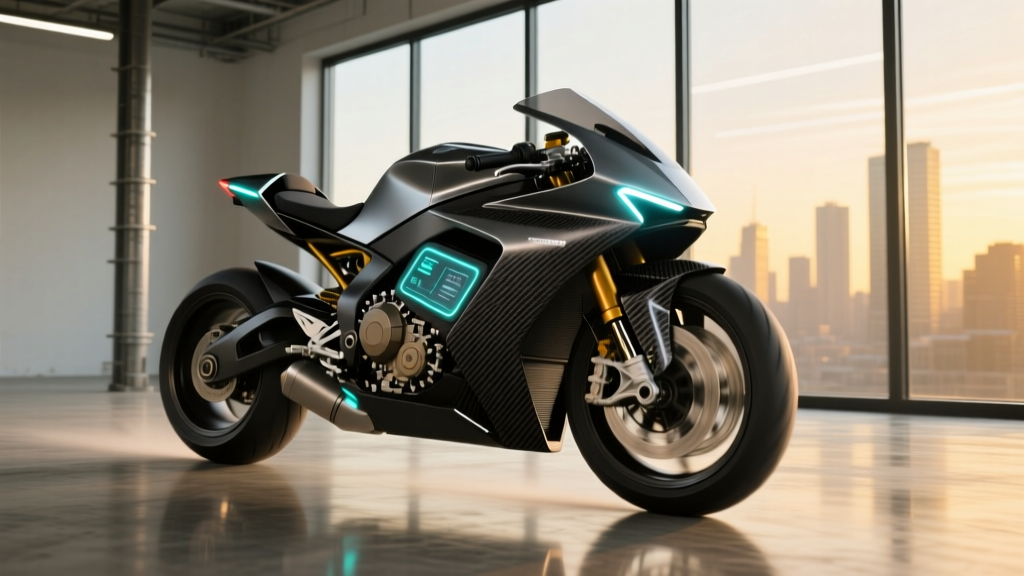
The Fastest Electric Motorbike in the World: Our Top Pick
🏆 Top Pick: Lightning LS-218
0–60 mph: ~2.0 seconds | Top Speed: 218 mph | Motor: 150 kW (201 HP) liquid-cooled IPM | Battery: 12–20 kWh (configurable) | MSRP: From $38,888
The Lightning LS-218 retains the title of fastest production electric motorbike in the world by top speed — a 218 mph figure achieved and validated at Bonneville. Its liquid-cooled 150 kW motor produces 201 HP and, critically, delivers full torque from standstill, yielding sub-2-second 0–60 runs that rival or beat any production superbike regardless of powertrain. The configurable battery pack (12 kWh for track use, up to 20 kWh for extended range) offers flexibility, though range remains the LS-218's compromise: expect 70–100 miles in mixed riding at the 20 kWh configuration. At $38,888 base, it's a low-volume, semi-custom machine — not a mass-market product — but nothing else in production surpasses its verified top speed.
Ranked Picks: Fastest Electric Motorbikes Available in 2026
#2 — Energica Ego+ RS
0–60 mph: ~2.6 seconds | Top Speed: 150 mph (limited) | Motor: 126 kW (169 HP) oil-cooled PMAC | Battery: 21.5 kWh (usable ~18.9 kWh) | MSRP: ~$28,000–$33,000 depending on trim
Why it made the list: The Energica Ego+ RS is the most well-rounded high-performance electric motorcycle you can actually buy from a dealer network. Its 21.5 kWh battery delivers a claimed 261 miles in city riding (WMTC cycle), though expect 100–130 miles in aggressive canyon or highway use. It supports DC fast charging via CCS at up to 24 kW — reaching 0–80% in approximately 40 minutes — making it the most practical fast electric motorcycle for touring. The oil-cooled motor avoids the thermal derating that plagues air-cooled competitors during repeated hard launches.
Best for: Riders who want superbike acceleration with real-world touring range and DC fast-charge capability.
#3 — Damon HyperSport Premier
0–60 mph: ~2.5 seconds (claimed) | Top Speed: 200 mph | Motor: 160 kW (215 HP) | Battery: 20 kWh | MSRP: ~$25,000
Why it made the list: Damon Motors' HyperSport Premier pairs a 200 mph top speed with its proprietary Shift digital windscreen and 360° awareness radar system — the most advanced ADAS suite on any production motorcycle. The 160 kW motor puts it in elite company for raw output. However, Damon is a newer manufacturer with limited production volume; delivery timelines have slipped historically, and dealer service infrastructure remains thin compared to Energica or Zero. Reserve with caution and verify delivery status.
Best for: Tech-forward riders who value active safety systems alongside extreme performance.
#4 — Zero SR/S
0–60 mph: ~3.0 seconds | Top Speed: 124 mph | Motor: 82 kW (110 HP) continuous / 140 kW (190 HP) peak | Battery: 15.8 kWh nominal (Z-Force 15.8) + optional Power Tank | MSRP: ~$23,995
Why it made the list: Zero Motorcycles has the most mature dealer and service network in electric motorcycles, and the SR/S is its faired sport-touring flagship. It won't win a top-speed contest, but its 3.0-second 0–60 is legitimately quick, and the optional Power Tank accessory extends total capacity to ~18.9 kWh for roughly 130–160 real-world miles. The Bosch MSC (Motorcycle Stability Control) and cornering ABS add a safety layer absent from smaller competitors. Charge time on Level 2 (6 kW onboard charger): approximately 2.5 hours from 0–95%.
Best for: Sport-touring riders prioritizing dealer support, proven reliability, and daily usability over outright top speed.
#5 — Energica Experia LR
0–60 mph: ~3.1 seconds | Top Speed: 112 mph | Motor: 90 kW (121 HP) | Battery: 22.5 kWh (largest in class) | MSRP: ~$26,000
Why it made the list: The Experia trades top-end speed for the largest battery in any production electric motorcycle at 22.5 kWh, yielding a claimed 256 miles of combined range (WMTC) and realistic 130–160 highway miles. It's the green-sport-tourer of the group — still very quick off the line thanks to instant electric torque, but optimized for distance. DC fast charging at 24 kW brings it from 0–80% in roughly 40 minutes.
Best for: Long-distance touring riders who want electric operation without constant range anxiety.
#6 — LiveWire ONE (Harley-Davidson Spin-Off)
0–60 mph: ~3.0 seconds | Top Speed: 110 mph | Motor: 78 kW (105 HP) | Battery: 15.4 kWh | MSRP: ~$21,999
Why it made the list: Backed by Harley-Davidson's dealer infrastructure, the LiveWire ONE offers the most accessible entry into fast electric motorcycling. Its 3.0-second 0–60 is genuinely thrilling, and the twist-and-go simplicity (no clutch, no gears) lowers the barrier for new riders. Range is its weak point: expect 70–95 real-world miles in mixed use, though the 105-mile EPA city figure is achievable in stop-and-go riding. DC fast charging (via CCS) reaches 0–80% in approximately 40 minutes at up to 24 kW.
Best for: Urban riders and new-to-EV motorcyclists who want dealer-backed support and straightforward performance.
#7 — Zero SR/F
0–60 mph: ~3.3 seconds | Top Speed: 124 mph | Motor: 82 kW continuous / 140 kW peak (190 HP) | Battery: 15.8 kWh | MSRP: ~$21,495
Why it made the list: The naked-sibling to the SR/S, the SR/F shares the same powertrain in a lighter, more upright package. It's a hair quicker in real-world roll-ons due to reduced weight and an exposed riding position that encourages aggressive throttle use. The 140 kW peak output and 140 lb-ft of torque are class-competitive, and the 3.3-second 0–60 still out-accelerates most 600cc gas supersport bikes.
Best for: Naked-bike enthusiasts who want instant torque and a lightweight, agile platform.
Spec Comparison: Fastest Electric Motorbikes Side by Side
| Model | 0–60 mph | Top Speed | Peak Motor (kW/HP) | Battery (kWh) | Real-World Range | MSRP |
|---|---|---|---|---|---|---|
| Lightning LS-218 | ~2.0 sec | 218 mph | 150 kW / 201 HP | 12–20 | 70–100 mi | $38,888+ |
| Energica Ego+ RS | ~2.6 sec | 150 mph | 126 kW / 169 HP | 21.5 | 100–130 mi | $28,000–$33,000 |
| Damon HyperSport Premier | ~2.5 sec | 200 mph | 160 kW / 215 HP | 20 | ~120 mi (claimed) | ~$25,000 |
| Zero SR/S | ~3.0 sec | 124 mph | 140 kW / 190 HP | 15.8 | 80–130 mi | $23,995 |
| Energica Experia LR | ~3.1 sec | 112 mph | 90 kW / 121 HP | 22.5 | 130–160 mi | ~$26,000 |
| LiveWire ONE | ~3.0 sec | 110 mph | 78 kW / 105 HP | 15.4 | 70–95 mi | $21,999 |
| Zero SR/F | ~3.3 sec | 124 mph | 140 kW / 190 HP | 15.8 | 80–120 mi | $21,495 |
Range figures reflect real-world mixed riding estimates based on manufacturer WMTC data adjusted downward 30–40% for highway/aggressive use. Actual range varies significantly with speed, temperature, rider weight, and terrain.
Budget Tiers: Performance Per Dollar
| Tier | Price Range | Models | What You Get |
|---|---|---|---|
| Entry Performance | $21,000–$24,000 | Zero SR/F, LiveWire ONE | 3.0–3.3 sec 0–60, 105–190 HP peak, 70–120 mi range, established dealer support |
| Mid-Range Sport | $24,000–$28,000 | Zero SR/S, Damon HyperSport, Energica Experia | 2.5–3.1 sec 0–60, 121–215 HP, DC fast charging available, touring range possible |
| Premium / Track | $28,000–$39,000+ | Energica Ego+ RS, Lightning LS-218 | Sub-2.6 sec 0–60, 150–218 mph top speed, race-bred components, limited production |
Tax Credits and Incentives: Do Electric Motorbikes Qualify?
This is where the electric motorbike market diverges sharply from electric cars. The federal §30D Clean Vehicle Credit — the up-to-$7,500 credit available for qualifying EVs — does NOT apply to motorcycles. The IRS defines eligible vehicles under §30D as four-wheeled vehicles with a gross vehicle weight rating (GVWR) under 14,000 lbs. Two- and three-wheeled electric vehicles are excluded.
There was previously a separate 10% credit (up to $2,500) for two-wheeled plug-in electric vehicles under IRC §30D(f), but that provision expired and has not been renewed as of the 2026 tax year. Always verify current status at IRS.gov clean vehicle credits before relying on any incentive.
State-level incentives vary: Some states (notably California, Colorado, and Oregon) have offered rebates or tax credits for electric motorcycles, typically ranging from $500 to $2,500. These programs change frequently and often have income caps or funding limits. Check your state's energy office or air resources board for current availability.
Which Fastest Electric Motorbike Should You Pick?
Choose the Lightning LS-218 if: You need the verified fastest production electric motorbike in the world by top speed, you have a $39K+ budget, and you accept limited range and semi-custom build timelines.
Choose the Energica Ego+ RS if: You want the best all-around package — superbike acceleration, touring range, DC fast charging, and a dealer network — without the LS-218's exotic pricing.
Choose the Damon HyperSport Premier if: You value cutting-edge safety technology (radar, cameras, digital windscreen) alongside 200 mph capability, and you're comfortable with a newer manufacturer's delivery risk.
Choose the Zero SR/S or SR/F if: Dealer support, proven reliability, and daily usability matter more than outright top speed. Zero's 15.8 kWh platform is mature, and the 190 HP peak motor is genuinely quick.
Choose the LiveWire ONE if: You want the lowest barrier to entry — Harley-backed dealerships, straightforward performance, and the simplest ownership experience in fast electric motorcycling.
Choose the Energica Experia LR if: Range is your priority. Its 22.5 kWh battery is the largest in the segment, and 130+ real-world miles makes multi-stop touring feasible with DC fast-charge breaks.
Key Technology Considerations for Fast Electric Motorbikes
kW vs. kWh — the critical distinction: Motor output is measured in kilowatts (kW), which is power — how fast the bike can accelerate and what top speed it can sustain. Battery capacity is measured in kilowatt-hours (kWh), which is energy — how far you can ride before recharging. A 160 kW motor in the Damon HyperSport is extremely powerful, but its 20 kWh battery limits how long that power can be sustained at maximum output.
Thermal management matters: Repeated hard launches generate enormous heat in the motor and inverter. Oil-cooled systems (Energica) and liquid-cooled systems (Lightning) resist thermal derating far better than passively cooled designs. If you plan to do multiple drag-strip runs or aggressive canyon rides, cooling architecture is as important as peak kW.
Charging infrastructure gap: Unlike electric cars, electric motorcycles have limited access to the DC fast-charging networks (Electrify America, EVgo, Tesla Superchargers). Most public chargers use CCS or NACS connectors designed for four-wheeled vehicles; adapter availability and physical charging-cable reach to a motorcycle's charge port are inconsistent. Energica's CCS compatibility offers the best public-charging access in the segment, but plan routes carefully. Home Level 2 charging (240V) remains the primary refueling method for most owners.
Range reality at speed: Aerodynamic drag increases with the square of velocity. An electric motorcycle that achieves 130 miles at 55 mph may deliver only 60–70 miles at sustained 80+ mph highway speeds. This physics penalty hits motorcycles harder than cars due to the rider's exposed frontal area. If your riding is predominantly highway, derate manufacturer range claims by 40–50%.
Frequently Asked Questions
What is the fastest electric motorbike in the world in 2026?
By verified top speed, the Lightning LS-218 holds the title at 218 mph, achieved at Bonneville. By 0–60 acceleration, the LS-218 also leads at approximately 2.0 seconds. Among higher-volume production models, the Damon HyperSport Premier claims a 200 mph top speed and ~2.5-second 0–60, though independent verification remains limited as of early 2026.
Can an electric motorcycle beat a gas superbike in acceleration?
Yes, in 0–60 sprints. The Lightning LS-218's ~2.0-second 0–60 matches or beats the Ducati Panigale V4 R (~2.8 sec) and BMW S1000RR (~2.9 sec). Electric motors deliver peak torque from 0 RPM with no clutch slip or gear shift delay, giving them an inherent launch advantage. However, gas superbikes typically surpass electric bikes in top-end roll-on performance above 120 mph and in sustained high-speed running due to multi-gear transmissions and larger fuel energy density.
Do electric motorcycles qualify for the $7,500 federal tax credit?
No. The IRS §30D Clean Vehicle Credit applies only to four-wheeled vehicles under 14,000 lbs GVWR. Motorcycles — including high-performance electric motorcycles — are excluded. A previous 10% credit (up to $2,500) for two-wheeled EVs has expired. Check IRS.gov for current rules and your state's energy office for possible local incentives.
How far can the fastest electric motorbikes actually go on a charge?
Real-world range varies enormously with riding style. The Energica Experia LR offers the best range at an estimated 130–160 miles in mixed riding, thanks to its 22.5 kWh battery. The Lightning LS-218, optimized for speed, manages just 70–100 miles even with its largest 20 kWh pack. At sustained highway speeds (75+ mph), expect all models to lose 30–50% of their rated range due to aerodynamic drag.
Are fast electric motorcycles practical for daily riding?
The Zero SR/S, Zero SR/F, and LiveWire ONE are the most daily-practical options, offering 70–130 real-world miles, standard 110V/240V charging, and established dealer networks for service. The Lightning LS-218 and Damon HyperSport are better suited as weekend or track machines due to limited range, higher cost, and thinner service infrastructure. For commuting under 50 miles round-trip with home charging, any model on this list is viable.
How long does it take to charge an electric motorcycle?
On a standard 120V household outlet (Level 1, ~1.2 kW), expect 10–18 hours for a full charge depending on battery size. On a 240V Level 2 home charger, most models charge fully in 2–4 hours. Energica models support DC fast charging via CCS at up to 24 kW, reaching 0–80% in approximately 40 minutes — the fastest public-charging option in the segment. Most other electric motorcycles lack DC fast-charge capability.
Sources: Manufacturer specification pages for Energica Motorcycles, Zero Motorcycles, Lightning Motorcycles, and LiveWire. Tax credit rules per IRS.gov §30D Clean Vehicle Credits. Range estimates adjusted from WMTC manufacturer data for real-world highway/aggressive riding conditions.