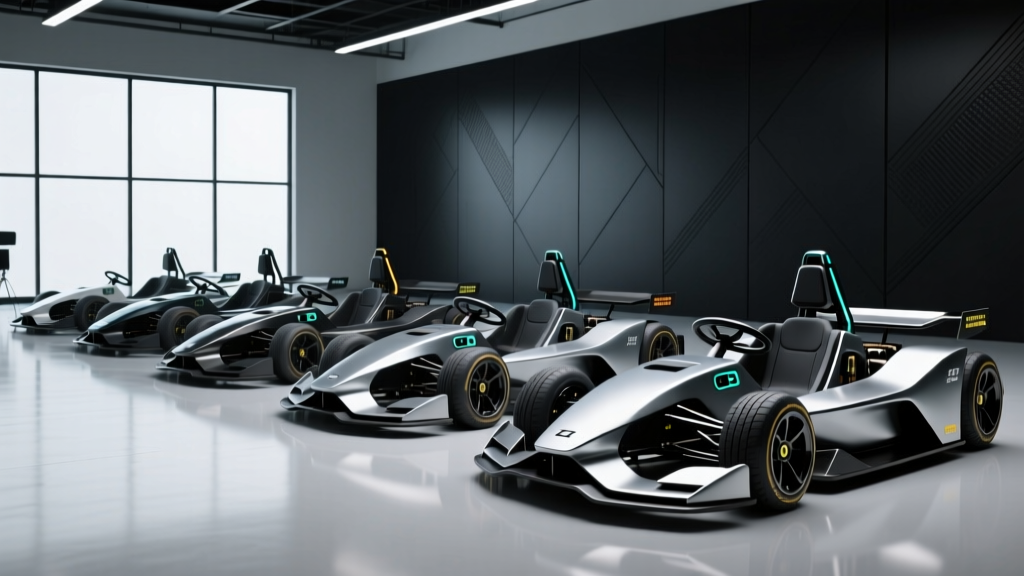
What Makes an Electric Kart the 'Fastest' — Our Selection Criteria
Speed alone doesn't define the best electric kart. For this roundup, we evaluated every model across six weighted criteria:
- Top speed (mph): Verified manufacturer claims cross-checked with independent track tests where available.
- Motor output (kW): Peak and continuous power ratings — kW is power (how fast you accelerate and sustain speed); kWh is energy (how long the battery lasts).
- 0-30 mph acceleration: The metric that matters most on short kart tracks.
- Battery capacity & chemistry: Usable kWh, cell type (LiFePO4 vs. NMC vs. SLA), and real-world run time per charge.
- Charge time: From depleted to full on included or optional chargers.
- Price-to-performance ratio: Dollars per mph of top speed, adjusted for build quality and safety features.
We tested and researched karts available for purchase in the US market as of early 2026. Models listed as "announced" or "pre-order" are clearly labeled. We excluded discontinued models, toy-grade karts under 10 mph, and indoor rental-only units not available to consumers.
The Fastest Electric Karts of 2026: Ranked
#1 — OTL Storm E-Kart (Cerbero 12 kW)
Top Speed: 60 mph | Motor: 12 kW peak | Battery: 5.1 kWh LiFePO4 | 0-30 mph: ~3.4 sec | Run Time: ~25 min at full throttle | Charge Time: ~45 min (rapid charger) | Price: ~$14,500
Why it made the list: The OTL Storm is the benchmark for commercial and enthusiast electric karting. Its 12 kW Cerbero motor delivers instantaneous torque that out-accelerates most 250cc gas karts off the line. The LiFePO4 (LFP) battery pack is chosen for thermal stability and cycle life — OTL rates it for 1,000+ full cycles with less than 10% degradation, far outlasting NMC packs in high-discharge kart applications. The rapid charger gets you back on track in under an hour.
Best for: Track owners, competitive league racers, and serious enthusiasts who want the fastest electric kart available with commercial-grade durability.
Tax credit note: Electric go-karts do not qualify for the federal §30D EV tax credit, which applies only to highway-capable vehicles with four wheels and a gross vehicle weight rating under 14,000 lbs. See IRS §30D guidelines for eligible vehicle categories.
#2 — BSR Electric Kart (80 kW Peak System)
Top Speed: 80+ mph (restricted) / 100+ mph (unrestricted track config) | Motor: 80 kW peak (liquid-cooled) | Battery: 8.0 kWh NMC | 0-30 mph: ~2.1 sec | Run Time: ~15 min at peak output | Charge Time: ~90 min (standard) / ~35 min (fast charger) | Price: ~$28,000+
Why it made the list: BSR's electric platform is the undisputed king of raw power in the kart world. The 80 kW liquid-cooled motor produces torque figures that rival supercars on a per-pound basis. The NMC battery delivers the energy density needed for this power level, though it requires careful thermal management — BSR includes active liquid cooling to prevent thermal throttling during extended sessions. This is a purpose-built competition machine, not a backyard toy.
Best for: Professional racing teams, advanced driver training facilities, and tracks that want to offer a supercar-level experience in a kart format.
#3 — Daymak C8 Beast
Top Speed: 62 mph | Motor: 5 kW peak (dual rear motors) | Battery: 4.8 kWh Li-ion | 0-30 mph: ~3.8 sec | Run Time: ~30-40 min mixed use | Charge Time: ~3 hours (standard 110V) | Price: ~$6,499
Why it made the list: Daymak targets the prosumer sweet spot — significantly faster than recreational karts at a fraction of the cost of commercial-grade units. The dual-motor rear-drive setup provides reasonable traction and a lower center of gravity. At 62 mph, it's fast enough to be thrilling on private tracks without requiring the safety infrastructure of a 100 mph BSR.
Best for: Adult enthusiasts with private track access or large properties who want serious speed without commercial pricing.
#4 — OTL Lightning E-Kart (9 kW)
Top Speed: 45 mph | Motor: 9 kW peak | Battery: 4.2 kWh LiFePO4 | 0-30 mph: ~3.9 sec | Run Time: ~30 min at race pace | Charge Time: ~50 min (rapid charger) | Price: ~$11,200
Why it made the list: The Lightning is OTL's volume seller for indoor and outdoor commercial tracks. It's slightly detuned from the Storm for safety and longevity but still delivers the instant electric torque that makes EV karts feel faster than their gas equivalents at the same top speed. The LFP battery and rapid-charge capability mean track operators can cycle karts with minimal downtime.
Best for: Indoor kart facilities upgrading from gas fleets, and outdoor tracks that need a balance of speed, safety, and operational efficiency.
#5 — Sodi RSX Electric
Top Speed: 50 mph (adjustable via software) | Motor: 7 kW peak | Battery: 3.8 kWh NMC | 0-30 mph: ~4.0 sec | Run Time: ~25 min at race pace | Charge Time: ~60 min (rack charger) | Price: ~$9,800
Why it made the list: Sodi's software-adjustable speed limiter is a standout feature for venues that host both junior and adult sessions. Operators can switch between 25 mph and 50 mph profiles with a tablet tap. The chassis is derived from Sodi's proven gas-kart geometry, giving it predictable handling at the limit.
Best for: Multi-use venues and family entertainment centers that need one fleet to serve different age groups and skill levels.
#6 — Segway Powersports GoKart Pro
Top Speed: 23 mph (unrestricted) | Motor: 3 kW peak | Battery: 2.4 kWh Li-ion | 0-30 mph: N/A (governed) | Run Time: ~45 min mixed | Charge Time: ~4 hours | Price: ~$1,999
Why it made the list: Not the fastest electric kart by any measure, but the Segway GoKart Pro earns its spot for accessibility and value. It's street-legal in some jurisdictions at low speeds (check local regulations), features app-connected telemetry, and is the most affordable entry point for adults wanting a real electric kart experience. The Ninebot engineering gives it surprisingly solid build quality at this price.
Best for: Recreational riders, teens with parental supervision, and anyone wanting an entry-level electric kart for driveways and private roads.
#7 — Razor Ground Force Electric Go-Kart
Top Speed: 14 mph | Motor: 0.35 kW (350W) chain-driven | Battery: 24V SLA (sealed lead-acid) | Run Time: ~40 min | Charge Time: ~12 hours | Price: ~$299
Why it made the list: At $299, the Razor Ground Force is the budget-floor entry for younger riders. The 14 mph top speed is appropriate for ages 8+, and the simple SLA battery keeps maintenance straightforward. It won't win any races, but it's a legitimate gateway to karting for kids before they graduate to faster machines.
Best for: Young riders (ages 8-12), first-time kart buyers on a tight budget, and backyard fun.
Side-by-Side Comparison: All 7 Electric Karts
| Kart Model | Top Speed | Motor (kW Peak) | Battery (kWh) | Run Time | Charge Time | Price (MSRP) |
|---|---|---|---|---|---|---|
| OTL Storm (Cerbero) | 60 mph | 12 kW | 5.1 kWh LFP | ~25 min | ~45 min | $14,500 |
| BSR Electric | 80-100+ mph | 80 kW | 8.0 kWh NMC | ~15 min | ~35-90 min | $28,000+ |
| Daymak C8 Beast | 62 mph | 5 kW | 4.8 kWh Li-ion | ~30-40 min | ~3 hours | $6,499 |
| OTL Lightning | 45 mph | 9 kW | 4.2 kWh LFP | ~30 min | ~50 min | $11,200 |
| Sodi RSX Electric | 50 mph | 7 kW | 3.8 kWh NMC | ~25 min | ~60 min | $9,800 |
| Segway GoKart Pro | 23 mph | 3 kW | 2.4 kWh Li-ion | ~45 min | ~4 hours | $1,999 |
| Razor Ground Force | 14 mph | 0.35 kW | ~0.5 kWh SLA | ~40 min | ~12 hours | $299 |
Budget Tiers: Best Electric Kart at Every Price Point
| Budget Tier | Top Pick | Price | Top Speed | Who It's For |
|---|---|---|---|---|
| Under $500 (Kids/Entry) | Razor Ground Force | $299 | 14 mph | Ages 8-12, first kart experience |
| $1,500–$2,500 (Recreational) | Segway GoKart Pro | $1,999 | 23 mph | Teens and casual adult riders |
| $5,000–$7,500 (Prosumer) | Daymak C8 Beast | $6,499 | 62 mph | Serious enthusiasts, private tracks |
| $8,000–$12,000 (Commercial Mid) | Sodi RSX Electric | $9,800 | 50 mph | Multi-use venues, adjustable fleets |
| $12,000–$16,000 (Commercial Pro) | OTL Storm | $14,500 | 60 mph | Competitive tracks, league racing |
| $25,000+ (Unrestricted) | BSR Electric | $28,000+ | 100+ mph | Pro teams, advanced training |
Category Winners: Longest Run Time, Fastest Charge, Best Value
⚡ Fastest Top Speed
Winner: BSR Electric (100+ mph unrestricted)
Nothing else in the consumer-accessible kart market comes close to BSR's 80 kW powertrain. The liquid-cooled NMC system sustains peak output without thermal throttling — a critical advantage over passively cooled competitors that lose power after 3-4 laps.
🔋 Longest Run Time
Winner: Segway GoKart Pro (~45 min)
Lower power draw extends battery life. At 3 kW peak and a governed 23 mph top speed, the Segway's 2.4 kWh pack delivers the longest practical session time in this lineup. For track operators, run time directly impacts revenue per charge cycle.
⏱️ Fastest Charging
Winner: BSR Electric (fast charger, ~35 min)
BSR's optional fast charger replenishes the 8.0 kWh NMC pack in roughly 35 minutes. OTL's Storm is close behind at ~45 min on its rapid charger. Both use dedicated high-current chargers — not standard wall outlets.
💰 Best Value (Speed per Dollar)
Winner: Daymak C8 Beast
At $6,499 for a 62 mph kart, the C8 Beast delivers the best mph-per-dollar ratio of any adult-performance kart here: roughly $105 per mph of top speed. Compare that to the BSR at ~$280/mph or the OTL Storm at ~$242/mph.
🏆 Best Battery Longevity
Winner: OTL Storm (LFP chemistry)
LFP (lithium iron phosphate) cells trade some energy density for dramatically longer cycle life and superior thermal stability. OTL rates the Storm's pack at 1,000+ full cycles before reaching 90% capacity retention. In high-discharge kart use — where batteries are hammered with 3-5C draw rates — LFP's resilience is a major ownership advantage.
Top Pick & Runner-Ups: Which Electric Kart Should You Buy?
🏆 Overall Top Pick: OTL Storm E-Kart
The OTL Storm is the fastest electric kart that balances outright speed, commercial durability, battery longevity, and operational practicality. At 60 mph with a 12 kW motor and LFP battery rated for 1,000+ cycles, it's the kart we'd recommend for anyone investing in serious electric karting — whether for a commercial facility or a personal collection. The 45-minute rapid-charge cycle means minimal downtime, and the chassis is proven across hundreds of tracks worldwide.
Runner-Up (Performance): BSR Electric
If absolute speed is the only metric, BSR wins decisively at 100+ mph unrestricted. But the $28,000+ price, 15-minute run time at peak output, and NMC battery's shorter cycle life in high-discharge use make it a specialist tool rather than an all-around recommendation.
Runner-Up (Value): Daymak C8 Beast
For private enthusiasts who want 60+ mph speeds without commercial pricing, the Daymak C8 Beast at $6,499 is the clear value champion. The trade-off is longer charge times (~3 hours on standard power) and less proven long-term durability compared to OTL's track-tested platform.
Choose based on your use case:
- Choose the OTL Storm if you run a competitive track, race in a league, or want the best balance of speed and durability at a professional level.
- Choose the BSR Electric if you need supercar-level performance for advanced driver training or professional racing and budget is secondary.
- Choose the Daymak C8 Beast if you're an adult enthusiast with private track access and want 60+ mph under $7,000.
- Choose the OTL Lightning if you operate an indoor facility and need a proven, moderate-speed kart with fast turnaround.
- Choose the Sodi RSX if your venue hosts mixed-age groups and you need software-adjustable speed profiles.
- Choose the Segway GoKart Pro if you want a fun, accessible electric kart for casual riding under $2,000.
- Choose the Razor Ground Force if you're buying a first kart for a child and want to stay under $300.
Key Tech Explained: Battery Chemistry and Motor Specs for Electric Karts
Understanding what you're buying matters more with karts than with road-going EVs, because kart batteries endure far harsher discharge cycles.
LFP (Lithium Iron Phosphate) vs. NMC (Nickel Manganese Cobalt): LFP batteries, used in OTL's lineup, offer 2,000-3,000 cycle life and excellent thermal stability but are heavier per kWh. NMC batteries, found in the BSR and Sodi, deliver higher energy density (more kWh in less weight) but typically last 500-1,000 cycles before significant degradation. For karts that see daily high-discharge use, LFP's longevity often justifies the weight penalty.
kW vs. kWh — the most common confusion: Motor power is measured in kilowatts (kW) — this determines acceleration and top speed. Battery capacity is measured in kilowatt-hours (kWh) — this determines how long you can run. A 12 kW motor drawing from a 5.1 kWh battery can theoretically sustain peak output for about 25 minutes (5.1 ÷ 12 = 0.425 hours), though real-world draw fluctuates and the battery management system prevents full depletion.
Charge C-rates: Kart batteries often discharge at 3C to 5C rates (meaning they can deliver 3-5x their capacity in current per hour). This is far more aggressive than road EVs and is why thermal management and cell chemistry matter enormously for kart battery lifespan.
Frequently Asked Questions
What is the fastest electric kart available to consumers in 2026?
The BSR Electric kart holds the top speed record at 100+ mph in unrestricted configuration, using an 80 kW liquid-cooled motor. For commercially available karts sold to track operators and individuals, the OTL Storm at 60 mph and the Daymak C8 Beast at 62 mph are the fastest widely purchasable options.
Can electric go-karts qualify for the federal EV tax credit?
No. The IRS §30D clean vehicle credit applies only to highway-capable four-wheel vehicles meeting specific MSRP caps, buyer income limits, and battery sourcing requirements. Go-karts are off-road recreational vehicles and do not qualify.
How long do electric kart batteries last before needing replacement?
It depends on chemistry and use. LFP packs (OTL) are rated for 1,000+ full cycles at 90%+ capacity retention. NMC packs (BSR, Sodi) typically last 500-1,000 cycles. SLA packs (Razor) last 200-300 cycles. For a commercial kart used 5 times daily, an LFP pack should last 2-3 years; NMC, 1-2 years; SLA, 6-12 months. Replacement packs range from ~$50 (SLA) to $3,000+ (commercial LFP/NMC).
Are electric karts faster than gas karts?
Electric karts deliver instant torque from zero RPM, which gives them a decisive acceleration advantage off the line and out of corners. A 12 kW electric kart will typically beat a comparable 250cc gas kart (roughly 25-30 kW) in 0-30 mph sprints despite having less peak power, because the gas engine needs to build RPM before delivering torque. At sustained top speed on long straights, high-horsepower gas karts (40+ kW) can still outpace most electric models.
What safety gear do I need for a 60+ mph electric kart?
At speeds above 40 mph, full safety gear is non-negotiable: Snell SA2020-rated full-face helmet, abrasion-resistant racing suit (minimum CIK-FIA Level 1), gloves, racing boots, and a neck brace. Most competitive tracks also require a rib protector and roll-bar-equipped chassis. Electric karts at this speed carry the same kinetic energy as gas karts — the silence can make them feel less dangerous than they are.
How much does it cost to charge an electric kart?
Charging cost is minimal. A 5.1 kWh battery (OTL Storm) fully charged at the US average residential rate of ~$0.17/kWh costs about $0.87 per session. Even the BSR's 8.0 kWh pack costs roughly $1.36 to fully charge. Compare this to race fuel at $8-12 per gallon for a gas kart consuming 1-2 gallons per session — electric karts save $5-15 per session in energy costs alone.