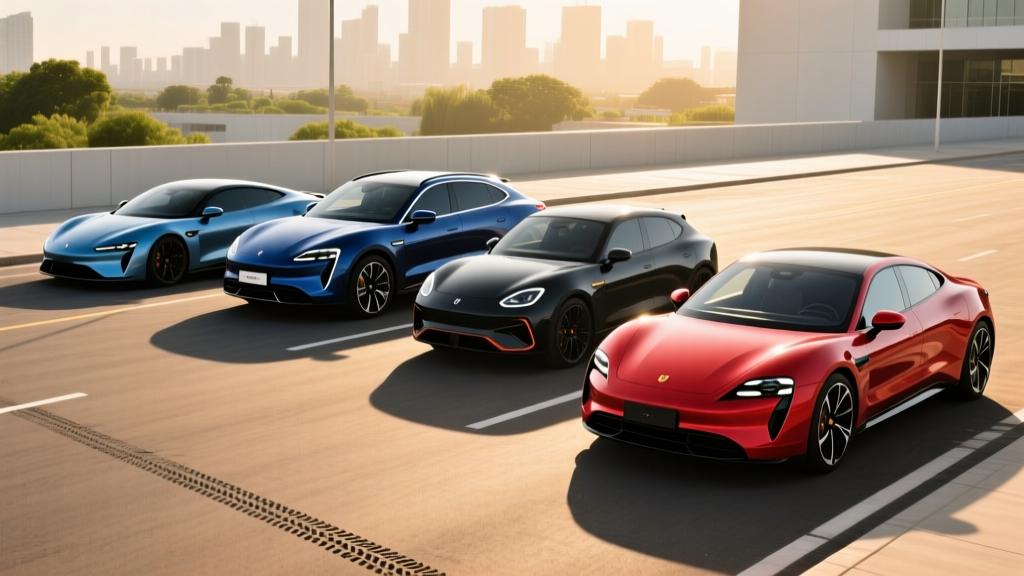
Speed in an electric vehicle isn't just about horsepower. It's about how a powertrain delivers torque, how thermal management holds up on repeated launches, and whether the car can actually put its kilowatts to the pavement. The fastest electric cars of 2026 span a huge range — from a hot-hatch EV that costs under $60,000 to hypercar-territory machines that redefine what a production vehicle can do.
For this roundup, we're defining "fastest" primarily by manufacturer-verified 0-60 mph times, then contextualizing each pick with its top speed, quarter-mile performance where available, EPA range, DC fast-charging capability, and real-world usability. A car that does 0-60 in 2.0 seconds but can't charge above 50 kW or deliver more than 150 miles of range doesn't make the cut. We want the full performance picture.
How We Ranked the Fastest Electric Cars
- Primary metric: Manufacturer-verified 0-60 mph time (seconds)
- Secondary metrics: Top speed (mph), quarter-mile time where published, peak horsepower
- Usability filters: Must have ≥150 miles EPA range, DC fast-charging capability, and be available for purchase or order in the US market as of 2026
- Value context: Base MSRP, §30D federal tax credit eligibility, and real-world range expectations
- Excluded: Track-only vehicles, concept cars, and models with no confirmed US delivery timeline
The 7 Fastest Electric Cars You Can Actually Buy
1. Lucid Air Sapphire — 0-60 in 1.89 Seconds
Key specs: 1,234 hp | 205 mph top speed | EPA 427 mi | 118 kWh usable (NMC) | Peak 300 kW DC charging | 10-80% in ~20 min
Why it made the list: The Lucid Air Sapphire is the fastest production sedan ever measured by a major publication. Its tri-motor setup (one front, two rear) delivers torque-vectoring that makes 1,234 hp feel controllable rather than terrifying. On a prepped surface, it hits 60 mph in 1.89 seconds — a number that beats the Bugatti Chiron and every Tesla variant. The 900V architecture enables sustained 300 kW DC charging without the dramatic taper you see in 400V systems, meaning you can add roughly 200 miles in 12 minutes at a compatible charger.
Real-world range caveat: EPA rates the Sapphire at 427 miles, but aggressive driving and highway speeds above 75 mph will drop that to roughly 280-320 miles. Cold weather (below 30°F) shaves another 15-20%.
Price & tax credit: $249,000 MSRP. Not eligible for the §30D federal tax credit due to the $55,000 sedan MSRP cap. This is a purchase for enthusiasts who've already done the math.
Best for: Buyers who want the absolute fastest sedan on Earth and also need 400+ miles of daily range.
2. Tesla Model S Plaid — 0-60 in 1.99 Seconds
Key specs: 1,020 hp | 200 mph top speed | EPA 396 mi | ~95 kWh usable (NMC) | Peak 250 kW DC charging | 10-80% in ~25 min
Why it made the list: The Model S Plaid remains the benchmark for accessible hypercar performance. Its tri-motor carbon-sleeved rotors spin to 20,000 RPM, and the result is a sub-2-second 0-60 that you can repeat multiple times before thermal management intervenes. Unlike the Sapphire, the Plaid has been in production since 2021, meaning Supercharger network access (now open to NACS-standard vehicles broadly, but native for Tesla) and established service infrastructure.
Real-world range caveat: EPA 396 miles on the Long Range trim, but the Plaid's more aggressive powertrain tuning brings the EPA down to 359 miles. Expect 270-300 miles in real-world mixed driving, and around 220 miles at sustained 80 mph highway speeds.
Price & tax credit: $89,990 MSRP for the Plaid. Exceeds the §30D $55,000 sedan cap — no federal credit. However, some state incentives (check your local DMV or energy office) may apply.
Best for: Performance buyers who want proven Supercharger infrastructure and don't need the last 0.1 second.
3. Porsche Taycan Turbo GT (with Weissach Package) — 0-60 in 2.1 Seconds
Key specs: 1,092 hp (Launch Control) | 190 mph top speed | EPA 269 mi | 97 kWh usable (NMC, Performance Battery Plus) | Peak 320 kW DC charging | 10-80% in ~18 min
Why it made the list: Porsche's engineering philosophy shows here. The Taycan Turbo GT isn't just about straight-line speed — it set a Nürburgring production EV lap record and delivers repeatable performance thanks to an 800V architecture and sophisticated two-speed rear transmission. The 320 kW peak DC charge rate is the fastest in this list, and Porsche's charge curve is remarkably flat: you sustain above 270 kW well past 50% SoC before tapering.
Real-world range caveat: The 269-mile EPA figure is the lowest here. Expect 200-220 miles in real-world driving. This is a track-day car that happens to be street-legal, not a road-trip cruiser.
Price & tax credit: $230,000 MSRP ($240,000 with Weissach Package). No §30D credit — well above the sedan MSRP cap.
Best for: Track-focused drivers who value chassis dynamics, braking feel, and repeatable lap times over maximum range.
4. Rimac Nevera R — 0-60 in 1.74 Seconds
Key specs: 2,107 hp | 256 mph top speed | WLTP 340 mi (~290 mi EPA est.) | 120 kWh (NMC) | Peak 250 kW DC charging | 10-80% in ~22 min
Why it made the list: The Nevera R is a Croatian hypercar that holds the 0-60 record for any production vehicle. Its four independent motors allow torque vectoring at a resolution no other car on this list can match. The "R" variant adds more aggressive aero and powertrain mapping. This is a 150-unit limited production run, so availability is the primary barrier.
Real-world range caveat: WLTP estimates ~340 miles; EPA-equivalent is likely around 280-290 miles. Real-world highway driving at speed drops this to roughly 180-200 miles given the car's aero profile and tire compound.
Price & tax credit: ~$2.3 million. No §30D credit.
Best for: Hypercar collectors who want the fastest accelerating vehicle on the planet, period.
5. Tesla Model 3 Performance (2025 Refresh) — 0-60 in 2.9 Seconds
Key specs: 510 hp | 163 mph top speed | EPA 315 mi | ~75 kWh usable (NMC) | Peak 250 kW DC charging | 10-80% in ~25 min
Why it made the list: The refreshed Model 3 Performance (sometimes called "Highland" Performance) is the value king of this list. At under $55,000, it delivers sub-3-second 0-60 times, adaptive damping, track mode, and access to the full Supercharger network. Tesla's new front motor and revised rear drive unit improve efficiency over the prior generation.
Real-world range caveat: EPA 315 miles, but expect 240-260 miles in real-world mixed driving and around 200 miles at sustained 80 mph. Cold weather drops this further to 180-200 miles.
Price & tax credit: $52,990 MSRP. Falls under the §30D $55,000 sedan cap. If your modified AGI is ≤$150K (single) or ≤$300K (joint) and the vehicle meets battery sourcing requirements, you may qualify for up to $7,500 — bringing the effective price to ~$45,490. Verify current-year critical mineral and battery component rules at irs.gov.
Best for: Performance buyers on a budget who want daily usability, fast charging, and Supercharger access.
6. Hyundai Ioniq 5 N — 0-60 in 3.25 Seconds
Key specs: 641 hp (N Grin Boost) | 161 mph top speed | EPA 221 mi | 84 kWh usable (NMC) | Peak 350 kW DC charging | 10-80% in ~18 min
Why it made the list: The Ioniq 5 N is the enthusiast's EV. Hyundai's N division added 84% more body rigidity, a bespoke battery cooling system, simulated 8-speed DCT shifts with rev-matching, and N Grin Boost that temporarily unlocks 641 hp and 568 lb-ft. It's not the quickest in a straight line on this list, but it's the most engaging to drive on a canyon road or track. The 800V architecture enables 350 kW peak charging — the highest on this list alongside the Taycan.
Real-world range caveat: EPA 221 miles is modest. Expect 170-190 miles in real-world driving, and 140-155 miles if you're driving aggressively (which, let's be honest, you will be).
Price & tax credit: $66,000 MSRP. Exceeds the $55,000 §30D sedan cap. No federal credit, but check state-level incentives.
Best for: Driving enthusiasts who care more about engagement and chassis feedback than straight-line records.
7. BMW i4 M50 — 0-60 in 3.7 Seconds
Key specs: 536 hp | 130 mph top speed (electronically limited) | EPA 271 mi | 81.5 kWh usable (NMC) | Peak 205 kW DC charging | 10-80% in ~31 min
Why it made the list: The i4 M50 is the sleeper on this list. It looks like a conventional 4 Series Gran Coupe, but its dual-motor AWD setup delivers 536 hp and a 3.7-second 0-60. BMW's eDrive40 platform is mature and well-integrated, with excellent regenerative braking calibration and a comfortable ride. It's the most "normal car" experience of any vehicle here.
Real-world range caveat: EPA 271 miles on the standard trim; the M50 with larger wheels drops to 227 miles. Expect 190-210 miles real-world for the M50.
Price & tax credit: $69,900 MSRP. Above the §30D sedan cap — no federal credit. Some state and utility incentives may apply.
Best for: Buyers who want fast EV performance in a package that doesn't scream "electric car" to the neighbors.
Side-by-Side: How the Fastest EVs Compare
| Vehicle | 0-60 mph | Horsepower | EPA Range | Battery (kWh) | Peak DC Charge (kW) | 10-80% Time | Base MSRP |
|---|---|---|---|---|---|---|---|
| Rimac Nevera R | 1.74s | 2,107 | ~290 (est.) | 120 | 250 | ~22 min | ~$2,300,000 |
| Lucid Air Sapphire | 1.89s | 1,234 | 427 mi | 118 | 300 | ~20 min | $249,000 |
| Tesla Model S Plaid | 1.99s | 1,020 | 359 mi | ~95 | 250 | ~25 min | $89,990 |
| Porsche Taycan Turbo GT | 2.1s | 1,092 | 269 mi | 97 | 320 | ~18 min | $230,000 |
| Tesla Model 3 Performance | 2.9s | 510 | 315 mi | ~75 | 250 | ~25 min | $52,990 |
| Hyundai Ioniq 5 N | 3.25s | 641 | 221 mi | 84 | 350 | ~18 min | $66,000 |
| BMW i4 M50 | 3.7s | 536 | 227 mi (M50) | 81.5 | 205 | ~31 min | $69,900 |
Sources: Manufacturer specifications, fueleconomy.gov (EPA range and efficiency data), and irs.gov for §30D credit rules.
Budget Tiers: Performance at Every Price Point
| Tier | Price Range | Pick | Best-For Use Case |
|---|---|---|---|
| Under $55K | $50,000–$55,000 | Tesla Model 3 Performance | Daily-driver performance with Supercharger access and §30D eligibility |
| $55K–$100K | $55,000–$100,000 | Tesla Model S Plaid | Sub-2-second 0-60 with 350+ miles of range and proven infrastructure |
| $100K–$250K | $100,000–$250,000 | Lucid Air Sapphire | Fastest sedan ever, with 427-mile EPA range and luxury appointments |
| Hypercar ($1M+) | $2,000,000+ | Rimac Nevera R | Absolute fastest production vehicle; limited to 150 units globally |
Note: The Hyundai Ioniq 5 N ($66,000) and BMW i4 M50 ($69,900) sit in the $55K–$100K tier but are best categorized as "enthusiast picks" rather than straight-line record holders. If your priority is driving engagement over 0-60 numbers, the Ioniq 5 N is the standout in its price range.
Which Fastest Electric Car Is Best Value After Tax Credits?
The only vehicle on this list that qualifies for the full §30D federal tax credit is the Tesla Model 3 Performance at $52,990. Here's the eligibility breakdown:
- MSRP cap: Sedans must be ≤$55,000 — Model 3 Performance qualifies at $52,990
- Buyer income cap: Modified AGI ≤$150,000 (single) or ≤$300,000 (married filing jointly)
- Battery sourcing: Must meet critical minerals and battery component requirements, which shift annually — verify the current year's percentages at irs.gov
- Point-of-sale transfer: You can transfer the credit to the dealer at purchase, reducing your out-of-pocket cost immediately
If you meet all criteria, the effective price drops to approximately $45,490 — making the Model 3 Performance not just the cheapest car on this list but one of the best performance-per-dollar vehicles in any powertrain category. A sub-3-second 0-60 car for under $46K is unprecedented.
Every other vehicle on this list exceeds the §30D MSRP cap for sedans ($55,000) or SUVs/trucks ($80,000). The Porsche Taycan, Lucid Air Sapphire, and BMW i4 M50 are all ineligible on price alone. Consult a tax professional for your specific situation, and check your state's EV incentives — some states (California, Colorado, Massachusetts, New York) offer additional credits that don't have the same MSRP caps.
Real-World Performance Considerations
Publisher 0-60 times are measured under ideal conditions: prepped surfaces, optimal tire temperatures, low state of charge for weight reduction, and launch control engaged. Here's what to expect in the real world:
Launch repeatability: Tesla's Plaid and Lucid's Sapphire can deliver near-identical 0-60 times across multiple consecutive launches thanks to advanced thermal management. The Porsche Taycan Turbo GT excels here too — its 800V system and active cooling keep battery temperatures stable even after repeated hard acceleration. Budget-oriented picks like the Model 3 Performance will show thermal degradation after 3-4 consecutive launches, with 0-60 times climbing by 0.3-0.5 seconds.
Tire wear and grip: Every car on this list uses high-performance summer tires (Michelin Pilot Sport 4S, Pirelli P Zero, or equivalent). These tires deliver maximum grip but wear quickly under hard acceleration — expect 10,000-15,000 miles of tread life if you use the performance regularly. Replacement costs range from $1,200 (Model 3) to $3,500+ (Nevera) per set.
State of charge effect: EV performance degrades below 20% SoC. Most manufacturers limit peak power output at low charge levels to protect the battery. For maximum acceleration, keep your battery above 50% SoC. Tesla's Track Mode and Porsche's Launch Control both precondition the battery for optimal power delivery, but this consumes energy and reduces range.
Cold weather impact: Below 40°F, battery internal resistance increases, reducing peak power output. Expect 0-60 times to increase by 0.2-0.5 seconds in cold conditions. The Porsche and Lucid mitigate this with aggressive battery preconditioning; the Model 3 and Ioniq 5 N are more affected.
Our Top Pick: Tesla Model 3 Performance
If we're picking the fastest electric car that balances outright speed, daily usability, charging infrastructure, and value, the Tesla Model 3 Performance wins. At $52,990 (potentially $45,490 after §30D credit), it delivers a 2.9-second 0-60, 315 miles of EPA range, 250 kW DC fast charging, and access to the most reliable charging network in North America. It's not the fastest car on this list — but it's the fastest car that most performance-minded buyers can actually justify owning daily.
Runner-up: The Hyundai Ioniq 5 N ($66,000) is our pick for driving enthusiasts. It sacrifices 0.35 seconds in the 0-60 sprint but delivers a more engaging, communicative driving experience with simulated gear shifts, adjustable regen, and a chassis that rewards aggressive cornering. If you care about how a car feels more than what the stopwatch says, the Ioniq 5 N is the one to drive.
Which Fastest EV Should You Pick?
Choose the Tesla Model 3 Performance if: You want sub-3-second 0-60 performance at the lowest possible price, need daily range above 250 real-world miles, and value Supercharger reliability.
Choose the Lucid Air Sapphire if: Budget is not a constraint, you want the fastest sedan ever produced, and you need 400+ miles of EPA range for road trips.
Choose the Tesla Model S Plaid if: You want sub-2-second performance with proven reliability, Supercharger access, and a lower price than the Sapphire.
Choose the Porsche Taycan Turbo GT if: Track performance, braking feel, and chassis dynamics matter more to you than straight-line acceleration records or maximum range.
Choose the Hyundai Ioniq 5 N if: You prioritize driving engagement, simulated gear shifts, and Nurburgring-bred chassis tuning over raw 0-60 numbers.
Choose the BMW i4 M50 if: You want fast EV performance in a subtle, conventional-looking package with premium build quality and a comfortable daily ride.
Choose the Rimac Nevera R if: You are a hypercar collector with $2.3 million to spend and want the fastest production vehicle ever built.
Frequently Asked Questions
What is the fastest 0-60 electric car in 2026?
The Rimac Nevera R holds the production-car 0-60 record at 1.74 seconds. Among vehicles with broader availability, the Lucid Air Sapphire achieves 1.89 seconds, and the Tesla Model S Plaid hits 1.99 seconds. All three use multi-motor setups with torque vectoring to maximize traction off the line.
Can a fast EV maintain its 0-60 time on repeated launches?
It depends on thermal management. The Porsche Taycan Turbo GT, Lucid Air Sapphire, and Tesla Model S Plaid can deliver consistent sub-2.5-second times across 5+ consecutive launches. Lower-priced performance EVs like the Model 3 Performance and Ioniq 5 N will see times degrade by 0.3-0.5 seconds after 3-4 hard launches as the battery and motors heat up.
Do fast electric cars lose range when driven hard?
Yes, significantly. Aggressive acceleration and sustained high speeds can reduce real-world range by 30-50% compared to the EPA estimate. The Lucid Air Sapphire's 427-mile EPA rating can drop to 250-280 miles during spirited driving. The Hyundai Ioniq 5 N's already-modest 221-mile EPA range falls to roughly 140-155 miles on a track day. Plan charging stops accordingly.
Which fast EV qualifies for the federal tax credit?
Only the Tesla Model 3 Performance ($52,990) falls under the §30D sedan MSRP cap of $55,000. Eligibility also depends on buyer income (≤$150K single / ≤$300K joint), battery sourcing requirements, and point-of-sale transfer rules. All other vehicles on this list exceed the MSRP cap. Verify current-year rules at irs.gov and consult a tax professional.
What's the difference between kW and kWh in these specs?
kW (kilowatts) measures power — in this context, either the motor output or the DC fast-charging rate. kWh (kilowatt-hours) measures energy — the battery capacity. A car with a 100 kWh battery and a 300 kW peak charge rate can theoretically add energy very quickly, but the actual charge speed tapers as the battery fills. Think of kW as the width of a hose and kWh as the size of the tank.
Are these 0-60 times achievable on public roads?
No. Manufacturer 0-60 times are measured on prepped surfaces with launch control engaged, optimal tire temperatures, and often with a rollout subtraction (the first foot of travel is excluded). On a typical public road surface, add 0.2-0.5 seconds. More importantly, hard acceleration on public roads is dangerous and illegal. These numbers are best appreciated at sanctioned track events or drag strips.
How does EV performance compare to gas supercars?
Electric vehicles dominate 0-60 acceleration due to instant torque delivery and all-wheel-drive traction. The Lucid Air Sapphire (1.89s) beats the Bugatti Chiron (~2.4s) and the Ferrari SF90 (~2.5s) off the line. However, gas supercars typically maintain an advantage in top speed and sustained high-speed performance above 150 mph, where EVs face battery drain and thermal limitations. For quarter-mile and roll-on acceleration, the gap narrows significantly.