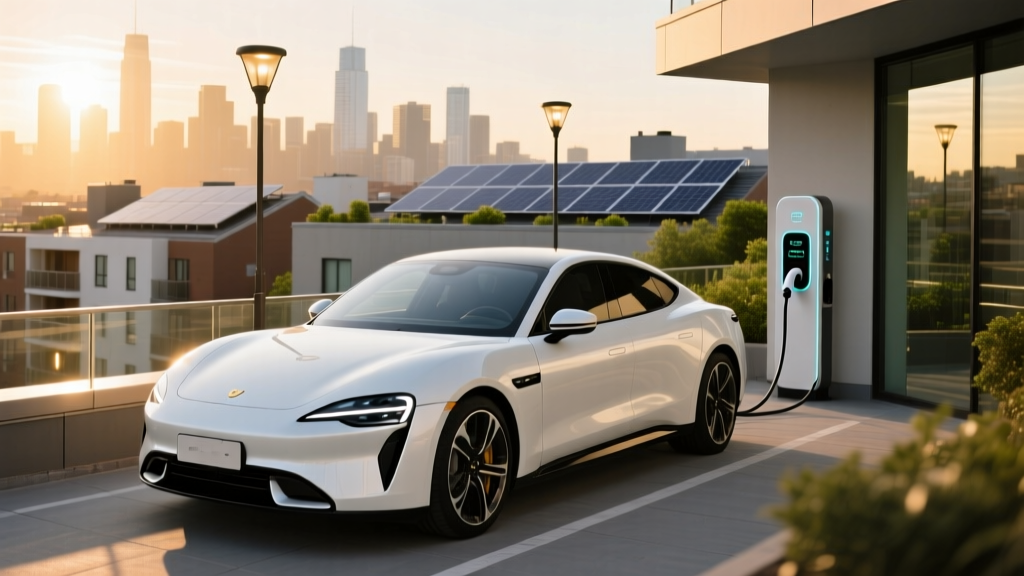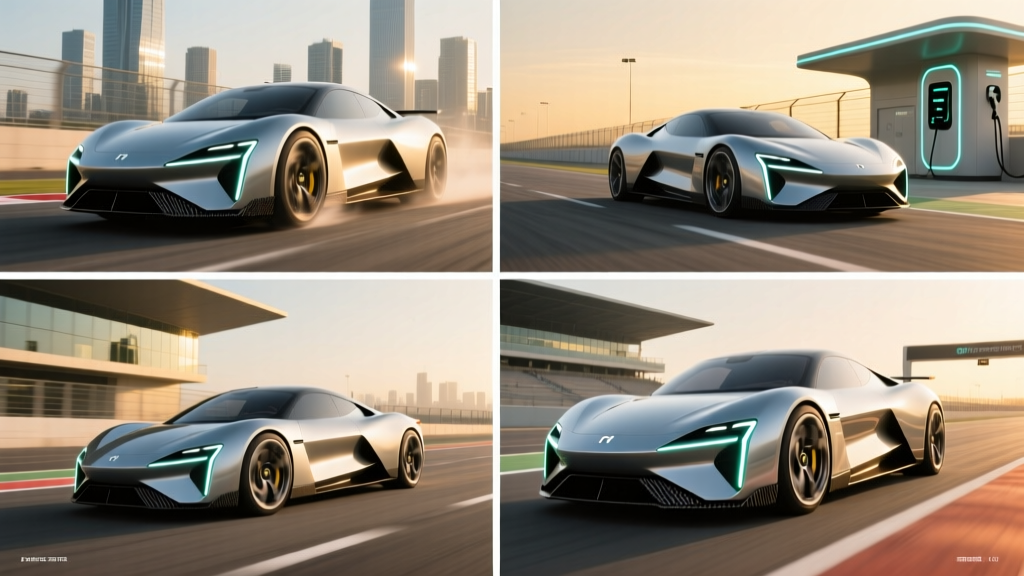
If you're searching for the fastest electric car in the world, you're looking at a very specific slice of the EV market: hypercars and ultra-performance sedans that trade efficiency and practicality for physics-defying acceleration. But "fast" means different things to different buyers. Is it 0-60 mph time? Top speed? Quarter-mile ET? Nürburgring lap time? Sustained track performance without thermal throttling?
For this 2026 ranking, we evaluated every currently-production electric vehicle that qualifies as a legitimate performance contender, prioritizing verifiable manufacturer data, independent instrumented testing (MotorTrend, Car and Driver, Hagerty), and real-world thermal management capability. We excluded concept cars, limited-run vehicles that have already sold out with no remaining availability, and any model that hasn't published verifiable 0-60 or top-speed figures.
Selection Criteria
- Primary metric: Verified 0-60 mph time (manufacturer or independent test)
- Secondary metrics: Top speed, quarter-mile time, sustained track capability (thermal management)
- Tertiary: Range, charging speed, and daily usability — because even hypercars need to be driven to events
- Eligibility: Currently in production, orderable or available through certified dealers/allocations in 2026
- Sources: EPA fueleconomy.gov, manufacturer spec sheets, instrumented tests from MotorTrend, Car and Driver, and Hagerty
The 7 Fastest Electric Cars in the World for 2026
#1 — Rimac Nevera (Fastest Overall)
0-60 mph: 1.74 seconds | Top Speed: 258 mph | Quarter-Mile: 8.58 sec | Power: 1,914 HP (1,427 kW) | Battery: 120 kWh (NMC) | Range: ~287 miles (WLTP) / ~240 miles EPA-estimated | DC Fast Charge: 500 kW peak | Price: ~$2,400,000 (150 units built, allocations secondary market only)
Why it's #1: The Nevera holds the production EV 0-60 record at 1.74 seconds — verified by independent testing — and simultaneously holds the top-speed record for an EV at 258 mph. No other production vehicle, electric or combustion, has matched both figures simultaneously. Rimac's four-motor torque-vectoring system delivers 1,740 lb-ft of torque with individual wheel control, and the liquid-cooled battery pack is engineered for repeated hard launches without thermal derating.
Best for: Hypercar collectors and track-day enthusiasts who want the undisputed performance king. Not a daily driver.
Tax credit: Not eligible — exceeds §30D MSRP cap and is not assembled in North America. See IRS §30D rules.
#2 — Lucid Air Sapphire (Fastest Sedan)
0-60 mph: 1.89 seconds | Top Speed: 205 mph | Quarter-Mile: 8.95 sec | Power: 1,234 HP (920 kW) | Battery: 118 kWh (NMC) | Range: 427 miles (EPA) | DC Fast Charge: 300 kW peak, 10-80% in ~20 min | Price: $249,000 MSRP
Why it's #2: The Sapphire is the fastest production sedan ever built. Its tri-motor setup (one front, two rear) delivers supercar acceleration in a four-door package with class-leading 427-mile EPA range. MotorTrend's instrumented test confirmed 1.89 seconds to 60 mph on a prepped surface. Unlike the Nevera, the Sapphire is a genuine daily driver with a full-size trunk, usable rear seats, and access to the Tesla Supercharger network via Lucid's NACS adapter.
Best for: Executives and enthusiasts who want hypercar acceleration with 400+ mile daily range and genuine four-door practicality.
Tax credit: Not eligible — exceeds the §30D MSRP cap of $55,000 for sedans.
#3 — Tesla Model S Plaid (Best Value Hyper-Sedan)
0-60 mph: 1.99 seconds | Top Speed: 200 mph (with track package) | Quarter-Mile: 9.23 sec | Power: 1,020 HP (761 kW) | Battery: 100 kWh (NMC) | Range: 396 miles (EPA) | DC Fast Charge: 250 kW peak (Supercharger), 10-80% in ~25 min | Price: $89,990 MSRP (before potential incentives)
Why it's #3: At under $90,000, the Plaid delivers sub-2-second 0-60 performance that costs 2-3x more from any competitor. Car and Driver confirmed 1.99 seconds on VHT-prepped surface. The tri-motor powertrain uses carbon-sleeved rotors to sustain 200 mph without thermal limiting. Tesla's Supercharger network (17,000+ stalls in North America) makes it the most road-trip-capable hyper-sedan. The yoke steering is polarizing but offers unobstructed cluster visibility.
Best for: Performance buyers who want the best acceleration-per-dollar ratio and the most robust charging infrastructure access.
Tax credit: Not eligible for new-vehicle §30D credit — exceeds $55,000 sedan MSRP cap. However, used Plaid models (2+ years old) may qualify for the $4,000 used-EV credit if buyer income is under §30D limits.
#4 — Porsche Taycan Turbo GT with Weissach Package (Fastest Track EV)
0-60 mph: 2.1 seconds | Top Speed: 190 mph | Quarter-Mile: 9.4 sec | Power: 1,092 HP (815 kW) in Launch Control | Battery: 105 kWh (NMC, Performance Battery Plus) | Range: 269 miles (EPA) | DC Fast Charge: 320 kW peak, 10-80% in ~18 min | Price: $230,000 MSRP (Turbo GT) / $244,000 (with Weissach)
Why it's #4: The Taycan Turbo GT holds the production EV lap record at the Nürburgring Nordschleife (6:57.6). Porsche's 800-volt architecture enables sustained high-power output without the thermal throttling that plagues lesser EVs on track. The Weissach Package deletes rear seats and adds carbon-fiber aero for 157 lbs of weight reduction and increased downforce. Real-world track testing shows consistent lap times within 1-2 seconds across multiple hot laps — a testament to Porsche's thermal management engineering.
Best for: Track-day purists who prioritize lap consistency and handling precision over straight-line drag racing numbers.
Tax credit: Not eligible — exceeds MSRP cap, not assembled in North America.
#5 — Lotus Eletre R (Fastest Electric SUV)
0-60 mph: 2.9 seconds | Top Speed: 165 mph | Power: 905 HP (675 kW) | Battery: 112 kWh (NMC) | Range: 304 miles (EPA-estimated) | DC Fast Charge: 350 kW peak, 10-80% in ~20 min | Price: $120,000 MSRP (estimated, US deliveries 2026)
Why it's #5: The Eletre R is the fastest-accelerating electric SUV currently in production, beating the Tesla Model X Plaid to 60 mph by 0.1 seconds. Lotus's 900-volt architecture enables exceptional charging speeds, and the active aero package generates up to 198 lbs of downforce at speed. Air suspension with active damping keeps the 5,900-lb vehicle composed through corners. US-spec models are arriving in 2026 with NACS compatibility.
Best for: Performance SUV buyers who want supercar acceleration with cargo space and ground clearance.
Tax credit: Not eligible — exceeds $80,000 SUV MSRP cap, not assembled in North America.
#6 — Tesla Model X Plaid (Fastest Family SUV)
0-60 mph: 2.5 seconds | Top Speed: 163 mph | Power: 1,020 HP (761 kW) | Battery: 100 kWh (NMC) | Range: 326 miles (EPA) | DC Fast Charge: 250 kW peak, 10-80% in ~28 min | Price: $94,990 MSRP
Why it's #6: A three-row, seven-passenger SUV that hits 60 mph in 2.5 seconds remains absurd. The Model X Plaid uses the same tri-motor powertrain as the Model S Plaid but tuned for the heavier SUV platform. Falcon-wing doors, 326-mile EPA range, and Supercharger access make it genuinely practical for family road trips. Real-world highway range drops to ~260 miles at 75 mph sustained — still enough for most legs between Superchargers.
Best for: Families who need three rows of seating but refuse to sacrifice straight-line performance.
Tax credit: Not eligible for new-vehicle credit (exceeds $80,000 SUV MSRP cap). Used models may qualify for $4,000 used-EV credit.
#7 — BMW iX M60 (Fastest Luxury Crossover Under $120K)
0-60 mph: 3.6 seconds | Top Speed: 155 mph (electronically limited) | Power: 610 HP (455 kW) | Battery: 111.5 kWh (NMC) | Range: 296 miles (EPA) | DC Fast Charge: 200 kW peak, 10-80% in ~31 min | Price: $111,500 MSRP
Why it's #7: The iX M60 doesn't compete on outright 0-60 numbers against the hypercars above, but it delivers M-car acceleration in a refined luxury crossover with genuine daily-driver comfort. BMW's xDrive all-wheel-drive system and rear-biased torque distribution provide engaging handling. The cabin materials and build quality surpass everything else on this list. Range is EPA-verified at 296 miles, with real-world highway testing yielding ~250 miles.
Best for: Luxury buyers who want brisk performance without the track-focused compromises of a Taycan Turbo GT.
Tax credit: Not eligible — exceeds $80,000 SUV MSRP cap, assembled in Germany.
Head-to-Head: Full Spec Comparison
| Model | 0-60 mph | Top Speed | HP | Battery (kWh) | EPA Range | Peak DC kW | MSRP |
|---|---|---|---|---|---|---|---|
| Rimac Nevera | 1.74s | 258 mph | 1,914 | 120 (NMC) | ~240 mi | 500 | $2,400,000 |
| Lucid Air Sapphire | 1.89s | 205 mph | 1,234 | 118 (NMC) | 427 mi | 300 | $249,000 |
| Tesla Model S Plaid | 1.99s | 200 mph | 1,020 | 100 (NMC) | 396 mi | 250 | $89,990 |
| Porsche Taycan Turbo GT | 2.1s | 190 mph | 1,092 | 105 (NMC) | 269 mi | 320 | $230,000 |
| Lotus Eletre R | 2.9s | 165 mph | 905 | 112 (NMC) | ~304 mi | 350 | $120,000 |
| Tesla Model X Plaid | 2.5s | 163 mph | 1,020 | 100 (NMC) | 326 mi | 250 | $94,990 |
| BMW iX M60 | 3.6s | 155 mph | 610 | 111.5 (NMC) | 296 mi | 200 | $111,500 |
Real-World Performance: What the Spec Sheet Doesn't Tell You
Manufacturer 0-60 times are almost always measured on VHT-prepped drag strips with optimal tire temperature, low wind, and launch control engaged. In real-world conditions — standard asphalt, ambient temperatures between 40-90°F, and street tires — expect 0-60 times to increase by 0.2-0.5 seconds across the board.
Thermal management is the real differentiator. The Rimac Nevera and Porsche Taycan Turbo GT can sustain repeated hard launches and high-speed runs without power derating. The Tesla Model S Plaid will thermally limit after 2-3 consecutive hard launches, reducing peak output to protect the battery and motors. Lucid's Sapphire has shown excellent thermal resilience in independent testing, maintaining near-peak power through 5+ consecutive runs.
Range at speed matters. At sustained 100+ mph highway driving (track transit or Autobahn-style roads), expect range to drop 35-50% from EPA figures. The Lucid Air Sapphire's 427-mile EPA rating still delivers ~260 miles at high speed — enough for most track-day transit without charging. The Taycan Turbo GT's 269-mile EPA range drops to ~160 miles under aggressive driving, requiring strategic charging stops for longer track events.
Charging curve taper is critical for track-day logistics. All vehicles on this list experience significant charge-rate taper above 80% SoC. The Porsche Taycan's 800V architecture sustains near-peak rates longer than competitors — holding 270+ kW through 50% SoC before tapering. Tesla's 250 kW peak is brief, dropping to ~150 kW by 50% and ~80 kW by 80%. Plan charging stops accordingly: a 10-80% charge is fast; an 80-100% top-off takes nearly as long as the first 70%.
Budget Tiers: Performance at Every Price Point
| Tier | Price Range | Picks | Best For |
|---|---|---|---|
| Hypercar Collector | $2M+ | Rimac Nevera | Absolute performance records; investment-grade collectible |
| Ultra-Luxury Performance | $200K-$300K | Lucid Air Sapphire, Porsche Taycan Turbo GT | Daily-drivable supercars with track capability |
| Accessible Performance | $80K-$120K | Tesla Model S Plaid, Tesla Model X Plaid, BMW iX M60 | Best acceleration-per-dollar; family practicality |
| Emerging Contenders | $100K-$150K | Lotus Eletre R | SUV performance with premium luxury positioning |
Top Pick & Runner-Ups
🏆 Top Pick: Lucid Air Sapphire
The Sapphire is the best overall package for 95% of performance-EV buyers. It delivers sub-1.9-second 0-60 acceleration (within 0.15 seconds of the $2.4M Nevera), holds a genuine 427-mile EPA range, charges at 300 kW, seats four adults comfortably, and costs $249,000 — a fraction of hypercar pricing. It's the only vehicle on this list that can serve as a daily commuter, a cross-country road-tripper, and a credible track car without compromise.
Runner-Up (Best Value): Tesla Model S Plaid at $89,990. Nothing else delivers sub-2-second acceleration under $100K. Supercharger network access and proven reliability make it the pragmatic performance choice.
Runner-Up (Track Focus): Porsche Taycan Turbo GT. If lap times matter more than drag-strip numbers, the Taycan's chassis balance, braking performance, and thermal endurance are unmatched among electric vehicles.
Frequently Asked Questions
What is the fastest electric car in the world by 0-60 time?
The Rimac Nevera holds the verified production-EV record at 1.74 seconds to 60 mph, tested independently. Among vehicles you can still order new in 2026, the Lucid Air Sapphire at 1.89 seconds is the fastest available.
What is the fastest electric car by top speed?
The Rimac Nevera at 258 mph. Among sedans, the Lucid Air Sapphire reaches 205 mph, and the Tesla Model S Plaid hits 200 mph with the optional track package.
Can any of these cars qualify for the federal EV tax credit?
No. The §30D federal tax credit caps eligibility at $55,000 MSRP for sedans and $80,000 for SUVs/trucks. Every vehicle on this list exceeds those limits. Additionally, most are not assembled in North America, which is a separate eligibility requirement. Used models (2+ years old) may qualify for the $4,000 used-EV credit if buyer income falls under §30D limits ($150K single / $300K joint).
How does the Tesla Model S Plaid compare to the Lucid Air Sapphire?
The Sapphire is 0.1 seconds quicker to 60 mph (1.89 vs 1.99), has 31 more miles of EPA range (427 vs 396), and charges 50 kW faster (300 vs 250 kW peak). The Plaid costs $159,000 less ($89,990 vs $249,000) and has access to Tesla's Supercharger network natively. For pure value, the Plaid wins. For maximum performance and range, the Sapphire is superior.
Which of these cars is best for track days?
The Porsche Taycan Turbo GT with Weissach Package. It holds the EV Nürburgring record, has the most sophisticated thermal management system for sustained high-output driving, and offers the best brake-by-wire modulation for trail-braking. The Nevera is faster in a straight line but is not optimized for repeated lap consistency.
Do these cars lose performance in cold weather?
Yes. All lithium-ion batteries (NMC chemistry across this list) experience increased internal resistance in cold temperatures. Expect 0-60 times to increase by 0.1-0.3 seconds below 40°F, and range to drop 20-35% in freezing conditions. Battery preconditioning (available on all models listed) mitigates this by warming the pack before hard acceleration or fast charging.
What's the cheapest way to get sub-3-second 0-60 in an EV?
The Tesla Model S Plaid at $89,990 is the least expensive vehicle on this list and the only sub-$100K option that breaks 2 seconds. For sub-3-second times, the Tesla Model X Plaid ($94,990) and Lotus Eletre R (~$120,000) are the next most affordable options.
Final Decision Framework
- Choose the Rimac Nevera if: You want the absolute fastest production EV ever built, budget is not a constraint, and you're buying as a collector/investment piece.
- Choose the Lucid Air Sapphire if: You want near-Nevera performance in a daily-drivable four-door sedan with 400+ mile range and are willing to pay $249K.
- Choose the Tesla Model S Plaid if: You want the best acceleration-per-dollar in the world, value Supercharger network access, and can accept the yoke steering controversy.
- Choose the Porsche Taycan Turbo GT if: Track lap times and handling precision matter more than straight-line drag numbers, and you value Porsche's build quality and dealer network.
- Choose the Tesla Model X Plaid if: You need three rows of seating and cargo space but refuse to give up supercar acceleration.
- Choose the BMW iX M60 if: You want luxury-crossover refinement with brisk (but not record-breaking) performance and don't need sub-3-second times.