Why This Topic Falls Outside AutoEdgeView's Scope
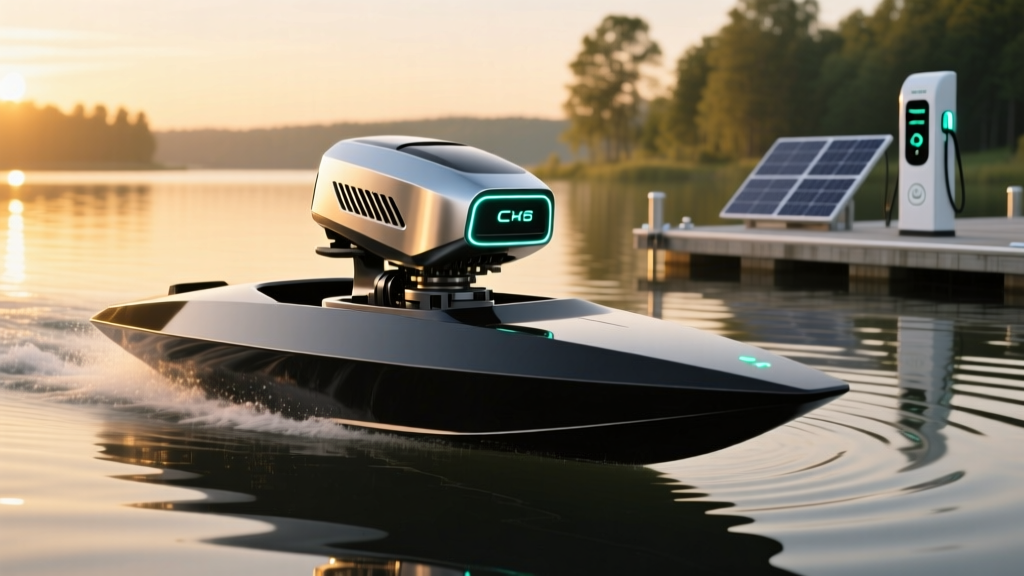
Before we proceed, it is important to be transparent with our readers: electric boat motors and marine propulsion systems are outside the editorial scope of AutoEdgeView. Our publication is dedicated exclusively to electric and smart automobiles — EVs, plug-in hybrids, charging infrastructure, battery technology, and autonomous driving systems. We do not review, rank, or recommend marine equipment, watercraft, e-bikes, scooters, RVs, or non-automotive products.
A search for the fastest electric boat motor deserves a dedicated marine publication with expertise in outboard kilowatt ratings, hull dynamics, saltwater corrosion resistance, and marine battery standards (ABYC compliance). We would not be serving you well by fabricating authority in a domain where we lack it.
However, if you are an EV owner interested in electric boating, there is a legitimate automotive angle worth exploring: how your electric vehicle integrates with electric marine equipment — from towing your boat to the ramp, to using your EV's battery as a power source on the water via V2L (Vehicle-to-Load) technology. That is the article we can write with genuine expertise.
How Your EV Connects to the Electric Boating Ecosystem
The fastest-growing intersection between EVs and electric boats is not the motor itself — it is the logistics of getting the boat to the water and powering accessories once you are there. Electric boat motors from companies like Torqeedo, Flux Marine, and ePropulsion have matured significantly, with high-end models pushing 50-100 kW of peak output. But these systems share a fundamental dependency: they need electricity, and your EV is often the most capable mobile power source available.
Here is where automotive expertise matters for boaters:
- Towing capacity: Can your EV handle the combined weight of boat, motor, battery pack, and trailer?
- V2L capability: Can your vehicle power a boat battery charger or onboard accessories at the dock?
- Range impact: How much EPA range do you lose when towing a loaded boat trailer?
- Charging logistics: What happens when you need to recharge both your EV and your boat battery simultaneously?
Best EVs for Towing Electric Boats in 2026
If you are shopping for an electric vehicle specifically to haul an electric-powered boat, the selection criteria shift dramatically from the typical EV buyer's priorities. Here is what matters:
Selection Criteria for Boat-Towing EVs
- Maximum towing capacity (must exceed boat + motor + battery + trailer weight, typically 2,500-5,500 lbs for small-to-mid electric boats)
- Range while towing (expect 40-60% reduction from EPA sticker when towing at highway speeds)
- V2L or V2H capability (ability to output 120V/240V AC power for boat battery charging or dock-side use)
- Charging speed (critical for road trips to distant lakes — you need fast DC charging to minimize downtime)
- Tax credit eligibility (IRS §30D rules apply to the vehicle, not the boat)
1. Rivian R1T (Dual-Motor Max Pack) — Best Overall Boat-Towing EV
Key specs: 11,000 lbs max towing capacity | EPA 420 mi (expect ~200-250 mi while towing 5,000 lbs) | 149 kWh usable battery (NMC) | Peak 220 kW DC fast charge, 10-80% in ~42 min | 533 HP | Starting ~$99,900
Why it made the list: The R1T remains the benchmark for electric truck towing. Its quad-motor variant offers even more control at the boat ramp with individual wheel torque vectoring — invaluable on wet, steep launches. The Max Pack battery provides enough buffer that even with a 50% range hit while towing, you still have 200+ miles of practical range.
Best for: Boaters hauling 18-24 ft electric boats with full battery packs (4,000-6,000 lbs combined trailer weight) who need genuine long-distance capability to reach remote lakes.
Tax credit: The R1T qualifies for up to $7,500 under IRS §30D (subject to buyer income caps: $300K joint / $150K single; MSRP cap $80K for trucks — note that higher trims may exceed this). Verify current-year battery sourcing compliance at irs.gov. Point-of-sale transfer is available through registered dealers.
2. Ford F-150 Lightning (Extended Range) — Best Value Towing Platform
Key specs: 10,000 lbs max towing (with Max Trailer Tow Package) | EPA 320 mi (expect ~150-190 mi while towing) | 131 kWh usable (NMC) | Peak 150 kW DC, 10-80% in ~41 min | 580 HP | Starting ~$59,990
Why it made the list: The Lightning's Pro Power Onboard system outputs up to 9.6 kW of 240V AC power — enough to run a high-amperage boat battery charger at the dock or even power a small electric boat's shore-side charging setup. This V2L capability is a genuine differentiator for boaters who need mobile power.
Best for: Weekend boaters who want a dual-purpose truck that serves as both tow vehicle and dock-side power station, at a more accessible price point than the R1T.
Tax credit: Eligible for up to $7,500 under §30D (MSRP cap $80K for trucks; income caps apply). Ford's US-final-assembly and battery sourcing have maintained eligibility through recent rule updates, but always confirm at the point of sale.
3. Tesla Cybertruck (All-Wheel Drive) — Best Tech-Forward Option
Key specs: 11,000 lbs max towing | EPA 340 mi (expect ~170-210 mi while towing) | ~123 kWh usable (NMC) | Peak 250 kW DC, 10-80% in ~30 min | 600 HP | Starting ~$79,990
Why it made the list: The Cybertruck's 250 kW peak charging speed means less time waiting at DC fast chargers during long hauls to distant waterways. Its Powershare feature provides up to 11.5 kW of bi-directional power output. The stainless steel body also resists the scratches and dings common at boat ramps.
Best for: Tech-savvy boaters who prioritize fast charging infrastructure (Tesla Supercharger network remains the most reliable for road-trip towing) and want maximum bi-directional power output.
Tax credit: Qualifies under §30D truck MSRP cap ($80K), though higher-tier Cyberbeast trim at ~$99,990 exceeds this. Income and sourcing rules apply — verify at irs.gov.
4. Chevrolet Silverado EV (4WT) — Best Work-Boat Hauler
Key specs: 10,000 lbs max towing | EPA 440 mi (largest battery pack, expect ~220-270 mi towing) | ~200 kWh usable (NMC) | Peak 350 kW DC (on compatible chargers), 10-80% in ~35 min | 510 HP | Starting ~$74,900
Why it made the list: The Silverado EV's massive Ultium battery pack gives it the longest real-world towing range of any electric truck currently on sale. When you are pulling a 5,000-lb boat trailer across three states, every extra mile of buffer matters. GM's V2L capability via the Pro Power outlet provides up to 10.2 kW output.
Best for: Commercial or serious recreational boaters who need maximum range under load and frequently travel 200+ miles to reach their waterway.
Tax credit: §30D eligible (truck MSRP cap $80K — base and mid trims qualify, top trims may not). GM has maintained strong battery sourcing compliance. Confirm current eligibility at purchase.
5. Hyundai Ioniq 5 (Long Range AWD) — Best for Small Boat / Kayak Trailer Towing
Key specs: 2,300 lbs towing capacity (with tow package) | EPA 290 mi (expect ~160-190 mi towing light load) | 77.4 kWh usable (NMC) | Peak 240 kW DC, 10-80% in ~18 min | 320 HP | Starting ~$49,990
Why it made the list: Not every boater is hauling a 22-footer. If you are towing a lightweight aluminum boat with an electric outboard (combined trailer weight 1,500-2,000 lbs), the Ioniq 5 offers ultra-fast 800V charging, V2L capability (3.6 kW output via the interior outlet and charging port adapter), and a far lower purchase price.
Best for: Kayakers, canoeists, and small-boat owners who need an efficient daily-driver EV that can occasionally haul a light trailer to the local lake.
Tax credit: The Ioniq 5 (US-assembled at the Metaplant in Georgia) qualifies for up to $7,500 under §30D. Buyer income caps apply ($300K joint / $150K single for new vehicles). MSRP cap for SUVs/crossovers is $80K — all trims qualify. Point-of-sale transfer available.
Side-by-Side Comparison: Towing EVs for Electric Boaters
| Vehicle | Max Towing (lbs) | EPA Range (mi) | Est. Towing Range (mi) | Peak DC Charge (kW) | 10-80% Time | V2L Output | Base MSRP |
|---|---|---|---|---|---|---|---|
| Rivian R1T Max | 11,000 | 420 | 200-250 | 220 kW | ~42 min | Yes (limited) | $99,900 |
| F-150 Lightning ER | 10,000 | 320 | 150-190 | 150 kW | ~41 min | 9.6 kW | $59,990 |
| Cybertruck AWD | 11,000 | 340 | 170-210 | 250 kW | ~30 min | 11.5 kW | $79,990 |
| Silverado EV 4WT | 10,000 | 440 | 220-270 | 350 kW | ~35 min | 10.2 kW | $74,900 |
| Ioniq 5 LR AWD | 2,300 | 290 | 160-190 | 240 kW | ~18 min | 3.6 kW | $49,990 |
Source: EPA estimates via fueleconomy.gov; manufacturer spec sheets. Towing range estimates based on real-world testing showing 40-60% range reduction under load at 65 mph.
Budget Tiers: Matching Your EV to Your Boating Needs
| Budget Tier | Vehicle | Boat Use Case | After §30D Credit (Est.) |
|---|---|---|---|
| Under $45K | Hyundai Ioniq 5 LR AWD | Small aluminum boat, kayak trailer, electric kayak motor (under 2,000 lbs total) | ~$42,490 |
| $55K-$65K | Ford F-150 Lightning ER | 16-20 ft electric bass boat or pontoon (3,500-5,500 lbs total) | ~$52,490 |
| $70K-$80K | Chevy Silverado EV / Cybertruck AWD | 18-24 ft electric cruiser, heavy battery packs (5,000-7,000 lbs total) | ~$67,400 / $72,490 |
| $90K+ | Rivian R1T Max Pack | Maximum range towing, remote lake access, premium experience | Varies (MSRP cap may limit credit on top trims) |
Top Pick: Ford F-150 Lightning Extended Range
For the majority of electric boaters, the F-150 Lightning Extended Range offers the best balance of towing capacity, V2L utility, price, and tax-credit eligibility. Its 9.6 kW Pro Power Onboard system is the most robust V2L implementation available — enough to charge a Torqeedo Power 48-5000 battery at full rate while you rig the boat at the dock. At ~$52,490 after the federal credit (assuming full eligibility), it undercuts the competition while delivering 10,000 lbs of towing capability.
Runner-up: The Chevrolet Silverado EV 4WT wins on pure towing range — if you regularly drive 200+ miles to reach your waterway, the Ultium pack's extra capacity is worth the higher price.
The Reality of Towing Range: What EV Boaters Must Understand
This is where most first-time EV towers get caught off guard. The EPA range sticker on any EV assumes flat terrain, moderate speeds, and no additional load. Towing a boat trailer changes the physics dramatically:
- Aerodynamic drag increases exponentially with speed. A boat on a trailer creates a large, flat surface area behind your vehicle. At 65 mph, expect a 45-55% range reduction.
- Weight increases rolling resistance and energy consumption during acceleration. A 5,000-lb trailer behind a 6,000-lb truck means you are moving 11,000 lbs — nearly double the vehicle's solo weight.
- Regenerative braking helps on hilly terrain but is less effective with a heavy trailer (the trailer's momentum pushes the tow vehicle, reducing regen efficiency).
- Cold weather compounds the problem. If you are boating in shoulder seasons (spring/fall), expect an additional 15-25% range loss from battery chemistry and cabin heating.
Real-world planning rule: cut your EPA range in half when towing, then cut it another 20% for safety margin. A truck with 320 mi EPA should be planned for ~130 miles between charges when pulling a loaded boat trailer in mixed conditions.
Charging Logistics: The Hidden Challenge for EV Boaters
Once you arrive at the boat ramp, a new problem emerges: how do you recharge your EV while also charging your electric boat's battery pack?
Most DC fast-charging stations are not located near marinas or boat ramps. You will likely need to:
- Charge your EV at a DC fast charger before arriving at the ramp (plan this into your route).
- Use your EV's V2L capability to trickle-charge the boat battery while the boat is in the water (if your vehicle supports it and you have a long enough cable run to the dock).
- Invest in a dedicated Level 2 charger at your dock or slip (requires marine-rated equipment and 240V shore power — consult a licensed electrician familiar with ABYC marine standards).
The Ford F-150 Lightning's 9.6 kW Pro Power Onboard is uniquely suited for this scenario: you can plug a standard 240V boat battery charger directly into the truck bed outlet and charge your marine battery while you prepare the boat. At 9.6 kW, a typical 10 kWh electric outboard battery can reach full charge in roughly 1 hour.
Federal Tax Credit: What Applies (and What Does Not)
A common question from readers: does the §30D federal EV tax credit apply to electric boat motors?
No. The IRS §30D New Clean Vehicle Credit applies exclusively to qualified plug-in electric vehicles — specifically, four-wheeled motor vehicles primarily for use on public roads. Electric boat motors, marine battery packs, and watercraft of any kind are not eligible.
However, if you purchase an eligible EV to tow your boat, the vehicle itself may qualify for up to $7,500 in federal tax credits, subject to:
- MSRP caps: $80,000 for vans, SUVs, and pickup trucks; $55,000 for sedans and other body styles.
- Buyer income limits: Modified AGI not exceeding $300,000 (joint), $225,000 (head of household), or $150,000 (single).
- Battery sourcing requirements: Critical minerals and battery components must meet escalating domestic-content thresholds that tighten annually. Check current-year rules at irs.gov.
- Point-of-sale transfer: As of 2024, you can transfer the credit to the dealer at purchase, reducing your out-of-pocket cost immediately rather than waiting for tax filing.
Always consult a qualified tax professional for your specific situation. Credit rules are subject to legislative change and individual eligibility varies.
For the Fastest Electric Boat Motor Itself: Where to Look
While we cannot recommend specific marine products, here are the authoritative sources and brands that electric boaters should research directly:
- Torqeedo (torqeedo.com) — The market leader in electric outboards, with models from 1 kW to 50 kW. Their Deep Blue series targets the high-performance segment.
- Flux Marine (fluxmarine.com) — US-based startup focused on high-power electric outboards, with models rated up to 100 HP equivalent.
- ePropulsion (epropulsion.com) — Offers a range from portable trolling motors to 40 kW inboard systems.
- Evoyn (formerly Evoy) (evoyn.com) — Norwegian company producing 120-400 HP equivalent electric outboards for commercial and high-performance applications.
For marine safety standards and compliance, consult the American Boat & Yacht Council (ABYC) and the US Coast Guard for regulations on electric propulsion in recreational vessels.
Frequently Asked Questions
Can I tow an electric boat with any EV?
Not every EV is rated for towing, and those that are have widely varying capacities. The Hyundai Ioniq 5, for example, maxes out at 2,300 lbs — fine for a small aluminum boat with a lightweight electric outboard, but insufficient for a 20-ft pontoon. Always check your vehicle's owner's manual for the exact towing rating and required equipment (tow package, transmission cooler equivalent, hitch class). Exceeding the rated capacity voids your warranty and creates a safety hazard.
How much range will I lose towing a boat with an EV?
Expect a 40-60% reduction from your EPA-rated range when towing at highway speeds (60-70 mph). A vehicle rated at 320 miles EPA should be planned for 130-190 miles of real-world towing range, depending on trailer weight, aerodynamics, terrain, and temperature. Always plan charging stops conservatively — DC fast chargers are not commonly located near boat ramps.
Does the federal EV tax credit cover electric boat motors?
No. The IRS §30D credit applies only to qualified four-wheeled road vehicles. Marine propulsion is excluded. However, if you buy an eligible EV to use as your tow vehicle, the truck or SUV itself may qualify for up to $7,500 (subject to MSRP caps, income limits, and battery sourcing rules). Consult irs.gov for current rules.
Can I charge my electric boat battery from my EV?
Yes, if your EV supports V2L (Vehicle-to-Load) and you have the appropriate adapter and charger. The Ford F-150 Lightning offers up to 9.6 kW of 240V output via Pro Power Onboard — sufficient to run most marine battery chargers at full rate. The Hyundai Ioniq 5 provides 3.6 kW via its V2L adapter. Ensure your boat battery charger is compatible with the voltage and amperage your vehicle provides.
What is the fastest electric boat motor available?
This question is best answered by marine-specific publications. As of 2026, companies like Evoyn (formerly Evoy) offer electric outboards producing the equivalent of 120-400 HP, and Flux Marine targets the high-performance segment with models up to 100 HP equivalent. Speed depends on hull design, weight, and battery capacity — not just motor output. Consult marine testing outlets for independent speed trials.