The Quick Answer: Which Family EV Should You Buy?
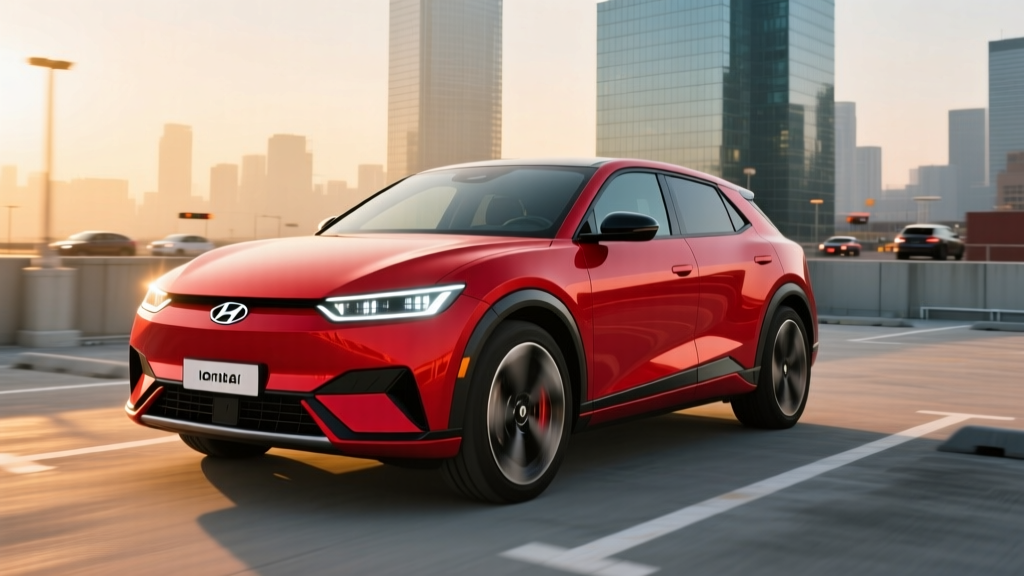
The best family electric vehicle depends on your household size, budget, and charging access. For most families of four to five, the Hyundai Ioniq 5 (EPA 318 miles, ~$42,600 base) or Tesla Model Y (EPA 320 miles, ~$44,990 base) deliver the strongest combination of range, charging speed, and interior space. Families needing three rows should look at the Kia EV9 (EPA 270–304 miles, ~$54,900 base) or the Rivian R1S (EPA 330–410 miles, ~$79,900 base). If you lack reliable home charging or frequently drive 400+ miles in cold weather, a plug-in hybrid like the Toyota Grand Highlander Hybrid MAX may serve you better until public charging infrastructure matures in your area.
Why Families Are Switching to Electric in 2026
The family electric vehicle segment has matured past early-adopter compromises. Today's mainstream electric SUVs and crossovers offer 270–330 miles of EPA-estimated range, DC fast charging from 10–80% in roughly 18–27 minutes, and cargo volumes rivaling midsize gas SUVs. The upfront price gap between EVs and comparable gas vehicles has narrowed, and federal tax credits under IRS §30D can reduce effective purchase cost by up to $7,500 for qualifying buyers and vehicles.
But the math isn't universally favorable. A family EV makes financial and practical sense when you can charge at home, drive under 300 miles daily, and live in a moderate climate or have access to DC fast chargers on road-trip corridors. If you're apartment-dwelling without workplace charging, or regularly tow heavy loads in sub-zero weather, the ownership calculus shifts.
Top Family Electric Vehicles Compared: Specs That Matter
Below is a side-by-side look at the most practical family EVs on sale in 2026. Every figure is sourced from EPA data or manufacturer specifications — not marketing estimates.
| Model | Body Style | Seats | EPA Range | Battery (kWh usable) | Chemistry | Peak DC kW | 10–80% Time | Level 2 kW | 0–60 mph | HP | Cargo (cu ft) | Base MSRP | Battery Warranty |
|---|---|---|---|---|---|---|---|---|---|---|---|---|---|
| Hyundai Ioniq 5 (Long Range RWD) | Midsize Crossover | 5 | 318 mi | 84.0 | NMC | 240 kW (CCS) | ~18 min | 10.9 kW | 7.3 sec | 168 | 27.2 / 59.3 | $42,600 | 10 yr / 100,000 mi |
| Tesla Model Y (Long Range AWD) | Midsize SUV | 5 (opt. 7) | 320 mi | 75.0 (est.) | NMC | 250 kW (NACS) | ~20 min | 11.5 kW | 4.8 sec | 384 | 30.2 / 72.1 | $44,990 | 8 yr / 120,000 mi |
| Kia EV9 (Land AWD) | 3-Row SUV | 6–7 | 270 mi | 100.0 | NMC | 210 kW (CCS) | ~24 min | 10.9 kW | 7.7 sec | 379 | 20.2 / 81.7 | $54,900 | 10 yr / 100,000 mi |
| Ford Mustang Mach-E (Extended Range) | Midsize SUV | 5 | 320 mi | 91.0 | NMC | 150 kW (CCS) | ~34 min | 10.5 kW | 5.1 sec | 346 | 29.7 / 59.7 | $43,495 | 8 yr / 100,000 mi |
| Rivian R1S (Dual Motor Max Pack) | 3-Row SUV | 7 | 410 mi | 141.0 | NMC | 220 kW (NACS) | ~35 min | 11.5 kW | 4.5 sec | 665 | 10.6 / 92.0 | $79,900 | 8 yr / 175,000 mi |
| Volkswagen ID.4 (Pro S AWD) | Compact SUV | 5 | 263 mi | 82.0 | NMC | 175 kW (CCS) | ~28 min | 11.0 kW | 5.4 sec | 295 | 30.3 / 64.2 | $43,895 | 8 yr / 100,000 mi |
EPA range figures sourced from fueleconomy.gov. Real-world highway range typically runs 10–20% below EPA combined estimates; cold weather (below 25°F) can reduce range an additional 20–30%. Cargo volumes listed as behind 2nd row / max.
Real-World Range vs. EPA Stickers: What Families Actually Get
EPA sticker: 318 miles (Ioniq 5 Long Range RWD)
Real-world highway (70 mph, 72°F): ~265–280 miles
Real-world highway (70 mph, 20°F): ~210–235 miles
Real-world mixed suburban/school-run: ~285–310 miles
The EPA combined range figure blends city and highway driving with mild climate control usage. Most family driving patterns — highway road trips at 75+ mph, aggressive HVAC use in extreme heat or cold, roof-box cargo carriers — pull real range below the sticker. The Ioniq 5's 84 kWh NMC battery delivers strong efficiency at roughly 3.3–3.5 miles per kWh in moderate conditions, but expect 2.5–2.8 mi/kWh on a flat-out winter highway run.
For families planning road trips, the more critical number is charging speed, not just total range. The Ioniq 5's 800-volt architecture enables a 240 kW peak charge rate that sustains above 180 kW up to roughly 60% State of Charge before tapering. The Mach-E, by contrast, peaks at 150 kW and begins tapering earlier, meaning real 10–80% stops take nearly twice as long despite similar battery sizes.
EV vs. Gas vs. Hybrid: The Family Vehicle Cost Showdown
Comparing a family EV against the gas and hybrid alternatives requires looking past the sticker price at total cost over five years of ownership.
| Cost Category | Hyundai Ioniq 5 SEL ($42,600) | Toyota Highlander Gas V6 ($40,970) | Toyota Grand Highlander Hybrid ($43,070) |
|---|---|---|---|
| Purchase Price (MSRP) | $42,600 | $40,970 | $43,070 |
| Est. Federal Tax Credit (§30D) | Up to $7,500* | $0 | $0 |
| Effective Purchase Price | ~$35,100 | $40,970 | $43,070 |
| Fuel/Energy (5 yr, 75,000 mi) | $3,750 (home L2, $0.15/kWh) | $10,350 ($3.45/gal, 24 MPG) | $6,900 ($3.45/gal, 36 MPG) |
| Maintenance (5 yr) | ~$1,200 | ~$3,500 | ~$2,800 |
| Insurance (5 yr est. avg) | ~$10,500 | ~$8,500 | ~$8,800 |
| 5-Year Total Cost | ~$50,550 | ~$63,320 | ~$61,570 |
*§30D credit eligibility depends on buyer income caps ($150K single / $300K joint), vehicle MSRP caps ($80K for SUVs), battery component and critical mineral sourcing requirements, and manufacturer compliance. Credit may be applied at point of sale as of 2024+. Verify current eligibility at irs.gov. Insurance estimates vary widely by state, driver profile, and insurer — EV premiums run 15–25% higher on average due to repair costs.
The Ioniq 5's energy cost advantage is dramatic when charging at home: at a national average residential rate of $0.15/kWh and efficiency of 3.3 mi/kWh, you're paying roughly $0.05 per mile versus $0.14 per mile for the gas Highlander. That gap widens further if you have access to off-peak utility rates or solar. However, if you rely exclusively on public DC fast charging at $0.35–$0.50/kWh, your per-mile cost rises to $0.10–$0.15, narrowing the savings substantially.
Home Charging: The Make-or-Break Factor for Family EVs
Home Level 2 charging is where family EV ownership either thrives or fails. A Level 2 home charger (240V, 32–48 amps) adds 25–40 miles of range per hour of charging, meaning an overnight session from 10 PM to 7 AM easily replenishes 200+ miles — more than enough for any daily family driving pattern.
| Level | Voltage | Power (kW) | Miles Added/Hour | Full Charge Time (84 kWh battery) |
|---|---|---|---|---|
| Level 1 (standard outlet) | 120V | 1.4 kW | 3–5 mi | ~60 hours |
| Level 2 (home wallbox, 32A) | 240V | 7.7 kW | 25–28 mi | ~11 hours |
| Level 2 (home wallbox, 48A) | 240V | 11.5 kW | 35–40 mi | ~7.5 hours |
| DC Fast Charge (typical public) | 400–800V | 50–250 kW | 180–800 mi/hr (peak) | 10–80% in 18–35 min |
Home installation cost breakdown:
| Item | Typical Cost Range |
|---|---|
| Level 2 charger hardware (ChargePoint, Wallbox, Emporia) | $350–$700 |
| Electrician labor (240V/50A circuit, 20–40 ft run) | $800–$2,000 |
| Permit and inspection | $50–$300 |
| Electrical panel upgrade (if needed, 100A → 200A) | $1,500–$4,000 |
| Total (no panel upgrade) | $1,200–$3,000 |
| Total (with panel upgrade) | $2,700–$7,000 |
Homes built after 2000 with 200-amp panels typically need no upgrade. Older homes with 100-amp service may require a panel upgrade, which is the single largest variable in installation cost. Some utilities offer rebates of $250–$1,000 for Level 2 installations — check with your local provider. Always hire a licensed electrician; final wire gauge, breaker sizing, and conduit requirements depend on your specific panel and run length.
If you cannot install home charging — you live in an apartment, condo, or street-parking situation — weigh this carefully. Public Level 2 chargers (typically $0.20–$0.30/kWh) and DC fast chargers ($0.35–$0.50/kWh) add time and cost to ownership. Plan for 2–3 public charging sessions per week, each taking 20–40 minutes. For some families, this is manageable with workplace charging; for others, it's a dealbreaker that makes a hybrid the better choice.
Tax Credits and Incentives: What Families Actually Qualify For
The federal §30D clean vehicle credit remains the single largest purchase incentive, but qualification in 2026 depends on a web of requirements that trip up many buyers.
Federal §30D Credit Checklist
- Buyer income cap: Modified AGI ≤ $150,000 (single) / $225,000 (head of household) / $300,000 (joint)
- Vehicle MSRP cap: ≤ $80,000 for SUVs, vans, and pickup trucks; ≤ $55,000 for sedans and other body styles
- Battery sourcing: Increasingly strict critical mineral and battery component requirements must be met — the list of qualifying vehicles narrows each year as sourcing thresholds tighten
- Assembly: Vehicle must undergo final assembly in North America
- Point-of-sale transfer: Eligible buyers can transfer the credit to the dealer at purchase, reducing the drive-off price immediately rather than waiting for a tax refund
- One credit per vehicle: Cannot stack with the used-EV credit (§25E) on the same purchase
As of early 2026, qualifying family EVs include select trims of the Tesla Model Y, certain GM EVs, and others meeting the updated sourcing thresholds. Always verify the current list at fueleconomy.gov's tax credit tool and consult a tax professional — eligibility rules shift with new Treasury guidance, and your specific tax situation may affect the benefit.
Common Family EV Misconceptions: Fact vs. Fiction
| Myth | Fact |
|---|---|
| "EVs don't have enough range for family road trips." | Most 2026 family EVs deliver 250–320 real-world miles. With DC fast charging adding 150–200 miles in 15–20 minutes, a 600-mile trip requires two brief stops — comparable to gas-car rest and food breaks. |
| "The battery will need replacing and cost $20,000." | Modern NMC and LFP batteries degrade roughly 10–15% over 10 years / 150,000 miles based on current fleet data. All major manufacturers warranty the battery for 8–10 years / 100,000–175,000 miles against dropping below 70% capacity. Full replacement is rare before 15+ years. |
| "EVs are worse in cold weather." | Range drops 20–30% in sub-25°F weather — real and significant. However, preconditioning (warming the battery while plugged in) recovers much of this loss, and EVs start instantly in cold where gas cars idle and warm slowly. Heat pumps (standard on Ioniq 5, EV9, and many 2026 models) reduce cabin-heating energy draw by 30–50%. |
| "Charging takes too long." | Home Level 2 charging happens while you sleep — zero active time. On road trips, 10–80% DC fast charging takes 18–35 minutes depending on the vehicle's charge curve. The bottleneck is charger availability, not speed, on popular holiday travel corridors. |
| "EVs are more expensive overall." | Higher MSRP is offset by the §30D credit (up to $7,500), dramatically lower fuel costs ($0.05 vs. $0.14/mile), and reduced maintenance (no oil changes, fewer brake replacements due to regen). Over 5 years, a family EV with home charging typically saves $8,000–$15,000 vs. a comparable gas SUV. |
First-Time Family EV Buyer: What You Need to Know
If this is your household's first electric vehicle, these practical realities shape daily ownership:
Regenerative braking changes how you drive. Most family EVs offer adjustable regen, from mild coasting to aggressive one-pedal driving where lifting off the accelerator slows the car significantly. Expect 1–2 weeks of adaptation. One-pedal mode in stop-and-go school-dropoff traffic is a genuine quality-of-life improvement.
Tire costs are higher. EVs are 500–1,000 lbs heavier than comparable gas vehicles and deliver instant torque, accelerating tire wear. Budget for tire replacement every 30,000–40,000 miles rather than the 50,000+ miles typical of gas cars. EV-specific tires (like Michelin Pilot Sport EV or Hankook iON) reduce road noise and rolling resistance but cost $200–$350 per tire.
Preconditioning is not optional for fast charging. If you're navigating to a DC fast charger, the vehicle's thermal management system preheats or precools the battery to optimize charge acceptance. Without preconditioning, a cold battery may accept only 50–80 kW instead of its rated 200+ kW peak. Always use the vehicle's built-in navigation to route through a charger — this triggers preconditioning automatically.
Insurance is higher — shop aggressively. EV insurance premiums run 15–25% above comparable gas vehicles, driven by higher repair costs for battery-adjacent damage and specialized labor. Get quotes from at least three insurers before purchasing. Some manufacturers (like Tesla) offer in-house insurance in certain states that can undercut traditional carriers.
Understand your charge curve, not just peak kW. A vehicle rated for 240 kW peak doesn't sustain 240 kW for the full session. Typical charge curves hold peak rate up to 50–60% State of Charge, then taper progressively. The Ioniq 5 sustains ~180+ kW to 55% SoC, then steps down to ~120 kW through 70%, and drops below 80 kW past 80%. This is why 10–80% time is the industry-standard metric — charging past 80% is painfully slow and rarely worth the wait on road trips.
Decision Framework: Which Family EV Fits Your Situation?
Choose a Battery-Electric Family SUV If:
- You can install a Level 2 home charger (garage or driveway with 240V access)
- Your daily driving is under 250 miles round-trip
- You qualify for the §30D tax credit (income and vehicle eligibility)
- You take road trips 2–4 times per year on corridors with DC fast charging
- You want the lowest per-mile operating cost and minimal maintenance
Choose a Plug-In Hybrid (PHEV) Family SUV If:
- You lack reliable home or workplace charging access
- You regularly drive 400+ miles in areas with sparse charging infrastructure
- You live in extreme cold climates (consistent sub-10°F winters) and can't tolerate range reduction
- You tow frequently (trailers, boats) and need sustained range without charging stops
- You want electric-only commuting (30–40 miles) with gas flexibility for longer trips
Choose a Gas Hybrid (HEV) Family SUV If:
- You have zero charging access and no ability to install it
- Your budget doesn't accommodate the EV price premium even after incentives
- You drive high annual miles (20,000+) predominantly on rural highways far from chargers
- You want zero behavior change from your current gas-car routine
Frequently Asked Questions
What is the most affordable family electric vehicle in 2026?
The Chevrolet Equinox EV (EPA ~315 miles, starting ~$33,600) is the most affordable family-sized electric SUV, though it's a compact crossover best suited for families of four or fewer. For a true midsize family SUV with five seats and strong cargo space, the Hyundai Ioniq 5 at ~$42,600 (potentially ~$35,100 after the §30D credit) is the value leader. The Volkswagen ID.4 at ~$43,895 is a close competitor with slightly more cargo room but lower range.
Can a family EV handle a 500-mile road trip?
Yes, with planning. A 300-mile-range EV like the Ioniq 5 or Model Y requires one to two DC fast charging stops on a 500-mile trip, adding roughly 30–50 minutes total. On the Tesla Supercharger network (now open to NACS-equipped non-Tesla vehicles) and major CCS networks like Electrify America, chargers are spaced 100–150 miles apart on interstate corridors. Use the vehicle's native navigation or apps like A Better Routeplanner to plan stops. The real constraint is holiday-weekend charger congestion, not distance.
Do family EVs have enough cargo space for strollers, groceries, and luggage?
Yes. The Tesla Model Y offers 30.2 cu ft behind the second row and 72.1 cu ft with seats folded — comparable to a midsize gas SUV. The Kia EV9 provides 20.2 cu ft behind the third row and 81.7 cu ft max. The Ioniq 5's 27.2 cu ft behind the second row handles a full-size stroller plus several grocery bags. Most family EVs also include a front trunk (frunk) for charging cables or small items, adding 1–2 cu ft of bonus storage.
How long do EV batteries last, and what does replacement cost?
Current NMC batteries in family EVs are engineered for 1,500–2,500 full charge cycles before reaching 70–80% of original capacity. For a family driving 12,000–15,000 miles annually, this translates to 15–20+ years of usable life before degradation becomes noticeable. Warranty coverage is 8–10 years / 100,000–175,000 miles. Out-of-warranty battery replacement costs range from $8,000–$15,000 for mainstream models (Ioniq 5, Mach-E) to $15,000–$22,000 for larger packs (EV9, R1S). However, module-level repairs are increasingly available at lower cost, and full-pack replacement before 15 years remains uncommon based on current fleet data.
Is a three-row electric SUV practical for a family of six?
The Kia EV9 and Rivian R1S are the leading three-row electric SUVs. The EV9's third row accommodates children and smaller adults comfortably, with 20.2 cu ft of cargo behind the third row — enough for groceries but tight for airport runs with all seats occupied. The Rivian R1S offers more power and range (up to 410 miles EPA with Max Pack) but starts at $79,900, exceeding the §30D MSRP cap for SUVs. For large families that regularly fill all seats and cargo area, a PHEV minivan like the Chrysler Pacifica Hybrid (32 miles electric-only, ~$47,000) may offer more practicality at lower cost until more three-row EVs arrive.
What's the difference between kW and kWh?
This is the most common EV confusion. kW (kilowatts) measures power — the rate at which energy flows. Think of it like water pressure from a hose. A 240 kW DC fast charger delivers energy very quickly. kWh (kilowatt-hours) measures energy — the total amount stored or consumed. Think of it like the size of a water tank. An 84 kWh battery stores 84 kWh of energy. Dividing battery capacity (kWh) by charge rate (kW) gives you approximate charge time: 84 kWh ÷ 240 kW = 0.35 hours ≈ 21 minutes (at sustained peak rate, which never happens in practice due to charge-curve taper).