Quick Answer: Is an EV Three Wheeler Right for You?
An EV three wheeler is a niche electric vehicle—legally classified as a motorcycle or autocycle in most states—that trades enclosed comfort and cargo space for extreme efficiency, a lower purchase price, and eligibility for some motorcycle-specific incentives. The leading 2026 models include the Aptera Launch Edition (up to 400 miles EPA-est range, ~$33,000 base) and the Arcimoto FUV (~75 miles range, ~$21,900). They cost pennies per mile to charge but face real limitations: limited crash-test data, minimal dealer networks, poor cold-weather range retention, and restricted highway practicality. They make sense if you have home charging, commute under 60 miles round-trip, live in a mild climate, and want a secondary vehicle. They don't make sense if you need a primary family car, tow anything, or live in a charging desert.
What Exactly Is an EV Three Wheeler?
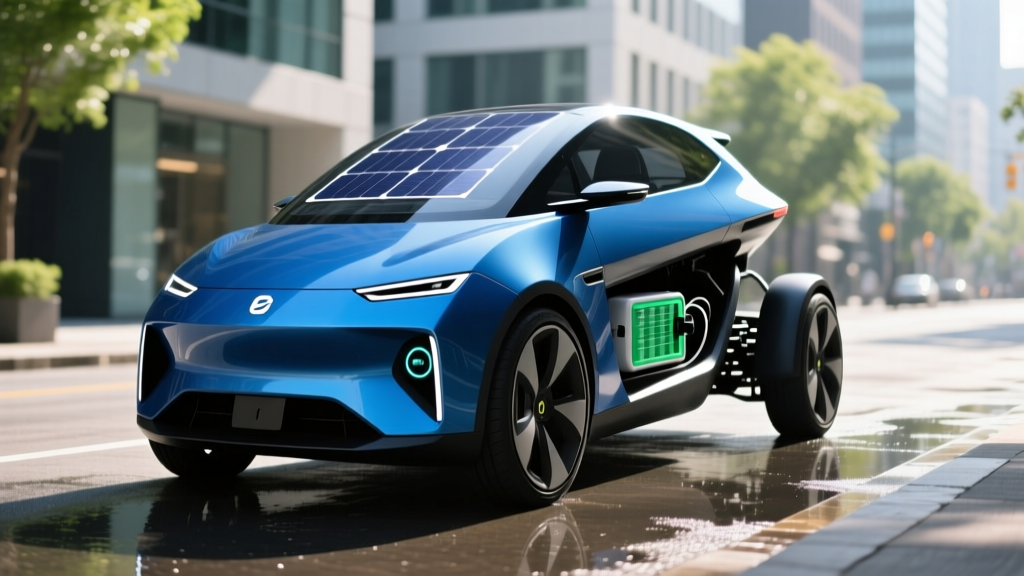
A three-wheeled electric vehicle (EV) sits between a motorcycle and a car. In the U.S., most states classify them as motorcycles or autocycles, meaning you may need a motorcycle endorsement on your license (rules vary by state—check your local DMV). Unlike a conventional four-wheeled EV, a three-wheeler typically has two wheels in front and one in the rear (the "tadpole" layout, favored for stability) or one front and two rear (the "delta" layout).
Because they are lighter—often between 1,200 and 2,200 lbs—and more aerodynamic, three-wheeled EVs achieve dramatically better efficiency than even the most efficient four-wheeled EVs. Where a Tesla Model 3 might return 4–5 miles per kWh, the Aptera claims over 10 miles per kWh thanks to its ultra-low drag coefficient (Cd ~0.13) and solar roof integration.
2026 EV Three Wheeler Models: Spec Comparison
| Spec | Aptera Launch Edition (2026) | Arcimoto FUV (2025/2026) | ElectraMeccanica Solo (Discontinued 2024) |
|---|---|---|---|
| EPA-Est. Range | Up to 400 mi (100 kWh pack) / ~250 mi (60 kWh) | ~75 mi | ~100 mi |
| Battery (kWh usable) | ~60 or ~100 kWh (NMC) | ~18 kWh (NMC) | ~17.5 kWh (NMC) |
| Peak DC Fast Charge | ~60 kW (est.) | Level 2 only (no DCFC) | Level 2 only (no DCFC) |
| 10–80% Charge Time | ~50 min (est. at 60 kW) | N/A (L2 ~6.6 kW, ~2.5 hr full) | N/A (L2 ~3.3 kW, ~5 hr full) |
| Level 2 Charge Rate | ~7.2 kW | ~6.6 kW | ~3.3 kW |
| Motor Output | ~150 kW (~201 hp) rear | ~57 kW (~77 hp) | ~37 kW (~50 hp) |
| 0–60 mph | ~4.0 sec (est.) | ~7.5 sec | ~8.0 sec |
| Top Speed | ~110 mph | ~80 mph | ~80 mph |
| Cargo Volume | ~15 cu ft (rear hatch) | ~3 cu ft (rear bin) | ~10 cu ft (rear) |
| Seating | 2 (tandem) | 2 (tandem) | 1 |
| Solar Integration | Yes (up to ~40 mi/day from solar) | No | No |
| Base MSRP | ~$33,000 (60 kWh) / ~$45,000 (100 kWh) | ~$21,900 | ~$18,000 (was) |
| Battery Warranty | 8 yr / 100,000 mi (est.) | 3 yr / 36,000 mi | 4 yr / 48,000 mi |
Sources: Aptera Motors official site, Arcimoto. ElectraMeccanica Solo was discontinued following the company's acquisition; included for reference only. Specs are preliminary for Aptera and may change at delivery.
Real-World Range Reality Check
Aptera (400-mi pack): EPA-est. 400 miles is measured under ideal conditions. Expect ~300–340 miles on highway driving at 70 mph, and ~220–260 miles in freezing temperatures (EVs lose 20–40% range in cold weather due to battery resistance and cabin heating). The integrated solar panels can add roughly 15–40 miles of range per day in full sun, partially offsetting losses for short commutes.
Arcimoto FUV: The 75-mile EPA range is realistic for city driving at 30–45 mph. At highway speeds (65+ mph), expect ~50–55 miles. In winter, that drops to ~40–45 miles. This is strictly a local-use vehicle.
EV Three Wheeler vs. Gas Car vs. Four-Wheel EV: Cost Breakdown
The economic case for a three-wheeled EV hinges on efficiency and low operating costs. Here is a five-year total cost of ownership (TCO) comparison assuming 12,000 miles/year, $0.15/kWh home electricity, $3.50/gal gasoline, and no federal tax credit (three-wheelers generally do not qualify for the §30D New Clean Vehicle Credit, which applies to four-wheeled vehicles with four or more wheels per IRS §30D rules).
| Cost Category (5 yr / 60k mi) | Aptera (60 kWh) | Arcimoto FUV | Toyota Corolla (Gas, 33 MPG) | Chevy Bolt EV (4-wheel) |
|---|---|---|---|---|
| Purchase Price (MSRP) | $33,000 | $21,900 | $22,050 | $28,785 |
| Fuel / Energy | $1,350 (9 mi/kWh) | $3,000 (4 mi/kWh) | $6,364 | $2,250 (3.5 mi/kWh) |
| Maintenance | $800 (est.) | $1,200 (est.) | $2,500 | $1,000 |
| Insurance (avg.) | $7,500 (est., motorcycle-class) | $6,000 (est.) | $5,500 | $6,500 |
| Federal Tax Credit | $0 (3 wheels, ineligible) | $0 (ineligible) | $0 | Up to $7,500* |
| 5-Year Total (before credit) | $42,650 | $32,100 | $36,414 | $38,535 |
| 5-Year Total (after credit) | $42,650 | $32,100 | $36,414 | $31,035 |
*Chevy Bolt EV eligibility depends on buyer income, MSRP caps, and battery-sourcing requirements per current IRS rules. Consult a tax professional. Insurance estimates assume motorcycle-class policies for three-wheelers, which vary widely by state and rider history.
Real-World Ownership Considerations
Before committing to an EV three wheeler, evaluate these practical factors honestly:
Home Charging Is Nearly Mandatory
Public DC fast charging infrastructure for three-wheeled EVs is limited. The Arcimoto FUV and the now-discontinued Solo lack DC fast charging entirely, meaning you are confined to Level 1 (120V, ~1 kW) or Level 2 (240V, 3.3–7.2 kW) charging. If you cannot install a Level 2 home charger (typically $500–$2,000 including equipment and electrician labor), a three-wheeler's daily usability drops sharply. The Aptera's solar integration helps, but it cannot replace plugging in for most drivers.
Climate and Seasonality
Three-wheeled EVs suffer the same cold-weather range loss as four-wheeled EVs—typically 20–40% below EPA range at freezing temperatures—but with smaller batteries (except the Aptera's 100 kWh option), the absolute mileage loss hits harder. An Arcimoto FUV dropping from 75 to 45 miles in winter may no longer cover your commute. The Aptera's heat pump (if equipped) and larger battery mitigate this significantly.
Safety and Crash Testing
This is the most significant trade-off. Three-wheeled EVs are not crash-tested by the NHTSA or IIHS in the same way as four-wheeled passenger vehicles. Their motorcycle/autocycle classification means they are exempt from many Federal Motor Vehicle Safety Standards (FMVSS) that apply to cars. The Aptera claims a reinforced composite safety cell, but without independent crash-test data, buyers are accepting unquantified risk. If safety is your top priority, a conventional four-wheeled EV is the rational choice.
Dealer Networks and Service
Aptera and Arcimoto operate on direct-to-consumer models with limited or no traditional dealer service networks. If something breaks, you may be shipping parts or traveling to a specialized service center. This is a real ownership friction point compared to buying a Chevy Bolt or Hyundai Ioniq 5 with hundreds of service locations.
Common Misconceptions About EV Three Wheelers
| Myth | Fact |
|---|---|
| "They qualify for the $7,500 federal EV tax credit." | The IRS §30D credit applies to vehicles with four or more wheels. Three-wheelers are classified as motorcycles and do not qualify. Some states offer separate motorcycle or alternative-fuel incentives—check your state energy office. |
| "They are as safe as a regular car." | They are not NHTSA/IIHS crash-tested to passenger-car standards. Motorcycle-class vehicles carry inherently higher injury risk in collisions. |
| "The Aptera's 400-mile range means I'll get 400 miles." | EPA estimates assume mixed driving. Highway, cold-weather, and hilly conditions reduce real-world range by 15–40%. Expect 300–340 miles highway in moderate weather. |
| "I can road-trip in a three-wheeler like a normal EV." | |
| "Solar panels on the Aptera eliminate plugging in." | Aptera's solar array adds roughly 15–40 miles per day in ideal conditions—enough for some short commutes, but not a replacement for regular charging on longer or cloudier days. |
Decision Framework: Should You Buy an EV Three Wheeler?
Choose an EV Three Wheeler If:
- You need a secondary vehicle for commuting, errands, or fair-weather driving
- You have home Level 2 charging (or can install it)
- Your round-trip commute is under 60 miles (Arcimoto) or under 250 miles (Aptera)
- You live in a mild climate or accept reduced winter range
- You are comfortable with motorcycle-class safety and licensing requirements
- You want maximum efficiency (the Aptera's ~10 mi/kWh is unmatched by any four-wheeled EV)
Choose a Conventional Four-Wheel EV If:
- This is your only vehicle
- You carry more than one passenger regularly or need cargo space
- You want NHTSA/IIHS crash-test ratings and proven safety
- You need DC fast charging at 150–350 kW for road trips
- You want to claim the §30D federal tax credit (up to $7,500, subject to income, MSRP, and sourcing rules)
- You want a dealer service network for maintenance and warranty work
What First-Time EV Three Wheeler Buyers Should Know
- Licensing: Most states require a motorcycle endorsement (M-class license) to legally operate a three-wheeler. Some states have autocycle classifications with different rules. Verify with your state DMV before purchasing.
- Insurance: Three-wheelers are typically insured under motorcycle policies, which can be cheaper or more expensive than auto insurance depending on your age, riding history, and state. Get quotes before committing.
- Resale value: This is an unproven market. Aptera and Arcimoto are small companies with limited production. Depreciation data does not yet exist. Assume higher depreciation risk than a mainstream EV from Tesla, Hyundai, or Ford.
- Wait times: The Aptera is still ramping production. Orders placed today may involve a multi-month or longer wait. Arcimoto has faced financial and production challenges—verify current production status before ordering.
- kW vs. kWh: Remember that kW (kilowatts) measures power (how fast you charge or how strong the motor is), while kWh (kilowatt-hours) measures energy (how big the battery "tank" is). A 60 kWh battery charged at 60 kW would theoretically fill in one hour; in practice, charging slows above 80% to protect battery health (the "charge curve taper").
Frequently Asked Questions
Do EV three wheelers qualify for any tax incentives?
They do not qualify for the federal §30D New Clean Vehicle Credit, which requires four or more wheels. However, some states offer rebates or incentives for electric motorcycles or alternative-fuel vehicles. Check the Alternative Fuels Data Center for state-specific programs.
How long does it take to charge an EV three wheeler at home?
On a Level 2 (240V) home charger, the Aptera (60 kWh) takes roughly 8–9 hours from empty to full at 7.2 kW. The Arcimoto FUV (~18 kWh) takes about 2.5–3 hours at 6.6 kW. On a standard 120V outlet (Level 1), expect 24+ hours for the Aptera and 12+ hours for the FUV—making Level 1 impractical as a primary charging method for the larger battery.
Can I drive an EV three wheeler on the highway?
Yes, legally. The Aptera (top speed ~110 mph) is capable of sustained highway driving. The Arcimoto FUV (~80 mph top speed) can manage highway speeds but with significantly reduced range and less stability in crosswinds. In practice, three-wheelers feel less planted than four-wheeled vehicles at speed, especially around large trucks.
What happens if the battery degrades?
Like all EVs, NMC batteries in three-wheelers will lose capacity over time—typically 10–20% over 8–10 years depending on usage patterns and climate. The Aptera's estimated 8-year/100,000-mile battery warranty should cover replacement if capacity drops below a threshold (typically 70%). Replacement costs are not yet published but would likely range from $5,000–$15,000 depending on pack size.
Is the Aptera actually available to buy?
As of early 2026, Aptera is in limited production and fulfilling reservation holders. It is not yet available for walk-in purchase. Delivery timelines have shifted multiple times. If you order now, expect a wait. Verify current status at aptera.us before making financial commitments.