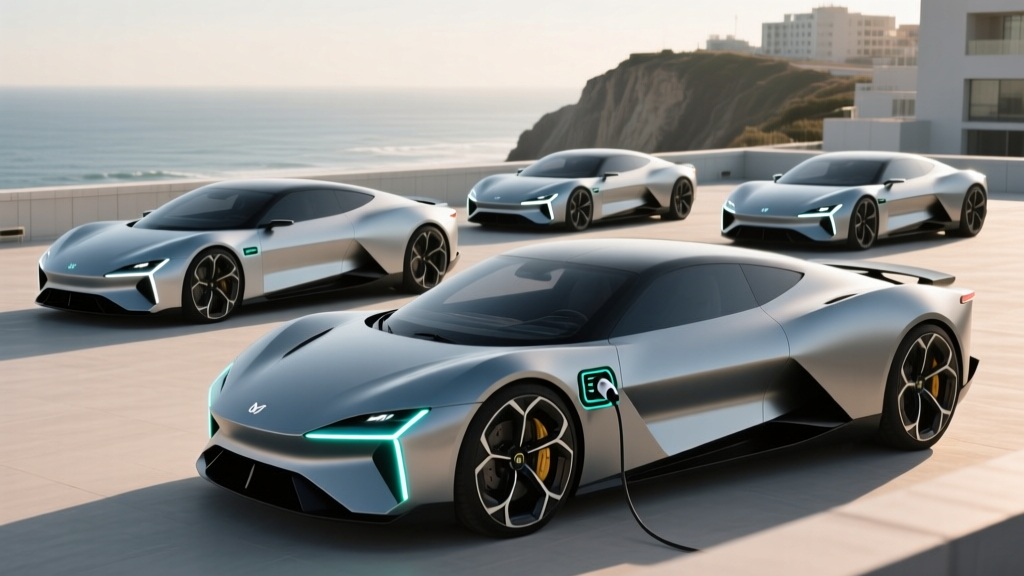
Quick Answer: Should You Buy an EV Sports Car?
An EV sports car delivers instant torque, sub-3-second 0-60 times, and lower running costs than a gas equivalent — but expect 20-30% less range than the EPA sticker on highway track-style driving, higher insurance premiums (often 25-40% more than gas sports cars), and limited DC fast-charging infrastructure near canyon roads or rural tracks. If you have Level 2 home charging and drive primarily on paved roads in moderate climates, a 2026 EV sports car can be a thrilling daily driver. If you lack home charging or frequently take 400+ mile road trips to remote areas, a gas or hybrid performance car remains more practical today.
The 2026 EV Sports Car Landscape: What's Available Now
The performance EV segment has matured past early adopters. Today's EV sports cars span from the accessible Tesla Model 3 Performance to the hypercar-tier Rimac Nevera, with serious contenders from Porsche, BMW, Hyundai, and Lotus filling the middle. Here's how the most relevant 2026 models stack up on the numbers that matter.
| Model | EPA Range | Battery (kWh / Chem.) | 0-60 mph | HP | Peak DC Charge | 10-80% Time | Base MSRP |
|---|---|---|---|---|---|---|---|
| Tesla Model 3 Performance | 315 mi | 79 kWh / NMC | 2.9 sec | 510 | 250 kW | ~18 min | $54,990 |
| Porsche Taycan GTS | 269 mi | 93.4 kWh (gross) / NMC | 3.5 sec | 590 | 270 kW | ~19 min | $113,950 |
| BMW i4 M50 | 269 mi | 81.5 kWh / NMC | 3.7 sec | 536 | 205 kW | ~27 min | $69,700 |
| Hyundai Ioniq 5 N | 221 mi | 84 kWh / NMC | 3.25 sec | 641 | 238 kW | ~18 min | $67,500 |
| Lotus Eletre R | 304 mi (est.) | 112 kWh / NMC | 2.95 sec | 905 | 350 kW | ~20 min | $120,000 (est.) |
Real-world range caveat: The EPA range figures above assume mixed driving. On sustained highway runs at 75-80 mph, expect 80-85% of sticker range. In cold weather (below 32°F / 0°C), range drops an additional 15-30% depending on whether the vehicle uses a heat pump. The Hyundai Ioniq 5 N and Porsche Taycan GTS both include heat pumps standard; the Tesla Model 3 Performance has one as well. Aggressive canyon or track driving can cut range by 40-50% — the same physics that punishes a gas car's MPG under hard throttle.
EV Sports Car vs. Gas Sports Car: The Real Cost Breakdown
Performance comparisons usually focus on 0-60 times, but ownership economics tell a more complete story. Below is a 5-year total cost of ownership (TCO) comparison between the Tesla Model 3 Performance and a comparable gas sports sedan — the BMW M340i xDrive — assuming 12,000 miles/year, $0.16/kWh home electricity, $3.80/gallon premium fuel, and no federal tax credit (the Model 3 Performance exceeds the §30D MSRP cap for sedans at $55,000).
| Cost Category | Tesla Model 3 Perf. (EV) | BMW M340i xDrive (Gas) |
|---|---|---|
| Purchase Price (MSRP) | $54,990 | $57,450 |
| Federal Tax Credit (§30D) | $0 (MSRP cap exceeded) | $0 |
| 5-Year Fuel/Energy | $4,800 (home L2 avg.) | $11,400 (premium 93 oct.) |
| 5-Year Maintenance | ~$1,500 | ~$4,200 |
| 5-Year Insurance (est.) | ~$14,400 | ~$10,800 |
| Estimated Depreciation (5yr) | ~$22,000 | ~$20,100 |
| 5-Year TCO (approx.) | $97,690 | $103,950 |
Key takeaway: The EV saves roughly $6,000-$6,500 over five years in this scenario, primarily from fuel and maintenance. However, higher insurance premiums (common for EVs due to expensive battery repair costs and higher parts prices) eat into those savings. Your actual numbers depend heavily on local electricity rates, whether you can charge at home, and your insurance profile. Get quotes from at least three insurers before committing — the Insurance Information Institute notes EV premiums vary widely by carrier.
Charging a Sports EV: What You Actually Need at Home
Every EV sports car in this guide supports DC fast charging at 200+ kW, but 80-90% of your charging will happen at home on Level 2. Here's what that looks like in practice:
| Level | Power (kW) | Miles Added/Hour | Typical Use |
|---|---|---|---|
| Level 1 (120V outlet) | 1.2-1.9 kW | 3-5 mi/hr | Emergency/trickle only |
| Level 2 (240V, 48A circuit) | 11.5 kW | 30-44 mi/hr | Daily home charging |
| DC Fast (public) | 150-350 kW | 500-1,000+ mi/hr | Road trips |
For a sports EV with a ~80 kWh battery, a 48-amp Level 2 home charger (like the Tesla Wall Connector, ChargePoint Home Flex, or Emporia Level 2) will recharge from 10% to 100% in roughly 7-8 hours — perfect for overnight. Installation costs vary widely:
| Item | Cost Range |
|---|---|
| Level 2 Charger (hardware) | $400 – $750 |
| Electrician labor (240V/50A circuit) | $800 – $2,500 |
| Permit & inspection | $50 – $300 |
| Electrical panel upgrade (if needed) | $1,500 – $4,000 |
| Total (no panel upgrade) | $1,250 – $3,550 |
| Total (with panel upgrade) | $2,750 – $7,550 |
If your home has a 200-amp electrical panel with spare capacity, expect the lower end. Older homes with 100-amp panels may require an upgrade to support a 48A EV charger alongside existing loads. Always get a licensed electrician's assessment before purchasing equipment — the Department of Energy's home charging guide outlines what to expect.
Myths vs. Facts: Common EV Sports Car Misconceptions
| Myth | Fact |
|---|---|
| "EVs are too heavy to handle like a sports car." | EVs are heavier than gas equivalents (the Ioniq 5 N weighs ~4,860 lbs vs. a Civic Type R at ~3,118 lbs), but the battery is mounted low, giving a lower center of gravity. Torque vectoring and advanced suspension tuning compensate significantly. The Porsche Taycan GTS posts competitive skidpad and slalom numbers. |
| "Battery replacement will cost $20,000+." | Full pack replacement is expensive ($12,000-$25,000+ depending on model), but modern NMC packs rarely need full replacement. Individual module repairs are possible on most platforms. Federal law mandates EV battery warranties of at least 8 years / 100,000 miles for emissions-related components, and most manufacturers cover capacity below 70% within that period. Per fueleconomy.gov, most EV batteries outlast their vehicles. |
| "You can't take an EV sports car on a road trip." | Tesla's Supercharger network now has 6,000+ US stations, and the NACS connector is becoming the standard across Ford, GM, Rivian, and others for 2025-2026 models. Electrify America and EVgo cover most interstates. However, remote canyon roads and rural tracks still have charging deserts — plan accordingly. |
| "EVs lose all their range in winter." | Cold weather reduces range 15-30%, not 50%+. Vehicles with heat pumps (Model 3 Performance, Taycan, Ioniq 5 N) recover some efficiency by using waste heat for cabin warming. Preconditioning the battery while plugged in further mitigates loss. |
| "The $7,500 federal tax credit applies to every EV." | The §30D credit has strict rules: MSRP caps ($55,000 for sedans, $80,000 for SUVs/trucks), buyer income limits ($150K single / $300K joint AGI), and battery critical-mineral and component sourcing requirements. Many EV sports cars exceed the sedan MSRP cap. Check current rules at IRS.gov §30D page before assuming eligibility. |
First-Time EV Sports Car Buyer: What You Must Know
If this is your first EV, performance models introduce a few ownership realities that don't appear in brochures:
- Charge curve taper is real. A "250 kW peak" charge rate only applies between roughly 10-50% state of charge. Above 80%, charging slows dramatically to protect the battery — often dropping below 50 kW. Plan road-trip stops to charge from 10-80%, not 10-100%, for the fastest total trip time.
- Tire wear accelerates. The instant torque and heavier weight of EV sports cars wear tires 20-30% faster than gas equivalents. Budget for replacement rubber every 20,000-30,000 miles. High-performance EV-specific tires (like the Michelin Pilot Sport EV or Pirelli P Zero Elect) cost $250-$400 per corner.
- Regenerative braking changes your driving. Most EV sports cars offer adjustable regen, and one-pedal driving becomes second nature. The Hyundai Ioniq 5 N even simulates gear shifts and engine sound for track engagement — a polarizing but popular feature among enthusiasts.
- Public charging reliability varies. While Tesla Superchargers maintain 99%+ uptime, CCS networks (Electrify America, EVgo) still experience 10-20% downtime at some locations according to J.D. Power studies. For road trips, always identify backup chargers along your route.
- Track use voids some warranties. If you plan to take your EV sports car to track days, read the fine print. Some manufacturers exclude battery warranty coverage for repeated high-temperature track use. Porsche and Hyundai have been more transparent about track-friendly thermal management than others.
Decision Framework: Which EV Sports Car Is Right for You?
Choose the Tesla Model 3 Performance if:
- You want the best value (sub-$55K, 315 mi range, 2.9s 0-60)
- You rely on the Supercharger network for road trips
- You prioritize over-the-air updates and software features
- You can accept a minimalist interior and no physical gauges
Choose the Porsche Taycan GTS if:
- Build quality, chassis tuning, and brand prestige are top priorities
- You want the best sustained performance (Taycan's 800V architecture handles repeated hard launches without thermal throttling)
- Budget is $110K+ and you value dealer service experience
Choose the Hyundai Ioniq 5 N if:
- You want track-day engagement with simulated shifts and N e-Shift software
- You want an 84 kWh battery and 238 kW charging at a sub-$70K price
- You prioritize fun factor over maximum range (221 mi EPA)
Choose the BMW i4 M50 if:
- You want a traditional luxury sedan feel with M-car performance DNA
- You prefer BMW's iDrive infotainment and dealer network
- You need a practical daily driver that doesn't shout "EV"
Skip the EV sports car entirely if:
- You cannot install Level 2 home charging (apartment/condo without EV infrastructure)
- Your typical road trips exceed 400 miles through rural areas with sparse DC charging
- You live in extreme cold (regularly below 0°F / -18°C) and need full EPA range year-round
- You plan competitive motorsport where EV weight penalties outweigh torque advantages
Frequently Asked Questions
Do EV sports cars qualify for the $7,500 federal tax credit?
Most don't. The §30D credit caps sedan MSRPs at $55,000 and SUVs/trucks at $80,000. The Tesla Model 3 Performance at $54,990 technically qualifies on price but must also meet battery sourcing and buyer income requirements. The Taycan, i4 M50, and Ioniq 5 N all exceed their respective MSRP caps. Always verify current eligibility at IRS.gov and consult a tax professional — rules change and point-of-sale transfers are now available at participating dealers.
How does an EV sports car compare to a gas sports car on a track?
EVs dominate on acceleration (instant torque, no turbo lag, no shift interruptions) but lose on sustained lap times due to weight and thermal management. A Tesla Model 3 Performance will gap a BMW M3 off the line, but the M3 may close the gap over a 20-lap session as the EV's battery heats up and power is thermally limited. The Porsche Taycan and Ioniq 5 N manage heat better than most, but gas cars still hold an edge at dedicated track days lasting multiple hours.
What happens to an EV sports car's range during spirited driving?
Expect 40-50% range reduction during aggressive canyon or track driving compared to EPA estimates. A Model 3 Performance rated at 315 miles EPA may deliver 150-180 miles of hard driving. This mirrors gas cars — an M3 rated at 23 MPG combined drops to 12-14 MPG under the same conditions. Plan your routes and charging stops accordingly.
Are EV sports cars expensive to insure?
Yes, typically 25-40% more than a comparable gas sports car. Insurers factor in higher repair costs (specialized EV body shops, expensive battery components), higher purchase prices, and limited claims history on newer models. Average annual premiums for a Model 3 Performance run $2,600-$3,200 depending on your profile. Always get insurance quotes before purchasing — the difference between carriers can be $800+/year.
Can I daily-drive an EV sports car year-round in cold climates?
Yes, but plan for 20-30% range loss in sub-freezing temperatures. All models listed here have thermal management systems and heat pumps that mitigate (but don't eliminate) cold-weather loss. Preconditioning the battery while plugged in — a feature available on all listed models — recovers some range and improves regenerative braking performance. If your daily round-trip commute is under 100 miles, even a 30% range reduction still leaves ample buffer.