Quick Answer: The most viable EV camper van options in 2026 are the Mercedes-Benz eSprinter (up to 280 miles EPA range, 113 kWh usable battery, starting ~$57,000 before upfitting) and the Ford E-Transit (126 miles EPA, 68 kWh usable, ~$46,000 base). Real-world range drops 20–35% when fully loaded with camper gear, towing, or driving in cold weather. An EV camper van makes the most sense for weekend trips within 150 miles of home where you can charge overnight on Level 2, not for cross-country boondocking.
What Is an EV Camper Van — and Who Is It For?
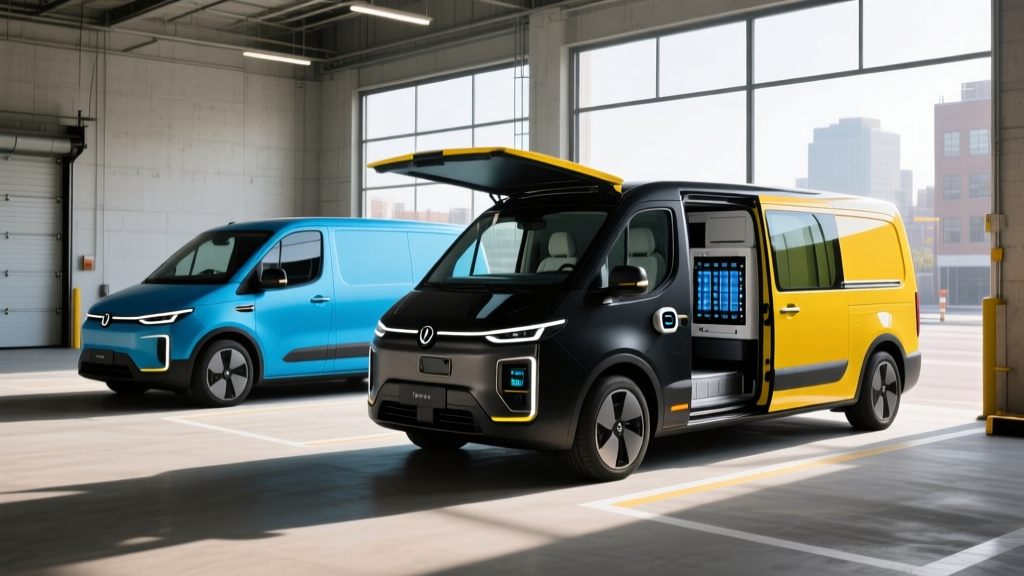
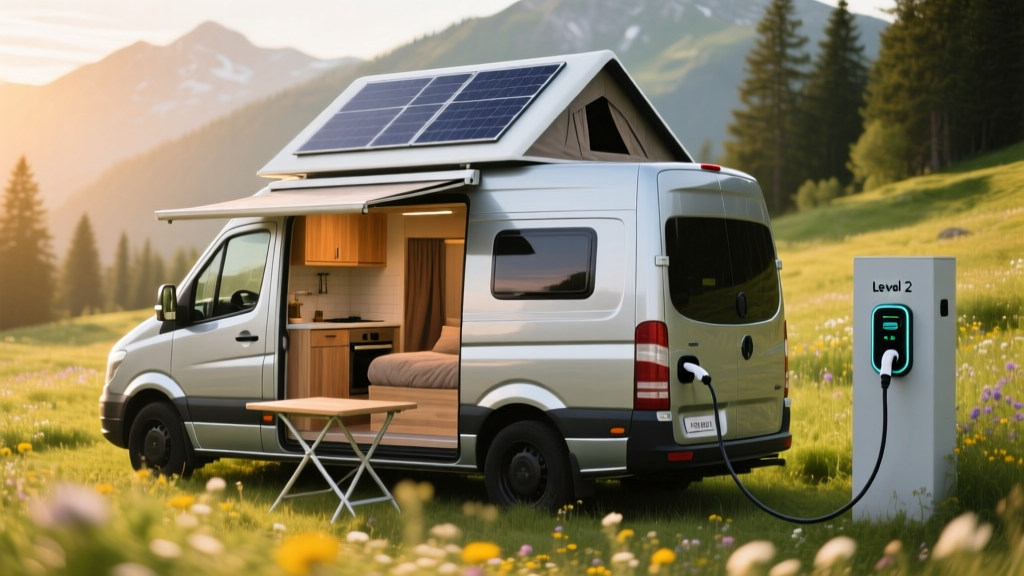
An EV camper van is an electric cargo or passenger van converted for camping — typically with a bed platform, basic kitchenette, auxiliary battery system, and sometimes solar panels. Unlike purpose-built electric RVs (which remain rare and expensive), most EV camper vans start as commercial electric vans that owners or upfitters convert for recreational use.
The appeal is straightforward: near-silent operation, zero tailpipe emissions at the campsite, the ability to run appliances off the traction battery via vehicle-to-load (V2L) or an inverter, and dramatically lower per-mile energy costs compared to a gas van getting 14–18 MPG. But the trade-offs — limited range, sparse DC fast-charging infrastructure in rural areas, and high upfront cost — are significant and need honest evaluation before you commit.
EV Camper Van Range: EPA Stickers vs. Real-World Camping
Range is the single biggest concern for any EV camper van buyer, and it deserves a hard look beyond the manufacturer's EPA estimate. Here is what the current leading electric vans actually deliver:
| Vehicle | Battery (Usable kWh) | Chemistry | EPA Range (mi) | Real-World Loaded Range* | Peak DC Charge (kW) | 10–80% Time |
|---|---|---|---|---|---|---|
| Mercedes-Benz eSprinter (150 kWh variant) | 113 kWh | NMC | ~280 | 185–225 mi | 115 kW | ~42 min |
| Ford E-Transit (2026) | 68 kWh | NMC | 126 | 85–100 mi | 115 kW | ~35 min |
| BrightDrop Zevo 600 | ~165 kWh (est.) | NMC | ~250 (est.) | 170–200 mi | ~120 kW | ~50 min |
*Real-world loaded range assumes 800–1,500 lbs of camper conversion weight, highway speeds of 65–75 mph, and moderate temperatures (55–75°F). In winter conditions below 32°F, expect an additional 15–25% reduction.
Cold-Weather Reality Check: An eSprinter with a full camper build that achieves 220 miles on a warm day may drop to 150–170 miles at 20°F, especially if you are running cabin heat. A heat pump (standard on the eSprinter, not on the E-Transit) helps, but resistive heating from auxiliary camper systems will compound the loss. Plan your winter routes around 55–60% of EPA range to be safe.
The Ford E-Transit's 126-mile EPA range makes it viable primarily as a weekend camper within a tight radius of home or as a urban adventure vehicle. The eSprinter's larger battery is far more practical for multi-day trips, though still requires careful route planning around charging stops.
EV vs. Gas Camper Van: Cost and Ownership Comparison
The most common comparison is an electric van versus a gasoline or diesel Sprinter or Transit camper build. Here is how the numbers stack up over five years and 60,000 miles of mixed use:
| Cost Category | eSprinter Camper (EV) | Gas Sprinter 2500 Camper |
|---|---|---|
| Vehicle Purchase (base, pre-conversion) | $57,000 | $48,000 |
| Camper Conversion | $15,000–$30,000 | $15,000–$30,000 |
| Federal Tax Credit (§30D, if eligible) | –$7,500* | $0 |
| Fuel/Energy (60k mi) | $4,200 (avg $0.14/kWh home) | $10,800 (16 MPG avg, $3.60/gal) |
| Maintenance (5 years) | $1,800 | $4,500 |
| Insurance (5-year est.) | $9,500 | $7,800 |
| Total 5-Year Cost | $79,500–$95,000 | $86,100–$101,100 |
*The IRS §30D credit of up to $7,500 is subject to MSRP caps ($80,000 for vans/SUVs), buyer income limits ($150k single / $300k joint), and battery critical-mineral sourcing requirements. The eSprinter's eligibility varies by model year and battery sourcing — verify on the IRS qualified vehicles list before purchasing. Commercial vehicles over 14,000 lbs GVWR may qualify under §45W instead.
The EV camper van's energy savings are substantial — roughly $6,600 less over 60,000 miles when charging primarily at home. Maintenance savings add another $2,700 (no oil changes, fewer brake replacements due to regenerative braking, no transmission service). However, EV insurance premiums run 15–25% higher due to battery replacement costs and specialized repair requirements.
| Metric | eSprinter (EV) | Gas Sprinter (V6 Turbo) |
|---|---|---|
| Efficiency | ~2.0 kWh/mi (loaded) | ~16 MPG combined |
| Home Charging Cost ($0.14/kWh) | $0.28/mi | — |
| Public DC Fast Charge ($0.40/kWh avg) | $0.80/mi | — |
| Gasoline ($3.60/gal) | — | $0.225/mi |
| Cost per 300-mi trip (home charge) | $84 | $67.50 |
| Cost per 300-mi trip (DC fast charge) | $240 | $67.50 |
This reveals a critical ownership insight: the EV camper van's cost advantage depends almost entirely on home charging. If you charge at home on a Level 2 at $0.14/kWh, you pay $0.28 per mile — competitive with gas. If you rely on public DC fast chargers at $0.35–$0.50/kWh on road trips, your per-mile cost can exceed gas. A 300-mile trip charged entirely on public fast chargers costs roughly $240 in an eSprinter versus $67.50 in a gas Sprinter.
Charging Logistics: The Real Challenge of EV Van Life
Charging an EV camper van is fundamentally different from charging a sedan or crossover. Here is what first-time buyers need to know:
Home Charging (Level 2)
A Level 2 home charger at 240V / 48A (11.5 kW) will fully recharge an eSprinter's 113 kWh battery in roughly 10–11 hours. For the E-Transit's 68 kWh pack, expect about 6–7 hours. Installation typically costs $800–$2,500 for a standard setup, but may require a panel upgrade ($1,500–$3,500) if your home has a 100A service. Always get a licensed electrician's assessment before committing.
Public DC Fast Charging
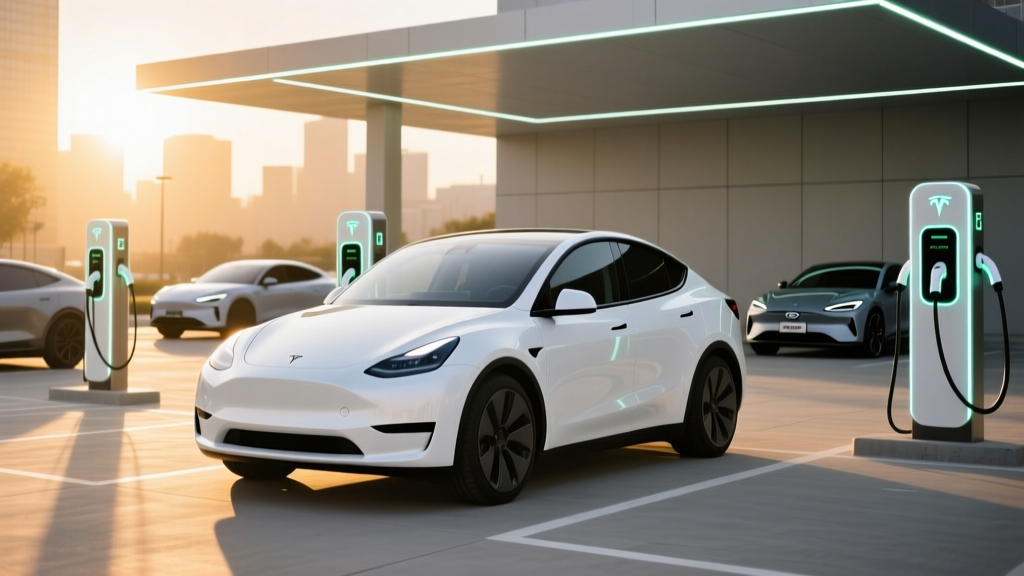
The eSprinter peaks at 115 kW on DC fast charging — adequate but not class-leading. On a road trip, a 10–80% charge takes roughly 42 minutes. The charge curve tapers significantly above 80%, so plan to charge to 80% and drive rather than waiting for a full fill. One major pain point: many DC fast-charging stations are designed for passenger cars, with short cables, tight pull-through spaces, and bollards that make maneuvering a 20-foot van difficult. Seek out stations with pull-through charging (increasingly common at Electrify America and Tesla Supercharger sites with NACS adapters).
Off-Grid / Boondocking
This is where the EV camper van faces its biggest limitation. Without access to grid power, you are limited to solar recovery (typically 200–600W of rooftop solar yielding 1–3 kWh per day — enough to power auxiliary systems but not meaningfully recharge the traction battery) or a portable generator as a range extender. If your camping style involves multi-day boondocking far from paved roads and charging infrastructure, a gas or diesel van remains the more practical choice in 2026.
Common EV Camper Van Misconceptions — Addressed with Facts
| Myth | Fact |
|---|---|
| "Solar panels on the roof will recharge the van while parked." | 600W of solar in full sun generates ~3 kWh/day. The eSprinter needs 113 kWh. That is 38 days of perfect sun for a full charge. Solar is great for auxiliary systems (lights, fridge, devices) but will not meaningfully extend driving range. |
| "EVs can't tow, so you can't bring a trailer." | The eSprinter is rated for up to 7,500 lbs towing. However, towing a 3,000-lb trailer will reduce range by 30–45%. Plan accordingly. |
| "The battery will need replacing in 5 years." | Mercedes-Benz warranties the eSprinter battery for 8 years/100,000 miles at 70% capacity retention. Real-world degradation data from commercial fleets shows NMC batteries retaining 85–90% capacity at 100,000 miles with proper charging habits (avoiding routine 100% charges and DC fast charging exclusively). |
| "You can run all camper appliances off the van battery." | You can — but only with a proper inverter and BMS integration. Drawing 2 kWh/day from the traction battery for a fridge and lights reduces your driving range by about 1 mile per kWh used. Plan your energy budget carefully. |
| "EV camper vans qualify for the full $7,500 tax credit." | Eligibility depends on MSRP (under $80,000 for vans), buyer income, and battery sourcing requirements. Many upfitted vans exceed the MSRP cap. Check the fueleconomy.gov qualified vehicle list before assuming eligibility. |
Decision Framework: Should You Build or Buy an EV Camper Van?
Choose an EV camper van if:
- Your trips are mostly within 150–200 miles of home (weekend warrior pattern)
- You have reliable Level 2 home charging (garage or driveway with 240V access)
- You camp at established campgrounds with shore power or near towns with DC fast chargers
- You value quiet, emission-free campsite operation and want to run appliances from the van battery
- You drive 8,000+ miles per year in the van, making energy savings meaningful
- You live in a mild climate or accept cold-weather range loss as a planning factor
Choose a gas/diesel camper van if:
- You regularly drive 300+ miles between stops or boondock in remote areas
- You lack home charging access (street parking, apartment living)
- You tow heavy loads (boats, horse trailers) on long trips
- You camp primarily in winter in sub-freezing climates
- Your budget is under $50,000 total (vehicle + conversion)
- You want maximum flexibility with no route planning around chargers
Consider a PHEV van (when available) if:
- You want electric campsite operation for short stays but gas range for travel days
- Your daily driving is under 30 miles but you take longer weekend trips
What First-Time EV Camper Van Buyers Must Know
If you are transitioning from a gas vehicle to an EV camper van, these ownership realities deserve your attention before purchase:
Weight kills range. Every 100 lbs of camper conversion weight costs roughly 1–2% of range. A full build with water tanks (a 20-gallon fresh tank adds 166 lbs), cabinetry, batteries, and gear can add 1,000–1,500 lbs. Budget for 15–25% less range than the EPA sticker once your van is fully loaded.
Preconditioning matters. The eSprinter and E-Transit both support battery preconditioning — warming the battery pack before a DC fast charge session. Always use this feature (typically activated by setting a charging stop in the navigation system) to achieve advertised charge speeds. Skipping preconditioning in cold weather can double your 10–80% charge time.
Auxiliary electrical systems need careful design. Running a camper fridge, lights, fan, and device charging from the traction battery requires a DC-DC converter or inverter with proper isolation. Most professional EV camper conversions include a separate 12V house battery system charged from the traction battery via a DC-DC charger — this protects your driving range and prevents deep discharge of the main pack.
Insurance costs more. EV camper vans typically carry insurance premiums 15–25% higher than equivalent gas vans, reflecting the cost of battery replacement ($15,000–$25,000 out of warranty) and the limited number of shops qualified to repair high-voltage systems after a collision. Get quotes before purchasing — the annual premium difference ($400–$800) affects your total cost of ownership.
Resale value is uncertain. The EV camper van market is young, and long-term depreciation data is limited. Commercial electric vans have shown steeper depreciation than gas equivalents in the first three years, partly due to rapid battery technology improvements making older packs less desirable. Factor in 50–60% depreciation over five years rather than the 40–45% typical of a gas Sprinter.
Frequently Asked Questions
Can I charge an EV camper van at a regular campground?
Most campgrounds offer 30A or 50A shore power outlets (120V/240V). A 50A outlet at 240V delivers up to 12 kW — essentially Level 2 charging speed. You will need an appropriate adapter (typically a NEMA 14-50 plug) and your van's mobile charging cable. A full charge on a 50A campground outlet takes 9–11 hours for the eSprinter, making overnight charging practical. Always confirm the campground's electrical setup before arrival.
Does the eSprinter or E-Transit support vehicle-to-load (V2L)?
The Ford E-Transit offers Pro Power Onboard, which provides up to 2.4 kW of 120V AC power from built-in outlets in the cargo area — enough to run a small fridge, laptop chargers, and LED lighting simultaneously. The Mercedes-Benz eSprinter does not include factory V2L as of the 2026 model year, but aftermarket inverter installations can provide similar functionality. This is a significant advantage for the E-Transit as a camper platform despite its shorter range.
How long does the battery last in an EV camper van?
Both the eSprinter and E-Transit carry 8-year/100,000-mile battery warranties with a 70% capacity retention threshold. Based on data from commercial delivery fleets (which cycle batteries far more aggressively than recreational use), NMC packs in these vans are projected to retain 80–88% capacity at 150,000 miles. For a camper van driven 10,000–15,000 miles per year, the battery should outlast the vehicle's practical service life.
Is it worth converting a used electric van to a camper?
A used E-Transit (2022–2024 model years) can be found for $25,000–$35,000, making it an attractive camper conversion candidate. However, the used EV tax credit under §25E is limited to $4,000 or 30% of the sale price (whichever is less), applies only to vehicles under $25,000, and has buyer income caps ($75k single / $150k joint). Have the battery state of health (SoH) checked via the dealer diagnostic system before purchase — a pack below 85% SoH significantly reduces already-limited range.
What about the VW ID. Buzz or other electric minivans for camping?
The Volkswagen ID. Buzz (231 miles EPA, 91 kWh usable battery, ~$61,000 base) offers a more car-like driving experience and a factory-available camper interior in Europe, though the US version currently lacks the full Camper trim. Its smaller cargo volume (163 cu ft vs. the eSprinter's 533 cu ft in the extended wheelbase) limits conversion potential. It works well as a light weekend camper for two people but cannot accommodate a full camper build.
The EV camper van is no longer a theoretical concept — it is a viable, if niche, platform for the right use case. If your camping style aligns with the range and charging realities, the energy savings, quiet operation, and off-grid power capability make it a compelling alternative to a gas van. If you need unlimited range and remote boondocking freedom, the technology is not quite there yet. Evaluate your actual trip patterns honestly, and let the data — not the dream — drive your decision.