The Quick Answer: Which Electric Wagon Car Should You Buy?
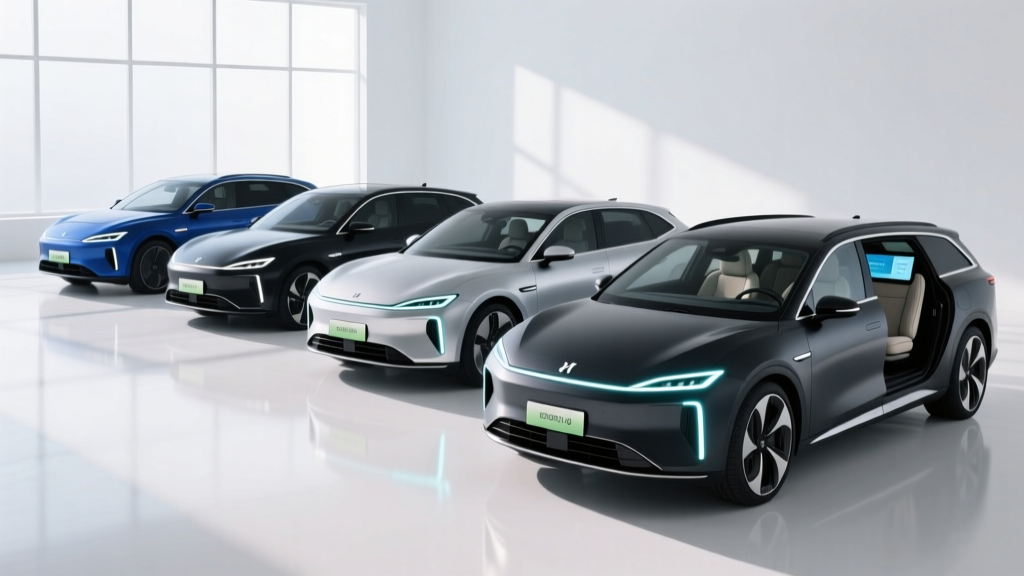
If you're searching for an electric wagon car in 2026, the short list is small but strong. The segment is anchored by three vehicles that blend cargo versatility with battery-electric efficiency: the Audi A6 Avant e-tron, the Porsche Taycan Sport Turismo, and the NIO ET5 Touring (available in select markets). For US buyers, the Audi A6 Avant e-tron and the Porsche Taycan Sport Turismo represent the most accessible options, with EPA ranges from 250 to over 300 miles depending on configuration.
Bottom line: The best electric wagon car for most US buyers in 2026 is the Audi A6 Avant e-tron — it offers ~300 miles of EPA range, over 60 cu-ft of cargo space with seats folded, DC fast charging up to 270 kW, and a starting MSRP near $72,000 before incentives. If driving dynamics matter more than outright cargo volume, the Porsche Taycan Sport Turismo (EPA ~280 mi, starting ~$105,000) is the performance pick. Neither qualifies for the full $7,500 federal §30D tax credit as of 2026 due to MSRP caps and battery-sourcing rules — always verify with a tax professional.
The electric wagon car niche exists for buyers who need more cargo space than a sedan but don't want the bulk, ride height, or efficiency penalty of an electric SUV. Wagons sit lower, weigh less, and typically achieve 5-10% better real-world range than their SUV counterparts sharing the same platform. Let's break down exactly what's available, what it costs to own, and whether an electric wagon makes financial sense versus a gas wagon or electric SUV.
2026 Electric Wagon Cars: Side-by-Side Specs
Before diving into ownership economics, here's how the current electric wagon car lineup stacks up on the numbers that matter. All figures reflect 2026 model-year data from manufacturer specifications and fueleconomy.gov where available.
| Spec | Audi A6 Avant e-tron | Porsche Taycan Sport Turismo | NIO ET5 Touring |
|---|---|---|---|
| EPA Range (est.) | ~300 mi (100 kWh, RWD) | ~280 mi (105 kWh, AWD) | ~270 mi (75 kWh) / ~360 mi (100 kWh) |
| Battery (usable) | ~96 kWh, NMC | ~93 kWh, NMC | 75 kWh (LFP) / 100 kWh (NMC) |
| Peak DC Fast Charge | 270 kW | 320 kW | ~180 kW |
| 10–80% DCFC Time | ~20 min | ~18 min | ~28 min |
| Level 2 Charge Rate | 11 kW (AC) | 11 kW (AC) | 7 kW / 11 kW (AC) |
| 0–60 mph | ~5.4 sec (RWD) / ~3.8 sec (quattro) | ~3.5 sec (4S) / ~2.5 sec (Turbo S) | ~4.0 sec (AWD) |
| Horsepower | 362 hp (RWD) / 543 hp (quattro) | 509 hp (4S) / 939 hp (Turbo S) | ~480 hp (AWD) |
| Cargo (rear seats up / folded) | ~18 / ~62 cu-ft | ~16 / ~47 cu-ft | ~16 / ~50 cu-ft |
| Base MSRP (2026) | ~$72,000 | ~$105,000 | Not sold in US (EU/China) |
| Battery Warranty | 8 yr / 100,000 mi (≥70% SoH) | 8 yr / 100,000 mi (≥70% SoH) | 8 yr / 100,000 mi |
Key takeaway on range: These EPA figures assume moderate temperatures, mixed driving, and a full charge. In real-world highway driving at 75 mph, expect a 10-15% reduction. In sub-30°F winter conditions without preconditioning, range loss can reach 25-35% — meaning a 300-mile EPA rating could deliver 195-225 miles on a cold January road trip. Both the Audi and Porsche feature heat pumps to mitigate cold-weather losses, but the physics of lithium-ion chemistry in cold temperatures cannot be fully engineered away.
Real-World Range Reality Check: The Audi A6 Avant e-tron's ~300-mile EPA estimate translates to approximately 255-270 miles on a warm-weather highway drive and 195-225 miles in freezing conditions. Plan road-trip charging stops around 200 miles of usable range to maintain a comfort buffer.
Electric Wagon vs. Gas Wagon vs. Electric SUV: The Cost Comparison
The most common question from electric wagon car shoppers: does it actually save money versus a traditional gas wagon like the Subaru Outback or a comparable electric SUV like the Tesla Model Y? Here's a data-driven breakdown.
| Category | Audi A6 Avant e-tron (EV Wagon) | Subaru Outback 2.5i (Gas Wagon) | Tesla Model Y LR AWD (EV SUV) |
|---|---|---|---|
| Base MSRP | ~$72,000 | ~$33,000 | ~$48,000 |
| Federal Tax Credit (§30D) | $0–$3,750 (sourcing dependent) | $0 | $0–$7,500 (sourcing dependent) |
| Fuel/Energy Cost (5 yr, 75k mi) | ~$3,750 (home L2) / ~$6,000 (DCFC heavy) | ~$9,375 (gas @ $3.50/gal, 28 MPG) | ~$3,375 (home L2) / ~$5,625 (DCFC heavy) |
| Maintenance (5 yr est.) | ~$1,500 | ~$3,500 | ~$1,200 |
| Insurance (5 yr est.) | ~$12,500 | ~$7,500 | ~$9,500 |
| 5-Year Total Cost (approx.) | ~$89,750–$95,750 | ~$53,375 | ~$54,600–$64,325 |
The numbers make the trade-offs clear. An electric wagon car like the A6 Avant e-tron costs significantly more upfront than a gas wagon and more than an electric SUV like the Model Y. The energy savings over five years are real — roughly $3,000-$6,000 less than gasoline — but they don't close the $39,000 purchase-price gap with the Outback. This purchase is a premium lifestyle and technology choice, not a pure economics play.
However, compare the A6 Avant e-tron to its direct internal-combustion sibling — the Audi A6 Avant 45 TFSI (~$62,000 MSRP, ~26 MPG combined) — and the math tightens considerably. Over five years, the gas A6 Avant burns approximately $10,000 in fuel versus the e-tron's $3,750-$6,000 in electricity, and the gas version requires oil changes, transmission fluid service, and emissions-system maintenance that the EV simply doesn't need.
Real-World Ownership: What First-Time EV Wagon Buyers Must Know
Buying an electric wagon car involves logistical considerations that don't apply to gas vehicles. Here's what matters in practice.
Home Charging Is Non-Negotiable for Most Owners
Public DC fast charging is viable for road trips, but daily EV ownership hinges on home Level 2 charging. A 240V Level 2 home charger (typically 7-11 kW) adds roughly 25-40 miles of range per hour of charging — enough to fully replenish a 100 kWh battery overnight in 9-13 hours.
| Item | Cost Range |
|---|---|
| Level 2 charger hardware (e.g., ChargePoint Home Flex, Wallbox Pulsar) | $400–$700 |
| Electrician labor (240V/50A circuit, 40-ft run) | $800–$2,000 |
| Electrical panel upgrade (if needed: 100A → 200A) | $1,500–$3,500 |
| Permit and inspection | $100–$400 |
| Total typical install | $1,300–$6,600 |
If you live in an apartment or condo without dedicated parking and charging access, an electric wagon car becomes significantly less practical. Relying solely on public DC fast charging is possible but adds time (20-30 minutes per session, 2-4 times per week) and cost — public DCFC rates average $0.35-$0.55/kWh versus $0.12-$0.18/kWh for residential electricity.
Charging Speed Matters More Than Peak Numbers Suggest
The Audi A6 Avant e-tron advertises a peak 270 kW DC fast-charge rate. In practice, that peak only holds between roughly 10-40% State of Charge (SoC). Above 50%, the charge curve tapers significantly — by 80%, you're pulling perhaps 80-100 kW. This is why manufacturers quote 10-80% times rather than 0-100%: the final 20% can take as long as the first 70%.
The Porsche Taycan Sport Turismo's 320 kW peak (on 800V architecture) sustains higher power longer, which is why its 10-80% time is ~18 minutes despite a similar battery size. For road-trippers who regularly DC fast-charge, this sustained-rate advantage is tangible.
Cold Weather, Tires, and the Efficiency Tax
Electric wagon cars are not immune to the efficiency penalties that affect all EVs. Cold temperatures slow lithium-ion chemistry, reducing both available capacity and charge acceptance. At 20°F, expect 20-30% range loss versus EPA figures, even with a heat pump. Both the Audi and Porsche include heat pumps as standard or available equipment — a critical feature that recovers waste heat from the drivetrain to warm the cabin, reducing the energy draw compared to resistive heating.
Tire selection also matters. The A6 Avant e-tron's efficiency rating assumes low-rolling-resistance summer or all-season tires. Switching to aggressive winter tires can reduce range by an additional 5-8%. Factor this into your winter range planning.
Federal Tax Credits and the Electric Wagon Car: What Qualifies?
The IRS §30D clean vehicle credit can reduce the effective cost of an EV by up to $7,500, but eligibility for premium electric wagon cars is limited in 2026. Here's the framework:
- MSRP cap: Vans, SUVs, and pickup trucks are capped at $80,000. Sedans and wagons are capped at $55,000. This immediately disqualifies the Audi A6 Avant e-tron (~$72,000) and Porsche Taycan Sport Turismo (~$105,000) from the new-vehicle credit, as both are classified as cars/wagons and exceed the $55,000 cap.
- Buyer income cap: Modified adjusted gross income must not exceed $150,000 (single), $225,000 (head of household), or $300,000 (joint filing).
- Battery sourcing: Critical minerals and battery components must meet phased-in percentage thresholds from US or FTA-partner countries. These thresholds tighten annually through 2030.
- Point-of-sale transfer: Eligible credits can be transferred to the dealer at purchase, reducing your out-of-pocket cost immediately rather than waiting for tax filing.
- Used EV credit (§25E): Up to $4,000 (30% of sale price) for qualifying used EVs under $25,000 — unlikely to apply to electric wagon cars given their current pricing.
Bottom line on incentives: Most electric wagon cars on the US market in 2026 are premium-priced vehicles that exceed the §30D MSRP cap for wagons. Don't count on the federal credit to bring the price down. Some states offer additional rebates (California's CVRP, Colorado's state credit, etc.) that may apply regardless of MSRP — check your state's energy office for current programs.
Myths vs. Facts: Electric Wagon Car Misconceptions
| Myth | Fact |
|---|---|
| "EV batteries need replacing every 5 years." | Modern NMC and LFP batteries are warrantied for 8 years / 100,000 miles at ≥70% State of Health. Real-world degradation data from Tesla, Hyundai, and others shows average capacity loss of 8-12% over 150,000 miles. Full battery replacement costs $12,000-$22,000 out of warranty but is rarely needed within the vehicle's normal lifespan. |
| "There are no electric wagons available in the US." | The Audi A6 Avant e-tron and Porsche Taycan Sport Turismo are both available for 2026. The segment is small but real, and more entrants (BMW i5 Touring, potential Volvo V60 successor) are expected by 2027-2028. |
| "Wagons are less efficient than sedans on the same platform." | Wagons share powertrains with sedans and add modest weight (~100-200 lbs) and slightly more frontal area. The efficiency penalty is typically 2-5% — far less than the 10-20% penalty of stepping up to an SUV. |
| "I can't take an EV wagon on road trips." | With 250-300 miles of range and a 10-80% DC fast-charge time of 18-22 minutes, an electric wagon car is viable for road trips using the Electrify America, Tesla Supercharger (with NACS adapter), or Ionity networks. Plan 20-minute stops every 2-2.5 hours. |
| "Electric wagons cost more to insure than gas wagons." | Generally true: EV insurance premiums run 15-25% higher than equivalent gas vehicles due to higher repair costs and battery replacement risk. Shop quotes from EV-friendly insurers (Geico, Progressive, Tesla Insurance) before purchasing. |
Decision Framework: Is an Electric Wagon Car Right for You?
Choose an electric wagon car if:
- You have reliable home Level 2 charging access (garage, driveway, or dedicated spot with 240V outlet)
- Your daily driving is under 80 miles round-trip, with occasional road trips of 200-400 miles
- You need 45-60+ cu-ft of cargo space but prefer car-like ride height and handling over an SUV
- You're shopping in the $65,000-$110,000 price range and value premium refinement
- You live in a region with moderate winters or have access to a heated garage for cold-weather charging
Choose a gas or hybrid wagon instead if:
- Your budget is under $40,000 (the Subaru Outback, starting ~$33,000, offers 28 MPG combined and 75 cu-ft cargo)
- You lack home charging access and your area has sparse public DCFC infrastructure
- You regularly tow over 2,000 lbs or drive 400+ miles between stops in rural areas
- You need a sub-$55,000 vehicle to qualify for the full §30D federal tax credit
Choose an electric SUV instead if:
- You want the broadest model selection, best tax-credit eligibility, and most competitive pricing (Tesla Model Y, Hyundai Ioniq 5, Kia EV6)
- You need third-row seating or 5,000+ lb towing capacity
- You prioritize ground clearance for unpaved roads or deep-snow conditions
Frequently Asked Questions
Are there any affordable electric wagon cars under $50,000?
Not in the US market as of 2026. The electric wagon car segment remains premium-positioned, with the lowest entry point around $72,000 (Audi A6 Avant e-tron). In Europe and China, more affordable options exist — the NIO ET5 Touring starts around €45,000, and MG offers the MG5 Electric at roughly £30,000 — but these aren't sold stateside. If you need an electrified wagon under $50,000, consider a plug-in hybrid (PHEV) wagon when one becomes available, or opt for a compact electric SUV like the Hyundai Ioniq 5 (~$42,000) which offers similar cargo volume.
How long does it take to charge an electric wagon car at home?
On a Level 2 home charger (240V, 48A / 11.5 kW), the Audi A6 Avant e-tron's ~96 kWh usable battery charges from 10% to 100% in approximately 8-9 hours — essentially one overnight session. On a standard 120V Level 1 outlet, the same charge takes 70+ hours, which is impractical for daily use. Most EV wagon owners install a Level 2 charger and wake up to a full battery every morning.
Do electric wagon cars hold their resale value?
EV depreciation has been steeper than gas vehicles in recent years, with 3-year depreciation averaging 45-55% for premium EVs versus 30-40% for comparable gas cars, according to industry data. The niche appeal of an electric wagon car could support slightly better retention among enthusiasts, but plan for significant depreciation. Leasing can mitigate this risk — both Audi and Porsche typically offer 36-month lease programs with competitive money factors.
Can I tow with an electric wagon car?
The Audi A6 Avant e-tron is rated to tow up to approximately 4,600 lbs (braked trailer), and the Porsche Taycan Sport Turismo is not rated for towing in most configurations. For comparison, the Tesla Model Y can tow up to 3,500 lbs, and a gas Subaru Outback tows up to 3,500 lbs. Towing with any EV reduces range by 30-50% depending on trailer weight and aerodynamics — plan accordingly.
What happens if the battery degrades significantly?
Both Audi and Porsche warrant their traction batteries for 8 years or 100,000 miles, whichever comes first, guaranteeing at least 70% State of Health (SoH). If your battery drops below that threshold within the warranty period, the manufacturer will repair or replace it at no cost. Outside warranty, a full battery replacement for a ~100 kWh pack costs approximately $15,000-$22,000 at current pricing. However, data from fueleconomy.gov and long-term fleet studies suggests most modern NMC packs retain 85-90% capacity at 100,000 miles under normal use.
The electric wagon car is a niche that rewards buyers who know exactly what they want: car-like dynamics, generous cargo space, and zero tailpipe emissions — without the SUV tax on efficiency and ride quality. The segment will grow as BMW's i5 Touring and potentially a Volvo V60 electric successor arrive in the coming years. Until then, the Audi A6 Avant e-tron stands as the most complete package for US buyers ready to make the switch.