Quick Answer: Is an Electric Van Worth It?
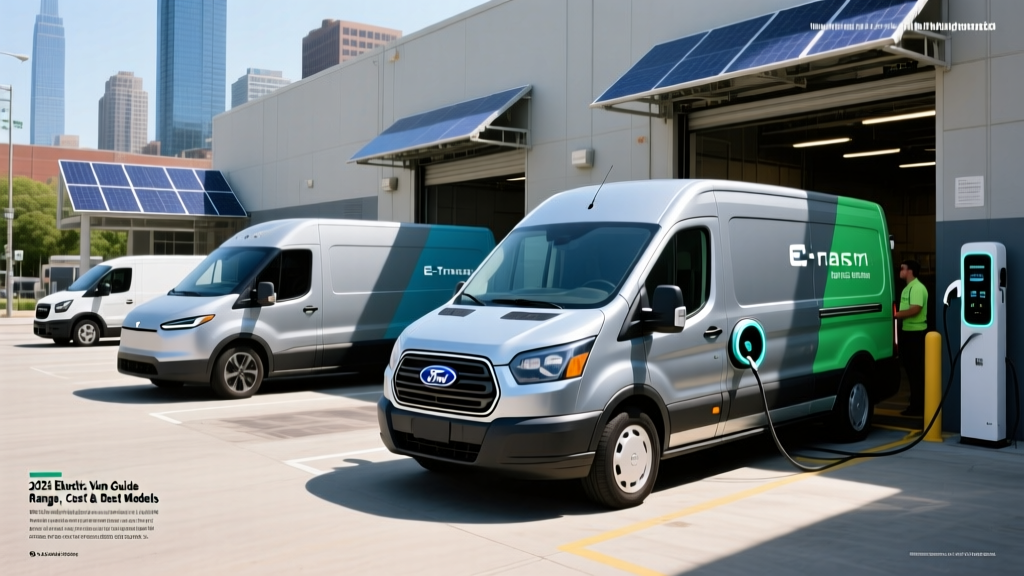
For last-mile delivery and urban commercial routes under 150 miles per day, a van electric powertrain cuts fuel and maintenance costs by 40–60% compared to gas equivalents. The 2026 Ford E-Transit (EPA 126 miles, ~$47,000 base) and BrightDrop Zevo 600 (EPA 250 miles, ~$72,000) lead the segment. However, if your routes exceed 200 daily miles, include highway-heavy stretches, or operate in extreme cold without depot charging, a gas or hybrid van remains the pragmatic choice.
The commercial electric van segment has matured rapidly. Fleet operators and owner-operators now have genuine choices — but the buying calculus differs sharply from passenger EVs. Payload, upfit compatibility, depot charging logistics, and total cost of ownership (TCO) over a 5-year/100,000-mile horizon matter far more than 0–60 times. This guide breaks down the real numbers behind today's leading electric vans, compares them head-to-head with gas counterparts, and gives you a decision framework grounded in operational reality.
The 2026 Electric Van Lineup: Specs That Matter
Three platforms dominate the US market as of the 2026 model year. Each targets a different operational profile. Below is the spec data fleet managers actually need — not brochure highlights.
| Spec | Ford E-Transit (2026) | BrightDrop Zevo 600 (2026) | Mercedes-Benz eSprinter (2026) |
|---|---|---|---|
| EPA Range | 126 mi (low-roof cargo) | 250 mi (est.) | 201 mi (high-roof) |
| Real-World Range* | ~95–110 mi (loaded, mixed) | ~190–220 mi | ~155–175 mi |
| Usable Battery | 68 kWh (NMC) | 120 kWh (NMC) | 113 kWh (NMC) |
| Peak DC Charge Rate | 115 kW | 120 kW | 115 kW |
| 10–80% DC Charge | ~45 min | ~55 min | ~50 min |
| Level 2 Charge Rate | 10.5 kW (~6 hr full) | 11.5 kW (~10 hr full) | 9.6 kW (~12 hr full) |
| Motor Output | 266 hp / 317 lb-ft | 300 hp / 390 lb-ft | 201 hp / 332 lb-ft |
| Max Payload | 3,330 lbs | 2,800 lbs (est.) | 2,624 lbs |
| Cargo Volume (max) | 487.3 cu ft | 576 cu ft | 533 cu ft |
| Base MSRP | ~$47,000 | ~$72,000 | ~$74,000 |
| Battery Warranty | 8 yr / 100,000 mi | 8 yr / 100,000 mi | 8 yr / 100,000 mi |
*Real-world range reflects a fully loaded van on mixed urban/suburban routes at 65°F. Expect 15–25% reduction in cold weather (below 32°F) and 10–15% reduction at sustained highway speeds above 65 mph.
Real-World Range Reality Check
The Ford E-Transit's EPA 126-mile figure assumes ideal conditions. In fleet testing with 2,000+ lbs of payload, stop-and-go urban routes, and HVAC running, operators consistently report 95–110 usable miles before needing a charge. For the eSprinter, highway-heavy routes at 70 mph drop effective range to roughly 140–155 miles. Always spec your van against your worst-case route day, not your average.
Electric Van vs. Gas Van: The Cost Breakdown
The purchase price of an electric van is significantly higher than its gas counterpart — but the operational savings compound quickly for the right duty cycle. Here's a 5-year/100,000-mile TCO comparison between the Ford E-Transit and the gas Ford Transit 250 (3.5L V6), assuming 200 miles/day, 5 days/week, and depot-based Level 2 charging.
| Cost Category (5 yr / 100k mi) | Ford E-Transit | Ford Transit 250 (Gas) |
|---|---|---|
| Purchase Price (base) | $47,000 | $42,500 |
| Federal Tax Credit (§30D) | −$7,500 (if eligible†) | $0 |
| Effective Purchase | $39,500 | $42,500 |
| Fuel / Electricity | $6,800 (avg $0.13/kWh) | $18,750 (avg $3.75/gal, 16 MPG) |
| Maintenance | $2,200 | $6,500 |
| Insurance (est.) | $14,000 | $11,500 |
| Depreciation (est.) | $18,000 | $14,500 |
| Total 5-Year Cost | $80,500 | $93,750 |
Net savings with the E-Transit: ~$13,250 over 5 years — and that widens further if you qualify for state-level fleet incentives or utility off-peak charging rates below $0.10/kWh.
†The IRS §30D credit applies to commercial vehicles under the separate §45W commercial clean vehicle credit for business-purchased vans. The credit equals up to $7,500 for vehicles under 14,000 lbs GVWR, but battery component and critical mineral sourcing requirements apply. Consult a tax professional to confirm eligibility for your fleet.
Where the Savings Come From — and Where They Don't
Fuel: The Biggest Win
An electric van averaging 2.0 kWh/mile at $0.13/kWh costs $0.26/mile to "fuel." A gas Transit at 16 MPG and $3.75/gallon costs $0.23/mile — wait, that seems close. But fleet operators rarely achieve 16 MPG loaded in urban driving; 12–14 MPG is common, pushing gas costs to $0.27–$0.31/mile. Add in idling (zero for electric), and the per-mile energy advantage grows to 20–35%.
Maintenance: Fewer Moving Parts, Real Savings
Electric vans eliminate oil changes, transmission fluid, spark plugs, exhaust system repairs, and most brake wear (regenerative braking extends pad life 2–3x). Ford estimates E-Transit scheduled maintenance costs at 40% less than the gas Transit over 100,000 miles. The caveat: if the traction battery needs replacement outside warranty, costs run $15,000–$25,000. However, NMC batteries in commercial duty cycles with daily shallow cycling (never fully depleting) show <10% degradation at 100,000 miles based on early fleet data.
Insurance: The Offset
Commercial EV insurance premiums run 15–25% higher than gas equivalents due to higher repair costs for battery-adjacent collision damage and specialized technician requirements. Budget an extra $500–$700/year per vehicle.
Depreciation: The Uncertain Variable
Used electric van values are still establishing. Early indicators suggest steeper depreciation than gas vans in the first 3 years (technology obsolescence risk), but strong residual demand from last-mile fleets may stabilize values by year 5. This remains the weakest data point in the TCO case.
Charging Logistics: The Make-or-Break Factor
Unlike passenger EVs, commercial vans live or die by depot charging. Public DC fast charging is a poor fit for daily fleet operations — it's expensive ($0.35–$0.50/kWh at commercial rates), time-consuming, and adds wear from repeated high-C-rate charging.
| Charging Level | Power (kW) | Miles Added/Hour | Best Use Case |
|---|---|---|---|
| Level 1 (120V) | 1.4 kW | ~3 mi/hr | Emergency/top-off only |
| Level 2 (240V, 40A) | 9.6 kW | ~22 mi/hr | Overnight depot (10–12 hr) |
| Level 2 (240V, 48A) | 11.5 kW | ~26 mi/hr | Overnight depot (8–10 hr) |
| DC Fast (115 kW peak) | 115 kW | ~150 mi/hr (to 80%) | Mid-day opportunity charge |
Depot Charging Install Costs
For a 5-van fleet, budget the following for Level 2 infrastructure:
| Item | Per-Stall Cost | 5-Stall Fleet Total |
|---|---|---|
| Level 2 EVSE (commercial-grade, e.g., ChargePoint CT4000) | $3,500–$5,500 | $17,500–$27,500 |
| Electrical panel upgrade (if needed) | $2,000–$8,000 | $2,000–$8,000 (shared) |
| Wiring, conduit, labor (electrician) | $2,500–$6,000 | $12,500–$30,000 |
| Permits & utility interconnection | $500–$2,000 | $2,500–$10,000 |
| Total | $34,500–$75,500 |
Many utilities offer commercial EV charging rebates covering 30–50% of installation. Check with your local utility before finalizing depot plans. A licensed electrician should perform a load analysis on your existing panel — a 400A service upgrade can add $10,000–$25,000 if your current panel is insufficient.
Common Misconceptions About Electric Vans
| Myth | Fact |
|---|---|
| "Electric vans can't handle real payload." | The E-Transit handles 3,330 lbs — competitive with a gas Transit 250. Payload is limited more by GVWR than powertrain weight. |
| "The battery will need replacing at 100k miles." | NMC batteries in commercial shallow-cycle use show <10% degradation at 100,000 miles. The 8-year/100,000-mile warranty covers defects and capacity loss below 70%. |
| "Charging takes too long for commercial use." | Overnight Level 2 charging (8–12 hours) fully replenishes any daily route under 150 miles. Mid-day DC fast charging adds ~80 miles in 30 minutes for route extensions. |
| "Cold weather kills range entirely." | Cold reduces range 15–25% (not 50%). The E-Transit with heat pump maintains ~90 miles loaded at 20°F — enough for most urban routes. Preconditioning while plugged in mitigates further. |
| "The tax credit is a guaranteed $7,500." | The §45W commercial credit has battery sourcing requirements that phase in through 2027. Not all trims/models qualify every year. Verify current eligibility on IRS.gov. |
Decision Framework: Should Your Fleet Go Electric?
Choose an Electric Van If:
- Your daily route is under 150 miles (loaded, worst-case weather) — the E-Transit or eSprinter covers this with margin.
- You have depot charging access or can install Level 2 chargers at your base of operations.
- Your routes are urban/suburban with frequent stops — regenerative braking maximizes efficiency and minimizes brake wear.
- You plan to hold the vehicle 5+ years — TCO savings compound and offset higher upfront cost.
- You qualify for the §45W commercial credit and/or state fleet electrification incentives.
Stick With Gas or Consider a Hybrid If:
- Daily routes exceed 200 miles regularly — current electric vans can't cover this without mid-day fast charging, which adds downtime and battery wear.
- Your routes are highway-dominant at 70+ mph — electric van efficiency drops sharply above 60 mph, cutting effective range 15–20%.
- You operate in extreme cold (sub-0°F) without climate-controlled depot parking — range loss becomes operationally risky.
- You lack depot charging and rely on street parking or shared lots — public charging infrastructure isn't built for commercial fleet schedules.
- You turn over vehicles every 2–3 years — the TCO advantage doesn't materialize in short ownership cycles, and resale values remain uncertain.
What First-Time Electric Van Buyers Must Know
If you're transitioning from a gas fleet, these operational shifts require planning:
- Route-map your worst day, not your average day. A 95-mile average route becomes a 120-mile problem when you add detours, HVAC load, cold weather, and a full payload. Spec battery capacity against your 95th-percentile day.
- Install charging before the vans arrive. Commercial Level 2 installations with utility interconnection and permitting take 2–4 months. Start the process before placing your vehicle order.
- Train drivers on regen braking and preconditioning. One-pedal driving via regenerative braking extends range 5–10% in stop-and-go routes. Preconditioning the battery and cabin while plugged in preserves 10–15 miles of range on cold mornings.
- Budget for higher insurance from day one. Get quotes before purchasing — some commercial insurers still lack actuarial data on electric vans and price conservatively.
- Monitor battery State of Health (SoH). Most fleet telematics platforms (Ford Pro, BrightDrop fleet management) include SoH tracking. A battery retaining 90%+ capacity at 60,000 miles is on track for a healthy 150,000-mile service life.
Frequently Asked Questions
Can I tow with an electric van?
The Ford E-Transit is rated for up to 5,000 lbs towing (properly equipped), but towing cuts range by 30–40%. If towing is a regular requirement, plan routes accordingly or reserve a gas van for tow-heavy days. The eSprinter's towing rating is 7,500 lbs but with similar range penalties.
How long does an electric van battery last before replacement?
Based on early fleet data and manufacturer testing, NMC batteries in commercial vans with daily shallow cycling (20–80% SoC) retain 85–90% capacity at 150,000 miles. Replacement is rarely needed within the first owner's service life. The federal warranty mandate requires 8 years/100,000 miles of coverage for battery capacity retention above 70%.
Is a used electric van a good deal?
Used electric vans from 2022–2024 model years are entering the market at significant discounts (30–45% off original MSRP). The key risk is battery SoH — always request a battery health report before purchase. A used E-Transit with 90%+ SoH and 40,000 miles at ~$28,000 can be an excellent value for budget-conscious fleets.
Do electric vans qualify for the $7,500 federal tax credit?
Commercial vans purchased for business use fall under the §45W commercial clean vehicle credit, not the consumer §30D credit. The maximum credit is $7,500 for vehicles under 14,000 lbs GVWR. Battery component and critical mineral sourcing rules apply and tighten annually. Confirm current-year eligibility with your tax advisor and the IRS before relying on the credit in your purchase budget.
What happens if I run out of charge on a route?
Unlike a gas van where a 5-minute fuel stop gets you going, a depleted electric van requires a 30–45 minute DC fast charge to reach 80%. Most fleet operators mitigate this through conservative route planning and telematics alerts that flag low-SoC vehicles before they become stranded. Roadside assistance with mobile charging is available from some providers (e.g., AAA in select markets) but remains limited.
Sources: EPA range and efficiency data from fueleconomy.gov; manufacturer specifications from Ford Pro, BrightDrop, and Mercedes-Benz Vans USA press sites; federal tax credit rules from IRS.gov §45W.