Quick Answer: What is an Electric Tire Nut Remover?
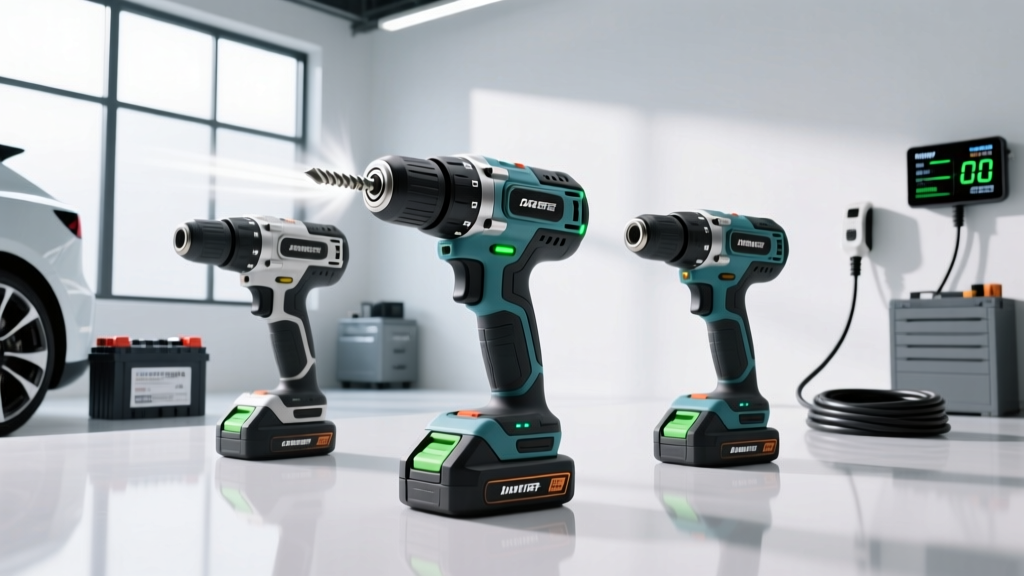
An electric tire nut remover is a cordless impact wrench (or cordless tire inflator with integrated lug-nut loosening, in a few niche products) used to spin off lug nuts when changing a flat or rotating tires. For most modern EVs — including the Tesla Model Y, Hyundai Ioniq 5, Ford F-150 Lightning, and Rivian R1S — you need a 1/2-inch drive cordless impact wrench producing at least 300 ft-lbs of breakaway torque, paired with the correct deep socket (typically 21 mm or 22 mm). Expect to spend $120–$280 for a quality kit from Milwaukee, DeWalt, or Makita. A gas car and an EV use the same tool, but EVs often spec higher torque and different socket sizes than older sedans, so confirm your vehicle's lug nut spec before buying.
Why EV Owners Are Searching for an Electric Tire Nut Remover
Electric vehicles are heavy. A 2026 Tesla Model Y Long Range weighs about 4,398 lbs, while a Ford F-150 Lightning Extended Range tips the scales at roughly 6,400 lbs. That mass is why EV tire shops and owners report faster tire wear and why rotating tires every 5,000–7,500 miles is non-negotiable on most EVs. Doing rotations at home — or carrying a compact impact wrench for roadside flats — saves $60–$120 per shop visit and avoids being stranded waiting for roadside assistance.
Unlike older sedans with 17-inch wheels and 100 ft-lb lug specs, many 2026 EVs run larger wheels (19–22 inches), higher tightening torques (110–150 ft-lb), and longer lug bolts to accommodate thicker hub-centric designs. A 3/8-inch impact wrench that worked fine on your 2012 Camry may stall on a Rivian R1T's 22-mm lug nuts. That mismatch is what sends EV owners searching specifically for an electric tire nut remover powerful enough for the job.
EV Lug Nut Sizes and Torque Specs: What You Actually Need
Before buying any tool, confirm your vehicle's socket size and torque spec. Using the wrong socket rounds lug nuts — a $5 mistake that turns into a $200+ shop visit. Here are the specs for popular 2026 EVs:
| Vehicle | Socket Size | Tightening Torque (ft-lb) | Thread |
|---|---|---|---|
| Tesla Model Y / Model 3 | 21 mm | 129 | M14 x 1.5 |
| Hyundai Ioniq 5 / Ioniq 6 | 21 mm | 100–120 | M12 x 1.5 |
| Ford Mustang Mach-E | 21 mm | 150 | M14 x 1.5 |
| Ford F-150 Lightning | 21 mm | 150 | M14 x 1.5 |
| Rivian R1T / R1S | 22 mm | 140 | M14 x 1.5 |
| Chevrolet Equinox EV | 19 mm | 140 | M12 x 1.5 |
| BMW i4 / iX | 17 mm | 103 | M14 x 1.25 |
| Volkswagen ID.4 | 17 mm | 103 | M14 x 1.5 |
Rule of thumb: Your impact wrench needs breakaway torque at least 2x the tightening spec to reliably remove lug nuts that have been sitting for thousands of miles, especially after winter road salt corrosion. A 129 ft-lb Tesla lug nut needs a tool rated for 260+ ft-lb breakaway — not "nut-busting" marketing claims.
Cordless Impact Wrench vs. Manual Lug Wrench vs. Inflator Combos
When people search for "electric tire nut remover," they're usually referring to one of three tools. Understanding the difference prevents a bad purchase.
| Tool Type | What It Does | Best For |
|---|---|---|
| Cordless impact wrench (1/2" drive) | High-torque rotary impacts to loosen and tighten lug nuts | Tire rotations, flats, seasonal wheel swaps |
| Cordless tire inflator | Compressor only — adds air pressure, does NOT remove lug nuts | Top-offs, TPMS resets, off-road airing down |
| Manual folding lug wrench | Hand-powered cross or telescoping wrench | Emergency backup, no battery required |
| "Electric tire changer" (shop machine) | $2,000+ floor unit that mounts/dismounts tires from rims | Professional tire shops, not consumers |
For 95% of EV owners, the correct tool is a 1/2-inch cordless impact wrench. Pair it with a separate cordless inflator (like the Milwaukee M18 2840-20) and you've covered both flat-tire scenarios: removing the wheel and topping off pressure after a slow leak.
EV vs. Gas Car: Does an EV Need a Different Tool?
The short answer: the tool itself is the same, but the specifications are often different. Here's how EVs and gas cars compare on the factors that matter for lug nut removal.
| Factor | Typical EV (2026) | Typical Gas Sedan (2026) |
|---|---|---|
| Vehicle weight | 4,200–6,500 lbs | 3,000–4,200 lbs |
| Wheel size (common) | 19–22 inches | 16–19 inches |
| Lug tightening torque | 100–150 ft-lb | 80–110 ft-lb |
| Socket size (common) | 17–22 mm | 17–19 mm |
| Wheel material | Often forged alloy or aero covers | Stamped steel or cast alloy |
| Tire rotation interval | 5,000–7,500 mi (faster wear) | 7,500–10,000 mi |
Because EVs are heavier and produce instant torque, tires wear faster and rotations happen more often. That means the impact wrench gets used 3–4 times per year instead of once — justifying a higher-quality tool. Also, many EVs ship with aero wheel covers (Tesla Model 3 Highland, Hyundai Ioniq 5) that require careful prying before you can access the lug nuts. Budget a plastic trim tool in your kit.
Cost Breakdown: Buying the Tool vs. Paying the Shop
Here's a realistic five-year ownership cost comparison for tire rotations and flat-tire handling on a typical EV driven 12,000 miles per year.
| Cost Item | DIY with Impact Wrench | Shop-Only |
|---|---|---|
| Cordless impact wrench kit | $180–$260 (one-time) | $0 |
| Socket set (21 mm + 22 mm deep) | $35 (one-time) | $0 |
| Torque wrench (for re-tightening) | $45–$90 (one-time) | $0 |
| Floor jack + jack stands | $120–$200 (one-time) | $0 |
| Rotations (3x/yr × 5 yrs = 15) | $0 | $60–$120 each = $900–$1,800 |
| Roadside flat-tire assistance | $0 (self-service) | $75–$150 per call |
| 5-Year Total | $380–$585 | $900–$2,100+ |
The DIY route pays for itself within the first year for most EV owners, especially if you swap between summer and winter wheel sets — a common practice in cold-climate states where EV range drops 20–30% in sub-freezing weather and winter tires improve both safety and efficiency.
Top Cordless Impact Wrenches for EV Lug Nuts (2026 Picks)
Based on breakaway torque, weight, and socket compatibility with common EVs, these are the tools that actually work on the vehicles listed above.
- Milwaukee M18 FUEL 2967-20 (1/2" mid-torque) — 650 ft-lb fastening, 800 ft-lb breakaway, 4.7 lbs bare. Handles every EV on the market including the F-150 Lightning. Street price ~$230 (tool only).
- DeWalt 20V MAX XR DCF900 (1/2" high-torque) — 700 ft-lb fastening, 1,000 ft-lb breakaway. Overkill for a Model Y but ideal for truck/SUV EVs. ~$250 (tool only).
- Makita XWT18Z (1/2" mid-torque) — 520 ft-lb fastening, 740 ft-lb breakaway, compact 5.9" head length for tight wheel wells. ~$200 (tool only).
- Ryobi 18V ONE+ HP P285 (budget pick) — 350 ft-lb breakaway. Adequate for Model 3, Ioniq 5, and ID.4 but may struggle on overtightened Lightning or Rivian lugs. ~$130 (tool only).
Critical safety note: An impact wrench is for removing lug nuts. When reinstalling, always finish-tighten with a calibrated torque wrench to the vehicle's spec. Overtightening with an impact can stretch studs or warp brake rotors — a particular concern on EVs where regenerative braking already puts unique thermal cycles on the rotor hub.
Decision Framework: Which Electric Tire Nut Remover Setup Is Right for You?
- If you drive a compact/mid-size EV (Model Y, Ioniq 5, ID.4, Equinox EV): A mid-torque 1/2" impact wrench (400–650 ft-lb breakaway) plus a 21 mm deep 6-point socket is sufficient. Budget ~$250 total.
- If you drive a heavy EV truck or SUV (F-150 Lightning, Rivian R1T, Hummer EV): Go high-torque (800+ ft-lb breakaway). Shop corrosion can push lug nuts past 300 ft-lb of seated resistance. Budget ~$320.
- If you live in the Rust Belt or mountain states: Add penetrating fluid (PB Blaster, Liquid Wrench) and a 1/2" breaker bar as a backup for salt-corroded lugs. Winter road salt is brutal on EV undercarriages.
- If you only need emergency flat-tire capability: A compact 3/8" impact (Milwaukee M12 FUEL 2554-20) plus your factory spare or inflator kit may suffice, but verify your lug torque is under 120 ft-lb.
- If you swap summer/winter wheel sets seasonally: Invest in the mid-torque kit plus a quality torque wrench (CDI or Tekton). You'll use the setup 2–4 times per year, and the tool will outlast the vehicle.
Common Misconceptions About EV Tire Service
| Myth | Fact |
|---|---|
| "EVs have special electric-only lug nuts." | Lug nuts are standard metric hardware. The "electric" part refers to the tool, not the fastener. |
| "A cordless inflator can also remove lug nuts." | Inflators only add air. You still need an impact wrench or manual lug wrench for wheel removal. |
| "Any impact wrench will work on any EV." | Undersized 3/8" impacts often stall on 140–150 ft-lb truck specs. Check breakaway torque, not just voltage. |
| "EVs don't need tire rotations because of regen braking." | Regen reduces brake wear but not tire wear. EV weight and instant torque accelerate tire wear, especially on the drive axle. |
| "I can use my gas-car lug wrench on my EV." | Often yes for emergency use, but many EVs use 21–22 mm sockets while older gas cars used 17–19 mm. Verify fit before you need it roadside. |
Frequently Asked Questions
Can I use an electric impact wrench on a Tesla Model Y?
Yes. The 2026 Model Y uses 21 mm lug nuts torqued to 129 ft-lb with M14 x 1.5 threads. A mid-torque 1/2" impact wrench (Milwaukee 2967, Makita XWT18) with a 21 mm deep 6-point socket removes them cleanly. Reinstall with a torque wrench set to 129 ft-lb — never finish with the impact alone.
Do I need a special socket for EV lug nuts?
You need the correct metric size (usually 21 mm or 22 mm) and a 6-point deep socket rather than 12-point. Six-point sockets grip the flats of the lug nut more securely, reducing the risk of rounding — especially important on EVs where factory-applied thread-locking compound can increase breakaway resistance.
What size impact wrench do I need for a Ford F-150 Lightning?
The Lightning uses 21 mm lug nuts at 150 ft-lb. Spec an impact wrench with at least 500 ft-lb of breakaway torque to handle corrosion and thread locker. The Milwaukee M18 FUEL 2967 or DeWalt DCF900 are reliable choices. Keep a 1/2" breaker bar as a backup.
Will an impact wrench damage my EV's wheel studs?
Not if used correctly. Use the impact only to break loose and spin off the nut. When reinstalling, hand-thread the nut first to avoid cross-threading, then snug with the impact at low speed, and finish with a torque wrench. Cross-threading and overtightening — not the impact itself — are what damage studs.
Should I carry an impact wrench in my EV for roadside flats?
It's optional but practical. A compact mid-torque impact plus a 21 mm socket adds about 6 lbs to your trunk. If your EV came with a tire inflator kit instead of a spare (common on Tesla, Hyundai, VW), the impact wrench lets you swap to a donut spare if you've purchased one aftermarket. Pair with a 12V or cordless inflator to re-inflate the repaired tire.
Are there any "electric tire nut removers" that aren't impact wrenches?
A few novelty products market themselves as electric tire nut removers — typically low-torque 12V plug-in spinners. These rarely produce enough torque for modern vehicles and are not recommended. Stick with established cordless impact wrench platforms (Milwaukee M18/M12, DeWalt 20V, Makita 18V LXT) for reliable performance and battery ecosystem compatibility with other tools.
For official torque specifications, always consult your vehicle's owner's manual or the manufacturer's service documentation. Specs can change between model years, and using the wrong torque value risks wheel detachment or stud failure. The National Highway Traffic Safety Administration (NHTSA) publishes recall data on wheel-related failures — a good reminder that correct fastener torque is a safety issue, not just a convenience one.