Quick Answer: Are Electric Street Legal Motorcycles Worth It?
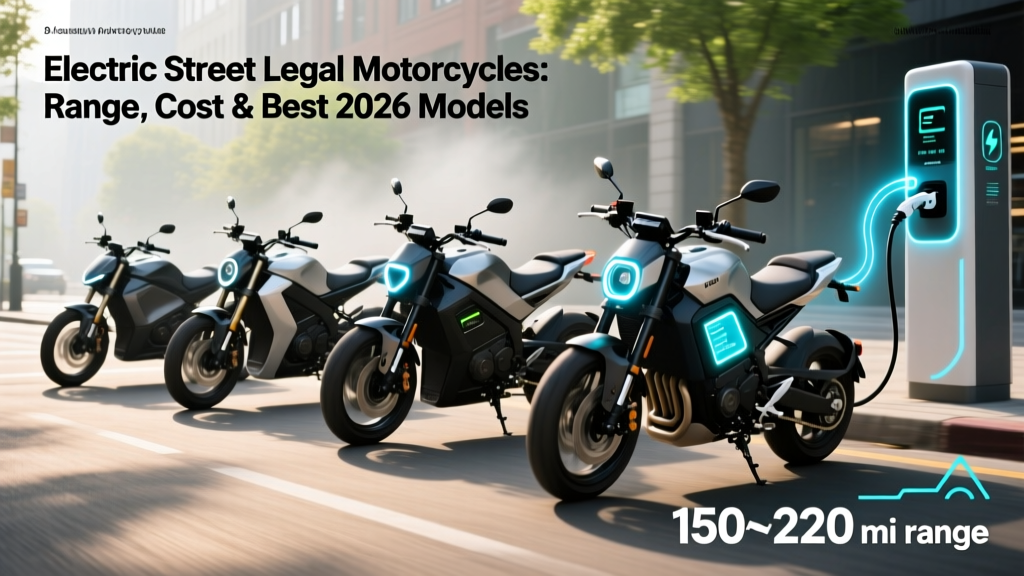
Electric street legal motorcycles are DOT-compliant, highway-capable two-wheelers powered by a battery-electric drivetrain. As of 2026, the top models deliver 60–160 miles of real-world range, charge in 1.5–4 hours on Level 2, and cost $0.01–$0.03 per mile to fuel versus $0.08–$0.14 per mile for a comparable gas motorcycle. Expect to pay $8,000–$24,000 MSRP depending on class. They excel for urban commuting and short highway runs but still lag gas bikes on long-distance touring due to sparse public charging infrastructure for two-wheelers. Federal EV tax credits (§30D) do not apply to motorcycles — only two-wheeled plug-in vehicles with three wheels (autocycles) qualify. Some state and local incentives do cover electric motorcycles, typically $500–$1,500.
What Defines a Street-Legal Electric Motorcycle?
Not every electric two-wheeler is street legal. To be road-registered in the United States, an electric motorcycle must meet the same Federal Motor Vehicle Safety Standards (FMVSS) that govern gas motorcycles — including DOT-approved lighting, mirrors, horn, speedometer, and braking systems. The manufacturer must file with NHTSA and assign a valid 17-character VIN.
This distinction matters because the market is flooded with electric scooters, e-bikes, and "electric motorcycles" that are classified as low-speed vehicles or off-road only. If it cannot be titled and insured for highway use in your state, it is not a street-legal motorcycle regardless of top speed claims.
Classification by Speed and Power
The industry generally segments street-legal electric motorcycles into three tiers:
- Urban commuter (under 70 mph top speed): 3–8 kWh battery, 5–15 kW motor, 40–80 mile range. Examples: Super73 RX (limited street legality varies by state), NIU NQi GT.
- Mid-range (70–100 mph): 8–15 kWh battery, 15–35 kW motor, 60–120 mile range. Examples: Zero S/SR, LiveWire ONE.
- Premium/high-performance (100+ mph): 15–22 kWh battery, 50–80 kW motor, 100–160 mile range. Examples: LiveWire S2 Del Mar, Zero SR/F.
Top Electric Street Legal Motorcycles: 2026 Specs Compared
Below is a side-by-side comparison of the most prominent street-legal electric motorcycles available in the U.S. market for the 2026 model year. All range figures are manufacturer-estimated city range; real-world highway range is typically 40–60% lower.
| Model | Battery (kWh) | City Range (mi) | Highway Range (mi) | Motor (kW / hp) | 0-60 mph | Level 2 Charge (0-95%) | MSRP |
|---|---|---|---|---|---|---|---|
| Zero S ZF14.4 | 14.4 (usable ~12.6) | 178 | 82 | 46 kW / 62 hp | 3.9 sec | ~2.5 hr (with Charge Tank) | $13,995 |
| Zero SR/F | 15.8 (usable ~14.0) | 164 | 82 | 82 kW / 110 hp | 3.3 sec | ~2.0 hr (with Charge Tank) | $19,995 |
| LiveWire ONE | 15.4 (usable ~13.6) | 146 | 95 | 78 kW / 105 hp | 3.0 sec | ~2.2 hr | $21,999 |
| LiveWire S2 Del Mar | 10.5 (usable ~9.4) | 113 | 70 | 63 kW / 84 hp | 3.5 sec | ~1.8 hr | $15,499 |
| Energica Ego+ | 21.5 (usable ~18.9) | 261 | 143 | 107 kW / 143 hp | 2.8 sec | ~3.5 hr (L2) / ~40 min (DCFC 10-80%) | $23,490 |
Real-World Range Reality Check
Manufacturer city-range figures assume 25–35 mph stop-and-go riding with frequent regenerative braking. Highway riding at 65–75 mph cuts range roughly in half due to aerodynamic drag and reduced regen opportunity. Cold weather (below 40°F) can reduce usable range an additional 15–25% due to battery chemistry limitations and cabin-less thermal losses. Plan trips around the highway range number, not the city sticker.
Electric Motorcycle vs Gas Motorcycle: Cost Comparison
The upfront price of an electric motorcycle is typically 30–80% higher than a comparable gas bike. But operating costs tell a different story, especially for daily commuters covering 20–50 miles.
| Cost Factor | Electric (Zero S ZF14.4) | Gas (Kawasaki Ninja 650) |
|---|---|---|
| MSRP (base) | $13,995 | $7,999 |
| Fuel/energy cost per mile | $0.015 (home L2 @ $0.14/kWh) | $0.10 (premium @ $4.20/gal, 42 MPG) |
| Annual fuel (8,000 mi/yr) | $120 | $800 |
| Annual maintenance | $100–$200 (tires, brake fluid, chain) | $400–$700 (oil, filters, chain, valves) |
| 5-year total operating cost | $1,100–$1,600 | $6,000–$7,500 |
| 5-year total cost of ownership (incl. purchase) | $15,095–$15,595 | $13,999–$15,499 |
The breakeven point against a mid-range gas sportbike typically arrives around year 4–5 for a rider covering 8,000+ miles annually. For lower-mileage riders, the gas bike may remain cheaper over a 5-year horizon. Insurance costs are broadly similar — $300–$800/year depending on rider profile and state — though some insurers surcharge electric motorcycles due to higher repair costs for battery-pack damage.
The Federal Tax Credit Gap
Under IRS §30D Clean Vehicle Credit rules, the federal $7,500 EV tax credit applies to four-wheeled vehicles (and certain three-wheeled autocycles). Two-wheeled electric motorcycles do not qualify for the federal credit. The previous §30D(e) two-wheeler credit expired at the end of 2021 and has not been renewed as of 2026.
However, several states offer their own incentives:
- California: Up to $1,500 through the Clean Vehicle Rebate Project (CVRP), income-dependent
- Colorado: $2,500 state tax credit for electric motorcycles
- New York: $500 point-of-sale rebate via the Drive Clean Rebate program
Always verify current incentive availability with your state energy office — programs change frequently and may have funding caps.
Charging an Electric Motorcycle at Home and on the Road
Charging is the single biggest ownership variable for electric motorcycles. Unlike electric cars, which increasingly share NACS or CCS connectors and access robust public networks, electric motorcycles use a patchwork of charging standards and have far fewer public options.
Home Charging (Level 1 and Level 2)
Most electric motorcycles ship with a Level 1 cord that plugs into a standard 120V household outlet. This delivers roughly 1 kW of power — adequate for overnight charging of smaller batteries but painfully slow for larger packs.
| Charging Level | Power (kW) | Miles Added per Hour | Full Charge Time (14 kWh pack) | Equipment Needed |
|---|---|---|---|---|
| Level 1 (120V standard outlet) | ~1.0 kW | 8–12 mi/hr | ~12–14 hours | Included cord, standard 15A outlet |
| Level 2 (240V, J1772 adapter) | 3.3–6.6 kW | 30–60 mi/hr | ~2–4 hours | 240V outlet (NEMA 14-50) or hardwired station, J1772 adapter |
| DC Fast Charging (CCS, rare) | Up to 24 kW | 120+ mi/hr | ~40 min (10-80%) | CCS-equipped bike + compatible public station |
For daily commuters, Level 1 overnight charging is often sufficient — if you ride 40 miles a day and your bike gets 6 miles per kWh, you need roughly 7 kWh replenished, which a 1 kW Level 1 charger can deliver in about 7 hours. But if you ride 80+ miles daily or want flexibility for spontaneous longer rides, a Level 2 home setup is strongly recommended.
Home Charging Installation Costs
| Item | Estimated Cost |
|---|---|
| NEMA 14-50 outlet installation (existing 200A panel, short run) | $300–$600 |
| NEMA 14-50 outlet (panel at capacity, upgrade needed) | $1,500–$3,500 |
| Level 2 EVSE station (Clipper Creek, ChargePoint, etc.) | $350–$700 |
| J1772-to-motorcycle adapter (if required) | $50–$150 |
| Electrical permit | $50–$150 |
| Total (typical, no panel upgrade) | $700–$1,600 |
Have a licensed electrician assess your panel capacity before committing. A 200-amp panel with spare breaker slots handles a 240V/30A motorcycle circuit easily. Older 100-amp panels may require an upgrade — and that cost can exceed the price of the motorcycle itself.
Public Charging: The Motorcycle Gap
This is where electric motorcycle ownership gets challenging. Public DC fast charging networks (Electrify America, EVgo, ChargePoint) are designed for four-wheeled vehicles. The physical parking layout, cable reach, and connector placement often make it difficult or impossible to plug in a motorcycle. Additionally, most electric motorcycles do not support DC fast charging at all — only the Energica lineup and a few others offer CCS compatibility.
For practical purposes, plan your electric motorcycle riding around home charging. If you cannot charge at home (apartment dwellers, street parking), an electric motorcycle in 2026 remains a difficult proposition unless your workplace offers Level 2 charging.
Common Misconceptions About Electric Motorcycles
| Myth | Fact |
|---|---|
| "Electric motorcycles are just fast e-bikes" | Street-legal electric motorcycles are full FMVSS-compliant vehicles requiring registration, insurance, a motorcycle license (M endorsement), and a helmet in most states. They share the road at highway speeds. |
| "The battery will die in 3 years and cost $10,000 to replace" | Modern NMC lithium-ion motorcycle batteries are warrantied for 5 years/unlimited miles (Zero) or 2 years/unlimited miles (LiveWire) with a capacity retention guarantee of 70–80%. Real-world degradation data from fleet riders shows 8–12% capacity loss over 5 years. Full replacement runs $4,000–$7,000 depending on model — expensive, but rarely needed within the first decade. |
| "You can charge at any public EV station" | Most public DCFC stations are physically designed for cars and trucks. Connector reach, parking space width, and connector type (NACS/CCS) often exclude motorcycles. Level 2 public stations are more motorcycle-friendly but far slower. |
| "Electric motorcycles get the $7,500 federal tax credit" | They do not. The §30D credit applies to four-wheeled (and some three-wheeled) vehicles only. The two-wheeler credit expired in 2021. State incentives may partially offset this. |
| "They have no maintenance" | Electric motorcycles eliminate oil changes, spark plugs, and valve adjustments. But tires (often wearing faster due to instant torque), brake fluid, chain/belt drive, suspension, and cooling system fluid still require regular service. Budget $100–$200/year. |
Battery Chemistry, Longevity, and Warranty
Most street-legal electric motorcycles use NMC (nickel manganese cobalt) lithium-ion cells, which prioritize energy density — critical when packaging a battery into a motorcycle frame. The trade-off versus LFP (lithium iron phosphate) chemistry is a shorter cycle life and greater sensitivity to high-temperature degradation. LFP cells last longer (2,000+ full cycles vs ~800–1,200 for NMC) but are heavier and bulkier, making them impractical for most motorcycle applications.
| Factor | NMC (Most Electric Motorcycles) | LFP (Rare in Motorcycles) |
|---|---|---|
| Energy density | 200–260 Wh/kg (compact, lighter) | 140–180 Wh/kg (heavier, bulkier) |
| Cycle life (to 80% SoH) | 800–1,200 cycles | 2,000–3,500 cycles |
| Thermal stability | Moderate — active cooling often required | High — inherently safer chemistry |
| Cost per kWh | $130–$170 | $90–$120 |
| Best for | Performance, range, weight savings | Longevity, daily shallow cycling |
Battery care tips for NMC motorcycle packs:
- Avoid routinely charging to 100% — set your charge limit to 80–90% for daily use and top to 100% only before longer rides.
- Do not store the motorcycle at 0% or 100% state of charge for extended periods. Aim for 50–60% SoC if storing for weeks.
- In extreme heat (above 95°F), allow the battery to cool before fast charging. Most bikes with active thermal management (LiveWire, Energica) handle this automatically; passively cooled packs (some Zero models) benefit from a cooldown period.
- Monitor state of health (SoH) through the manufacturer's app. A drop below 80% of original capacity typically triggers a warranty claim.
Who Should Buy an Electric Street Legal Motorcycle? Decision Framework
Choose an Electric Motorcycle If:
- You commute 20–60 miles daily and can charge at home overnight. The per-mile energy cost is 80–85% lower than gas.
- You ride primarily in urban or suburban environments where regenerative braking maximizes efficiency and range.
- You value low maintenance — no oil changes, no valve checks, no clutch replacement.
- You have a garage or dedicated parking spot with access to a 120V or 240V outlet.
- You want instant torque and smooth, silent acceleration — electric motorcycles deliver peak torque from 0 RPM, making them exceptionally responsive in city traffic.
Stick With a Gas Motorcycle If:
- You regularly ride 150+ miles in a single day — public charging infrastructure for motorcycles is sparse, and even DCFC-equipped bikes need 30–40 minute stops.
- You cannot charge at home — apartment dwellers without workplace charging will find daily electric motorcycle ownership impractical.
- You ride primarily in cold climates (below 30°F for extended seasons) — expect 20–30% range loss and reduced battery performance.
- You prioritize low upfront cost — a capable gas commuter bike runs $5,000–$8,000 versus $14,000+ for an equivalent electric.
- You tour or ride off-road — the electric motorcycle market in 2026 is overwhelmingly road-focused with limited adventure/touring options.
Frequently Asked Questions
Do I need a motorcycle license to ride an electric street legal motorcycle?
Yes. Any electric motorcycle capable of exceeding 30 mph and requiring state registration requires a standard motorcycle endorsement (M license) on your driver's license. This includes models from Zero, LiveWire, and Energica. Lower-speed electric scooters under 30 mph may fall under different state classifications, but full electric motorcycles follow the same licensing rules as gas bikes.
How long do electric motorcycle batteries last?
Based on current NMC cell data and fleet mileage reports, expect 8–12% capacity loss over 5 years of typical use (3,000–8,000 miles/year). Most manufacturers warrant the battery for 5 years with a 70–80% capacity retention floor. In practical terms, a well-maintained electric motorcycle battery should remain functional for 100,000+ miles, though with gradually reduced range. Full battery replacement costs $4,000–$7,000 depending on the model.
Can I take an electric motorcycle on the highway?
Yes — street-legal electric motorcycles from Zero, LiveWire, and Energica are fully highway-capable, with top speeds of 80–125 mph depending on the model. The practical limitation is range: highway riding at 65–75 mph typically yields 60–95 miles from a full charge. Plan accordingly, and note that public fast-charging options for motorcycles remain extremely limited along most interstate corridors.
Are electric motorcycles cheaper to insure?
Not consistently. Insurance premiums for electric motorcycles are broadly comparable to gas bikes of similar value and performance. Some insurers apply a surcharge due to higher repair costs for battery damage, while others offer a green-vehicle discount. Expect $300–$800/year depending on your age, riding history, state, and the motorcycle's MSRP. Get quotes from multiple carriers — specialty motorcycle insurers like Dairyland and Progressive often have specific electric-motorcycle rate categories.
What happens if I run out of charge on the road?
Unlike a gas motorcycle where a fuel delivery is a quick $20 fix, a depleted electric motorcycle must be towed to a charging location. Most roadside assistance plans (AAA, manufacturer programs) cover towing, but the wait and cost are higher than a gas can delivery. Many electric motorcycle owners carry a portable Level 1 charging cord as an emergency measure — any 120V outlet (gas station, restaurant) can add 8–12 miles of range per hour, enough to limp to a better charging location.