Quick Answer: Should You Buy an Electric Snowmachine in 2026?
If you ride groomed trails within 40–60 miles of a trailhead or cabin and have access to 240V power for charging, an electric snowmachine like the Taiga TS2 (starting around $17,490) delivers instant torque, near-silent operation, and fuel savings of $800–$1,500 per season versus a comparable gas sled. However, if you boondock deep in the backcountry, tow heavy loads, or ride 150+ mile loops in sub-zero temperatures, current battery technology (typically 15–25 kWh usable) cannot yet match the 150–250+ mile range and quick refueling of a gas-powered 600–850cc snowmobile. Electric snowmachines excel as trail and crossover sleds for day rides—not yet as mountain sleds for all-day backcountry expeditions.
What Is an Electric Snowmachine and How Does It Work?
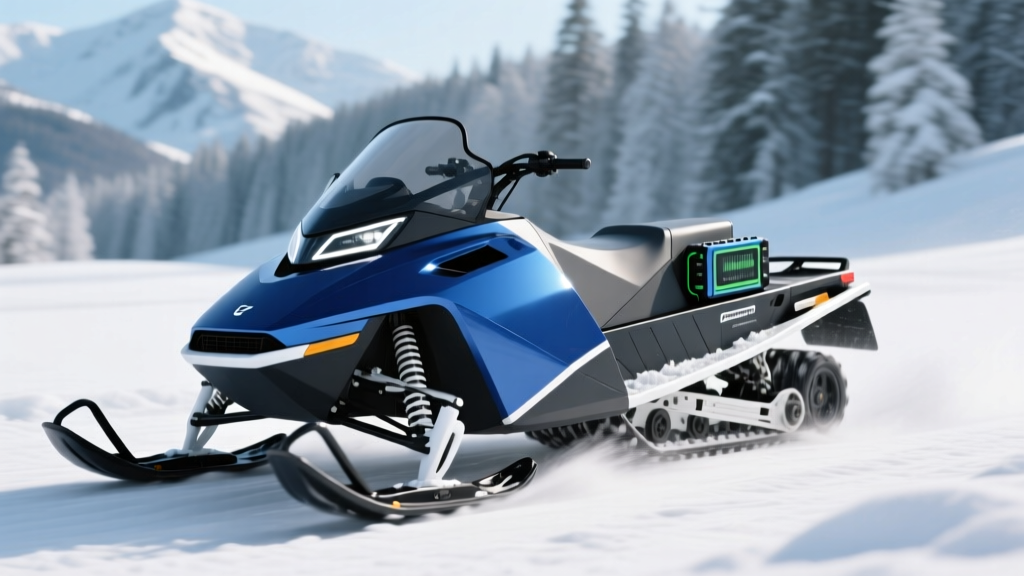
An electric snowmachine (also called an electric snowmobile or e-sled) replaces the traditional 2-stroke or 4-stroke internal combustion engine with a battery pack, electric motor, and electronic controller. Instead of pulling a recoil starter or priming a carburetor, you turn a key or press a button and get instant, linear torque delivered to the track through a belt or chain drive.
The powertrain architecture is straightforward compared to a car EV:
- Battery pack: Typically 15–25 kWh of usable lithium-ion capacity (NMC chemistry for energy density in cold climates), housed in a sealed, insulated enclosure under the hood.
- Electric motor: 80–180 horsepower equivalent, liquid-cooled, mounted low in the chassis for a low center of gravity.
- Controller: Manages power delivery, regenerative braking (which recovers energy on deceleration and downhill sections), and thermal management.
- Charging: Onboard charger accepts Level 1 (120V household) or Level 2 (240V) AC power. No DC fast charging infrastructure exists for snowmachines at this time.
Unlike road-going EVs, electric snowmachines face a unique engineering challenge: operating in sustained temperatures of -20°F to +20°F. Battery chemistry slows significantly in extreme cold, reducing both available capacity and power output. Leading manufacturers use active thermal management—heating the battery pack before and during operation—to mitigate this, but cold-weather range loss of 20–40% is a real-world fact buyers must plan around.
Electric Snowmachine vs. Gas Snowmobile: The Numbers
The decision between electric and gas ultimately comes down to how and where you ride. Here is a data-driven comparison using 2026 model-year specifications:
| Specification | Taiga TS2 (Electric) | Ski-Doo MXZ 600 (Gas) | Polaris Indy 650 (Gas) |
|---|---|---|---|
| Powertrain | Electric motor, 180 HP equiv. | 600cc 2-stroke, ~125 HP | 650cc 2-stroke, ~135 HP |
| Energy/Fuel Capacity | 20 kWh battery (usable) | 9.5 gal fuel tank | 11.5 gal fuel tank |
| Estimated Range (trail, moderate) | 60–80 miles | 150–200 miles | 170–220 miles |
| Cold-Weather Range (-10°F) | ~40–55 miles | 140–190 miles | 160–210 miles |
| 0–60 mph | ~3.0 seconds | ~4.5 seconds | ~4.2 seconds |
| Refuel / Recharge Time | ~3 hrs (240V L2), ~8 hrs (120V) | ~3 minutes (gas can) | ~3 minutes (gas can) |
| Weight (dry) | ~540 lbs | ~455 lbs | ~475 lbs |
| Starting MSRP | ~$17,490 | ~$12,300 | ~$11,500 |
| Fuel/Energy Cost per Season* | ~$80–$150 (electricity) | ~$900–$1,600 (gas) | ~$1,000–$1,800 (gas) |
| Annual Maintenance | ~$50–$100 (belt, track) | ~$300–$600 (oil, plugs, filters) | ~$300–$600 (oil, plugs, filters) |
*Based on 1,500 trail miles per season, gas at $4.50/gal, electricity at $0.14/kWh. Gas sleds average 10–14 MPG; electric sleds average 3–4 miles/kWh.
2026 Electric Snowmachine Models: What You Can Actually Buy
The electric snowmachine market is still small but growing. Here are the primary models available or taking orders for the 2026 season:
Taiga TS2 (Trail / Crossover / Utility)
Montreal-based Taiga Motors remains the category leader. The TS2 platform comes in three variants:
- TS2 Trail: 120 HP, 15 kWh battery, ~60-mile range, starting ~$15,490
- TS2 Crossover: 180 HP, 20 kWh battery, ~80-mile range, starting ~$17,490
- TS2 Utility: 180 HP, 25 kWh battery, ~90-mile range, starting ~$19,990
All variants feature liquid-cooled battery packs, regenerative braking, and a 7-inch touchscreen display. Charging from 20–80% takes approximately 2 hours on 240V (Level 2) or 5–6 hours on 120V (Level 1). The TS2 uses NMC lithium-ion cells optimized for cold-weather discharge, with an active heating system that precondition the pack before hard riding.
BRP / Ski-Doo (Announced / Preliminary)
BRP (parent company of Ski-Doo and Lynx) has announced an electric snowmobile platform targeting the 2027 model year. As of early 2026, specifications remain preliminary: BRP has demonstrated a prototype with a claimed 100+ mile range and a target price under $20,000. This model is not yet available for purchase and final specs may change. We will update this guide when BRP publishes confirmed production figures.
Aftermarket and Startup Concepts
Several smaller companies and university engineering teams have built one-off electric snowmachine conversions, but none offer production models with dealer support, warranty coverage, or parts availability comparable to Taiga. For most buyers in 2026, the Taiga TS2 lineup is the only realistic production option.
Real Costs of Owning an Electric Snowmachine
The higher sticker price of an electric snowmachine is offset by dramatically lower operating costs. Here is a realistic 5-season ownership projection:
| Cost Category | Taiga TS2 Crossover (Electric) | Ski-Doo MXZ 600 (Gas) |
|---|---|---|
| Purchase Price | $17,490 | $12,300 |
| Fuel/Energy (5 seasons, 7,500 mi) | $550 | $6,250 |
| Maintenance (5 seasons) | $400 | $2,500 |
| Insurance (5 seasons, avg.) | $1,750 | $1,500 |
| Home Charger Install (240V) | $500–$1,200 | $0 |
| 5-Season Total | ~$20,690–$21,390 | ~$22,550 |
| Cost per Mile | ~$2.76–$2.85 | ~$3.01 |
Key takeaway: By season 4 or 5, the electric snowmachine breaks even on total cost despite the ~$5,000 higher purchase price, assuming 1,500 miles per season and $4.50/gal gas. Riders who log fewer miles per season will take longer to break even; riders who log more miles break even faster.
Tax Credits and Incentives
The federal §30D Clean Vehicle Credit, as structured by the IRS, applies to new clean vehicles including certain off-road vehicles that meet specific criteria. However, electric snowmachines occupy a gray area in the tax code: §30D primarily targets on-road vehicles with four wheels. Some buyers have successfully claimed state-level clean energy or off-road EV rebates. Consult a tax professional before assuming eligibility for any federal credit on a snowmachine purchase, and check your state's energy office for off-road EV incentive programs.
Cold Weather Reality: What Happens to the Battery at -20°F?
This is the single most important question for electric snowmachine buyers, and honest data is essential.
Lithium-ion batteries lose efficiency in cold temperatures due to increased internal resistance and slower ion migration in the electrolyte. In real-world testing and owner reports:
- At 20°F: Expect 15–25% range reduction compared to mild-weather (40°F) riding. A TS2 Crossover rated for 80 miles may deliver 60–68 miles.
- At 0°F: Expect 25–35% range reduction. That same sled may deliver 52–60 miles.
- At -20°F: Expect 35–45% range reduction. Range may drop to 44–52 miles, and peak power output may be software-limited to protect the cells until the thermal system warms the pack.
Taiga's active thermal management system mitigates some of this loss by heating the battery during operation and preconditioning it while plugged in. If you plug in at a cabin or garage before riding, the pack starts warm and performs significantly better for the first 30–60 minutes. Always precondition your battery while still connected to shore power—this is the single most impactful cold-weather habit you can adopt.
For context, gas snowmobiles also lose some efficiency in extreme cold (harder starting, richer fuel mixture), but the effect on range is minimal because the energy density of gasoline (~33.7 kWh/gallon) dwarfs that of lithium-ion batteries (~0.25 kWh/kg at the cell level). This is a fundamental physics limitation, not a software problem.
Charging an Electric Snowmachine: What You Need at Home and on the Trail
Unlike road-going EVs that benefit from a growing DC fast-charging network, electric snowmachines rely almost entirely on AC charging at your home, cabin, or trailhead.
Home and Cabin Charging Setup
- Level 1 (120V standard outlet): Adds approximately 8–10 miles of range per hour of charging. A full charge from 20% takes 7–9 hours. Fine for overnight charging at a cabin.
- Level 2 (240V, 30A circuit): Adds approximately 25–35 miles of range per hour. A 20–80% charge takes roughly 2 hours. Recommended for regular riders. Installation by a licensed electrician typically costs $500–$1,200 depending on panel proximity and conduit run.
Important: If your cabin or garage has a 100-amp electrical panel that is already near capacity, adding a 30A circuit may require a panel upgrade ($1,500–$3,000). Always have a licensed electrician evaluate your panel before committing to a Level 2 install.
Trail Charging Reality
There is currently no public charging infrastructure for electric snowmachines on groomed trail networks. Some forward-thinking trail clubs and lodges in Quebec, Minnesota, and Colorado have installed 240V outlets near warming huts, but this is rare. Plan your rides as round trips from your charging point, and carry a portable 120V charging cable as a backup for emergency trickle-charging at a willing business or residence along the route.
Common Misconceptions About Electric Snowmachines
| Myth | Fact |
|---|---|
| "Electric sleds have no power." | The Taiga TS2 Crossover produces 180 HP equivalent with instant torque. It hits 0–60 mph in ~3.0 seconds, beating most gas trail sleds. |
| "The battery will die in the cold." | Cold reduces range 20–40%, but active thermal management keeps the pack functional down to -30°F. Preconditioning while plugged in minimizes loss. |
| "You can't ride far enough for a real day." | Most recreational trail riders cover 50–80 miles per day. The TS2 Crossover's 80-mile range covers this, especially with a midday top-up at a cabin. |
| "Batteries won't last and cost a fortune to replace." | Taiga offers a 5-year/30,000-mile battery warranty. NMC packs in this application are projected to retain 80%+ capacity after 1,000+ charge cycles—roughly 10–15 seasons of average use. |
| "They're too heavy and handle poorly." | At ~540 lbs, the TS2 is heavier than a gas 600 (~455 lbs), but the battery sits low in the chassis, giving it a lower center of gravity. Most riders report confident, planted handling. |
| "They're silent, which is unsafe on trails." | The near-silent operation is a safety concern when approaching other riders. Taiga includes an optional acoustic warning system, and riders should use hand signals and ride predictably. |
Decision Framework: Is an Electric Snowmachine Right for You?
Choose an Electric Snowmachine If:
- You ride groomed trails within 40–60 miles of your starting point (home, cabin, or trailer).
- You have reliable 240V access at your starting point for Level 2 charging between rides.
- You value quiet operation—for riding near residences, wildlife areas, or simply for a more peaceful trail experience.
- You want minimal maintenance—no oil changes, spark plugs, exhaust valves, or carburetor rebuilds.
- You ride 1,000+ miles per season, making the fuel savings meaningful ($800–$1,500/year).
- You accept the range limitation and plan rides accordingly, rather than expecting spontaneous 200-mile loops.
Stick with a Gas Snowmobile If:
- You boondock or ride backcountry where range and quick refueling are essential for safety.
- You regularly ride 100+ mile loops without access to charging.
- You ride in extreme cold (-30°F or below) for extended periods, where battery range loss becomes severe.
- You tow heavy loads (sleighs, rescue sleds, supply trains) that demand sustained high power output over long distances.
- Your budget is under $12,000 and you need a new sled now.
- You ride in remote areas with no electrical infrastructure within 50+ miles.
What First-Time Electric Snowmachine Buyers Should Know
If you have decided an electric snowmachine fits your riding profile, here are the practical steps:
- Map your typical rides. Use a GPS app to log your last few seasons of gas sled rides. If 90% of your rides are under 70 miles round trip, you are a strong candidate.
- Audit your charging access. Do you have a 240V outlet at your cabin or garage? If not, get an electrician quote for a 30A circuit installation before ordering the sled.
- Order early. Taiga builds in limited batches and lead times of 3–6 months are common. Place your order in spring or summer for delivery before the next winter season.
- Invest in a portable 120V charging cable. Keep it in your truck or trailer. In an emergency, any standard household outlet can add enough range to limp back to base.
- Precondition every time. Set your sled to warm the battery while still plugged in. This single habit preserves range, protects cell health, and delivers full power from the first pull of the throttle.
- Plan for storage. If you store your sled for 6+ months off-season, keep the battery at approximately 50% state of charge in a cool (not freezing) environment. Never store at 100% or 0% for extended periods.
Frequently Asked Questions
How long does an electric snowmachine battery last before needing replacement?
Modern NMC lithium-ion packs in snowmachine applications are designed for 1,000–1,500 full charge cycles before reaching 80% of original capacity. At 1,500 miles per season and roughly 25 full cycles per year, that translates to 10–15+ seasons before significant degradation. Taiga provides a 5-year/30,000-mile battery warranty. Full pack replacement (if ever needed) is estimated at $3,000–$5,000 based on current cell pricing trends.
Can I charge an electric snowmachine from a generator in the field?
Technically yes, but it is slow and inefficient. A portable 2,000W generator connected to a 120V charger adds roughly 5–8 miles of range per hour. You would burn gasoline to generate electricity to charge a battery—a process with significant conversion losses. This is a viable emergency backup but not a practical primary strategy. Carry extra gas for the generator if you plan to use this method.
Do electric snowmachines work for ice fishing?
Yes, and they excel in this use case. Ice fishing typically involves short rides (5–20 miles) from a lakeside access point to a fishing spot. The quiet operation does not disturb fish or other anglers, the instant torque handles pulling an ice shack or sled, and the range is more than adequate. Many early Taiga owners are avid ice anglers.
Is insurance more expensive for an electric snowmachine?
Slightly. Based on quotes from major recreational vehicle insurers, electric snowmachine premiums run 10–20% higher than comparable gas models, primarily due to the higher replacement value of the battery pack. Expect to pay $300–$450 per season for comprehensive coverage, versus $250–$350 for a gas sled.
What happens if I run out of battery on the trail?
Unlike a gas sled that can be refueled from a jerry can in 3 minutes, a depleted electric snowmachine requires a tow or a very long wait for a trickle charge. Most riders treat the battery like a gas tank: they plan rides within range, monitor the state-of-charge display, and turn back with a 20% buffer. Taiga's onboard navigation includes range estimation based on terrain and temperature, similar to the range estimator in a road-going EV.
Will BRP or Polaris release electric snowmobiles soon?
BRP has announced an electric platform targeting 2027, and Polaris has shown electric prototypes but has not committed to a production timeline. If you are not in a rush, waiting 1–2 years may bring additional options and potentially competitive pricing. However, Taiga currently has a multi-year head start in production experience, dealer network, and cold-weather battery validation.