If you're shopping for an electric small car, you're likely balancing affordability, city-friendly dimensions, and daily commuting range. The short answer: today's subcompact EVs deliver 200–260 miles of EPA-rated range, cost roughly $30,000–$38,000 before incentives, and can slash your fuel spend to $0.04–$0.06 per mile if you charge at home. But the right choice depends on whether you have Level 2 home charging access, how cold your winters get, and whether you need highway road-trip capability or strictly urban runabout duty. This guide walks you through the exact numbers so you can decide without guesswork.
Quick Answer: Is a Small EV Worth It?
Yes, if you can charge at home (Level 2), drive under 60 miles daily, and want to minimize running costs. Think twice if you rely entirely on public charging, regularly drive in sub-20°F winters, or frequently take 300+ mile road trips. Small EVs excel as commuter cars and second vehicles, with total cost of ownership often undercutting equivalent gas cars within 3–4 years.
What Defines the Electric Small Car Segment?
The "small EV" category spans subcompact hatchbacks and crossovers with battery packs typically between 40 and 65 kWh, curb weights under 3,800 lbs, and starting MSRPs in the low-to-mid $30,000s. These vehicles prioritize efficiency over brute range — they're lighter, more aerodynamic in city driving, and cheaper to charge than full-size electric SUVs.
Key players in the 2026 model year include the Chevrolet Bolt EV/EUV (successor generation), Hyundai Kona Electric, Nissan LEAF (with updated battery), Volvo EX30, and the Mini Cooper SE (now with a larger battery). Each targets a slightly different buyer, but all share the core proposition: lower operating cost, zero tailpipe emissions, and parking-lot agility.
Real-World Range: What the EPA Sticker Doesn't Tell You
EPA range estimates are a useful baseline, but real-world results vary significantly based on speed, temperature, and terrain. A small EV rated at 250 miles EPA may deliver only 200–215 miles at sustained 75 mph highway speeds, and as little as 160–180 miles in freezing weather without a heat pump.
| Model | Battery (kWh usable) | EPA Range | Highway Real-World | Cold Weather (20°F) |
|---|---|---|---|---|
| Chevrolet Bolt EV 2026 | 65 kWh (NMC) | 259 mi | ~220 mi | ~180 mi |
| Hyundai Kona Electric | 63 kWh (NMC) | 261 mi | ~225 mi | ~185 mi (heat pump equipped) |
| Volvo EX30 Single Motor | 64 kWh (NMC) | 265 mi | ~225 mi | ~190 mi (heat pump equipped) |
| Mini Cooper SE (Gen 3) | 54 kWh (NMC) | 230 mi | ~195 mi | ~160 mi |
| Nissan LEAF e+ | 60 kWh (NMC) | 212 mi | ~185 mi | ~155 mi |
The cold-weather penalty is real and non-negotiable for buyers in northern climates. Lithium-ion batteries lose efficiency below freezing, and cabin heating draws 3–6 kW continuously. Models equipped with a heat pump (Kona Electric, EX30) reduce this penalty by roughly 20–30% compared to resistive heating, but you'll still lose range. If you live in Minnesota or Maine, budget 30% off the EPA number for January driving.
Charging Speed and Infrastructure: The Hidden Differentiator
Not all small EVs charge at the same rate, and peak kW ratings are only part of the story. What matters is the sustained charge curve — how long the car holds peak power before tapering. A car that peaks at 150 kW but tapers after 30% state of charge (SoC) may actually charge slower overall than one that holds 100 kW steadily to 80%.
| Model | Peak DC kW | 10–80% Time | Level 2 Rate (kW) | Connector |
|---|---|---|---|---|
| Chevrolet Bolt EV 2026 | 150 kW | ~28 min | 11.5 kW | NACS (native) |
| Hyundai Kona Electric | 100 kW | ~41 min | 10.9 kW | CCS1 / NACS adapter |
| Volvo EX30 | 153 kW | ~26 min | 11 kW | CCS1 / NACS adapter |
| Mini Cooper SE | 95 kW | ~35 min | 11 kW | CCS1 / NACS adapter |
| Nissan LEAF e+ | 100 kW | ~45 min | 6.6 kW | CHAdeMO (legacy) |
Key takeaway: The Bolt EV's native NACS port gives it direct access to Tesla Superchargers — the most reliable DC fast-charging network in the U.S. The LEAF's CHAdeMO connector is increasingly stranded as networks prioritize CCS and NACS. If public charging is part of your routine, connector compatibility matters enormously.
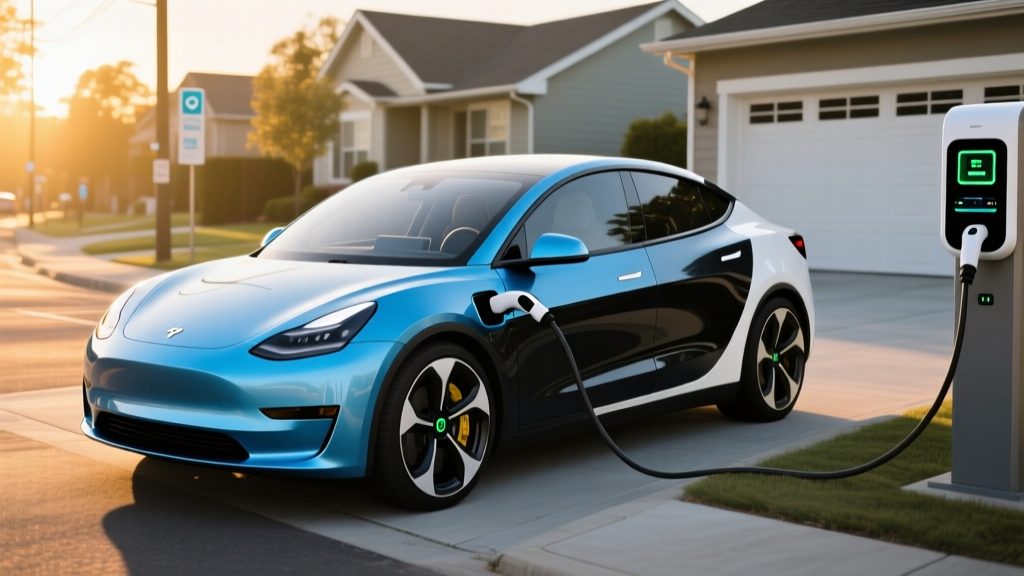
For home charging, a Level 2 (240V) setup at 11 kW adds roughly 35–45 miles of range per hour of charging. A full overnight charge from 20% to 100% takes 6–8 hours. Expect to spend $500–$1,500 on a quality Level 2 home charger and $800–$2,500 on electrician installation, depending on panel capacity and conduit run length. If your home has a 200-amp panel with spare capacity, you're likely looking at the lower end of that range.
Cost Breakdown: Small EV vs. Gas Subcompact vs. Hybrid
The purchase price of a small EV is typically $5,000–$10,000 higher than an equivalent gas subcompact. But total cost of ownership (TCO) tells a different story when you factor in fuel, maintenance, and available tax credits.
| Cost Factor | Small EV (e.g., Bolt EV) | Gas Subcompact (e.g., Honda Civic) | Hybrid (e.g., Toyota Corolla Hybrid) |
|---|---|---|---|
| Base MSRP | $31,900 | $24,500 | $26,000 |
| Federal Tax Credit (§30D)* | −$3,750 to $7,500 | $0 | $0 (HEV) |
| Effective Purchase Price | $24,400–$28,150 | $24,500 | $26,000 |
| Fuel / Electricity (5 yr) | $2,700 (home charging) | $8,250 (30 MPG, $3.30/gal) | $5,500 (50 MPG, $3.30/gal) |
| Maintenance (5 yr) | $1,200 | $3,500 | $3,200 |
| Insurance (5 yr avg) | $9,500 | $7,500 | $7,800 |
| 5-Year Total | $37,800–$41,550 | $43,750 | $42,500 |
*Federal EV tax credit under IRS §30D varies by battery sourcing, buyer income caps ($150K single / $300K joint), and MSRP limits ($55K for cars). Many small EVs qualify for partial or full credit — verify eligibility at purchase. Point-of-sale transfer is now available, reducing your upfront cost directly.
The EV wins on TCO primarily through fuel and maintenance savings. Electric motors have no oil changes, no spark plugs, no transmission fluid, and regenerative braking extends pad life to 80,000+ miles in typical driving. The insurance premium gap is real — EVs currently cost 15–25% more to insure due to higher repair costs and battery replacement risk — but this is narrowing as the fleet matures.
Federal Tax Credit: What You Actually Qualify For
The §30D Clean Vehicle Credit is not a blanket $7,500 for every EV buyer. Eligibility depends on multiple factors that change periodically:
- Battery sourcing: Critical minerals and battery components must meet phased-in domestic/free-trade-agreement thresholds. Some small EVs qualify for only $3,750 (half credit) if they meet one requirement but not both.
- MSRP cap: The vehicle must have a base MSRP at or below $55,000 for cars (all small EVs clear this).
- Buyer income cap: Modified AGI must not exceed $150,000 (single), $225,000 (head of household), or $300,000 (joint filers).
- Point-of-sale transfer: You can transfer the credit to the dealer at purchase, reducing your out-of-pocket cost immediately rather than waiting for a tax refund.
Always verify current eligibility on IRS.gov or ask your dealer for the vehicle's credit qualification letter. Sourcing rules tightened significantly in 2024–2025, and some previously eligible models lost partial or full credit eligibility.
Common Misconceptions About Small EVs
| Myth | Fact |
|---|---|
| "Small EVs can't handle highway speeds." | Modern small EVs hit 0–60 mph in 6.5–8.0 seconds and sustain 80–90 mph effortlessly. The Bolt EV does 0–60 in ~6.5 sec with 200 hp. |
| "The battery will need replacing in 5 years." | EPA and manufacturer data show most EV batteries retain 85–90% capacity at 100,000 miles. All 2026 models carry 8-year/100,000-mile battery warranties (capacity retention ≥70%). Replacement is rare and costs $8,000–$14,000 if needed out of warranty. |
| "You need a $2,000 home charger." | A quality Level 2 charger costs $300–$600. Installation ranges from $400 (simple outlet nearby) to $2,500 (panel upgrade + long conduit run). Many utilities offer rebates of $200–$500. |
| "EVs are worse for the environment because of battery mining." | Lifecycle analyses from the EPA show EVs produce fewer total emissions than gas cars over their lifetime, even accounting for battery production. The grid is also getting cleaner every year, which improves EV emissions post-purchase. |
| "Charging takes too long." | Home charging happens while you sleep — 8 hours covers a full recharge. DC fast charging adds 150+ miles in 20–30 minutes for modern small EVs. For daily commuting under 60 miles, you may never need DC fast charging. |
Decision Framework: Is a Small EV Right for You?
Choose a Small Electric Car If:
- You have home charging access (garage, driveway, or landlord-approved outlet) — this is the single biggest predictor of EV satisfaction.
- Your daily round-trip commute is under 60 miles — any small EV handles this easily, even in cold weather, with range to spare.
- You want to minimize ongoing costs — electricity at $0.14/kWh yields ~$0.04/mile vs. $0.12/mile for a 30 MPG gas car at $3.30/gallon.
- This is a second car or dedicated commuter — small EVs shine as urban runabouts and complement a larger vehicle for road trips.
- You qualify for the federal tax credit — the $3,750–$7,500 credit dramatically closes the purchase-price gap with gas alternatives.
Consider a Hybrid or Gas Car Instead If:
- You live in an apartment with no charging option and public chargers are sparse or unreliable in your area.
- You regularly drive 200+ miles in a single day — a small EV can do it with one DC fast-charge stop, but a hybrid eliminates the planning entirely.
- You face extreme cold (below 0°F) frequently — range loss of 30–40% is real and may make a small battery insufficient.
- Your budget is strictly under $22,000 — even with incentives, small EVs are hard to acquire new below $24,000. A used EV or a new hybrid may fit better.
What First-Time EV Buyers Should Know
Beyond the purchase, a few ownership realities catch new EV drivers off guard:
- Preconditioning matters. If your EV supports scheduled departure preconditioning, use it. Warming the battery while still plugged in preserves range and enables faster DC charging on cold mornings.
- The 80% rule. For daily driving, charge to 80% — not 100%. This extends battery longevity (especially for NMC chemistry). Charge to 100% only before long trips.
- Regenerative braking changes how you drive. Most small EVs offer adjustable regen. Set it high for one-pedal driving in the city — you'll barely touch the brake pedal, and you'll recapture energy on every deceleration.
- Public charging is improving but inconsistent. Networks like Tesla Supercharger, Electrify America, and EVgo vary in uptime. Download multiple network apps and keep a CCS/NACS adapter if your car supports it.
- Tires wear faster. EVs are heavier and deliver instant torque. Expect tire replacement at 25,000–35,000 miles rather than the 45,000+ you might get on a gas car. Budget accordingly (~$600–$900 for a set of EV-rated touring tires).
Bottom Line: Small EVs Are the Sweet Spot for Most Commuters
The electric small car segment has matured into the most practical entry point for EV ownership. With 200–265 miles of EPA range, sub-$35,000 pricing before incentives, and charging infrastructure that covers daily needs for anyone with home access, these vehicles deliver on the promise of cheaper, cleaner commuting. The key is honest self-assessment: if your driving patterns, climate, and charging access align with what a small EV can deliver, you'll likely never want to go back to a gas car for daily driving. If they don't, a hybrid remains an excellent bridge technology with no range compromise.
What's the cheapest electric small car available in 2026?
The Chevrolet Bolt EV starts around $28,900 MSRP, making it the most affordable long-range (259 mi EPA) small EV. With the full $7,500 federal tax credit (if eligible), the effective price drops to ~$21,400 — competitive with gas subcompacts.
Can I charge a small EV on a regular 120V outlet?
Yes, but slowly. Level 1 (120V) charging delivers roughly 1.0–1.4 kW, adding about 3–5 miles of range per hour. For a 60 kWh battery, a full charge takes 40–50 hours. It works for overnight top-ups if your daily driving is under 30 miles, but Level 2 (240V) is strongly recommended for convenience.
How long do small EV batteries last?
Based on current degradation data, most NMC batteries in small EVs retain 85–92% capacity at 100,000 miles and 80–88% at 150,000 miles. Federal law mandates an 8-year/100,000-mile battery warranty with a minimum 70% capacity retention threshold. Many batteries outlast the car itself.
Do small EVs qualify for the $7,500 federal tax credit?
Several do, but eligibility depends on battery mineral sourcing, your income, and the vehicle's MSRP. Under current IRS §30D rules, some models qualify for the full $7,500, others for $3,750, and some for none. Always verify before purchasing — the dealer can provide a credit eligibility summary, and you can transfer the credit at point of sale.
Is a small EV practical for a family?
For a family of two or a single parent with one child, yes — models like the Bolt EUV and Kona Electric offer 25+ cubic feet of cargo space and adequate rear-seat room for child seats. For families of four or those needing frequent cargo hauling, a compact EV SUV (Ioniq 5, Model Y) is more practical.