The Quick Answer: Who Builds Electric School Buses in 2026?
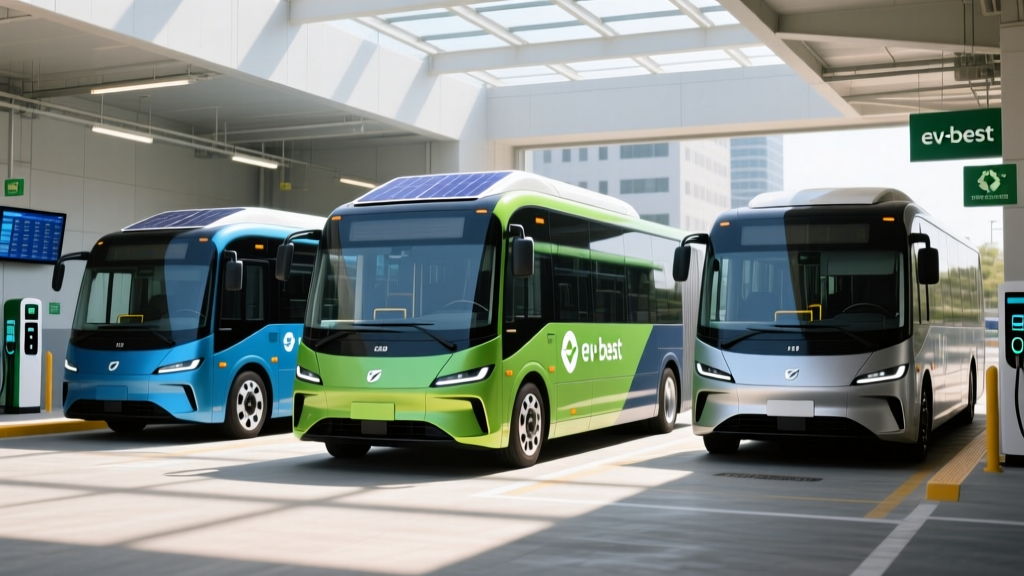
The major electric school bus manufacturers currently delivering Class A–D models to U.S. fleets are Blue Bird Corporation (Vision and All American BEV), Thomas Built Buses (Saf-T-Liner C2 Jouley), Lion Electric (LionC and LionD), and Collins Bus (Low Floor E). Together, these OEMs cover Type A (small/van-based), Type C (conventional), and Type D (transit-style) configurations. Base pricing in 2026 ranges from roughly $180,000 to $390,000 per bus before federal or state incentives, with EPA-estimated ranges between 75 and 155 miles depending on battery size and configuration. Most districts report diesel-fuel savings of $6,000–$12,000 per bus annually, with payback periods of 5–9 years when grants and the EPA Clean School Bus Program funding are applied.
The 2026 Electric School Bus Landscape at a Glance
School transportation is one of the most compelling electrification use cases in commercial trucking. Routes are predictable, distances are short (the national average is roughly 30–40 miles per day), buses return to a central depot for overnight charging, and diesel exhaust near children is a documented health concern. As of 2026, over 3,000 electric school buses have been ordered or deployed across the U.S., supported by the EPA's Clean School Bus Program and state-level voucher programs like California's HVIP and New York's school bus electrification mandate.
Below is a side-by-side comparison of the four primary manufacturers, based on current 2026 model-year specifications:
| Manufacturer | Model | Type | Battery (kWh usable) | EPA Est. Range (mi) | Max DC Charge (kW) | 10–80% Time | Base MSRP (approx.) | Powertrain Warranty |
|---|---|---|---|---|---|---|---|---|
| Blue Bird | Vision BEV | C | 155 kWh (NMC) | 120 mi | 60 kW | ~2.5 hrs | $295,000 | 5 yr / 100k mi |
| Blue Bird | All American BEV | D | 196 kWh (NMC) | 155 mi | 60 kW | ~3 hrs | $385,000 | 5 yr / 100k mi |
| Thomas Built | C2 Jouley | C | 226 kWh (NMC) | 138 mi | 60 kW (CCS1) | ~3 hrs | $330,000 | 5 yr / 100k mi |
| Lion Electric | LionC | C | 130–195 kWh (NMC) | 75–130 mi | 50 kW | ~2.5 hrs | $270,000 | 5 yr / unlimited mi |
| Lion Electric | LionD | D | 155–210 kWh (NMC) | 100–150 mi | 50 kW | ~3 hrs | $340,000 | 5 yr / unlimited mi |
| Collins Bus | Low Floor E | A | 110 kWh (NMC) | 75 mi | 50 kW | ~2 hrs | $185,000 | 5 yr / 75k mi |
Note: Range figures are EPA-estimated. Real-world range varies significantly based on climate, terrain, passenger load, and HVAC usage (see next section).
Real-World Range: What the Sticker Doesn't Tell You
School bus operators quickly learn that EPA range is a starting point, not a guarantee. The physics of a 25,000–33,000 lb. vehicle carrying up to 72 passengers means efficiency fluctuates dramatically with conditions:
Real-World Range Reality Check
EPA sticker: 120 miles (Blue Bird Vision BEV, 155 kWh)
Real-world expectations:
- Mild weather, flat terrain, moderate load: 100–115 miles
- Highway-speed runs (55+ mph sustained): 85–100 miles
- Cold weather (below 32°F) with cabin heating: 65–85 miles (30–40% loss)
- Hilly terrain, full passenger load: 80–95 miles
Most districts plan routes at 70% of EPA range as a safe operational buffer, reserving 30% for detours, HVAC load, and battery aging over the bus's 12-year service life.
Cold-weather range loss is the single biggest operational surprise for northern districts. NMC lithium-ion batteries lose efficiency below freezing, and electric cabin heaters draw 10–20 kW of continuous power — equivalent to running a Level 2 home charger just to keep students warm. Districts in Minnesota, Maine, and upstate New York report needing 30–40% more battery capacity than identical routes in Texas or Florida.
Lion Electric offers an optional diesel-fired cabin heater on the LionC to preserve battery range in extreme cold — a pragmatic tradeoff that sacrifices zero-emission operation for 20–30 additional electric miles on the coldest days.
Total Cost of Ownership: Electric vs. Diesel School Buses
The upfront premium for an electric school bus is substantial — typically $150,000–$220,000 more than an equivalent diesel Type C. But the TCO story flips when you account for fuel, maintenance, and grant funding over a 12-year lifecycle.
| Cost Category | Diesel Bus (Cummins B6.7) | Electric Bus (Blue Bird Vision BEV) |
|---|---|---|
| Purchase Price | $110,000 | $295,000 |
| EPA Clean School Bus Rebate | $0 | –$62,500 (avg.) |
| State Voucher (varies) | $0 | –$50,000 (avg.) |
| Net Purchase | $110,000 | $182,500 |
| Fuel / Electricity (12 yrs, 12k mi/yr) | $72,000 (diesel @ $4.00/gal) | $18,700 (electric @ $0.13/kWh) |
| Maintenance (12 yrs) | $48,000 (oil, filters, DPF, brakes) | $15,000 (brake regen savings, no oil/fluids) |
| DEF Fluid / Emissions Systems | $6,000 | $0 |
| Depot Charging Infrastructure (share per bus) | $0 | $25,000 |
| 12-Year Total | $236,000 | $241,200 |
The numbers reveal a near-parity scenario when grants are applied — and the electric bus pulls ahead in years 10–12 as maintenance savings compound. Districts with access to time-of-use electricity rates (charging overnight at $0.08–$0.10/kWh) or on-site solar can push the electric TCO well below diesel.
Key cost variables to model for your specific district:
- Electricity rate: Commercial rates vary from $0.07/kWh (Pacific Northwest hydro) to $0.22/kWh (Northeast). This is the single largest variable in operating cost.
- Route mileage: Buses running 60+ miles/day save more on fuel; buses under 20 miles/day have longer payback periods.
- Charger sharing ratio: Most districts deploy one Level 2 or DC charger per 2–4 buses using staggered charging schedules. This dramatically reduces per-bus infrastructure cost.
- Grant stacking: Districts combining EPA Clean School Bus funds, state vouchers (HVIP in CA can reach $240,000 per bus), and utility make-ready programs can reduce net purchase cost below diesel.
Charging Infrastructure: What Depots Actually Need
School buses charge almost exclusively at the depot, overnight. This eliminates public-charging unreliability as a concern but introduces depot electrical planning as the primary infrastructure challenge.
| Level | Power (kW) | Connector | Miles Added/Hour | Full Charge Time | Typical Use |
|---|---|---|---|---|---|
| Level 2 (AC) | 19.2 kW | J1772 / CCS1 | ~12–15 mi/hr | 8–12 hours | Overnight depot (most common) |
| DC Fast (low-power) | 50–60 kW | CCS1 | ~35–50 mi/hr | 3–4 hours | Mid-day top-up, shorter depots |
| DC Fast (high-power) | 150 kW | CCS1 | ~90–120 mi/hr | 1.5–2 hours | Rare; requires major utility upgrades |
The vast majority of school districts deploy 19.2 kW Level 2 chargers — sufficient to fully recharge a 155 kWh battery overnight in roughly 8–10 hours. At approximately $7,000–$15,000 per Level 2 pedestal (hardware plus installation), this is the most cost-effective approach for fleets that return by 4 PM and depart by 6 AM.
Depot Charging Install Cost Breakdown (Per Charger)
| Component | Level 2 (19.2 kW) | DC Fast (60 kW) |
|---|---|---|
| Charger hardware | $5,000–$8,000 | $25,000–$45,000 |
| Electrical installation | $3,000–$8,000 | $15,000–$40,000 |
| Utility service upgrade | $0–$15,000 | $20,000–$100,000+ |
| Permitting / engineering | $1,000–$3,000 | $5,000–$15,000 |
| Total per station | $9,000–$34,000 | $65,000–$200,000 |
Utility upgrades are the wildcard. Many school depots have 400A or 800A service that can support 5–10 Level 2 chargers without upgrades. DC fast charging almost always requires a new transformer or service upgrade — contact your local utility early in planning.
A critical operational note: charge curve taper matters less for school buses than for passenger EVs. Since buses charge overnight, the fact that charging slows above 80% State of Charge is irrelevant — the bus simply sits plugged in. Districts should set chargers to reach 100% by departure time, which actually helps with cell balancing for NMC batteries. However, routinely holding NMC batteries at 100% for 12+ hours accelerates degradation. Smart charge management software (ChargePoint, BTCP, or OEM-provided) can delay the final top-off to 1–2 hours before departure.
Common Misconceptions About Electric School Buses
| Myth | Fact |
|---|---|
| "Electric buses can't handle cold weather." | Range drops 30–40% below freezing, but most routes are short enough to accommodate this with proper battery sizing. Districts in Alaska, Vermont, and Michigan operate electric buses year-round with route planning adjustments. |
| "Battery replacement will bankrupt the district." | NMC batteries in current models are warrantied for 5 years / 75k–100k miles with a 70–80% capacity retention guarantee. Replacement costs $40,000–$65,000, but most batteries retain 80%+ capacity at 150,000 miles based on transit-agency fleet data. A mid-life replacement extends the bus another 8–10 years. |
| "The grid can't handle a fleet of electric buses." | A 10-bus depot charging at 19.2 kW each draws ~192 kW — roughly the load of 50–60 homes. Most commercial utility feeders can accommodate this. The issue is timing: staggered charging and utility demand-response programs prevent peak-load spikes. |
| "Electric buses are slower and less powerful." | Electric drivetrains deliver peak torque from 0 RPM. The Blue Bird Vision BEV produces 362 HP and 1,600 lb-ft of torque at the wheels — exceeding its diesel counterpart's acceleration. Highway speed merging and hill climbing are not issues. |
| "There aren't enough federal incentives." | The EPA Clean School Bus Program allocated $5 billion through 2026, with individual rebates up to $375,000 for zero-emission buses in high-need districts. Combined with state programs, many districts pay less than diesel. |
Decision Framework: Is an Electric School Bus Right for Your Fleet?
Choose Electric If:
- Your average daily route is under 80 miles (covers ~85% of U.S. school bus routes)
- You have depot parking with 8+ hour dwell time for overnight Level 2 charging
- You qualify for EPA Clean School Bus rebates or state voucher programs (check epa.gov/cleanschoolbus)
- Your commercial electricity rate is below $0.15/kWh
- You plan to keep buses 10+ years (where maintenance savings compound)
- Student air quality and emissions reduction are district priorities
Stay With Diesel or Consider Hybrid If:
- Routes regularly exceed 100 miles/day or include long field-trip runs
- Your depot lacks electrical capacity and utility upgrades are prohibitively expensive ($100,000+)
- You operate in extreme cold (consistently below 0°F) with routes near range limits
- Your district cannot access federal or state grant funding
- You need tow-away capability for disabled buses (electric bus towing requires special flatbed procedures to avoid motor regeneration damage)
What First-Time Fleet Buyers Should Know
Transitioning even a portion of a school bus fleet to electric involves planning that goes beyond the vehicle purchase. Here's what experienced fleet managers wish they'd known:
Start with a pilot of 2–5 buses. Don't electrify the entire fleet in year one. Use the pilot to validate route assumptions, train drivers on regenerative braking techniques (one-pedal driving recaptures 15–25% of energy on stop-and-go routes), and identify charging bottlenecks.
Engage your utility early. Utility make-ready programs can cover 50–100% of electrical infrastructure costs on the utility side of the meter. But these programs have application windows and lead times of 6–18 months. Contact your utility's commercial EV team before you order buses.
Train mechanics on high-voltage safety. Electric bus powertrains operate at 400–800V DC. Maintenance staff need OEM-certified high-voltage training — typically a 2–3 day course — before working on the battery or drive system. Most manufacturers include this training with purchase.
Plan for V2G (vehicle-to-grid) as a future revenue stream. Blue Bird and Lion Electric offer V2G-capable buses that can discharge power back to the grid during peak demand events. In markets like California (with PG&E and SCE V2G tariffs), a fleet of 10 buses can earn $15,000–$30,000 annually in grid-services revenue, further improving TCO.
Battery second-life and recycling. When a bus battery drops below 70% capacity (typically at 150,000–200,000 miles), it's no longer suitable for vehicle use but retains significant value for stationary energy storage. Companies like Redwood Materials and Battery Resources accept retired school bus batteries, offsetting replacement cost by $3,000–$8,000.
Frequently Asked Questions
Do electric school buses qualify for the federal §30D tax credit?
No. The §30D Clean Vehicle Credit applies to light-duty vehicles under 14,000 lbs. GVWR. School buses fall under the §45W Commercial Clean Vehicle Credit, which provides up to $40,000 per vehicle for qualified commercial clean vehicles. School districts (as tax-exempt entities) can access this through direct pay provisions under the Inflation Reduction Act — meaning they receive the credit as a payment from the IRS even without tax liability. Consult a tax professional and reference IRS guidance on §45W for eligibility details.
How long do electric school bus batteries last?
Current NMC battery packs in Blue Bird, Thomas, and Lion buses are warrantied for 5 years with a 70–80% capacity retention threshold. Real-world data from early-adopter transit agencies suggests these packs retain 80–85% capacity at 150,000 miles (roughly 10–12 years of school bus use). A mid-life battery replacement at year 8–10 extends the bus's service life to 15+ years, matching diesel bus lifespans.
Can you charge an electric school bus with solar panels?
Yes, but the math requires scale. A single bus consuming ~200 kWh per charge cycle needs roughly 60–80 solar panels (400W each) to generate that energy on a clear day. Most districts pair solar canopies over bus parking with grid power as a supplement. The solar offset reduces electricity cost but rarely covers 100% of charging needs year-round.
What happens if an electric school bus runs out of charge on a route?
This is managed through route planning and telematics. All major OEMs provide fleet management software showing real-time State of Charge, projected range, and alerts when a bus may not complete its route. If a bus does deplete, it must be flatbed-towed — towing with wheels on the ground can cause the electric motor to generate voltage and damage the inverter. Districts keep one diesel spare bus for these contingencies.
Which electric school bus manufacturer has the longest range?
As of 2026, the Blue Bird All American BEV (Type D) offers the highest EPA-estimated range at 155 miles with its 196 kWh battery, though real-world highway and cold-weather range will be 100–125 miles. The Thomas C2 Jouley carries the largest battery at 226 kWh, but its EPA range is rated at 138 miles due to the heavier vehicle weight of the C2 platform.
Are electric school buses safer than diesel buses?
Electric buses carry inherent safety advantages: no diesel fuel (eliminating fire/explosion risk from fuel leaks), a lower center of gravity from floor-mounted battery packs (reducing rollover risk), and regenerative braking that reduces brake wear and fade. The NHTSA applies the same Federal Motor Vehicle Safety Standards (FMVSS) to electric and diesel buses. There have been no widespread safety recalls specific to electric school bus battery systems as of early 2026.