Quick Answer: Are Electric Off Road Cars Ready for the Trail?
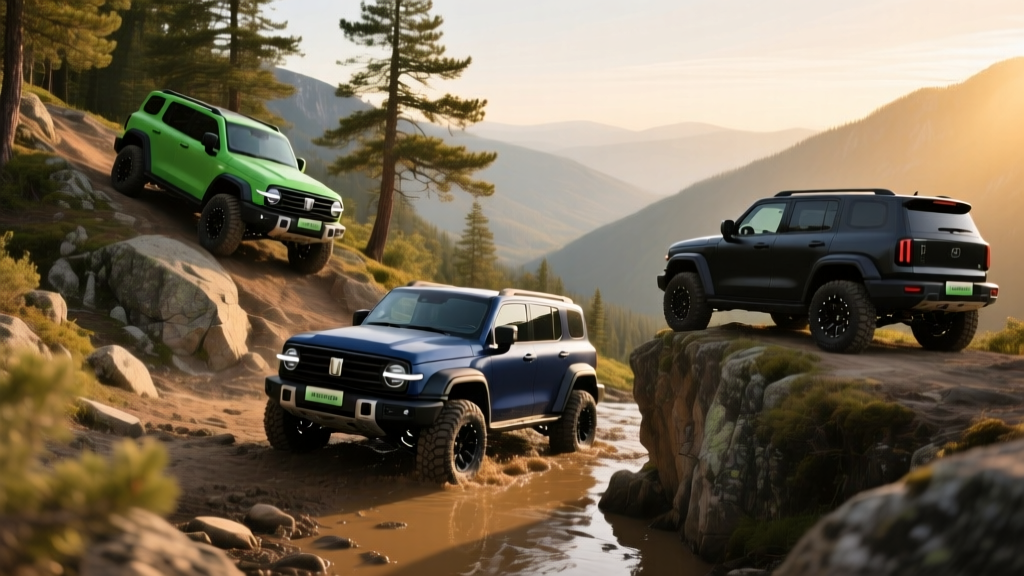
Yes — if you pick the right model and understand the trade-offs. The best electric off road cars in 2026 deliver instant torque, low centers of gravity, and precise throttle control that outperform most gas 4x4s on technical terrain. But trail range drops 40-55% versus EPA highway estimates, DC fast chargers remain scarce near remote trailheads, and curb weights over 8,500 lbs can limit mud/sand performance. Expect to spend $55,000-$100,000+ before incentives, and plan for 250-350 miles of EPA range that shrinks to 120-180 miles on moderate off-road loops.
What Makes an EV Good Off-Road (and Where Gas Still Wins)
Electric powertrains offer three mechanical advantages on the trail:
- Instant torque at zero RPM. No spool-up, no clutch slip — you get maximum wheel torque the moment you touch the pedal. This matters for rock crawling and technical climbs.
- Independent motor control. Quad-motor setups (Rivian, Hummer EV) can vector torque to individual wheels faster than any mechanical locker.
- Low center of gravity. Battery packs sit under the floor, reducing rollover risk on side slopes.
Where internal combustion still holds an edge:
- Refueling in remote areas. A jerry can of gas works anywhere. A dead EV in the backcountry requires a tow or a very long wait for a mobile charger.
- Weight. A Jeep Wrangler Rubicon weighs ~4,900 lbs. A Rivian R1S Tri Motor tips scales at ~7,150 lbs. Heavy vehicles sink in sand, churn mud deeper, and stress suspension components faster.
- Range predictability. Gas off-roaders lose efficiency on trails too, but refueling takes 5 minutes. An EV at 15% State of Charge in a canyon with no cell service is a genuine problem.
| Metric | Rivian R1S Tri Motor (EV) | Jeep Wrangler 4xe (PHEV) | Jeep Wrangler Rubicon 392 (Gas) |
|---|---|---|---|
| EPA Range / Fuel Range | 330 mi (EPA) | 370 mi gas + 22 mi electric | ~330 mi |
| Trail Range (real-world, moderate terrain) | ~140-170 mi | ~180-220 mi (gas) | ~160-200 mi |
| Horsepower | 850 hp | 375 hp combined | 470 hp |
| Wheel Torque (est.) | ~11,000 lb-ft | 470 lb-ft | 470 lb-ft |
| Ground Clearance | 14.9 in (max) | 10.8 in | 12.9 in |
| Approach / Departure Angle | 35.5° / 34.2° | 44° / 37° | 47.4° / 40.4° |
| Curb Weight | ~7,150 lbs | ~5,100 lbs | ~4,900 lbs |
| Max Towing | 7,700 lbs | 3,500 lbs | 3,500 lbs |
| Starting MSRP | $99,900 | $55,090 | $89,090 |
Sources: EPA / fueleconomy.gov, Rivian.com, Jeep.com. Trail range estimates based on real-world owner reports and 40-55% reduction from EPA for low-speed, high-load off-road driving.
The 2026 Electric Off Road Cars Worth Considering
Rivian R1S (Dual & Tri Motor)
The R1S remains the most capable all-around electric SUV for owners who actually leave pavement. The 2026 Tri Motor version produces 850 hp and uses a 141 kWh NMC battery pack (the Max Pack) for 330 miles EPA. Air suspension lifts to 14.9 inches of ground clearance. The quad-motor setup was dropped for 2025+ in favor of a lighter, more efficient tri-motor configuration. DC fast charging peaks at ~220 kW, reaching 10-80% in approximately 30 minutes on a 350 kW charger — but expect closer to 40 minutes on typical 150 kW trailhead-adjacent chargers.
Base MSRP: $79,900 (Dual Motor Standard) / $99,900 (Tri Motor Max)
Federal tax credit: The R1S qualifies for up to $7,500 under IRS §30D for eligible buyers (income caps: $300k joint / $150k single; SUV MSRP cap: $80,000 — meaning only the Dual Motor Standard pack may qualify; verify current-year battery sourcing rules).
GMC Hummer EV SUV
At over 9,000 lbs and 1,000 hp in Watts to Freedom mode, the Hummer EV is a blunt instrument. Its 246 kWh Ultium battery (one of the largest in any production vehicle) delivers 314 miles EPA. Ground clearance reaches 15.9 inches with the adaptive air ride, and the Extract Mode crawls at ultra-low speeds with maximum torque. CrabWalk (4-wheel steering) lets you diagonal-crawl on tight trails. The trade-off: charging a 246 kWh battery is slow. Even at 350 kW peak, 10-80% takes roughly 45-55 minutes.
Base MSRP: $99,995+ (3X)
Federal tax credit: Exceeds the $80,000 SUV MSRP cap — not eligible for §30D.
Jeep Recon (All-Electric)
Jeep's first purpose-built electric off-roader (built on Stellantis STLA Large platform) arrives for the 2026 model year with removable doors, a power-folding soft top, and Jeep's Selec-Terrain system adapted for EV torque delivery. EPA range is estimated at ~300 miles. It includes front and rear mechanical lockers (rare on EVs) and 33-inch all-terrain tires from the factory. Pricing starts in the mid-$50,000 range, positioning it as the most affordable serious electric off-roader.
Estimated Base MSRP: ~$55,000-$60,000
Federal tax credit: Expected to qualify for up to $7,500 (subject to battery sourcing and buyer income — confirm at point of sale).
Ineos Grenadier Quartermaster (EV variant — announced)
Status: Announced / preliminary. Not yet on sale. Ineos has confirmed an electric version of the Grenadier, its body-on-frame off-roader. Specs are preliminary, but expect a focus on durability over range — solid axles, a ladder frame, and a target of ~250 miles EPA. This is a niche play for expedition-style buyers.
Real Ownership Costs: What Trail-Focused EV Buyers Actually Spend
| Cost Category | Rivian R1S Dual Motor | Jeep Wrangler 4xe (PHEV) |
|---|---|---|
| Purchase Price (base MSRP) | $79,900 | $55,090 |
| Federal Tax Credit (est.) | -$7,500* | -$7,500* |
| Net Purchase | $72,400 | $47,590 |
| 5-Yr Fuel/Energy (home L2 + trail DCFC) | ~$5,200 | ~$8,800 (gas + electric) |
| 5-Yr Maintenance | ~$1,500 | ~$4,200 |
| 5-Yr Insurance (avg) | ~$14,000 | ~$9,500 |
| Estimated 5-Yr Depreciation | ~$28,000 | ~$18,000 |
| 5-Year Total Cost of Ownership | ~$121,100 | ~$88,090 |
*Tax credit eligibility depends on buyer income, battery critical-mineral sourcing, and MSRP caps per IRS §30D. Consult a tax professional.
Assumptions: 75,000 miles over 5 years; $0.14/kWh home charging; $0.45/kWh DC fast charging (trail use); $3.40/gal gas; insurance from industry averages for high-value SUVs.
The EV saves roughly $5,100 on fuel and maintenance over five years, but those savings are overwhelmed by higher purchase price, insurance, and depreciation. Off-road EVs are not budget plays — they're performance and experience purchases.
Home Charging: The Trail EV Make-or-Break
If you don't have access to Level 2 home charging, an electric off-roader is a poor fit. Here's why:
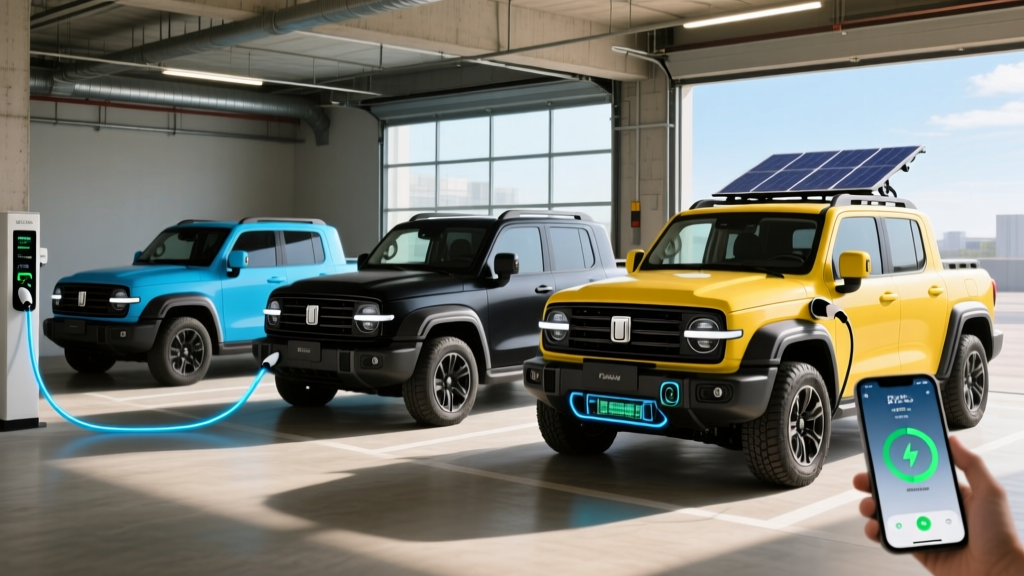
- Large batteries need time. A 141 kWh Rivian pack charging at 120V (Level 1) adds roughly 3-4 miles of range per hour — that's 35+ hours for a full charge. Level 2 at 11.5 kW (48A) takes ~12 hours from empty.
- Post-trail recovery. After a hard off-road day burning 60-70% of your battery, you need overnight L2 charging to be ready the next morning. Public DC fast chargers near trailheads are rare, and those that exist are often 50-150 kW units, not 350 kW stations.
- Installation cost. Budget $1,200-$3,500 for a 240V/48A home charger installation (panel permitting, 60A circuit, NEMA 14-50 or hardwired). Homes with older 100A electrical panels may need a $2,000-$4,000 panel upgrade.
Common Misconceptions About Electric Off Road Cars
| Myth | Fact |
|---|---|
| "EVs can't handle water crossings." | Most EV battery packs are sealed to IP67 or IP6K9K. The Rivian R1S has a wading depth of ~43 inches (with air suspension raised) — deeper than most gas SUVs. No air intake means no hydrolock risk. However, saltwater and repeated deep submersion can compromise seals over time. |
| "EVs get stuck more because they're heavy." | Weight hurts in sand and deep mud, but the low center of gravity and instant torque help on rock and hard-pack. Modern traction control on EVs reacts in milliseconds — faster than mechanical lockers engage. |
| "You can't take an EV anywhere remote." | You can — with planning. Many off-road EV owners carry portable solar panels (200-400W) for emergency trickle charging and plan loops within 100 miles of known chargers. But yes, deep backcountry expeditions (Rubicon Trail multi-day, Moab remote sections) require more logistics than a gas rig. |
| "Cold weather kills off-road EV range." | Cold (below 32°F) reduces range 20-35% due to battery chemistry and cabin heating demands. Combined with off-road load, winter trail range can drop to 80-110 miles on a 330-mile EPA vehicle. Preconditioning the battery while plugged in mitigates some loss. Vehicles with heat pumps (R1S, Hummer EV) fare better than resistive heaters. |
| "EV batteries will get destroyed off-road." | Battery packs are housed in armored skid plates (Rivian uses 5mm+ steel; Hummer EV has underbody armor). Manufacturers test for rock strikes. That said, a punctured battery casing is a $20,000-$35,000 replacement — so skid plate damage should be inspected after every trail run. |
Charging on the Trail: What Infrastructure Actually Exists
The honest picture in 2026: DC fast charging near popular off-road destinations is improving but still inconsistent.
- Moab, UT: Multiple Electrify America and Tesla Supercharger stations (150-350 kW). Adequate for R1S and Hummer EV with adapters. Rivian Adventure Network chargers at select trailheads.
- Moab-adjacent remote trails: Limited to none. Plan to return to town to charge.
- Colorado (Ouray, Telluride, Moab-area): Growing NACS and CCS infrastructure, but 50 kW chargers remain common in small mountain towns — expect 2+ hour charge sessions.
- Rubicon Trail (Lake Tahoe area): Chargers in Georgetown and at trailhead-adjacent towns, but nothing on the trail itself.
- National Forests / BLM land: Virtually zero charging. You must self-contain your energy.
Connector note: Tesla's NACS connector is now the standard for Ford, Rivian (2025+), and most new EVs. CCS1 remains on the Hummer EV and some legacy models. CHAdeMO is effectively dead for new vehicles. Carry a NACS-to-CCS adapter if your vehicle requires it.
Decision Framework: Which Electric Off Roader Fits You?
Choose the Rivian R1S if:
- You want the best combination of on-road comfort and genuine off-road capability
- You can install a Level 2 home charger and your trail loops are within 150 miles of home base
- You value over-the-air updates, a growing Adventure Network, and a usable third row
- Budget: $75,000-$110,000 after options
Choose the Jeep Recon if:
- You want the most affordable entry into serious electric off-roading (~$55,000-$60,000)
- You want removable doors and an open-air trail experience
- You're okay with less range (~300 mi EPA) and a newer, less proven platform
- You prioritize mechanical lockers and Jeep's off-road heritage
Choose the GMC Hummer EV SUV if:
- You want maximum presence, 1,000 hp, and CrabWalk for tight trail obstacles
- You have a large budget ($100,000+) and a garage that fits a 9,000-lb, 18-foot vehicle
- You accept 45+ minute DC fast charge sessions due to the massive 246 kWh battery
- Trail range and efficiency are secondary to raw capability
Stick with a gas or PHEV off-roader (Wrangler 4xe, Bronco, 4Runner) if:
- You regularly do multi-day backcountry expeditions far from charging
- You don't have home Level 2 charging access
- You want to keep total cost of ownership under $90,000 over 5 years
- Vehicle weight matters for your terrain (sand dunes, soft mud)
Frequently Asked Questions
How much trail range do electric off road cars actually get?
Expect 40-55% of EPA range on moderate off-road terrain. A Rivian R1S rated at 330 miles EPA will realistically deliver 140-170 miles of trail driving before needing a charge. Aggressive rock crawling or sand driving can push losses to 60%+. Low-speed, high-torque driving consumes far more energy per mile than highway cruising.
Do electric off road cars qualify for the $7,500 federal tax credit?
Some do, with conditions. Under IRS §30D, SUVs must have an MSRP at or below $80,000, the buyer must meet income caps ($300k joint / $150k single), and the battery must meet critical-mineral and component sourcing requirements. The Rivian R1S Dual Motor Standard ($79,900) may qualify; the Tri Motor Max ($99,900) and Hummer EV ($99,995) exceed the MSRP cap. The Jeep Recon (~$55,000) is expected to qualify. Always verify at point of sale — rules change and sourcing compliance varies by build date.
Can I charge an electric off-roader from a standard wall outlet at a cabin?
Yes, but slowly. A 120V Level 1 outlet delivers ~1.2-1.4 kW, adding 3-4 miles of range per hour to a large-pack EV. After a trail day that uses 60% of a 141 kWh battery (~85 kWh depleted), a 120V outlet would take 60+ hours to fully recharge. A 240V outlet (like a dryer outlet / NEMA 14-50) at 7-11 kW cuts this to 8-12 hours. If your cabin has a 240V outlet, you can charge overnight.
Are EV battery packs protected from rock strikes?
Yes. All major off-road EVs use reinforced skid plates — Rivian uses multi-layer steel armor, and the Hummer EV has dedicated underbody protection. Battery packs are also sealed against water intrusion. That said, a severe impact that dents or punctures the casing can compromise the battery. Inspect skid plates after every trail run, and factor in that a battery replacement (if needed out of warranty) costs $20,000-$35,000.
What's the best electric off road car for beginners?
The Jeep Recon offers the lowest entry price (~$55,000) with genuine off-road hardware (lockers, Selec-Terrain, high clearance). For buyers with higher budgets who want daily-driver refinement plus trail capability, the Rivian R1S Dual Motor is the most well-rounded choice. Beginners should prioritize home Level 2 charging installation before purchase and start with trails within 80 miles of a known DC fast charger.
How does cold weather affect off-road EV performance?
Below 32°F, expect 20-35% range loss from battery chemistry slowdown and cabin/climate demands. On the trail, this compounds — a 330-mile EPA vehicle in 20°F weather doing moderate off-roading may deliver only 80-110 real miles. Preconditioning (warming the battery while plugged in before departure) recovers some efficiency. Heat pumps, standard on most 2026 off-road EVs, reduce cabin-heating energy draw by 30-50% compared to resistive heaters.