The Short Answer on Electric Kei Trucks
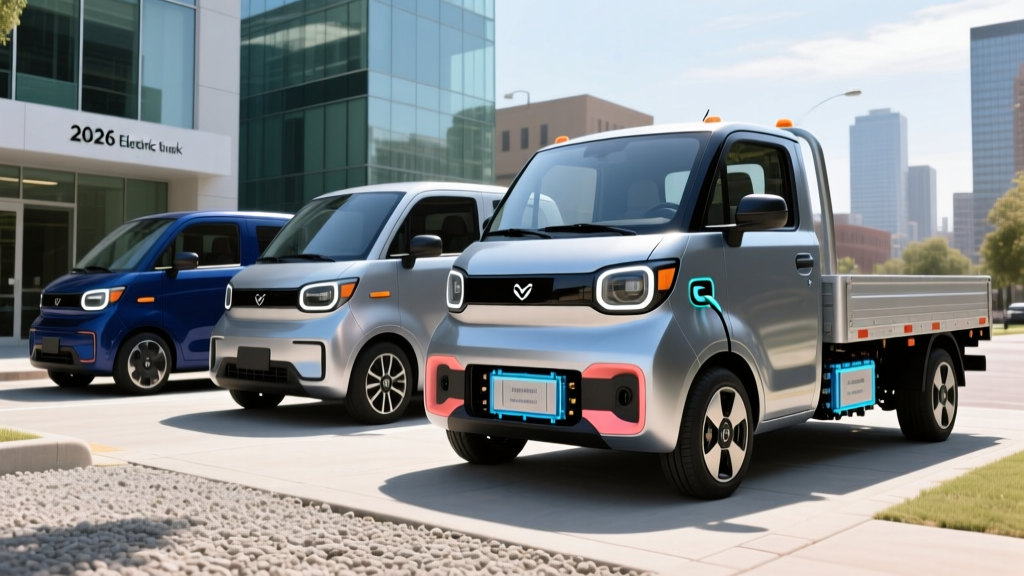
Electric kei trucks — the battery-powered versions of Japan's iconic mini utility vehicles — are best suited as low-speed, short-range workhorses for farms, ranches, large campuses, and neighborhood errands. Expect 40–80 miles of real-world range, top speeds of 25–62 mph (depending on street-legal classification), and purchase prices between $12,000 and $35,000 before incentives. They charge on standard 120V outlets overnight and cost pennies per mile to operate. However, most models cannot legally be driven on highways, lack modern crash-test ratings, and offer minimal climate control — making them a specialized secondary vehicle, not a daily-driver replacement.
What Is an Electric Kei Truck and Who Is It For?
Kei trucks (軽トラック) originated in Japan as ultra-compact utility vehicles built to meet kei-car regulations — maximum dimensions of roughly 134 inches long, 58 inches wide, and engines under 660cc. The electric versions swap the tiny gas engine for a battery pack (typically 10–30 kWh) and an electric motor (10–30 kW).
In the US market, electric kei trucks fall into two categories:
- Low-Speed Vehicles (LSVs): Federally limited to a top speed of 25 mph, legal on roads with speed limits up to 35 mph (varies by state). No crash-test requirements. Examples include converted imports and purpose-built US-market micro-trucks.
- Neighborhood Electric Vehicles (NEVs) / Higher-speed imports: Some models can reach 45–62 mph and may be registered as full vehicles in certain states, though highway use is almost universally prohibited.
The typical buyer is someone who needs a compact, cheap-to-run utility vehicle for property maintenance, short-haul cargo runs, farm work, or campus logistics — not highway commuting.
Electric Kei Truck Models Available or Coming to the US
The US electric kei truck market in 2026 is still niche but growing. Here are the primary options:
| Model | Battery (kWh) | Est. Range (mi) | Top Speed | Payload (lbs) | MSRP (approx.) |
|---|---|---|---|---|---|
| Cape Electric Mini Truck | 15 kWh (LFP) | 50–65 | 55 mph | 1,100 | $18,500 |
| BMS Electric Mini Truck | 12 kWh (LFP) | 40–55 | 25 mph (LSV) | 1,000 | $14,900 |
| Japanese import (converted) | 10–20 kWh | 35–60 | Varies | 770–1,100 | $12,000–$25,000 |
| Jetson ORION (micro utility) | 10 kWh | 40–50 | 25 mph (LSV) | 800 | $12,995 |
Note: Specs vary by importer and configuration. Many electric kei trucks are sold through specialty dealers rather than mainstream franchises. Always confirm EPA classification and state registration eligibility before purchasing.
Real-World Range and Charging: What to Expect
Electric kei truck batteries are small — typically 10 to 20 kWh usable, often using LFP (lithium iron phosphate) chemistry for its durability and lower cost. Here's how that translates to real driving:
Range Reality Check
Sticker/claimed range: 50–80 miles (manufacturer estimates, often at low speeds on flat terrain)
Real-world range (mixed use): 35–60 miles
Loaded/towing or hilly terrain: 25–40 miles
Cold weather (below 40°F): Expect 20–35% range loss, bringing effective range to 25–45 miles
Charging is straightforward because the batteries are small:
| Charging Level | Power (kW) | Time (0–100%) | Notes |
|---|---|---|---|
| Level 1 (120V household) | 1.0–1.4 kW | 10–18 hours | Standard outlet; sufficient for overnight |
| Level 2 (240V) | 2.5–3.3 kW | 4–7 hours | Requires dedicated circuit; worthwhile if you drive daily |
| DC Fast Charge | N/A | N/A | Most electric kei trucks do NOT support DC fast charging |
The absence of DC fast charging is a key limitation. These vehicles are designed for depot-style charging — plug in at night, ready by morning. If you need midday top-ups, a Level 2 charger cuts charge time roughly in half.
Cost Breakdown: Electric Kei Truck vs. Gas Kei Truck
One of the strongest arguments for going electric in the kei truck segment is operating cost. Here's a side-by-side comparison over 5 years, assuming 3,000 miles per year (typical for property/farm use):
| Cost Category | Electric Kei Truck | Gas Kei Truck (used import) |
|---|---|---|
| Purchase price | $15,000–$25,000 | $7,000–$12,000 (used JDM import) |
| Fuel/energy (5 years) | $375–$600 (at $0.13/kWh) | $2,500–$3,750 (at $3.50/gal, 25 MPG) |
| Maintenance (5 years) | $200–$500 | $1,500–$3,000 (oil, filters, belts, carb issues) |
| Insurance (annual avg) | $300–$600/yr | $300–$500/yr |
| 5-year total (mid-range est.) | ~$20,000–$28,000 | ~$15,000–$24,000 |
Key takeaway: The electric kei truck costs more upfront but saves $2,000–$5,000 in fuel and maintenance over five years. The break-even point typically arrives around year 3–4, depending on mileage and local electricity rates. For high-use scenarios (daily farm rounds, campus mail delivery), the electric option wins on total cost. For occasional weekend use, a cheap gas import may still be the better financial play.
Federal and State Incentives
Under current IRS §30D rules, the federal clean vehicle credit of up to $7,500 applies only to vehicles that meet strict battery-sourcing, critical-mineral, MSRP, and buyer-income requirements. Most electric kei trucks do not qualify because:
- Many are classified as LSVs or NEVs, not full highway-capable vehicles
- Battery components and critical minerals often do not meet US-sourcing thresholds
- MSRP is typically below the cap, but the vehicle classification disqualifies them
Some state and local utility rebates apply to LSVs and off-road electric utility vehicles. Check your state energy office and local electric cooperative for available programs. A few states offer point-of-sale rebates of $500–$2,000 for low-speed electric vehicles.
Street Legality, Registration, and Where You Can Drive
This is the most misunderstood aspect of kei truck ownership in the US. The rules vary dramatically by state and vehicle classification:
| Myth | Fact |
|---|---|
| "Kei trucks are street-legal everywhere in the US" | LSV-classified electric kei trucks are legal on roads with speed limits ≤35 mph in most states, but full registration varies. Some states restrict them to private property only. |
| "I can drive a kei truck on the highway" | Almost never legal. LSVs are federally capped at 25 mph. Even higher-speed imports are generally prohibited from limited-access highways. |
| "Used Japanese imports are easy to register" | Gas kei trucks imported under the 25-year rule can be registered in some states but face emissions and safety exemptions that vary widely. Electric conversions face additional inspection hurdles. |
| "Electric kei trucks don't need insurance" | If registered for road use, most states require at minimum liability insurance. Off-road-only use may not require it, but it's still recommended. |
| "They're exempt from crash-test standards" | LSVs are exempt from FMVSS crash-test requirements. This means minimal occupant protection in a collision — a serious safety trade-off. |
Before purchasing, verify with your state DMV whether the specific model and classification can be legally registered and operated on the roads you intend to use. The NHTSA defines LSV requirements at the federal level, but state adoption varies.
Decision Framework: Is an Electric Kei Truck Right for You?
Choose an Electric Kei Truck If:
- You need a compact utility vehicle for private property, farms, or campuses with short daily routes (under 40 miles)
- You have access to a 120V or 240V outlet for overnight charging at the point of use
- You want to eliminate fuel and oil maintenance on a vehicle used frequently for light hauling
- You operate in a mild climate or can accept reduced winter range
- Noise and exhaust emissions matter (barns, greenhouses, indoor-adjacent use)
Choose a Gas Kei Truck or Alternative If:
- You need highway-capable speeds or plan to drive on roads with speed limits above 35–45 mph
- Your daily routes exceed 50+ miles or involve heavy towing/hauling that would drain a small battery
- You operate in extreme cold for extended periods and cannot charge midday
- You need crash-tested occupant protection and modern safety features (airbags, ABS, stability control)
- Your budget is under $10,000 and you want a proven, simple platform (used gas imports start around $7,000)
Consider a Full-Size Electric Pickup If:
- You need highway legality, 200+ miles of range, modern safety tech, and can budget $40,000+. Vehicles like the Ford F-150 Lightning or Chevrolet Silverado EV offer utility-truck capability with full street legality and federal tax credit eligibility.
First-Time Buyer Checklist: What to Know Before You Buy
If you've decided an electric kei truck fits your use case, here's what to verify before handing over money:
- State registration eligibility: Call your DMV. Confirm the exact model and classification (LSV, NEV, or full vehicle) can be registered for your intended roads.
- Battery chemistry and warranty: LFP batteries are preferred for longevity (2,000+ cycles with minimal degradation). Ask for a written battery warranty — ideally 3–5 years with a capacity-retention guarantee (e.g., 70%+ at end of warranty).
- Charging setup: A standard 120V outlet works for overnight charging. If you need faster turnaround, budget $300–$800 for a dedicated 240V circuit installed by a licensed electrician.
- Payload and bed specs: Confirm the payload rating covers your typical loads. Many electric kei trucks max out at 800–1,200 lbs — enough for tools, feed bags, and light lumber but not heavy gravel or equipment.
- Parts and service availability: Unlike mainstream EVs, electric kei trucks often have limited dealer networks. Confirm that replacement parts (especially batteries and controllers) are available domestically and ask about service turnaround times.
- Safety equipment: LSVs are not crash-tested. If you'll be sharing roads with full-size vehicles, consider supplemental safety: high-visibility markings, slow-vehicle triangles, and always wearing a seatbelt (if equipped).
Frequently Asked Questions
Can I use an electric kei truck as my only vehicle?
For most US buyers, no. The limited range (35–60 miles real-world), low top speed (25–55 mph), and lack of highway access make electric kei trucks impractical as a sole vehicle. They work best as a secondary utility vehicle alongside a primary car or truck.
How long do electric kei truck batteries last?
LFP batteries commonly used in these vehicles are rated for 2,000–3,000 charge cycles before degrading to 80% capacity. At one full cycle per day, that's roughly 5–8 years of daily use. Replacement battery packs typically cost $3,000–$6,000 depending on capacity and chemistry.
Do electric kei trucks qualify for the $7,500 federal tax credit?
Generally, no. The IRS §30D credit requires the vehicle to be a highway-capable clean vehicle meeting battery-sourcing and critical-mineral thresholds. Most electric kei trucks are classified as LSVs or off-road vehicles, which are excluded. Always confirm with a tax professional before assuming credit eligibility.
What's the difference between kW and kWh on these trucks?
kW (kilowatts) measures power — how fast the motor can deliver energy or how fast the battery charges. kWh (kilowatt-hours) measures energy capacity — how much total electricity the battery holds. A 15 kWh battery with a 15 kW motor can theoretically run at full power for about one hour. Think of kWh as the "gallon" equivalent and kW as the "flow rate."
Can I tow with an electric kei truck?
Most electric kei trucks have minimal towing capacity — typically 500–1,000 lbs. Towing significantly reduces range due to the added load on a small battery. For regular towing needs, a full-size electric or gas pickup is a better choice.
Are electric kei trucks safe in a crash?
This is the biggest trade-off. LSV-classified vehicles are exempt from federal crash-test standards (FMVSS). They lack airbags, crumple zones, and stability control found in full-size vehicles. If you'll be operating near faster, heavier traffic, this is a serious consideration. The NHTSA's LSV guidelines outline the minimal federal requirements.