EVs are heavy — a Tesla Model Y tips the scales at 4,398 lbs, and a Ford F-150 Lightning pushes past 6,000 lbs. That extra mass means larger lug nuts, higher torque specs, and more stress on fasteners than a typical gas sedan. If you rotate your own tires, swap seasonal wheels, or tackle light underbody work, a good electric impact wrench isn't optional — it's the difference between a 20-minute job and a stripped bolt.
Quick Answer: What Makes a Good Electric Impact Wrench for EVs?
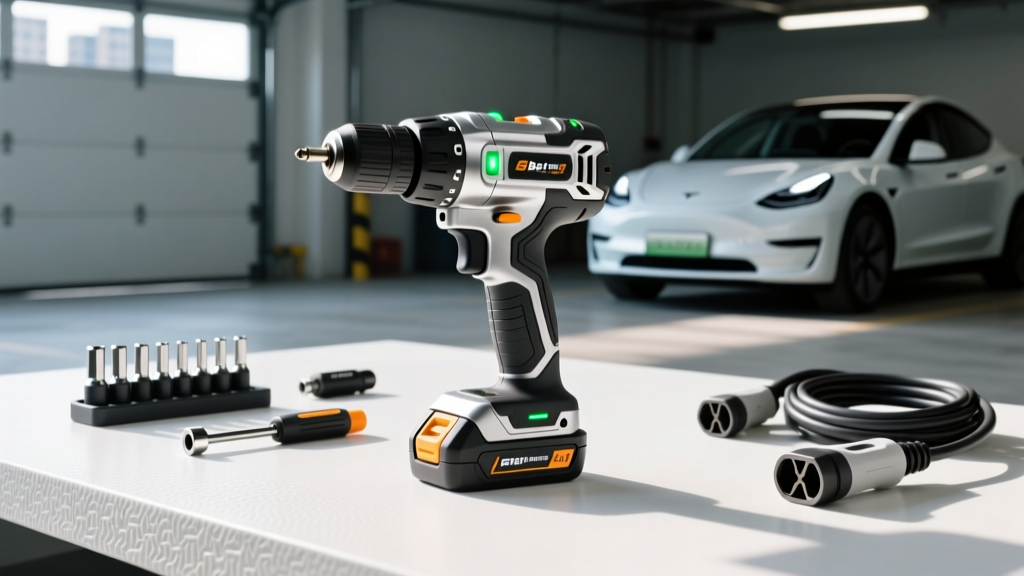
For most EV owners doing tire rotations and wheel swaps, you need a cordless 1/2-inch drive impact wrench delivering at least 300 lb-ft of fastening torque and 400+ lb-ft of breakaway (nut-busting) torque. Models like the Milwaukee M18 FUEL 1/2" High Torque (2967-20) or DeWalt 20V MAX XR 1/2" (DCF900B) hit this target reliably. Expect to spend $200–$350 for the bare tool, or $350–$550 for a kit with battery and charger.
Why EV Owners Need More Torque Than Gas Car Owners
The average EV carries 20–30% more curb weight than a comparably sized internal combustion vehicle, primarily due to the battery pack. A Hyundai Ioniq 5 (4,431 lbs) outweighs a similarly equipped Hyundai Tucson gas model (3,474 lbs) by nearly 1,000 lbs. That extra weight translates directly into higher clamping force on wheel studs and greater corrosion seizing on underbody bolts.
Most EV lug nuts require between 90 and 120 lb-ft of tightening torque — comparable to gas vehicles — but the real challenge is removal. After months of driving, thermal cycling, and road salt exposure, lug nuts on heavier vehicles can seize at breakaway torques exceeding 300 lb-ft. A weak impact wrench will stall or round the fastener.
Additionally, many EVs use larger wheels (19- to 22-inch) with more lug nuts per wheel — the Rivian R1T uses six lugs per corner — meaning more fasteners to manage per rotation. A high-torque electric impact wrench pays for itself in a single tire rotation season compared to a torque-limiting manual breaker bar.
Key Specs That Separate a Good Electric Impact Wrench From a Bad One
Not every cordless impact wrench is suited for EV work. Here's what to look for, with specific numbers:
| Specification | Minimum for EV Work | Ideal Range | Why It Matters |
|---|---|---|---|
| Fastening Torque | 300 lb-ft | 400–700 lb-ft | Properly seats lug nuts and suspension bolts without stalling |
| Breakaway (Nut-Busting) Torque | 400 lb-ft | 600–1,000 lb-ft | Removes seized or over-torqued fasteners common on heavier EVs |
| Drive Size | 1/2-inch | 1/2-inch | Standard for lug nuts; 3/8-inch is too small, 3/4-inch is overkill |
| Impacts Per Minute (IPM) | 2,000 | 2,400–3,200 | Higher IPM means faster run-off and smoother torque delivery |
| Battery Platform | 18V/20V MAX | Same, with 5.0+ Ah cells | Larger Ah cells sustain power under heavy load without voltage sag |
| Weight (Bare Tool) | — | 5.0–7.5 lbs | Overhead work on jack stands gets tiring fast |
| Speed Settings | 3 modes | 4+ modes with precision/bolt mode | Prevents over-torque damage to aluminum EV wheels |
The single biggest mistake first-time buyers make is confusing fastening torque with breakaway torque. Manufacturers often advertise the higher breakaway number. Always check both: a wrench with 700 lb-ft breakaway but only 250 lb-ft fastening torque will remove bolts but can't properly tighten them.
Top Cordless Impact Wrench Picks for EV Owners in 2026
Best Overall: Milwaukee M18 FUEL 1/2" High Torque (2967-20)
Milwaukee's 2967 delivers 700 lb-ft fastening and 1,000 lb-ft breakaway torque, with four speed modes including a "Bolt Removal" mode that reduces speed after the nut breaks free — protecting EV wheel studs from cross-threading. At 6.0 lbs bare, it's manageable for overhead work. The M18 battery platform is the largest in the industry, meaning one battery system covers your impact wrench, drill, work light, and tire inflator.
- Price: ~$249 bare tool / ~$449 kit (two 5.0 Ah batteries, charger, case)
- Best for: Owners who want one tool for wheels, suspension, and general garage work
Best Value: DeWalt 20V MAX XR 1/2" Mid-Range (DCF899B)
If you only do seasonal tire swaps and don't need maximum torque, the DCF899 offers 330 lb-ft fastening / 600 lb-ft breakaway at a lower price point. It's 0.5 lbs lighter than the Milwaukee and includes a precision wrench mode. The trade-off: less headroom for stubborn suspension bolts.
- Price: ~$179 bare tool / ~$349 kit
- Best for: Wheel swaps and lug-nut work only; not heavy suspension tasks
Best Compact: Ingersoll Rand W7152-K22 20V 1/2"
At just 7.6 lbs with battery and a shorter head length, the W7152 fits into tight EV underbody spaces where larger wrenches can't reach. It produces 500 lb-ft breakaway — adequate for most wheel work. Ingersoll Rand's industrial heritage means excellent anvil durability.
- Price: ~$299 bare / ~$449 kit
- Best for: Owners with low-clearance EVs (sedans like Tesla Model 3, Lucid Air) needing compact tool access
Electric Impact Wrench vs. Pneumatic: The Real Cost Comparison
Before cordless tools matured, pneumatic (air-powered) impact wrenches dominated. Here's how they compare for a home EV owner in 2026:
| Factor | Cordless Electric (1/2" High-Torque Kit) | Pneumatic (1/2" + Compressor Setup) |
|---|---|---|
| Upfront Cost (complete working system) | $350–$550 | $500–$900 (wrench $120 + 20-gal compressor $350–$600 + hose/fittings $50–$100) |
| Portability | Excellent — take it to the driveway or campsite | Poor — tethered to compressor, requires 120V/240V outlet nearby |
| Noise Level | ~85 dB (impact mechanism) | ~95–100 dB (impact + compressor cycling) |
| Maintenance | Battery replacement every 3–5 years (~$80–$130) | Compressor oil changes, air filter, moisture draining, hose replacement |
| Torque Consistency | Consistent with charged battery; drops as cell depletes | Consistent as long as compressor maintains 90+ PSI |
| Time to Ready | Instant (if battery is charged) | 2–5 minutes for compressor to build pressure |
| Cold-Weather Performance | Battery loses 10–20% capacity below 32°F | Moisture in air lines can freeze; compressor struggles in extreme cold |
For the typical EV owner doing 2–4 tire rotations or swaps per year, cordless wins on convenience, noise, and total cost. Pneumatic makes sense only if you already own a compressor or do daily professional-level work.
EV-Specific Tips: Protecting Aluminum Wheels and High-Voltage Components
Most EVs use aluminum alloy wheels to offset battery weight. Aluminum is softer than steel, and over-torquing with an impact wrench can crack or warp the wheel hub. Here's how to avoid damage:
- Never use the impact wrench for final tightening. Run the lug nut down with the wrench, then finish with a calibrated torque wrench set to your vehicle's spec (typically 90–120 lb-ft — check your owner's manual).
- Use the lowest speed/torque mode for installation. Milwaukee's "Precision" mode and DeWalt's "Precision Wrench" mode limit output to prevent over-torque.
- Use impact-rated sockets only. Standard chrome sockets can shatter under impact loads. Look for black oxide or phosphate-coated impact sockets sized to your lug nuts (commonly 19mm, 21mm, or 22mm for EVs).
- Stay clear of orange high-voltage cables. On most EVs, the battery pack and HV cables run under the floor pan. If you're working beneath the car (suspension, skid plate), identify HV components by their bright orange sheathing and never apply impact tools near them.
If you're also considering the broader ownership picture — including whether to invest in home garage equipment vs. paying a shop — our EV maintenance and fueling cost guides break down total cost of ownership by model.
Decision Framework: Which Electric Impact Wrench Should You Buy?
If-Then Buying Guide
- If you only do seasonal tire swaps (2x/year) on a crossover or sedan: Choose a mid-range model (DeWalt DCF899B or Milwaukee 2962-20 mid-torque). Save $100–$150 vs. high-torque models and accept that you'll need a breaker bar for rare seized bolts.
- If you rotate tires on a heavy EV (F-150 Lightning, Rivian R1T, Hummer EV) or plan suspension work: Go high-torque (Milwaukee 2967 or DeWalt DCF900). The 600+ lb-ft breakaway torque handles stubborn truck lug nuts and control-arm bolts.
- If you already own a cordless tool ecosystem (drills, saws, lights): Buy the bare tool in the same battery platform. A Milwaukee M18 owner should stay M18; switching platforms doubles your battery investment.
- If you work in cold climates (below 32°F regularly): Store batteries indoors and insert them into the tool only at the job site. Cold lithium-ion cells lose voltage under load. Some users keep a second warm battery rotating in.
- If you have a low-clearance EV (Tesla Model 3, Lucid Air, Porsche Taycan): Prioritize a compact head length. The Ingersoll Rand W7152 or Milwaukee 2962 mid-torque has a shorter anvil-to-body distance that fits tight wheel wells.
Common Misconceptions About Electric Impact Wrenches
| Myth | Fact |
|---|---|
| "I need 1,000 lb-ft of torque for my EV." | You need 1,000 lb-ft breakaway for removal, not fastening. Final tightening must always be done with a torque wrench at your vehicle's spec (90–120 lb-ft typical). |
| "Cordless tools are too weak for real work." | Modern brushless 18V/20V tools exceed the torque of many mid-range pneumatic wrenches. The Milwaukee 2967 matches a shop-grade 1/2" air gun. |
| "Any impact socket will work." | Chrome (non-impact) sockets can crack and send shrapnel flying. Always use impact-rated sockets, and replace them if you see cracking or rounding. |
| "Higher voltage means more torque." | Voltage alone doesn't determine torque. Motor design, anvil mass, and hammer mechanism matter more. A well-engineered 18V tool can outperform a cheap 24V model. |
| "I can use my impact wrench to tighten lug nuts to spec." | Impact wrenches deliver torque in rapid bursts — they can't be precisely calibrated. Always finish with a click-type or digital torque wrench for safety-critical fasteners like wheels. |
Battery Platform Strategy: Thinking Beyond One Tool
A good electric impact wrench is often the entry point into a cordless ecosystem. For EV owners, the ideal garage battery platform covers:
- Impact wrench — tire rotations, wheel swaps
- Torque wrench adapter or digital torque adapter — precision tightening
- Cordless tire inflator — EV tire pressure management (EVs eat tires faster due to weight; maintaining exact PSI extends life)
- Work light or underhood LED bar — illuminating EV underbody work
- Drill/driver — garage organization, mounting Level 2 charger brackets
Milwaukee's M18 system (300+ tools), DeWalt's 20V MAX (250+ tools), and Makita's 18V LXT (275+ tools) all offer these categories. Pick the platform that covers your most common tasks, buy bare tools going forward, and invest in two high-capacity batteries (5.0 Ah minimum, 8.0 Ah or 12.0 Ah preferred for the impact wrench).
For broader EV ownership cost planning — including how DIY maintenance factors into your total savings — the IRS clean vehicle credit rules and our DOE-backed efficiency guides can help you model the math of ownership.
Frequently Asked Questions
Can I use an electric impact wrench on my EV's battery skid plate bolts?
Proceed with extreme caution. Skid plate bolts are near high-voltage components. Use a hand wrench or low-torque setting, and verify bolt torque specs in your service manual. If you're unsure, leave underbody battery work to a certified EV technician.
How many tire rotations can I do on a single battery charge?
A 5.0 Ah battery in a high-torque 1/2" impact wrench will typically handle 40–60 lug nut removal-and-install cycles before needing a charge. That's enough for 2–3 full vehicle tire rotations (20 lug nuts each) on a single charge.
Do I need a special socket for EV lug nuts?
Most EVs use standard metric lug nuts (19mm, 21mm, or 22mm hex). However, some Tesla models use acorn-style lug nuts with a plastic cover that requires a thin-wall socket to avoid cracking the cover. Check your specific model before buying sockets.
Is a mid-torque or high-torque impact wrench better for EVs?
For wheel-only work on sedans and crossovers, mid-torque (250–400 lb-ft fastening) is sufficient and lighter. For trucks (F-150 Lightning, Rivian R1T, Hummer EV) or any suspension work, high-torque (500+ lb-ft fastening) is the safer choice.
Will cold weather affect my cordless impact wrench?
Yes. Lithium-ion batteries lose 10–20% of their effective capacity below 32°F and up to 40% below 0°F. Store batteries at room temperature and swap them in just before use. Keep a second battery warm as a backup.