Quick Answer: Is an Electric GT Car Worth It in 2026?
An electric GT car delivers grand-touring comfort — high-speed cruising, quiet cabins, and 280–400+ miles of EPA range — with instant torque and lower per-mile energy costs than gasoline equivalents. The trade-offs are a higher starting MSRP ($80,000–$160,000+), heavier curb weights that eat into tire life, and DC fast-charging stops every 2.5–3.5 hours on long road trips. If you have reliable Level 2 home charging and drive mostly highway miles, a 2026 electric GT can save $1,200–$2,500 annually in fuel and maintenance versus a comparable gas grand tourer. If you lack home charging or frequently drive in sub-20°F winters, a plug-in hybrid GT like the Porsche Panamera E-Hybrid may be a more practical bridge.
What Defines an Electric GT Car (and What It Doesn't)
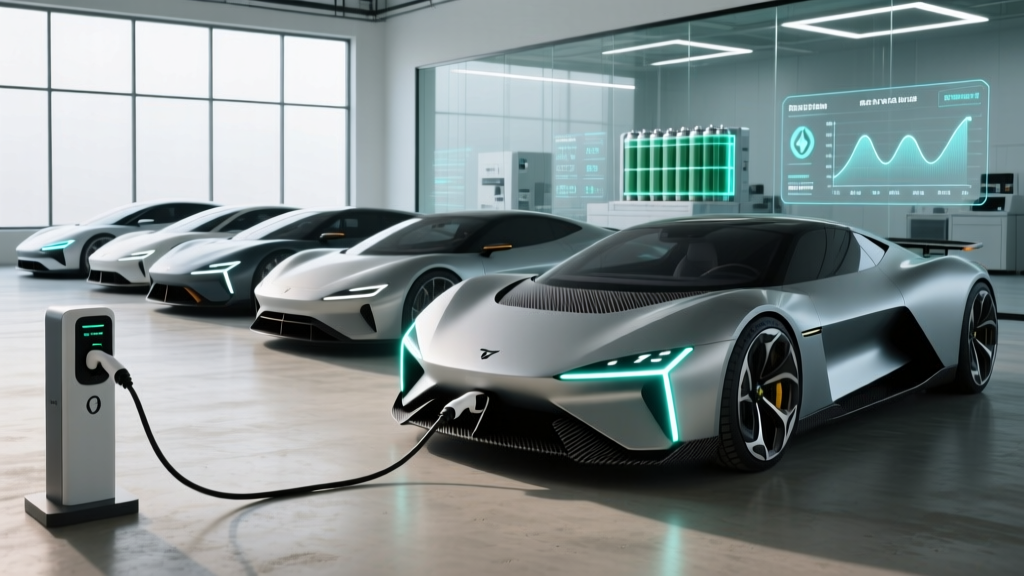
The GT — grand touring — badge historically means a car built for sustained high-speed travel in comfort, not raw track performance. In the electric era, that translates to a long wheelbase, adaptive air suspension, premium sound insulation, and a battery large enough to cruise 600+ miles before needing more than one charging stop.
Key traits that separate an electric GT from a sports sedan or luxury crossover:
- EPA range above 300 miles (real-world highway: 250–280 miles at 75 mph)
- Sustained DC fast charging above 200 kW, with a 10–80% time under 25 minutes
- 0–60 mph under 4.5 seconds without sacrificing ride quality
- Cargo space for two suitcases and a golf bag (minimum 15 cu ft trunk + frunk)
- Adaptive damping and air suspension standard or widely available
What an electric GT is not: a lightweight canyon carver (that's the sports-sedan segment), nor a three-row family hauler (that's the luxury SUV segment). If your primary use case involves back-road driving or regular six-passenger trips, look elsewhere.
2026 Electric GT Car Spec Comparison
The table below covers the most prominent electric GT cars available or taking orders in the US market for the 2026 model year. All figures are manufacturer-published or EPA-sourced where available.
| Model | EPA Range | Battery (usable kWh) | Peak DC kW | 10–80% Time | 0–60 mph | HP | Base MSRP |
|---|---|---|---|---|---|---|---|
| Porsche Taycan (2026, base RWD) | 318 mi | 84 kWh (NMC) | 320 kW | ~18 min | 4.5s | 402 | $92,250 |
| Porsche Taycan 4S | 302 mi | 84 kWh (NMC) | 320 kW | ~18 min | 3.5s | 590 | $108,450 |
| Audi e-tron GT quattro | 270 mi | 85 kWh (NMC) | 270 kW | ~22 min | 3.9s | 522 | $109,900 |
| Tesla Model S Long Range | 402 mi | 100 kWh (NMC) | 250 kW | ~27 min | 3.1s | 670 | $84,990 |
| Mercedes EQS 580 Sedan | 371 mi | 108 kWh (NMC) | 200 kW | ~31 min | 4.1s | 536 | $118,300 |
| BMW i7 xDrive60 | 318 mi | 102 kWh (NMC) | 195 kW | ~34 min | 4.5s | 536 | $125,295 |
Real-World Range Reality Check
EPA range figures assume a mix of city and highway driving at moderate temperatures. On a 75-mph highway cruise in 40°F weather, expect to lose 15–25% of sticker range. The Tesla Model S Long Range's 402-mile EPA figure becomes roughly 310–340 miles in real-world cold-weather highway use. The Taycan's 800-volt architecture gives it a charging-speed advantage that partly compensates for its shorter range — you spend less time plugged in at each stop. Source: fueleconomy.gov and manufacturer data.
Electric GT vs. Gas Grand Tourer: Cost Breakdown
The most common comparison shoppers make is between an electric GT and a gasoline equivalent — say, a Porsche Taycan 4S versus a BMW M850i Gran Coupe or a Mercedes-AMG GT 4-Door. Here's a five-year ownership comparison based on 15,000 miles per year, 75% highway driving, and national average energy costs.
| Cost Category (5-Year) | Porsche Taycan 4S (EV) | BMW M850i xDrive (Gas) |
|---|---|---|
| Purchase price (MSRP) | $108,450 | $113,900 |
| Federal §30D tax credit | $0–$7,500* | $0 |
| Energy / fuel (75,000 mi) | $3,200 (home L2) – $5,800 (DCFC-heavy) | $11,250 (17 mpg, $3.50/gal) |
| Maintenance | $1,800 | $5,200 |
| Insurance (avg.) | $14,500 | $12,800 |
| Estimated depreciation | $48,000 | $52,000 |
| Total 5-Year Cost | ~$174,000 – $177,000 | ~$183,000 |
*The §30D federal EV tax credit has MSRP caps ($55,000 for sedans — most GT cars exceed this), buyer income limits ($150K single / $300K joint), and battery critical-mineral sourcing requirements. As of 2026, many electric GT sedans do not qualify for the full $7,500 credit due to the MSRP cap. Always verify current eligibility on irs.gov or consult a tax professional.
Real-World Ownership: What First-Time EV GT Buyers Must Know
Buying an electric GT car involves logistical realities that don't apply to a gas grand tourer. Here are the non-negotiable factors to evaluate before signing:
Home Charging Is Almost Mandatory
A Level 2 home charger (240V, 40–48 amps / 9.6–11.5 kW) adds 30–40 miles of range per hour of charging. Overnight, that's a full battery every morning. Without home charging, you'll rely on public DC fast chargers, which cost 2–4× more per kWh and add 20–40 minutes per session to your weekly routine. A Level 2 home installation typically runs $800–$2,500 for equipment and electrician labor, assuming your panel has a spare 50-amp breaker slot. If you need a panel upgrade (common in older homes), add $1,500–$3,500.
Cold-Weather Range Loss Is Real
NMC batteries — used in every GT car listed above — lose 15–30% of range in sustained sub-freezing temperatures. The Taycan's standard heat pump mitigates cabin-heating energy draw, but battery chemistry itself is less efficient in cold. If you live in Minnesota or Maine and commute 80+ miles daily in winter, plan for real-world range of 220–260 miles from a 318-mile EPA car. Preconditioning the battery while still plugged in (a feature all these models offer) recovers some of that loss.
Charging Speed Matters More Than Peak Range
On a 600-mile road trip, the car that charges fastest — not the one with the longest range — gets you there sooner. The Taycan's 800V architecture sustains higher charge rates deeper into the session. At a 350 kW Electrify America station, the Taycan peaks at 320 kW and holds above 200 kW until roughly 55% State of Charge (SoC), then tapers. The Model S peaks at 250 kW on Tesla Superchargers but benefits from the most reliable and ubiquitous charging network in the US. The EQS and i7, limited to ~200 kW, add roughly 8–12 extra minutes per stop.
Tire Costs Are Higher
Electric GT cars weigh 4,800–5,700 lbs and deliver instant torque. Expect OEM tire life of 20,000–30,000 miles — roughly half what you'd get on a gas grand tourer of similar power. Replacement tires (Michelin Pilot Sport EV, Pirelli P Zero Elect) run $300–$450 each. Budget $1,200–$1,800 per axle replacement.
Common Misconceptions About Electric GT Cars
| Myth | Fact |
|---|---|
| "Electric GTs can't handle long road trips." | A Taycan 4S can cover 600 miles with two 20-minute DC fast-charge stops. That's comparable to a gas car's fuel-and-rest-stop cadence. |
| "The battery will need replacing in 5 years." | All 2026 models carry 8-year/100,000-mile battery warranties guaranteeing ≥70% capacity retention. Real-world degradation data from 2020–2024 Taycans shows ~8–12% loss at 100K miles. |
| "I'll get the $7,500 tax credit." | Most electric GT sedans exceed the §30D MSRP cap of $55,000 for sedans. As of 2026, only the Tesla Model S Long Range (at $84,990) also exceeds it. Very few GT-class EVs qualify. Check fueleconomy.gov for the current eligible-vehicle list. |
| "Autopilot / FSD means the car drives itself on the highway." | All current driver-assist systems (Tesla Autopilot, Porsche InnoDrive, BMW Highway Assistant) are SAE Level 2 — you must keep your hands on or near the wheel and remain fully engaged. No consumer vehicle sold in 2026 is self-driving. |
| "Public charging is unreliable everywhere." | Tesla Superchargers average 99.5% uptime. Electrify America and EVgo reliability has improved but still averages ~85–90% uptime depending on region. Plan backup stops on remote routes. |
SAE Automation Levels — What You're Actually Getting
Level 2 (all consumer EVs in 2026): The car controls steering and acceleration simultaneously, but the driver must continuously supervise and be ready to take over instantly. Examples: Tesla Autopilot, Porsche InnoDrive, BMW Highway Assistant, Mercedes Drive Pilot (in approved zones only).
Level 4 (robotaxis only): No driver needed in a defined operational area. Examples: Waymo in Phoenix/SF, Zoox in Las Vegas. You cannot buy a Level 4 vehicle.
Decision Framework: Which Electric GT Car Is Right for You?
Choose Based on Your Actual Driving Pattern
Choose the Porsche Taycan if: You value driving dynamics and charging speed above all else. Its 800V platform and rear-axle steering make it the best-handling EV GT, and its 320 kW peak charge rate is the fastest in this segment. Best for drivers who take frequent road trips and want minimal charging downtime.
Choose the Tesla Model S Long Range if: Maximum range and Supercharger network access are your top priorities. At 402 miles EPA and access to 17,000+ Superchargers, it's the lowest-stress option for cross-country driving. Trade-off: interior materials and ride refinement lag the German competitors.
Choose the Mercedes EQS 580 if: Cabin luxury and straight-line comfort matter most. Its 371-mile range and 108 kWh battery make it the quietest, most isolating GT cruiser here. Trade-off: 200 kW peak charging is the slowest in this group — plan for 30+ minute stops.
Choose the BMW i7 xDrive60 if: You need rear-seat space for adults (it's the only true full-size sedan here) and value BMW's iDrive interface. Trade-off: highest base price and 318-mile range in a heavy 5,900-lb package.
Choose a PHEV alternative (Porsche Panamera E-Hybrid, BMW M760e) if: You lack home charging, regularly drive in extreme cold, or take 500+ mile trips through charging-desert regions. You'll get 30–40 miles of electric-only commuting with a gas engine for longer hauls — zero range anxiety.
Frequently Asked Questions
What's the cheapest electric GT car available in 2026?
The Tesla Model S Long Range starts at $84,990 — roughly $7,000–$25,000 less than any German competitor. If you consider the Hyundai Ioniq 6 (EPA 361 mi, ~$47,000) a GT, it's dramatically cheaper but lacks the power, materials, and suspension sophistication of the traditional GT segment.
Do electric GT cars qualify for any federal tax credits?
Under §30D rules, the sedan MSRP cap is $55,000 — which disqualifies nearly every electric GT car in this segment. Additionally, the buyer must have adjusted gross income below $150,000 (single) or $300,000 (joint), and the battery must meet critical-mineral and component-sourcing thresholds that change annually. Always confirm on irs.gov before purchasing.
How much does it cost to charge an electric GT at home vs. public chargers?
At the national average residential electricity rate of ~$0.16/kWh, fully charging a 100 kWh battery costs about $16. That's roughly 3–4 cents per mile. Public DC fast chargers average $0.35–$0.55/kWh, pushing cost to 9–14 cents per mile. A gas GT averaging 18 mpg at $3.50/gallon costs ~19 cents per mile. Home charging delivers 5–6× cost savings; exclusive public charging still saves ~30–50%.
Will an electric GT car hold its value?
EV depreciation has historically been steeper than gas cars, driven by rapid tech improvements and battery-health concerns. However, 2024–2025 data shows premium EVs like the Taycan holding 50–55% of value at 3 years (vs. ~45–50% for comparable gas GTs). Tesla's depreciation has been more volatile due to frequent price cuts on new models.
Can I tow with an electric GT car?
Most electric GT sedans are not rated for towing, or carry very low limits. The Model S has no official tow rating. The Taycan can tow up to 1,760 lbs when equipped with the factory hitch — enough for a small bike trailer but not a boat. If towing matters, look to electric SUVs like the BMW iX or Rivian R1S.
What happens if the battery degrades past the warranty threshold?
If your battery drops below 70% State of Health within 8 years / 100,000 miles, the manufacturer replaces or refurbishes it at no cost. Out-of-warranty battery replacements for GT-class EVs currently range from $18,000–$35,000 depending on the model and kWh capacity. However, real-world data suggests most NMC packs retain 85–90% capacity at 100K miles with normal use (avoiding habitual 100% charges and frequent DC fast charging in extreme heat).