Quick Answer: Do You Need a Special Foam Cannon for Your EV?
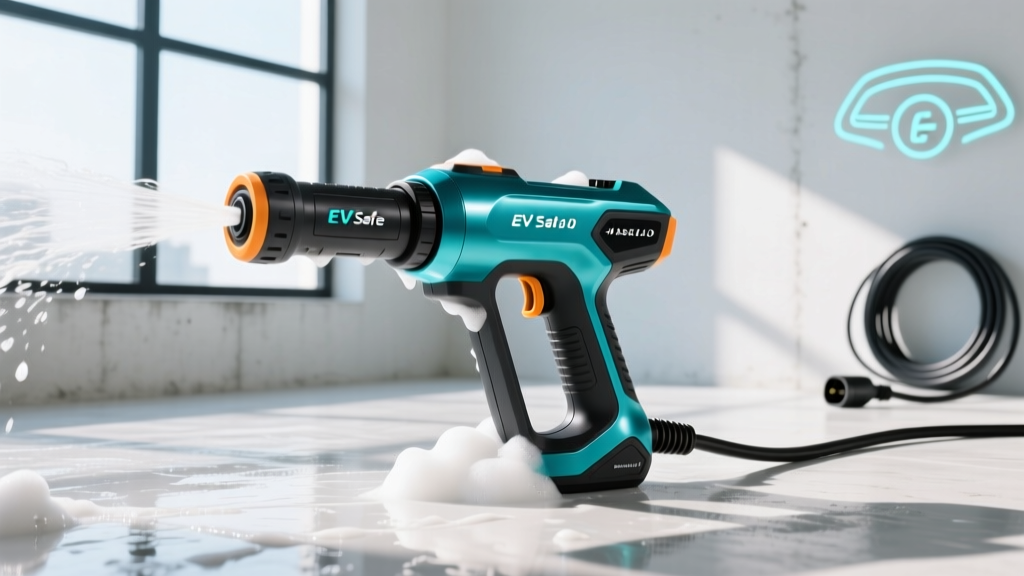
No — your electric vehicle does not require a unique foam cannon. Any quality electric foam cannon that produces thick, clinging foam at low pressure (under 1,600 PSI) works safely on EV paint, glass, and sensor housings. What matters for EV owners specifically is touchless or low-contact washing to protect the cameras, ultrasonic sensors, and radar units embedded in bumpers and mirrors on vehicles equipped with ADAS suites like Tesla Autopilot, Ford BlueCruise, or GM Super Cruise. A good electric foam cannon lets you blanket the car in lubricating foam, loosen road grime, and rinse clean — minimizing the chance you'll scratch a lens or dislodge a sensor calibrator.
For 2026, the top-performing cordless electric foam cannons deliver 0.9–1.2 GPM at 700–1,200 PSI with 25–40 minutes of runtime on a single charge — more than enough to wash a full-size SUV like a Rivian R1S or Tesla Model X twice.
Why EV Owners Are Switching to Electric Foam Cannons
Modern EVs are sensor-dense vehicles. A 2026 Tesla Model Y has 8 cameras, 12 ultrasonic sensors (on older builds), and radar hardware. The Ford F-150 Lightning with BlueCruise carries cameras in the windshield header, side mirrors, and front grille. The Hyundai Ioniq 5 and Kia EV6 rely on forward-facing cameras and radar behind the emblem for Highway Driving Assist.
Traditional pressure washers at 2,500+ PSI can force water behind sensor housings, crack protective lens covers, or — worst case — knock a sensor out of alignment, requiring a dealer recalibration that runs $250–$500 per module. Electric foam cannons operate at a fraction of that pressure, delivering foam that does the cleaning work chemically rather than mechanically.
There's also the practical angle: most EV owners charge at home and wash at home. A cordless electric foam cannon eliminates the need for a garden hose spigot near your parking spot — a real consideration for apartment dwellers or those with garage-only parking who rely on a home Level 2 charger and don't have driveway water access.
How Electric Foam Cannons Compare: Cordless vs. Pressure-Washer vs. Garden Hose
Before we get to specific product categories, here's how the three main foam-application methods stack up for EV washing:
| Method | PSI Range | GPM | Foam Thickness | EV Sensor Safety | Avg. Cost |
|---|---|---|---|---|---|
| Cordless electric foam cannon | 700–1,200 | 0.8–1.2 | Thick, shaving-cream consistency | Excellent — low pressure, no forced water intrusion | $80–$200 |
| Pressure-washer foam cannon | 1,500–3,200 | 1.4–2.5 | Very thick with correct orifice | Moderate — must maintain 12"+ distance from sensors | $40–$80 (cannon) + $150–$400 (washer) |
| Garden hose foam gun | 40–80 | 2.0–5.0 | Thin, runny foam | Excellent — minimal pressure | $20–$50 |
The cordless electric foam cannon sits in the sweet spot: thick enough foam to lubricate and lift dirt, low enough pressure to be safe around ADAS hardware, and zero dependency on a hose spigot or 120V outlet. For EV owners washing in a garage or carport, this independence matters.
What to Look for in an Electric Foam Cannon (EV-Specific Criteria)
Not every electric foam cannon on the market is designed with vehicle washing in mind — many are marketed for patio furniture or fence cleaning. Here are the specs that matter when you're washing a $45,000+ EV with $3,000 worth of sensor hardware:
PSI Rating: Stay Under 1,600
Automotive paint clear coats tolerate up to roughly 1,500 PSI at close range before risk of etching. More critically, water intrusion into camera housings and radar modules becomes a real risk above 1,800 PSI at distances under 6 inches. Target an electric foam cannon rated 700–1,200 PSI for safe, effective EV washing.
GPM and Foam Density
Higher GPM means more water throughput and thinner foam. For a proper snow-foam blanket, you want 0.8–1.2 GPM paired with a quality foam soap (pH-neutral, high-lubricity). Most cordless units include an adjustable nozzle — dial it toward the "fan" pattern for wider, thicker coverage.
Battery Runtime and Chemistry
Look for lithium-ion battery packs rated at minimum 25 minutes of continuous spray. A full-size EV like the Rivian R1T (230.7 inches long) or the GMC Hummer EV (217 inches) takes roughly 8–12 minutes to foam completely, so a 25-minute battery covers two full washes. Some 2026 models now use swappable battery packs compatible with the brand's power tool ecosystem — useful if you already own cordless drills or leaf blowers from the same manufacturer.
Soap Reservoir Capacity
Most cordless electric foam cannons hold 300–600 mL of soap concentrate mixed with water. A 500 mL reservoir is typically enough for one full-size SUV. If you're washing a large EV weekly, a unit with a quick-disconnect bottle system saves time.
Cost Breakdown: Electric Foam Cannon vs. Commercial Car Wash for EV Owners
One of the most common ownership questions we see: is it worth buying an electric foam cannon, or should you just use a touchless drive-through wash? Let's run the numbers for a typical EV owner washing bi-weekly.
| Expense | Home Electric Foam Cannon | Commercial Touchless Wash |
|---|---|---|
| Equipment / per-wash cost | $150 (cannon, one-time) | $12–$18 per visit |
| Soap / supplies (5 years) | $180 (foam soap concentrate) | $0 (included) |
| Water cost (5 years) | $60 (est. 15 gal/wash, municipal rate) | $0 |
| Battery replacement (if needed) | $40–$60 | $0 |
| Total over 5 years (bi-weekly, 130 washes) | $430–$450 | $1,560–$2,340 |
| Cost per wash | $3.31–$3.46 | $12.00–$18.00 |
The savings are substantial — roughly $1,100–$1,900 over five years. That's enough to cover a significant chunk of your federal EV tax credit paperwork hassle, or several years of home electricity for charging.
Real-World EV Washing Considerations Most Guides Ignore
Here's where owning an EV changes the car-wash calculus in ways generic detailing forums don't always address:
Sensor and Camera Locations Vary Wildly by Model
Before your first foam-cannon wash, spend five minutes identifying every camera, radar, and ultrasonic sensor on your vehicle. Key spots:
- Front emblem/badge area: Often hides a radar module (Hyundai, Kia, Genesis)
- Windshield header, behind rearview mirror: Forward-facing cameras for ADAS (Tesla, Ford, GM, Toyota)
- Side mirror housings: Surround-view and blind-spot cameras
- Front and rear bumper corners: Ultrasonic parking sensors (small circles, typically 4–8 per bumper)
- Rear license plate area: Backup camera and, on some models, rear cross-traffic radar
Foam these areas freely — foam itself won't damage sensors. But avoid directing a concentrated water stream at close range (under 6 inches) into any housing seam. Let the foam dwell and rinse from 18+ inches away.
Charging Port Precautions
Your EV's charge port (NACS, CCS, or CHAdeMO) is sealed against rain and car-wash water — the NHTSA and SAE standards require IP67-level ingress protection. That said, it's best practice to keep the charge port door closed during washing. If your cannon's spray pattern hits the port area, there's no risk of electrical hazard, but water pooling in the port recess can trigger a temporary "charge port wet" warning that delays your next charging session by 10–15 minutes while it dries.
Cold-Weather Washing and Range Impact
If you're washing your EV outdoors in sub-40°F weather, know two things: (1) foam soap can freeze on contact with cold panels, making rinsing difficult, and (2) the energy used for cabin heating during and after a cold wash will temporarily reduce your range. A 2026 Tesla Model 3 Long Range (EPA 363 miles) might show 320–330 miles of range after a cold-weather wash cycle with cabin preheat. This is normal thermal behavior, not battery degradation. Wash in a garage or on a day above 50°F when possible.
Myths vs. Facts: Electric Foam Cannons and EVs
| Myth | Fact |
|---|---|
| "Pressure washers will destroy EV sensors" | Modern ADAS sensors are sealed to IP67/IP69K standards and tested against high-pressure water jets. Damage requires sustained close-range spray (<4 inches) at 2,500+ PSI. A foam cannon at 1,000 PSI is well within safe margins. |
| "You can't wash an EV in the rain or with water near the battery" | EV traction batteries are sealed, liquid-cooled enclosures rated for submersion. Washing the exterior has zero impact on the battery pack. EVs drive through puddles and rain daily. |
| "Foam soap damages EV paint differently than gas car paint" | EV paint is identical to conventional automotive paint — same clear coats, same base coats. pH-neutral foam soap is safe for all modern automotive finishes regardless of powertrain. |
| "Electric foam cannons aren't powerful enough to clean road salt" | Foam chemistry does the work, not pressure. A quality snow foam dwell time of 3–5 minutes dissolves salt effectively. Follow with a gentle rinse and a microfiber contact wash for stubborn deposits. |
| "Touchless car washes are always safer for EVs than hand washing" | Touchless commercial washes use 1,500–2,500 PSI water jets and harsh alkaline soaps that can strip wax and degrade rubber seals over time. A home foam cannon with pH-neutral soap is gentler. |
Decision Framework: Which Electric Foam Cannon Setup Is Right for Your EV?
Choose Based on Your Washing Situation
Choose a cordless electric foam cannon if:
- You park in a garage or carport without nearby hose access
- Your EV has extensive ADAS sensors you want to wash gently
- You wash bi-weekly or more and want per-wash cost under $4
- You want a self-contained setup (no pressure washer, no hose)
Choose a pressure-washer foam cannon if:
- You already own a pressure washer for home maintenance
- You wash multiple vehicles (EV + gas car + truck) and need higher throughput
- You have outdoor space with water spigot access
- You want the absolute thickest foam possible (adjust orifice to 1.1mm for foam density)
Choose a garden-hose foam gun if:
- You're on a tight budget (under $40 total)
- You have easy hose access and don't mind thinner foam
- You follow foam with a two-bucket contact wash anyway
- You wash infrequently (monthly or less)
Step-by-Step: Washing Your EV with an Electric Foam Cannon
For first-time EV buyers transitioning from gas vehicles, here's the optimal foam-cannon wash sequence that protects your investment:
- Close all windows, sunroof, and charge port door. Ensure the vehicle is powered off (not in "camping mode" or "Sentry mode" if you want to avoid camera activation during washing).
- Pre-rinse with plain water (if available) to remove loose grit. A cordless unit's plain-water mode works, or use a separate spray bottle for spot rinsing.
- Foam from bottom to top. Road grime concentrates on lower panels, rocker panels, and wheel wells. Starting low prevents dirty foam from dripping onto clean upper panels.
- Let foam dwell for 3–5 minutes. Don't let it dry. The foam should remain wet and actively dripping.
- Rinse from top to bottom using the cannon's rinse mode (if available) or a separate low-pressure water source.
- Dry with a clean microfiber towel or air blower. Pay attention to sensor housings, mirror crevices, and the charge port recess where water pools.
- Inspect camera lenses for water spots. A quick wipe with a lens-safe microfiber keeps your ADAS cameras clear for optimal performance.
Frequently Asked Questions
Can I use any car wash soap in an electric foam cannon?
Use a pH-neutral, high-foaming car wash soap specifically labeled for foam cannons or snow foam applications. Dish soap strips wax and ceramic coatings. Concentrated automotive foam soaps (Chemical Guys Honeydew, Koch Chemie Gsf, or CarPro Lift) produce the thick foam that makes an electric cannon effective at low pressure.
Will washing my EV void the battery warranty?
No. Washing the exterior of your EV has no bearing on the traction battery warranty, which covers capacity degradation (typically 8 years/100,000 miles with a 70% capacity retention threshold per most manufacturers). The battery is a sealed unit isolated from the vehicle's exterior. Even high-pressure commercial touchless washes don't affect battery warranty coverage.
How often should I wash my EV?
Every 2 weeks is optimal for most climates. In areas with heavy road salt (Midwest, Northeast winters), weekly washing prevents corrosion on undercarriage components — EVs are not immune to rust despite their sealed battery enclosures. In dry, mild climates, monthly washing may suffice. Your EV's paint and sensors need the same care as any modern vehicle.
Is a cordless electric foam cannon powerful enough for a large EV like the Rivian R1T or F-150 Lightning?
Yes. A unit rated 1,000 PSI at 1.0 GPM produces enough foam to cover a full-size pickup in 8–12 minutes. The key is foam chemistry and dwell time, not raw pressure. A 500 mL soap reservoir handles one full-size truck wash; carry a pre-mixed backup bottle for larger vehicles or heavily soiled conditions.
Do I need to worry about water getting into the frunk or charge port?
The frunk (front trunk) is sealed with weather stripping identical to a conventional trunk. Close it before washing. The charge port is sealed to IP67 standards — incidental spray is harmless. Just keep the port door closed during the wash. If you notice a "moisture detected" warning when plugging in afterward, let the port air-dry for 10–15 minutes before charging.