Quick Answer: Is an Electric Dune Buggy Worth It?
Electric dune buggies and off-road EVs deliver instant torque (often 200+ lb-ft from zero RPM), near-silent trail running, and dramatically lower operating costs — typically $0.04–$0.08 per mile in electricity versus $0.18–$0.30 per mile in gas for comparable UTVs. However, expect real-world range of 40–80 miles on a single charge depending on terrain and speed, and trail-side charging infrastructure is essentially nonexistent. If you primarily ride at a home-base ranch, dune area with nearby charging, or use a truck/UTV trailer with a generator, an electric dune buggy is a compelling, low-maintenance option. If you plan multi-hour remote backcountry runs, gas UTVs still hold the edge in 2026.
The Electric Dune Buggy Landscape in 2026
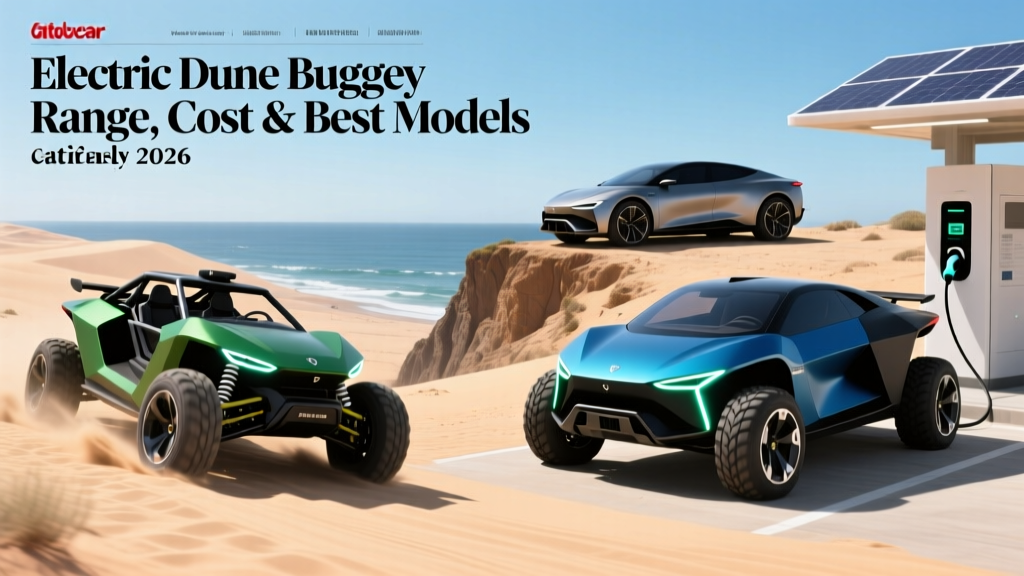
The term "electric dune buggy" covers a spectrum from lightweight single-seat sand cars to street-legal low-speed vehicles (LSVs) to full-size off-road EVs like the Polaris Ranger XP Kinetic and the GMC Hummer EV Pickup's off-road trims. Purpose-built electric sand buggies from niche manufacturers (Kreger Electric, Daymak, and various Chinese imports) sit alongside mainstream OEM electric off-roaders that serve the same recreational purpose at higher capability.
What unites them: battery-electric powertrains replacing small-displacement gas engines, eliminating oil changes, air filters, spark plugs, and exhaust systems. The trade-off is finite onboard energy (measured in kWh) and longer refueling times.
Real-World Range: What You'll Actually Get
Off-road range is notoriously difficult to standardize — there's no EPA test cycle for dune running. Manufacturer claims often cite "up to" figures under ideal flat-terrain, low-speed conditions. Here's what real-world testing and owner reports show for popular electric off-road platforms:
| Vehicle | Battery (kWh) | Claimed Range | Real-World Aggressive Off-Road | Peak DC Charge kW |
|---|---|---|---|---|
| Polaris Ranger XP Kinetic Ultimate | 29.8 (NMC) | 110 mi (combined) | 45–65 mi (dunes/hills) | N/A (Level 2 only, ~6.6 kW) |
| Polaris Ranger XP Kinetic Premium | 14.9 (NMC) | 55 mi (combined) | 25–40 mi (dunes/hills) | N/A (Level 2 only, ~3.3 kW) |
| GMC Hummer EV Pickup (3X) | 246 (NMC, usable ~212) | 381 mi (EPA highway mix) | 80–120 mi (hard off-road) | 350 kW |
| Rivian R1T Tri Motor | 149 (NMC, Max Pack) | 420 mi (EPA) | 100–150 mi (hard off-road) | 220 kW |
| Niche Electric Sand Buggy (typical 48V) | 7–15 (LFP or lead-acid) | 30–50 mi | 15–30 mi (aggressive dune) | N/A (120V wall outlet) |
Electric Dune Buggy vs. Gas UTV: Cost & Performance Data
The purchase price of electric off-road vehicles remains higher than gas equivalents, but operating costs tell a different story. Here's a head-to-head comparison using the Polaris Ranger XP Kinetic Ultimate versus the gas-powered Ranger XP 1000 as a representative pairing:
| Category | Polaris Ranger XP Kinetic Ultimate (EV) | Polaris Ranger XP 1000 (Gas) |
|---|---|---|
| Base MSRP | $29,999 | $17,499 |
| Fuel/Energy Cost (500 mi/yr, 5 yrs) | ~$600 (at $0.14/kWh avg) | ~$3,750 (at $3.80/gal, 25 mpg) |
| Maintenance (5 yrs) | ~$200 (brake fluid, cabin filter) | ~$2,800 (oil, filters, belts, plugs) |
| Estimated Insurance (5 yrs) | ~$3,500 | ~$2,800 |
| 5-Year Total Cost | ~$37,299 | ~$26,849 |
| Cost Per Mile (fuel only) | ~$0.05 | ~$0.15 |
The EV saves roughly $6,000 in fuel and maintenance over five years, but the $12,500 MSRP gap means you won't break even on operating costs alone within that window. The electric model makes financial sense if you value near-zero maintenance, silent operation (critical for hunting or wildlife areas), and instant torque delivery — or if you rack up higher annual mileage.
Charging an Electric Dune Buggy: What You Need to Know
Charging is where most first-time electric off-road buyers underestimate the logistics. Here's the breakdown by charging level:
| Level | Power (kW) | Typical Miles Added/Hour | Equipment Needed | Availability Off-Road |
|---|---|---|---|---|
| Level 1 (120V) | 1.2–1.8 kW | 4–8 mi (UTV) / 3–5 mi (full-size EV) | Standard outlet | Anywhere with power |
| Level 2 (240V) | 3.3–11.5 kW | 12–40 mi (UTV) / 15–35 mi (full-size) | 240V outlet or wallbox | Home, garage, some RV parks |
| DC Fast Charge | 50–350 kW | 100–1,000+ mi/hr equivalent | CCS/NACS station | Highway corridors only — not at trails |
Key distinction: kW (kilowatts) measures charging power — how fast energy flows. kWh (kilowatt-hours) measures battery capacity — how much energy is stored. A 30 kWh battery charged at 6.6 kW takes roughly 4.5 hours from empty to full. A 250 kWh Hummer EV battery at 6.6 kW would take nearly 38 hours — which is why full-size electric off-roaders need DC fast charging for road trips.
For purpose-built electric dune buggies and UTVs, Level 2 home charging is the primary refueling method. You charge overnight in your garage, trailer the vehicle to the riding area, and ride until depleted. Trail-side charging options are extremely limited — do not plan on recharging at remote locations.
Home Level 2 Charger Installation Cost (Typical UTV Garage Setup)
| Item | Low Estimate | High Estimate |
|---|---|---|
| Level 2 EVSE (240V, 32A) | $300 | $700 |
| Electrician labor (240V outlet install) | $400 | $1,200 |
| Permit & inspection | $50 | $250 |
| Electrical panel upgrade (if needed) | $0 | $2,500 |
| Total | $750 | $4,650 |
Source: Always confirm final electrical specifications with a licensed electrician. Panel capacity and circuit distance drive the wide range.
Battery Chemistry, Degradation & Warranty
Most production electric off-road vehicles in 2026 use NMC (nickel manganese cobalt) lithium-ion batteries, chosen for higher energy density in a compact package. Some budget electric buggies still use lead-acid or entry-level LFP (lithium iron phosphate) packs.
| Factor | LFP (Lithium Iron Phosphate) | NMC (Nickel Manganese Cobalt) |
|---|---|---|
| Energy Density | Lower (heavier for same kWh) | Higher (lighter, more compact) |
| Cycle Life | 3,000–5,000+ cycles | 1,000–2,000 cycles |
| Cold Performance | Poorer below 32°F | Better cold-weather delivery |
| Cost | Lower per kWh | Higher per kWh |
| Thermal Stability | Excellent (less fire risk) | Good (requires active management) |
| Best For | Budget buggies, warm climates, high cycle use | Premium UTVs, cold climates, weight-sensitive builds |
Polaris backs the Ranger Kinetic battery with a 3-year unlimited-mileage warranty on the battery pack. Full-size electric off-roaders like the Hummer EV and Rivian R1T carry 8-year/100,000-mile battery warranties with a minimum 70% capacity retention threshold, per federal requirements. For recreational-use UTVs, battery replacement cost ranges from $3,500–$6,000 for the Polaris Kinetic pack based on current parts pricing.
Common Misconceptions About Electric Dune Buggies
| Myth | Fact |
|---|---|
| "Electric buggies have no power" | Electric motors deliver peak torque at 0 RPM. The Polaris Kinetic produces 140 lb-ft instantly; the Hummer EV makes 1,200 HP. Gas UTVs need to rev to build torque. |
| "You can charge at the dunes" | No public charging exists at most OHV areas. Plan to trailer home or bring a generator/inverter for emergency Level 1 top-ups. |
| "EVs can't handle water crossings" | Electric motors and battery packs are sealed (IP67-rated on most production models). Polaris rates the Kinetic for 27" of water fording. The risk is to auxiliary 12V electronics, not the traction pack. |
| "The battery will die in 3 years" | Modern NMC packs in off-road EVs are engineered for 1,000+ full charge cycles. At 500 miles/year, that's 10+ years of use before significant degradation. |
| "Electric buggies qualify for the $7,500 tax credit" | Most purpose-built off-road UTVs and dune buggies are NOT classified as highway-capable vehicles by the IRS and do not qualify for the §30D federal EV tax credit. Street-legal EVs like the Hummer EV or Rivian R1T may qualify, subject to MSRP caps ($80,000 for trucks), buyer income limits, and battery sourcing requirements. Always verify at irs.gov before purchasing. |
Decision Framework: Which Electric Off-Roader Is Right for You?
Choose a Purpose-Built Electric UTV (e.g., Polaris Kinetic) If:
- You ride within 30–50 miles of a trailer/home base
- Silent operation matters (hunting, noise-restricted areas, private land)
- You want minimal maintenance and no fuel storage
- Your annual off-road mileage is under 2,000 miles
- Budget: $15,000–$30,000 for the vehicle, plus $750–$4,650 for home charging
Choose a Full-Size Electric Truck/SUV (Hummer EV, Rivian R1T) If:
- You want to drive to remote trailheads on-road, then go off-road
- You need DC fast charging for road-trip flexibility
- You want daily-driver capability plus weekend off-road use
- Budget: $70,000–$110,000+, but potential §30D tax credit eligibility (up to $7,500) for qualified buyers on eligible models
Stick with a Gas UTV If:
- You regularly ride 80+ miles in remote areas without charging access
- You need quick 5-minute refueling at a gas can
- Upfront cost is a primary constraint (gas UTVs start around $8,000–$12,000)
- You ride in extreme cold (below 10°F) where battery performance drops 20–30%
First-Time Electric Off-Road Buyer Checklist
- Audit your riding patterns: How many miles per ride session? If you consistently ride more than 40 miles of aggressive terrain, current electric UTVs may not have sufficient range.
- Confirm home charging: Do you have a 240V outlet in your garage or can you install one? Budget $750–$4,650 for professional installation.
- Plan your transport: Most electric UTVs require trailering. Ensure your tow vehicle can handle the combined weight (UTV + trailer = 2,500–3,500 lbs typical).
- Check tax credit eligibility: Only street-legal, highway-capable EVs qualify for §30D. Review current rules at irs.gov and consult a tax professional.
- Factor in insurance: Electric UTVs often carry 10–25% higher insurance premiums than gas equivalents due to higher replacement cost. Get quotes before purchasing.
- Understand the warranty: Battery coverage varies widely — 3 years on recreational UTVs vs. 8 years on full-size EVs. Read the fine print on capacity retention thresholds.
Frequently Asked Questions
How fast can an electric dune buggy go?
Purpose-built electric sand buggies typically top out at 25–45 mph. The Polaris Ranger Kinetic reaches 65 mph. Full-size electric off-roaders like the Hummer EV hit 60 mph in approximately 3.0 seconds and have governed top speeds around 106 mph.
Can I tow with an electric UTV or dune buggy?
Yes. The Polaris Ranger XP Kinetic is rated to tow 2,500 lbs — matching or exceeding most gas Ranger models. Electric motors excel at towing because peak torque is available from standstill without clutching or revving.
How long does it take to charge an electric dune buggy?
A typical 15 kWh electric buggy battery charges in 5–8 hours on a standard 120V outlet (Level 1) or 2–3 hours on a 240V Level 2 charger. Full-size electric off-roaders with 100+ kWh batteries require 8–14 hours on Level 2 but can reach 10–80% in 20–40 minutes on DC fast chargers.
Are electric dune buggies street-legal?
Most purpose-built electric dune buggies and UTVs are classified as off-highway vehicles (OHVs) and are NOT street-legal without modification. Some low-speed electric vehicles (LSVs) can be registered for street use in certain states with speeds up to 25 mph. Check your state DMV for specific requirements.
What happens if I run out of charge on the trail?
Unlike a gas UTV where you can pour in fuel from a jerry can, a depleted electric off-road vehicle must be towed or trailered out. Some riders carry a portable generator and onboard charger for emergency Level 1 top-ups (adding ~4–8 miles of range per hour of generator runtime), but this adds weight and complexity. Always ride with a recovery plan.
Do electric off-road vehicles work in cold weather?
Yes, but expect 20–35% range reduction in temperatures below 32°F due to increased battery internal resistance and cabin/accessory heating loads. NMC batteries handle cold better than LFP. Preconditioning the battery (warming it before driving) helps, though this feature is more common on full-size EVs than UTVs. See fueleconomy.gov for general EV cold-weather efficiency data.