Quick Answer: What Is an Electric Dragster Car?
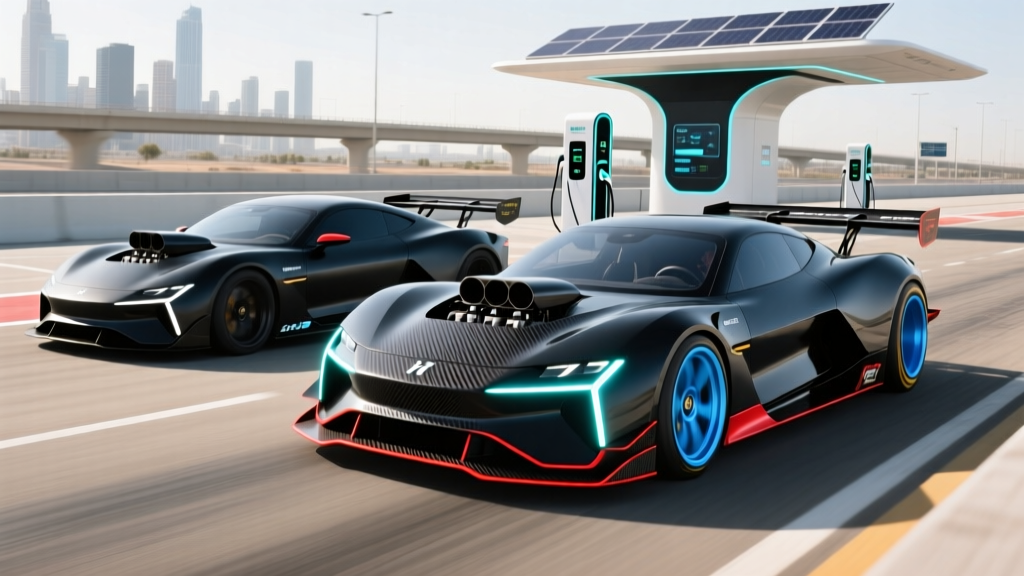
An electric dragster car is a purpose-built or converted electric vehicle optimized for straight-line acceleration over a quarter-mile or eighth-mile drag strip. Unlike production EVs, these machines prioritize instantaneous torque delivery and extreme power output over range — typically packing 1,000 to 10,000+ horsepower from battery-electric powertrains. As of 2026, electric dragster cars compete across NHRA and independent series, with top-tier builds hitting sub-7-second quarter-miles at 200+ mph. Entry-level street-legal EV drag builds start around $45,000, while competitive all-electric Top Fuel equivalents can exceed $500,000. For context, a Tesla Model S Plaid — the most accessible production electric dragster car you can buy today — delivers a 9.28-second quarter-mile and 1,020 HP for $89,990 MSRP.
The Electric Dragster Car Landscape in 2026
The drag racing world has bifurcated into two electric camps: production-based EVs that owners drive to the track and race on weekends, and dedicated tube-chassis electric dragsters built solely for competition. The NHRA officially sanctioned its first all-electric Top Fuel exhibition runs in 2024, and by 2026, independent organizations like the Electric Drag Racing Association (EDRA) host full season schedules across multiple classes.
Production EVs have reshaped grassroots drag racing. The Tesla Model S Plaid, Lucid Air Sapphire, and Porsche Taycan Turbo GT now populate Sportsman and bracket-racing classes at tracks nationwide. Their advantage is brutal simplicity: electric motors deliver peak torque from 0 RPM, eliminating the launch-RPM guesswork and traction management that defines internal-combustion drag racing.
On the dedicated-build side, teams are running battery packs in the 60-120 kWh range using high-discharge-rate cells — typically NMC (nickel manganese cobalt) pouch cells capable of sustained 10C+ discharge rates. A competitive Pro Mod-class electric dragster in 2026 might run a 75 kWh pack paired with dual or quad motors producing 3,000+ HP, completing a quarter-mile pass that consumes roughly 8-12 kWh of energy in under 8 seconds.
Electric Dragster Car vs Gas: Performance and Cost Comparison
The debate between electric and combustion dragsters centers on three axes: acceleration physics, cost per pass, and maintenance overhead. Here is how the numbers stack up across comparable competition tiers.
| Metric | Electric Dragster (Pro Mod Class) | Gas/Nitro Dragster (Pro Mod Class) | Tesla Model S Plaid (Production EV) | Gas Muscle Car (Dodge Challenger SRT Demon 170) |
|---|---|---|---|---|
| Horsepower | 2,500–4,000 HP | 2,500–4,000 HP (nitro) / 1,100 HP (gas) | 1,020 HP | 1,025 HP |
| 0–60 mph | ~1.0–1.5 sec | ~1.0–1.5 sec (nitro) / ~2.3 sec (gas) | 1.99 sec | 1.66 sec (rollout-adjusted) |
| Quarter-Mile ET | 6.5–7.8 sec | 5.6–6.0 sec (nitro) / 7.5–8.2 sec (gas) | 9.28 sec | 8.91 sec |
| Quarter-Mile Trap Speed | 190–220 mph | 240+ mph (nitro) / 190–210 mph (gas) | 155 mph | 215 mph |
| Cost Per Pass (energy/fuel) | $1.50–$4.00 (electricity) | $50–$500+ (nitro methanol) | $0.80–$1.20 | $8–$15 (race fuel) |
| Rebuild Interval | Motor/controller: 500+ passes; Battery: 300–800 passes at race discharge | Engine: 5–25 passes (Top Fuel nitro) | N/A (production drivetrain) | Engine: 50–200 passes (supercharged) |
| Maintenance Per Season (est.) | $5,000–$15,000 | $50,000–$250,000+ | $500–$1,500 | $10,000–$30,000 |
The electric dragster car's economic advantage is starkest in cost per pass. A Top Fuel nitromethane engine can consume $300–$500 in fuel per 3.7-second pass and requires a full teardown and rebuild after as few as 5–12 runs. An electric dragster drawing 10 kWh per pass at $0.15/kWh (grid rate) or $0.30/kWh (generator at the track) spends between $1.50 and $3.00 on energy — and the electric motors themselves rarely need rebuilding.
The tradeoff: top-end speed. Nitromethane's energy density is unmatched. A Top Fuel nitro dragster still traps 335+ mph, a figure no electric dragster has approached as of 2026. Battery weight and thermal limits cap current electric builds in the 200–230 mph range for quarter-mile work.
Real Costs of Owning and Campaigning an Electric Dragster Car
Whether you are building a dedicated competition chassis or prepping a production EV for bracket racing, the financial picture extends well beyond the initial purchase.
| Cost Category | Production EV Drag Build (e.g., Model S Plaid) | Dedicated Electric Dragster (Pro Mod/Outlaw) | Comparable Gas Drag Car |
|---|---|---|---|
| Vehicle / Chassis Purchase | $89,990 (MSRP) | $120,000–$500,000+ | $75,000–$350,000 |
| Battery Pack | Included (factory 100 kWh NMC) | $25,000–$80,000 (60–120 kWh race pack) | N/A |
| Motor(s) & Controller | Included (tri-motor) | $15,000–$60,000 | $8,000–$25,000 (engine + blower) |
| Safety Equipment (cage, suit, chute) | $3,000–$8,000 (roll cage, SFI gear) | $10,000–$25,000 | $8,000–$20,000 |
| Energy Per Race Weekend (6–10 passes) | $5–$12 (grid charging) | $15–$40 (grid) / $30–$80 (generator) | $200–$2,000 (race fuel/nitro) |
| Annual Maintenance | $500–$2,000 | $5,000–$15,000 | $15,000–$100,000+ |
| Battery Replacement (if needed) | $15,000–$22,000 (out of warranty) | $25,000–$80,000 (every 2–4 seasons) | Engine rebuild $5,000–$50,000 (frequent) |
| Insurance (specialty motorsport) | $2,500–$5,000/yr | $5,000–$15,000/yr | $5,000–$12,000/yr |
The total cost of ownership for a production-based electric dragster car like the Model S Plaid is dramatically lower than a comparable gas bracket-racing car over a 3-year campaign. The savings come primarily from energy cost (electricity vs race fuel) and the near-elimination of engine rebuilds. However, the upfront purchase price of a production EV is higher, and battery degradation from repeated high-discharge passes is a real factor — expect 5–15% capacity loss over 300–500 full-throttle quarter-mile runs, depending on pack chemistry and thermal management.
Charging Logistics: What Drag Racers Need to Know
Charging an electric dragster car is fundamentally different from charging a daily-driver EV. Here is the practical reality for track-day and race-weekend charging.
At the track: Most drag strips do not have DC fast chargers in the pit area. You have three options:
- Level 2 (240V, 40–48 amp): Adds 25–35 miles of range per hour. A full charge from 20% to 100% on a 100 kWh pack takes 8–10 hours. Fine for overnight between race days, inadequate for same-day turnaround.
- Portable DC fast charger / tow-behind generator: Teams running dedicated electric dragsters often bring a 25–50 kW portable charger powered by a diesel or gasoline generator. A 75 kWh pack from 20% to 90% takes roughly 60–90 minutes at 40 kW.
- Track-side grid connection: Some progressive tracks now offer 480V three-phase pit power. With the right onboard charger or external DC unit, this enables 50–100 kW charging — a 20–90% fill in 30–50 minutes.
At home (between events): A Level 2 home charger (240V, 48 amp) is standard for production EV drag builds. Installation typically costs $800–$2,500 depending on panel capacity and run length, per U.S. Department of Energy guidance. Dedicated electric dragsters with large race packs may require 100-amp subpanels or 480V service — budget $3,000–$8,000 for electrical upgrades, and always have a licensed electrician perform the final spec.
Key charging numbers for production EV drag builds:
- Tesla Model S Plaid: 250 kW peak DC fast charge (V3 Supercharger), 10–80% in ~25 minutes. 11.5 kW Level 2 onboard.
- Lucid Air Sapphire: 300+ kW peak DC (900V architecture), 10–80% in ~20 minutes. 19.2 kW Level 2 onboard.
- Porsche Taycan Turbo GT: 320 kW peak DC (800V), 10–80% in ~18 minutes. 19.2 kW Level 2 onboard.
Understand the critical distinction: kW (kilowatts) measures charging power — how fast energy flows into the battery. kWh (kilowatt-hours) measures battery capacity — how much total energy the pack stores. A 100 kWh battery charged at 50 kW takes roughly 2 hours from empty (minus taper above 80% SoC).
Common Misconceptions About Electric Dragster Cars
| Myth | Fact |
|---|---|
| "Electric dragsters are slower than gas cars" | Electric dragsters dominate 0–60 and 60-foot times due to instant torque. Top Fuel nitro still wins on top-end trap speed (335+ mph vs ~220 mph electric). In bracket racing and Sportsman classes, production EVs like the Model S Plaid and Lucid Air Sapphire are among the quickest cars in the field. |
| "You can't make multiple passes without waiting hours to charge" | A production EV like the Model S Plaid uses approximately 8–12 kWh per quarter-mile pass from a 100 kWh pack. You can realistically make 8–15 passes before needing a charge, then recover with a 20-minute DC fast charge for 5–8 more runs. Dedicated builds with smaller packs may need charging every 3–5 passes. |
| "Electric drag racing is silent and boring" | Electric dragsters produce intense tire-shrieking, gear-whine, and wind noise. The absence of exhaust sound actually makes tire spin and suspension feedback more audible to drivers. Many tracks now add crowd-facing speaker systems for spectator energy. |
| "The battery will explode in a crash" | Race-spec battery packs in sanctioned electric dragsters use fire-suppression systems, ballistic containment, and disconnect protocols per SFI/NHRA safety standards. Production EV battery packs are heavily armored and have strong crash-test ratings per NHTSA data. |
| "Electric dragsters don't need maintenance" | While they eliminate oil changes, spark plugs, and engine rebuilds, electric dragsters require battery health monitoring, coolant system maintenance, contactor inspection, motor bearing service, and high-voltage cable integrity checks. Budget $5,000–$15,000/year for a dedicated build. |
| "Any EV can be a dragster" | Repeated full-throttle launches cause extreme battery discharge rates (5C–15C+), rapid heat buildup, and accelerated degradation. Vehicles without robust thermal management systems — or those with LFP chemistry not rated for high C-rates — will throttle power or sustain damage. Purpose-built cooling and high-discharge NMC cells are essential for serious competition. |
First-Time EV Drag Racer: What You Need to Know Before You Buy
If you are entering electric drag racing for the first time, whether with a production car or a dedicated build, these are the ownership realities that separate prepared competitors from expensive disappointments.
Battery chemistry matters enormously. Most production EVs use either NMC (nickel manganese cobalt) or LFP (lithium iron phosphate) cells. NMC offers higher energy density and better high-discharge performance — critical for drag racing. LFP is safer and longer-lasting for daily cycling but typically cannot sustain the extreme C-rates a drag pass demands. For a dedicated electric dragster car build, high-discharge NMC pouch cells from suppliers like Kokam, LG, or Samsung SDI are the standard.
Thermal management is non-negotiable. A single quarter-mile pass in a 2,000 HP electric dragster can generate enough heat to push battery cells past 60°C. Without active liquid cooling on the battery pack and motors, you will face thermal throttling after 2–3 passes or, worse, cell damage. Production EVs like the Model S Plaid and Taycan Turbo GT have sophisticated liquid-cooling systems that handle repeated launches — but even they benefit from cool-down laps between passes on hot days.
Tire selection changes everything. Electric dragster cars deliver maximum torque at zero RPM, which means tire shock and wheelspin are the primary limiting factors in elapsed time. Drag radials (e.g., Mickey Thompson ET Street R) or slicks are mandatory for anything beyond casual bracket racing. Budget $800–$2,500 per set, and expect 20–50 passes per set depending on power level and track prep.
Insurance is specialized. Standard auto insurers typically exclude competition use. You will need a motorsport-specific policy. Providers like Hagerty, Leland-West, and specialty underwriters cover drag racing, with premiums ranging from $2,500 to $15,000 annually depending on vehicle value, class, and driver record.
Safety gear is mandatory and expensive. Any car running quicker than 9.99 seconds in the quarter-mile requires a roll cage, SFI-rated fire suit (3.2A/5 minimum), helmet (Snell SA2020+), window net, and parachute above 150 mph. Budget $5,000–$15,000 for initial safety outfitting.
Federal tax credits do not apply to dedicated race cars. The IRS §30D clean vehicle credit applies only to street-legal vehicles purchased for personal use, subject to MSRP caps ($55,000 sedans / $80,000 SUVs/trucks), buyer income limits, and battery sourcing requirements. A Model S Plaid at $89,990 MSRP exceeds the sedan cap and does not qualify. A Tesla Model 3 Performance ($52,990 MSRP in 2026) may qualify for up to $7,500 depending on your income, the vehicle's battery mineral sourcing, and whether you elect point-of-sale transfer — consult a tax professional for your specific situation.
Decision Framework: Which Electric Dragster Car Path Is Right for You?
Choose a Production EV Drag Build If:
- You want to drive the car to the track, race it, and drive it home
- Your budget is $50,000–$100,000 total (vehicle + safety gear + prep)
- You compete in Sportsman, bracket, or index classes (9–12 second quarter-mile range)
- You want minimal maintenance and reliable, repeatable performance
- You value dual-purpose use: daily driver + weekend race car
- Top picks for 2026: Tesla Model S Plaid ($89,990, 1,020 HP, 9.28-sec 1/4 mi), Lucid Air Sapphire ($249,000, 1,234 HP, ~9.0-sec est.), Tesla Model 3 Performance ($52,990, 510 HP, ~11.5-sec 1/4 mi — potential §30D credit)
Choose a Dedicated Electric Dragster Build If:
- You are competing in Pro Mod, Outlaw, or exhibition classes targeting sub-8-second passes
- Your budget exceeds $150,000 for the build alone
- You have trailer/hauler logistics and a support crew
- You want maximum power-to-weight and custom battery/motor configuration
- You accept that the car has no street use and requires trailer transport
- Key suppliers: Cascade Motorsports, EV West, Hyper9, AEM EV, AMRacing for motors/controllers; custom chassis from S&W Race Cars, Jerry Bickel, or similar
Stick With Gas/Nitro If:
- You compete in Top Fuel or Funny Car where trap speeds above 300 mph are the objective
- Your class rules prohibit electric powertrains (still the case in many NHRA Pro categories as of 2026)
- You have existing infrastructure, crew expertise, and sponsor relationships in nitro/alcohol racing
- Top-end speed matters more than elapsed-time consistency
Real-World Ownership: Climate, Track Access, and Practical Limits
Owning an electric dragster car involves logistical realities that spec sheets do not capture.
Cold-weather impact: Battery internal resistance increases significantly below 40°F (4°C). Expect 15–30% reduction in available discharge power and increased risk of cell damage if you attempt full-throttle passes on a cold-soaked pack. Preconditioning the battery to 70–85°F (21–29°C) before racing is essential. Production EVs handle this via built-in thermal preconditioning; dedicated builds require external battery heaters or climate-controlled staging.
Track access: Not all drag strips allow electric vehicles in all classes. Before investing, confirm your target track's tech inspection requirements for high-voltage systems, emergency disconnect switches, and battery containment. The NHRA rulebook (updated annually) now includes specific electric vehicle safety requirements in Section 22.
Charging infrastructure at tracks: This remains the single biggest pain point for electric drag racers in 2026. Fewer than 15% of U.S. drag strips have dedicated high-power pit charging. Most electric competitors bring portable generators (typically 10–25 kW diesel units, costing $3,000–$8,000) or rely on nearby public DC fast chargers between rounds. Plan your race-day logistics around charging windows — a 30-minute turnaround between rounds is tight if you need 20+ minutes of charging.
Battery longevity: Repeated high-C-rate discharges accelerate degradation. A production EV battery that might last 200,000+ miles in daily use may see measurable capacity loss (5–15%) after 300–500 drag passes. Dedicated race packs using high-discharge cells typically last 300–800 passes before replacement, depending on depth of discharge and thermal management quality. Budget accordingly: a replacement race pack costs $25,000–$80,000.
Frequently Asked Questions
How fast can an electric dragster car go in the quarter-mile?
The quickest dedicated electric dragsters in 2026 run in the 6.5–7.5 second range at 190–220 mph. Production EVs like the Lucid Air Sapphire and Tesla Model S Plaid achieve 9.0–9.3 second quarter-miles at 150–160 mph. For comparison, Top Fuel nitro dragsters run 3.6–3.7 seconds at 335+ mph — electric has not yet matched that top-end benchmark due to battery weight and energy density limits.
Can I daily-drive my electric dragster car?
If it is a production EV like the Model S Plaid, Taycan Turbo GT, or Lucid Air Sapphire — yes, absolutely. These are fully street-legal, comfortable, and practical daily drivers that happen to be devastatingly quick. Dedicated tube-chassis electric dragsters are not street-legal and require trailer transport.
What does it cost to convert a gas car into an electric dragster?
A basic conversion (lightweight car, 200–400 HP, 20–40 kWh pack) starts around $25,000–$45,000 in parts. A competitive conversion targeting sub-10-second quarter-miles with proper thermal management, safety equipment, and high-discharge battery typically costs $60,000–$150,000. The conversion market has matured, with companies like EV West and Hyper9 offering turnkey kits.
Do electric dragster cars qualify for the federal EV tax credit?
Only if the vehicle is street-legal, purchased new for personal use, and meets all IRS §30D requirements: MSRP caps ($55,000 for sedans, $80,000 for SUVs/trucks/vans), buyer income limits ($150K single / $300K joint AGI), and critical mineral/battery component sourcing rules. Dedicated race cars and most high-performance EVs (Model S Plaid at $89,990, Lucid Air Sapphire at $249,000) exceed the MSRP caps. The Tesla Model 3 Performance ($52,990) may qualify depending on sourcing and your income. Always verify current-year rules with a tax professional.
How do I get started in electric drag racing on a budget?
The most affordable entry point is a used Tesla Model 3 Performance or Long Range AWD (2021–2024, $28,000–$42,000 on the used market). Add drag radials ($800–$1,200), a roll bar if running quicker than 11.49 seconds ($800–$2,000), and basic safety gear ($1,500–$3,000). Total entry cost: roughly $32,000–$50,000. Join the Electric Drag Racing Association (EDRA) or your local track's EV bracket racing class for structured competition.
What is the biggest risk when racing an electric dragster car?
Thermal runaway from battery damage or sustained over-discharge is the primary safety concern. Proper build practices — fire suppression, ballistic battery containment, emergency high-voltage disconnects, and cell-level monitoring — mitigate this risk substantially. On the performance side, the biggest risk is underestimating traction requirements: electric torque at 0 RPM will overwhelm inadequate tires instantly, causing wheelspin that costs tenths of a second or causes loss of control.