The Quick Answer
Alta Motors shut down in late 2018 and never resumed production, so you cannot buy a new Alta Redshift electric dirt bike in 2026. Used Alta Redshift models (MX and EX variants) sell for roughly $7,000–$12,000 on the secondary market depending on condition, hours, and battery health. If you want a new electric dirt bike with current battery tech, warranty support, and dealer service, your best alternatives are the KTM Freeride E-XC (~$8,299), Sur-Ron Light Bee X (~$4,500), or the Stark Varg MX (~$13,490). This guide covers what Alta built, why it failed, the real costs of owning a used Alta today, and how modern electric dirt bikes compare to gas-powered counterparts.
What Was the Alta Redshift Electric Dirt Bike?
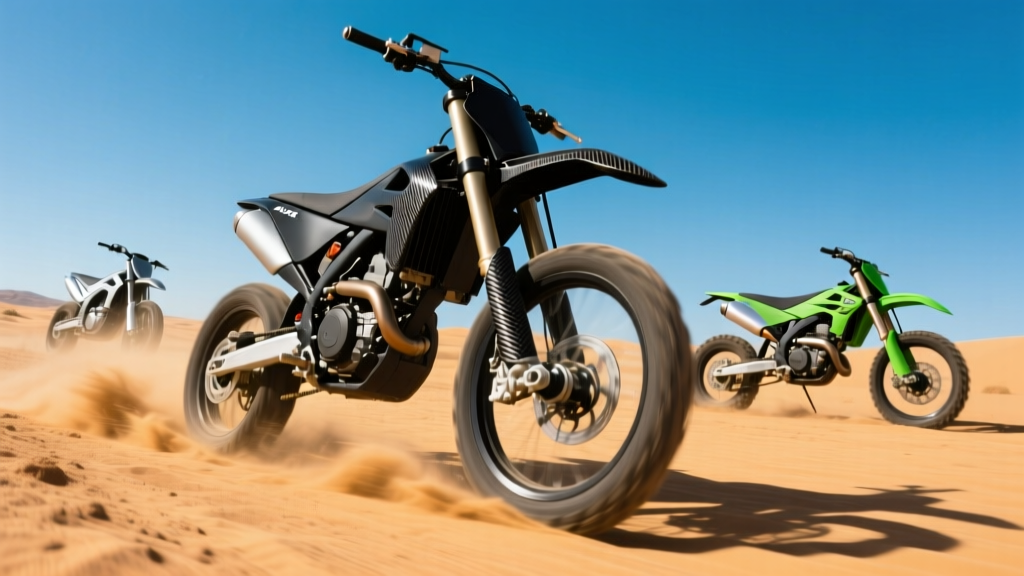
Alta Motors, a San Francisco startup founded in 2010, built the Redshift — a full-size, competition-grade electric dirt bike that was years ahead of the market. The Redshift came in two main variants:
- Redshift MX: Motocross-focused, ~40 hp, ~42 lb-ft torque, 120 mph top speed (governed), ~1.5–2 hours of hard riding per charge
- Redshift EX: Enduro/cross-country version with lighting, kickstand, and slightly different gearing for trail use
The powertrain centered on a 5.8 kWh lithium-ion battery pack (NMC chemistry) paired with a liquid-cooled permanent-magnet AC motor. Alta claimed a wet weight around 259–269 lbs depending on variant — competitive with a 250cc four-stroke gas bike. The onboard charger accepted standard 120V (Level 1 equivalent), reaching a full charge in roughly 2–3 hours. There was no DC fast-charging capability.
For context, Alta's engineering was legitimately impressive for 2014–2018. Test riders and publications like Motocross Action noted the Redshift's instant torque delivery and low center of gravity gave it handling characteristics that rivaled 250F gas bikes on tight tracks. The problem wasn't the product — it was the business.
Why Alta Motors Failed and What That Means for Buyers Today
Alta burned through significant venture capital but never achieved the production volume needed for profitability. The company targeted a niche market (serious off-road riders willing to pay a premium for electric), and at an MSRP of $14,995–$15,495, the Redshift was priced well above comparable gas 250cc motocross bikes (which sold for $7,500–$8,500 at the time). Key factors in Alta's collapse:
- Limited production runs: Alta hand-built bikes in small batches, never scaling to thousands of units per year
- No dealership network: Direct sales meant limited service infrastructure outside the Bay Area
- Premature market timing: In 2015–2018, battery costs were higher and consumer acceptance of electric off-road vehicles was minimal
- Investor pullback: When follow-on funding didn't materialize, operations ceased in late 2018
Common Misconceptions About the Alta Redshift
| Myth | Fact |
|---|---|
| "Alta went bankrupt because the bike was bad" | The Redshift was well-reviewed by riders; Alta failed due to business-model and funding issues, not product quality |
| "You can't get parts for an Alta anymore" | Some aftermarket suppliers and former Alta engineers still offer limited parts and service support, but availability is inconsistent |
| "Alta is coming back" | As of early 2026, there is no confirmed revival. Rumors surface periodically but no entity holds active production rights with confirmed tooling |
| "The battery is completely unsupported" | Specialist EV shops can rebuild Alta packs, but expect $3,000–$5,000 for a cell replacement — and no warranty backing it |
Real Cost of Owning a Used Alta Redshift in 2026
Buying a discontinued electric vehicle carries risks that don't apply to current-production models. Here's an honest cost breakdown for a used Alta Redshift versus a new gas-powered competitor and a new electric alternative:
5-Year Ownership Cost Estimate: Alta Redshift (Used) vs Gas 250F vs Stark Varg MX
| Cost Category | Used Alta Redshift MX | New Gas 250cc 4-Stroke (e.g., KTM 250 SX-F) | New Stark Varg MX |
|---|---|---|---|
| Purchase Price | $8,000–$12,000 | $9,500–$10,500 | ~$13,490 |
| Fuel/Energy (5 yrs, ~150 hrs/yr) | $400–$600 (electricity at $0.15/kWh) | $3,000–$4,500 (premium gas + mix oil) | $500–$750 (electricity) |
| Maintenance (5 yrs) | $1,500–$4,000 (specialist labor, scarce parts) | $2,500–$4,000 (valves, piston, chain, sprockets, oil) | $800–$1,500 (chain, brake pads, minimal drivetrain) |
| Battery Replacement Risk | $3,000–$5,000 (high risk on used pack) | N/A | Covered under warranty; replacement ~$4,000+ |
| Insurance (off-road) | $600–$1,200 | $600–$1,200 | $600–$1,200 |
| Estimated 5-Year Total | $14,100–$22,800 | $16,100–$21,400 | $15,990–$18,140 |
Note: Off-road vehicles used exclusively on private property typically don't require registration or street insurance. Costs vary heavily by riding frequency and local electricity rates. Alta maintenance costs are volatile due to parts scarcity.
The key takeaway: a used Alta can be cheaper to operate than a gas bike on a per-hour basis (electricity at roughly $0.04–$0.06 per kWh consumed vs. $2–$4 per hour in gas), but the battery replacement risk and parts scarcity can erase those savings quickly. A single pack rebuild can cost as much as a top-end rebuild on a gas 250F.
How Does the Alta Redshift Compare to Gas Dirt Bikes?
For riders considering a used Alta versus a conventional gas motocross or enduro bike, the performance and ownership differences are meaningful:
| Attribute | Alta Redshift MX (Used) | Typical 250cc Gas MX Bike |
|---|---|---|
| Peak Power | ~40 hp (instant, no clutch) | ~44 hp (requires RPM build) |
| Torque Delivery | 42 lb-ft from 0 RPM | ~20 lb-ft at peak RPM |
| Weight (wet) | ~259 lbs | ~220–228 lbs |
| Ride Time per Tank/Charge | ~1.5–2 hrs (hard riding) | ~1.5–2 hrs (1.6 gal tank) |
| Noise | Near-silent (motor whine only) | 94–110 dB (hearing protection required) |
| Refuel/Recharge Time | 2–3 hours (120V) | 2 minutes (gas can) |
| Maintenance Intervals | Minimal drivetrain; battery is the wildcard | Oil every 5–10 hrs; top-end 50–100 hrs; bottom-end 150+ hrs |
| Trail Access | Allowed on some noise-restricted trails | Banned from noise-restricted areas |
| Parts/Service Availability (2026) | Very limited | Extensive dealer and aftermarket network |
The Alta's silent operation is its single biggest practical advantage for trail riders. Many public riding areas in California, Colorado, and the Pacific Northwest have imposed noise restrictions that effectively ban gas bikes — but allow electric. If your local riding area has a 96 dB or lower sound limit, the Alta (and its modern successors) unlock access that gas bikes simply cannot match.
However, the Alta is roughly 35–40 lbs heavier than a modern 250F gas bike, and that weight difference is noticeable in whoops, jumps, and technical single-track. Gas bikes also win on refueling speed: you can dump a gallon of premix in two minutes and ride another hour. The Alta needs a wall outlet and 2+ hours.
Best Electric Dirt Bike Alternatives to the Alta in 2026
If the Alta's story intrigues you but you want something you can actually buy new with warranty support, here are the strongest contenders in the 2026 market:
Stark Varg MX — ~$13,490
Stark Future (Sweden) has emerged as the spiritual successor to Alta's ambitions. The Varg MX produces a claimed 80 hp (in the Alpha version; 60 hp standard) from a 6 kWh battery. Weight sits at approximately 205 lbs — lighter than most 250F gas bikes. Charge time is roughly 1–2 hours with the optional fast charger. The Varg is the closest thing to a race-ready electric motocross bike currently in production, though long-term reliability data is still limited given the model's 2023–2024 launch window.
KTM Freeride E-XC — ~$8,299
KTM's electric trail bike uses a 3.9 kWh battery with a claimed ride time of ~1.5 hours on moderate trail use. It produces roughly 22 hp in its most aggressive power map, making it better suited for technical trail riding than motocross. The Freeride benefits from KTM's dealer network and parts availability — a critical advantage over Alta. It's also significantly lighter at ~245 lbs.
Sur-Ron Light Bee X — ~$4,500
Not a full-size dirt bike, but the Sur-Ron occupies the electric off-road space at a fraction of the price. Its 1.9 kWh battery delivers roughly 40–60 miles of range at moderate speeds. It's popular for casual trail riding, neighborhood use, and as a pit bike. Build quality and dealer support are inconsistent — buy from an authorized dealer, not a marketplace reseller.
GasGas MC-E Series (Youth/Mini) — $6,000–$9,500
For younger riders or those wanting a smaller platform, the GasGas MC-E line (2, 3, and 5 variants) offers competition-grade electric mini bikes. The MC-E 5 competes directly with 65cc gas bikes and has proven itself in AMA amateur racing. Battery capacity ranges from 1.6–3.2 kWh.
Real-World Ownership: What First-Time Electric Dirt Bike Buyers Must Know
Whether you're chasing a used Alta or buying a new Stark Varg, electric dirt bike ownership has practical realities that marketing materials gloss over:
Charging access matters more than you think. Unlike electric cars, which charge at home or at public stations, electric dirt bikes rely almost entirely on standard 120V household outlets. If your garage or storage unit doesn't have a dedicated 15A or 20A circuit near your bike, you'll need to plan for that. Running an extension cord from a house outlet works, but expect 3+ hour charge times on a full-depleted pack. Some riders invest in portable generators (Honda EU2200i, ~$1,200) to recharge at the track — but that reintroduces gas and noise, defeating the purpose.
Cold weather hits battery performance hard. Lithium-ion packs lose 20–40% of usable capacity below 40°F. If you ride in northern climates during fall and winter, expect noticeably shorter ride times. Store and charge the bike indoors (above 50°F) whenever possible — charging a cold battery accelerates degradation and can trigger the BMS to reject the charge entirely.
Battery degradation is real and expensive. A dirt bike battery undergoes deep discharge cycles (0–100%) far more frequently than an EV car battery, which typically operates between 20–80%. Expect 3–5 years of usable life from an off-road pack before capacity drops below 80% of original. For a used Alta with unknown cycle history, assume the battery is partially degraded and budget accordingly.
No federal tax credit applies. The IRS §30D clean vehicle credit applies only to highway-capable four-wheeled vehicles meeting specific MSRP, income, and battery-sourcing requirements. Off-road motorcycles and dirt bikes do not qualify. Don't let anyone tell you otherwise.
Decision Framework: Should You Buy a Used Alta, a New Electric, or Stick with Gas?
Buy a used Alta Redshift if:
- You're mechanically inclined and comfortable sourcing scarce parts
- You ride noise-restricted trails where electric access is the only option
- You can inspect the battery in person and verify cycle count / State of Health
- You accept the risk of a $3,000–$5,000 battery rebuild within 2–3 years
Buy a new electric dirt bike (Stark Varg, KTM Freeride) if:
- You want warranty coverage and dealer support
- You ride on noise-restricted public land
- You value instant torque and low maintenance for trail/enduro use
- Your budget allows $8,000–$14,000 upfront
Stick with a gas dirt bike if:
- You ride motocross races where refueling speed and light weight are critical
- You ride in remote areas without any electrical access
- You want maximum parts availability and resale liquidity
- You're on a budget under $7,000 and need a reliable race bike
Battery Health and Longevity: The Critical Factor for Used Alta Buyers
If you're seriously considering a used Alta Redshift, the single most important variable is battery State of Health (SoH). Alta's 5.8 kWh NMC pack was cutting-edge in 2016 but uses older cell formats and a thermal management system that hasn't been updated in years. Here's what to check:
- Cycle count: Alta's BMS tracks total charge cycles. Under 200 cycles is ideal; over 400, expect significant capacity loss
- Storage history: A bike stored at 0% or 100% SoC for months will have accelerated degradation. Ask for storage records
- Physical inspection: Look for swelling, corrosion on pack terminals, or error codes on the dash
- Ride test: A healthy Alta pack should deliver consistent power for at least 60 minutes of hard riding. If power drops sharply after 30 minutes, cells are imbalanced or degraded
Budget $1,000–$2,000 for a professional battery diagnostic from an EV specialist before purchasing. This is non-negotiable for a bike with no manufacturer support.
Frequently Asked Questions
Can I still buy an Alta Redshift electric dirt bike new?
No. Alta Motors ceased operations in late 2018. Only used units are available, typically priced between $7,000 and $12,000 depending on condition, hours, and battery health.
How much does it cost to charge an electric dirt bike?
A full charge on a 5–6 kWh pack costs approximately $0.75–$1.20 at the US average residential rate of ~$0.16/kWh. That's roughly 2 hours of riding for under a dollar — compared to $8–$15 in premium gas for a comparable gas bike.
Do electric dirt bikes qualify for any tax credits or incentives?
No. The federal §30D EV tax credit requires a four-wheeled, highway-capable vehicle. Off-road motorcycles and dirt bikes are excluded. Some states or local utility districts offer rebates for electric off-road equipment, but these are rare — check your state's energy office for specifics.
Is the Stark Varg a good replacement for the Alta Redshift?
The Stark Varg MX exceeds the Alta in nearly every performance metric — more power (60–80 hp vs 40 hp), lighter weight (~205 lbs vs 259 lbs), and it comes with a new-vehicle warranty. However, at $13,490, it costs more than a used Alta, and Stark's dealer network is still growing. Long-term reliability remains to be proven at scale.
How long do electric dirt bike batteries last?
Expect 3–5 years or 300–600 full charge cycles before capacity drops below 80% of original. Proper storage (at ~50% SoC, in moderate temperatures) and avoiding repeated 0–100% deep cycles can extend life. Replacement packs for current models typically cost $3,000–$5,000.
Can I ride an electric dirt bike on public trails?
It depends on the trail system. Many national forests and BLM land require a spark arrestor and a sound test — electric bikes pass both trivially. Some OHV areas specifically welcome electric bikes on noise-restricted days. Always check local land-management rules before riding.
Is a used Alta Redshift a good investment?
As a collectible or conversation piece, possibly — early production Redshifts may appreciate among enthusiasts. As a practical daily rider, it carries significant risk due to parts scarcity, battery replacement costs, and zero manufacturer support. Buy one only if you accept those trade-offs and have a backup plan for parts and service.