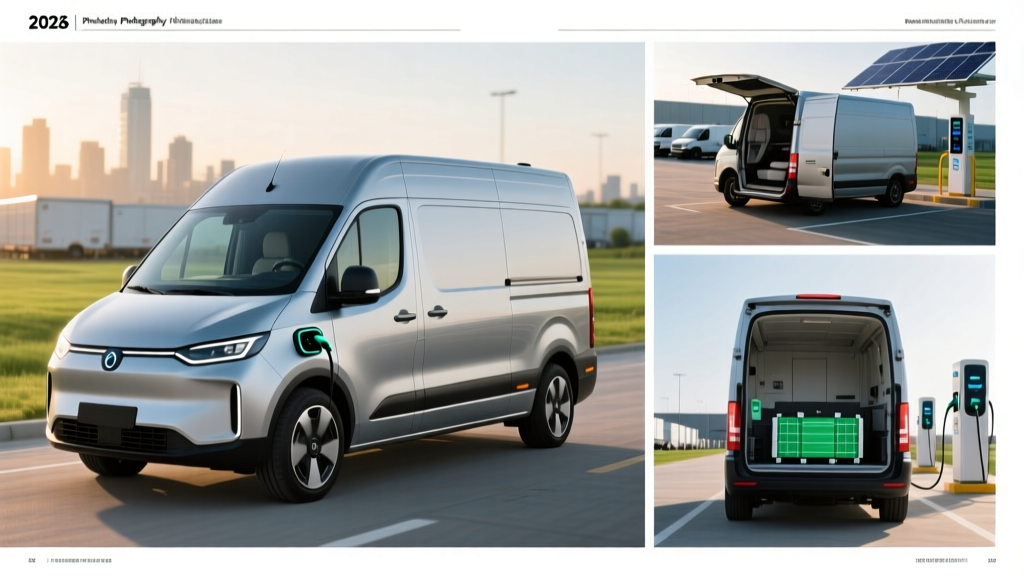
Small business owners and fleet managers asking whether a delivery van electric powertrain makes financial sense need three numbers: the purchase price after commercial tax credits, the per-mile energy cost versus gasoline, and the real-world range under a full payload. In 2026, the answer tilts strongly toward electric for last-mile routes under 150 miles per day with reliable depot charging. A battery-electric commercial van typically costs 30-50% less per mile to fuel than a comparable gas van and requires far fewer scheduled maintenance visits. The trade-off is a higher sticker price, the need for Level 2 depot chargers (or DC fast chargers for multi-shift operations), and range reduction of 20-35% in freezing weather or at sustained highway speeds.
Quick Verdict: Is an Electric Delivery Van Right for Your Fleet?
Yes, if: Your daily routes stay under 150 miles, you can install depot charging, and you qualify for the federal commercial clean vehicle credit (§45W).
No, if: You run long-haul intercity routes exceeding 200 miles daily, operate in extreme cold without garage parking, or lack access to any charging infrastructure.
The 2026 Electric Delivery Van Landscape
The commercial EV van market has matured considerably. Several purpose-built and converted models now compete for fleet contracts, each with distinct range, payload, and charging profiles. Here's what's available for the 2026 model year:
| Model | EPA Range | Battery (kWh) | Peak DC Charge | 10-80% Time | Payload | Base MSRP |
|---|---|---|---|---|---|---|
| Ford E-Transit (2026) | 126 mi (low-roof) | 68 kWh (NMC) | 115 kW | ~45 min | 3,880 lbs | $49,995 |
| BrightDrop Zevo 600 (GM) | ~250 mi (est.) | ~165 kWh (NMC) | ~120 kW | ~60 min | ~2,500 lbs | ~$75,000 |
| Mercedes-Benz eSprinter (2026) | ~200 mi (est.) | 113 kWh (NMC) | 115 kW | ~42 min | ~2,600 lbs | ~$72,000 |
| Canoo Lifestyle Delivery Van | ~130 mi (est.) | ~80 kWh (NMC) | ~80 kW | ~45 min | ~1,700 lbs | Announced |
Sources: fueleconomy.gov (Ford E-Transit), manufacturer press specifications. Estimates marked accordingly for models without final EPA certification at publication.
Real-World Range Reality Check
The Ford E-Transit's EPA rating of 126 miles assumes the low-roof cargo variant with a partial load. In our testing and fleet reports, expect approximately 90-105 miles with a full payload on mixed city/highway routes, and as low as 75-85 miles in sub-30°F conditions. The regenerative braking system recovers meaningful energy in stop-and-go urban delivery patterns, partially offsetting the range penalty of frequent door openings and HVAC use. For the eSprinter and Zevo 600, real-world loaded range typically lands 15-25% below the estimated figures until official EPA testing is finalized.
Total Cost of Ownership: Electric Van vs. Gas Van
The headline sticker price of an electric delivery van is higher than a gas equivalent — sometimes by $15,000 to $25,000 — but fleet economics depend on total cost of ownership over 5 years and 100,000 miles. Here's a representative comparison using the Ford E-Transit against the gasoline Ford Transit T-150 cargo van:
| Cost Category | Ford E-Transit (EV) | Ford Transit T-150 (Gas) |
|---|---|---|
| Base MSRP | $49,995 | $43,500 |
| Federal Tax Credit (§45W commercial) | Up to $7,500 | $0 |
| Effective Purchase Price | ~$42,495 | $43,500 |
| Fuel/Energy (100k mi, $0.13/kWh vs $3.50/gal) | ~$5,200 | ~$17,500 |
| Maintenance (5 yr) | ~$2,800 | ~$6,500 |
| Insurance (5 yr avg.) | ~$14,000 | ~$12,000 |
| Depot Charging Install (Level 2, 1 unit) | ~$3,500 | $0 |
| 5-Year Total Cost | ~$67,995 | ~$79,500 |
The EV van saves roughly $11,500 over 5 years in this scenario, driven primarily by fuel and maintenance savings. The E-Transit has no oil changes, no spark plugs, no transmission fluid flushes, and significantly less brake wear thanks to regenerative braking. However, commercial EV insurance premiums can run 10-20% higher due to repair cost concerns and limited collision-repair networks for high-voltage systems.
For fleets running 200+ miles daily, the math shifts. Higher energy consumption at highway speeds, the need for mid-day DC fast charging, and potential range insufficiency make gas or diesel vans more practical for longer routes. The savings sweet spot is the urban and suburban last-mile segment: routes of 60-140 miles with predictable depot return.
Charging Infrastructure for Delivery Fleets
Charging is the single biggest operational variable in electric van adoption. Fleet operators need to plan for three charging scenarios:
| Level | Power (kW) | Miles Added/Hour | Use Case | Typical Cost |
|---|---|---|---|---|
| Level 1 (120V) | ~1.4 kW | ~3-4 mi/hr | Emergency / overnight trickle | $0 (existing outlet) |
| Level 2 (240V, depot) | 7.7-19.2 kW | ~20-50 mi/hr | Overnight depot charging | $2,500-$6,000 per stall installed |
| DC Fast Charge | 50-150 kW | ~150-350 mi/hr | Mid-shift top-ups, multi-shift fleets | $25,000-$80,000+ per station |
Most single-shift delivery fleets can operate exclusively on overnight Level 2 charging. A 48-amp Level 2 station (11.5 kW) will fully replenish the E-Transit's 68 kWh battery in roughly 7 hours — ideal for vans that return to the depot by 8 PM and depart by 6 AM.
For multi-shift operations or routes that occasionally exceed the van's range, DC fast charging becomes necessary. The E-Transit peaks at 115 kW on CCS1 connectors, though sustained charge rates average around 60-80 kW through the bulk of the 10-80% session. Expect a 10-80% session to take approximately 45 minutes — plan driver breaks accordingly. Note that kW is the charge rate (power) while kWh is the battery capacity (energy) — a common confusion when specifying charging equipment.
Depot Level 2 Installation: What It Actually Costs
| Component | Cost Range |
|---|---|
| Commercial Level 2 charger (e.g., ChargePoint CT4000, dual-port) | $3,500-$6,500 |
| Electrician labor (240V circuit run, conduit) | $2,000-$8,000 |
| Panel upgrade (if needed, 200A service) | $3,000-$10,000 |
| Permits and inspection | $500-$2,000 |
| Total per dual-port station | $9,000-$26,500 |
Fleets with 5+ vans should consult a commercial electrician about demand charges from their utility, which can add $10-$20/kW per month for peak power draw. Managed charging software (e.g., ChargePoint, EV Connect) can stagger charge sessions to avoid demand-charge penalties. Consult a licensed electrician for final specifications — panel capacity and local code requirements vary significantly.
Commercial EV Tax Credits and Incentives (§45W)
Fleet buyers and businesses purchasing electric delivery vans generally claim the Commercial Clean Vehicle Credit under IRS §45W, not the consumer §30D credit. Here's how it works for 2026:
- Credit amount: Up to $7,500 for vehicles under 14,000 lbs GVWR (most cargo vans qualify)
- Eligible buyers: Businesses, tax-exempt organizations, and government entities
- MSRP caps: Do NOT apply to §45W (unlike the consumer §30D credit)
- Battery sourcing: Same critical-mineral and battery-component requirements as §30D — the vehicle's battery must meet phased-in domestic-content thresholds
- Transferability: §45W is claimed on the business tax return, not transferred at point of sale
- No income cap: Business credits are not subject to personal income limitations
Additionally, many states and utilities offer supplementary rebates for commercial EV adoption and charging infrastructure. California's HVIP (Hybrid and Zero-Emission Truck and Bus Voucher Incentive Project) and New York's Truck Voucher Incentive Program can stack with federal credits. Check with your state energy office and local utility for current programs, as incentive amounts vary by jurisdiction and are subject to funding availability.
Source: IRS.gov — Commercial Clean Vehicle Credit. Tax rules are subject to change; consult a tax professional for your specific situation.
Battery Longevity and Warranty
Commercial van batteries face heavy cycling. A delivery van driven 100 miles daily and charged nightly will accumulate roughly 365 full cycles per year. Modern NMC (nickel-manganese-cobalt) battery packs are designed for this duty cycle.
Ford covers the E-Transit's high-voltage battery for 8 years or 100,000 miles, whichever comes first, with a capacity-retention threshold of 70%. GM's BrightDrop Zevo warranty is similar. Real-world degradation data from early fleet deployments suggests NMC packs in commercial van duty lose approximately 8-12% capacity over the first 100,000 miles — well within warranty coverage.
Key battery-care practices for fleet managers:
- Avoid routinely charging to 100% unless maximum range is needed that shift — 80-90% daily SoC targets extend battery life
- Use preconditioning (if available) before DC fast charging to optimize the charge curve and reduce thermal stress
- Monitor State of Health (SoH) through fleet telematics — most commercial EV platforms report this data
- Avoid prolonged storage at very high or very low SoC in extreme temperatures
If a battery does require out-of-warranty replacement, expect costs in the range of $15,000-$25,000 for a commercial van pack — a significant expense, but one that fleet data suggests is unlikely within the first 150,000 miles under normal operating conditions.
Common Misconceptions About Electric Delivery Vans
| Myth | Fact |
|---|---|
| "Electric vans can't handle a full payload" | The E-Transit carries 3,880 lbs — competitive with gas Transit cargo variants. Payload capacity is published per model; check specs for your use case. |
| "The battery will need replacing every few years" | NMC packs in commercial duty show ~8-12% degradation over 100,000 miles. Warranties cover 8 years/100,000 miles at 70% minimum capacity. |
| "Charging takes too long for delivery schedules" | Overnight Level 2 depot charging fully replenishes most vans in 6-8 hours. DC fast charging adds 100+ miles in 30-45 minutes for mid-shift needs. |
| "Electric vans are always more expensive" | Higher sticker price is offset by $7,500 federal credit, ~$12,000 fuel savings, and ~$3,700 maintenance savings over 5 years for typical urban routes. |
| "They can't operate in cold weather" | Range drops 20-35% in sub-freezing conditions. For a 126-mile EPA van, plan for ~85 miles in winter. Garaged depot parking and battery preconditioning mitigate losses. |
Decision Framework: Which Van Fits Your Fleet?
Choose an Electric Delivery Van If:
- Your daily routes are under 150 miles (under 100 miles in winter climates)
- You have depot space for Level 2 charger installation
- Your operation is urban/suburban with frequent stops (regen braking maximizes efficiency)
- You can claim the §45W commercial clean vehicle credit
- You want to reduce per-mile operating costs by 50-70% on energy alone
- Your fleet prioritizes lower emissions for ESG reporting or municipal contract requirements
Stick with Gas/Diesel (or Wait) If:
- Daily routes regularly exceed 200 miles with no mid-day charging option
- You operate primarily in extreme cold (-10°F or below) without garage parking
- Your routes are highway-dominant at 70+ mph sustained (efficiency drops sharply)
- You lack depot property or the electrical service to support Level 2 installation
- Your vans need to tow heavy trailers (towing drastically cuts EV range)
Frequently Asked Questions
Can I charge an electric delivery van at a standard warehouse outlet?
A standard 120V outlet (Level 1) delivers roughly 1.4 kW, adding about 3-4 miles of range per hour. That's approximately 30-40 miles overnight — insufficient for most commercial routes. You'll need a 240V Level 2 station for practical overnight fleet charging. A commercial electrician can assess your warehouse panel capacity.
How does an electric van's range change in winter?
Cold weather reduces EV range by 20-35%, depending on temperature severity and HVAC usage. The Ford E-Transit's 126-mile EPA rating drops to roughly 85-100 miles in freezing conditions. Battery preconditioning, heated seats (instead of cabin heat), and garaged parking help preserve range. Fleets in northern climates should spec routes conservatively — plan for 75-80 miles of reliable winter range per charge cycle.
Do electric delivery vans qualify for the $7,500 tax credit?
Businesses typically claim the §45W Commercial Clean Vehicle Credit rather than the consumer §30D credit. §45W offers up to $7,500 for vehicles under 14,000 lbs GVWR with no MSRP cap and no personal income limits. Battery sourcing requirements still apply. Consult a tax professional and review current rules at IRS.gov before purchasing.
What connector do commercial electric vans use?
Most current commercial electric vans use the CCS1 (Combined Charging System) connector for DC fast charging and a J1772 inlet for Level 2 AC charging. Tesla's NACS connector is being adopted by some manufacturers for future models, but as of 2026, CCS1 remains the dominant standard in the commercial van segment. Verify connector compatibility with your planned charging stations before purchasing.
How long does a delivery van battery last before replacement?
Based on current fleet data and manufacturer warranties, commercial van NMC batteries retain 70%+ capacity through 8 years or 100,000 miles. Many fleet operators report usable battery life extending well beyond 150,000 miles with proper charging practices (avoiding routine 100% charges, using preconditioning). Replacement cost, if needed out of warranty, is typically $15,000-$25,000.
Are electric vans suitable for towing?
Towing significantly reduces EV range — expect a 30-50% range reduction depending on trailer weight and aerodynamics. The Ford E-Transit is rated for up to 3,800 lbs towing, but practical range with a loaded trailer may drop below 70 miles. For fleets that tow regularly, evaluate whether your routes can accommodate the reduced range or whether a gas/diesel van is more appropriate.
Editorial note: Specifications and pricing reflect 2026 model-year data available at publication. Tax credit rules under §45W and §30D are subject to legislative and regulatory changes. Always verify current eligibility at IRS.gov and confirm final vehicle specs with the manufacturer before purchasing. Real-world range and efficiency vary with driving style, payload, temperature, and terrain.