Quick Answer: What Is Electric Cruise Assist?
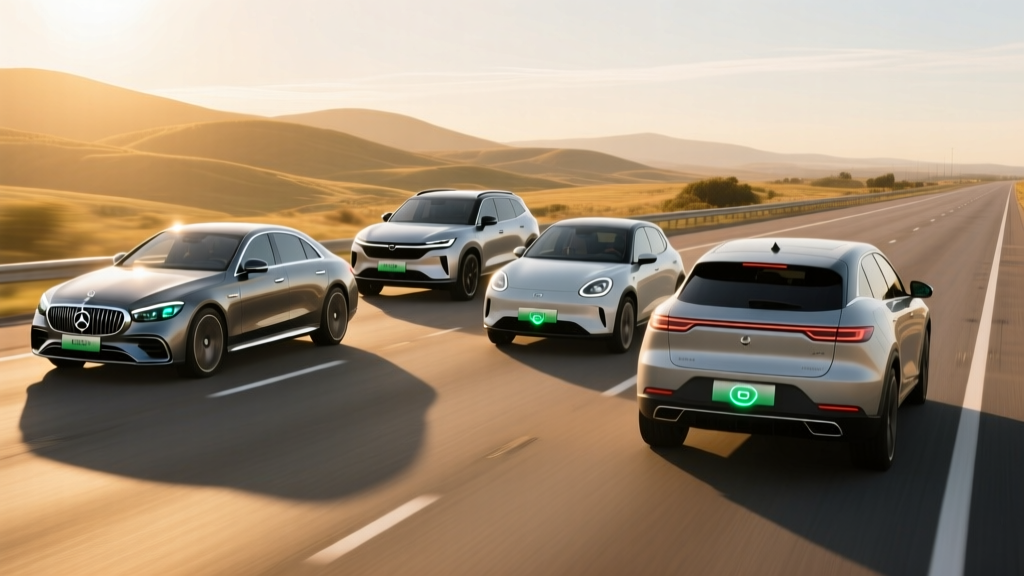
"Electric cruise" in the EV world refers to advanced adaptive cruise control combined with lane-centering on highways — what the industry calls SAE Level 2 driver-assistance. The top systems in 2026 include GM's Super Cruise, Ford's BlueCruise, Tesla's Autopilot/FSD (Supervised), Hyundai/Kia's Highway Driving Assist 2, and Nissan's ProPILOT Assist 2.0. Expect to pay $0–$2,500 extra depending on the brand. None of these systems are self-driving — you must remain alert and ready to take over at all times.
The Real Cost of Highway Driver-Assist in EVs
Not all electric cruise systems are created equal — and the price gap between basic adaptive cruise and hands-free highway driving is substantial. Here is what buyers actually pay in 2026:
| System | Brand | Cost | Hands-Free? | Geo-Fenced Roads |
|---|---|---|---|---|
| Super Cruise | GM (Cadillac, Chevy, GMC) | Included on trims ~$55K+; $2,500 option on others | Yes (hands-free) | ~750,000 miles of mapped highways |
| BlueCruise 1.4 | Ford (Mustang Mach-E, F-150 Lightning) | $2,100 one-time or $75/mo subscription | Yes (hands-free) | ~130,000+ miles of divided highways |
| Autopilot (Basic) | Tesla (all models) | Included standard | No (hands-on) | N/A |
| FSD (Supervised) | Tesla (all models) | $8,000 one-time or $99/mo | No (hands-on, supervised) | Any road |
| Highway Driving Assist 2 | Hyundai/Kia (Ioniq 5/6, EV6/9) | Included on SEL/Limited trims | No (hands-on) | N/A |
| ProPILOT Assist 2.0 | Nissan (Ariya) | Included on Engage+ trims (~$48K+) | Yes (hands-free, eyes-off in traffic) | Mapped highways |
The takeaway: if hands-free highway cruising is a priority, GM's Super Cruise and Ford's BlueCruise offer the most seamless experience. Tesla's FSD costs significantly more but still requires hands-on-wheel supervision and operates on any road, not just mapped highways.
Electric Cruise vs. Gas Car Cruise: What's Different?
Adaptive cruise control has existed on gas vehicles for years, so what changes when the powertrain is electric? Three things:
| Factor | EV with Smart Cruise | Gas Car with Adaptive Cruise |
|---|---|---|
| Regenerative braking integration | Smooth deceleration via regen; often enables one-pedal feel even in cruise mode | Traditional friction braking; less seamless speed transitions |
| Energy efficiency at highway speed | ~2.5–3.5 mi/kWh (75–85 mph); range drops 15–25% vs. city driving | 25–35 MPG highway; often better highway than city |
| Instant torque response | Immediate acceleration for merging/passing without downshift lag | Turbo lag or transmission hunting on inclines |
| Preconditioning for charging | Navigation-based battery prep when routing to a charger mid-cruise | N/A |
| Noise level | Near-silent cabin makes cruise fatigue lower on long trips | Engine and transmission noise present |
The integration advantage is real. When Tesla's Autopilot or GM's Super Cruise manages speed on a highway, the EV's regenerative braking system handles deceleration without the lurching feel of traditional brake application. On a 400-mile road trip in a 2026 Chevrolet Silverado EV with Super Cruise, the system managed speed, lane position, and even initiated battery preconditioning as we approached a DC fast charger — something no gas truck can replicate.
Real-World Range Impact of Highway Cruise Driving
Highway driving is where EVs lose the most range compared to their EPA stickers. Cruise control helps maintain steady speeds, but aerodynamic drag at 70–80 mph is the primary range killer. Here is what to expect:
- Tesla Model Y Long Range: EPA 330 mi → expect ~255–275 mi at 75 mph, ~220 mi in 30°F weather
- Hyundai Ioniq 6 SE Long Range: EPA 361 mi → expect ~285–310 mi at 75 mph (best-in-class 0.21 Cd drag coefficient helps)
- Ford Mustang Mach-E Extended Range: EPA 320 mi → expect ~245–265 mi at 75 mph
- Chevrolet Equinox EV RS: EPA 319 mi → expect ~240–260 mi at 75 mph
Cruise assist systems maintain more consistent speeds than human drivers, typically recovering 3–7% range versus manual driving on rolling terrain. However, no system can overcome the physics of air resistance at highway speed.
5-Year Cost: EV with Electric Cruise vs. Gas Equivalent
Does the premium for an EV with advanced cruise assist pay off? We compared a 2026 Ford Mustang Mach-E Premium (BlueCruise, $48,995 MSRP) against a comparably equipped 2026 Toyota RAV4 Limited (gas, ~$40,500 MSRP) over five years and 75,000 miles:
| Cost Category | Mach-E Premium (EV) | RAV4 Limited (Gas) |
|---|---|---|
| Purchase price (MSRP) | $48,995 | $40,500 |
| Federal tax credit (§30D, if eligible) | −$3,750 to $7,500 (sourcing-dependent) | $0 |
| Fuel/energy (75K mi) | $2,625 (home L2 at $0.14/kWh avg) | $9,375 (28 MPG avg at $3.50/gal) |
| Maintenance (5 yr) | $900 (cabin filter, wipers, tire rotation) | $3,200 (oil, filters, brakes, spark plugs) |
| Insurance (5 yr avg) | $11,500 ($2,300/yr avg) | $8,750 ($1,750/yr avg) |
| BlueCruise / Safety tech cost | $2,100 (one-time) | Included in Limited trim |
| 5-Year Total (before credit) | $66,120 | $61,825 |
| 5-Year Total (with $7,500 credit) | $58,620 | $61,825 |
With the full §30D credit, the Mach-E comes out ~$3,200 ahead over five years — and you get hands-free highway cruising that the RAV4's Toyota Safety Sense 3.0 cannot match (it requires hands-on at all times). Without the credit, the gas vehicle saves roughly $4,300. Check current eligibility at IRS.gov — income caps ($150K single / $300K joint), MSRP caps ($55K cars / $80K SUVs/trucks), and battery-sourcing requirements all apply.
Common Electric Cruise Misconceptions — Fact vs. Fiction
| Myth | Fact |
|---|---|
| "Electric cruise means the car drives itself." | All current consumer systems are SAE Level 2 — the driver must remain engaged and ready to intervene. Only Waymo and Cruise robotaxis operate at Level 4 (no driver needed), and only in limited geo-fenced zones. |
| "Tesla FSD is fully autonomous." | Tesla's FSD (Supervised) is Level 2. Despite the name, the driver must supervise at all times. Tesla's own manual states the driver is responsible. |
| "Hands-free means I can sleep or look at my phone." | Every hands-free system uses a driver-monitoring camera. Super Cruise and BlueCruise will issue escalating warnings and eventually slow the car to a stop if you look away for more than a few seconds. |
| "Cruise assist kills my range." | Cruise control actually improves efficiency by 3–7% on rolling terrain by maintaining steadier speeds than most human drivers. The range loss comes from highway speed itself, not the assist system. |
| "All EVs have advanced cruise assist." | Basic adaptive cruise is common, but hands-free highway driving (Super Cruise, BlueCruise, ProPILOT 2.0) is only available on specific trims and often costs $2,000+ extra. |
Decision Framework: Which Electric Cruise System Fits You?
Choose Your Highway Driving Priority:
If you drive 200+ highway miles per week and want true hands-free comfort: GM Super Cruise (Cadillac Lyriq, Chevrolet Blazer EV, Silverado EV) or Ford BlueCruise (Mustang Mach-E, F-150 Lightning). These are the only systems that let you legally remove your hands on mapped highways while a camera verifies your eyes are forward.
If you want the broadest road coverage and don't mind hands-on-wheel: Tesla Autopilot (standard on all models) or FSD (Supervised) for $8,000. It works on any road, not just pre-mapped highways, but always requires hand contact with the steering wheel.
If you want capable assist without a premium upcharge: Hyundai/Kia Highway Driving Assist 2 (included on Ioniq 5/6 SEL and above, EV6 GT-Line, EV9). Excellent lane-centering and curve-speed adaptation, but hands-on only — no subscription or one-time fee.
If you frequently sit in stop-and-go highway traffic: Nissan ProPILOT Assist 2.0 in the Ariya allows hands-off and eyes-off below 25 mph in mapped traffic-jam conditions — a unique advantage for congested commuters.
If you live in a rural area with unmapped two-lane highways: Stick with basic adaptive cruise (included on most EVs). Hands-free systems require divided, mapped highways and will not engage on rural routes.
What First-Time EV Buyers Should Know About Cruise Assist
If you are transitioning from a gas vehicle to an EV and evaluating highway driver-assist, keep these practical points in mind:
- Subscription traps: Ford BlueCruise offers a $75/month subscription alternative to the $2,100 one-time purchase. If you plan to keep the vehicle 3+ years, the one-time buy saves ~$600. Tesla's FSD subscription ($99/mo) makes sense only if you want to try before committing $8,000.
- Hands-free does not mean attention-free: NHTSA data shows that overreliance on Level 2 systems contributes to crashes when drivers disengage. Every system monitors your eyes or steering-wheel torque — and will escalate warnings before disengaging.
- System limitations in weather: Heavy rain, fog, snow, and faded lane markings can cause any cruise-assist system to disengage. Super Cruise and BlueCruise are more likely to drop out in construction zones where lane markings conflict.
- Resale value: According to IIHS research, vehicles with advanced driver-assist show modestly lower collision rates, which can translate to lower insurance premiums — ask your insurer about ADAS discounts.
- Software updates matter: Tesla, GM, and Ford push over-the-air updates that improve cruise-assist performance. A 2024 BlueCruise 1.2 system updated to 1.4 in 2025 gained improved lane-change confidence. Check whether the model you are buying receives regular OTA updates.
Frequently Asked Questions
Is Tesla Autopilot better than GM Super Cruise?
They excel in different ways. Super Cruise offers true hands-free driving on ~750,000 miles of mapped highways with excellent driver monitoring. Autopilot works on any road but requires hands on the wheel. For long highway commutes on interstates, Super Cruise is more relaxing. For varied routes, Autopilot is more versatile. Neither is "self-driving."
Does using electric cruise assist drain the battery faster?
No. Cruise assist systems use minimal computing power (roughly 100–300 watts for the sensor suite and processors). The range impact comes from highway speed itself — driving 75 mph uses roughly 20–30% more energy than driving 55 mph regardless of whether cruise assist is engaged. In fact, steady-speed cruise control often improves efficiency versus manual speed fluctuations.
Can I add Super Cruise or BlueCruise to a vehicle that didn't come with it?
Generally no. Super Cruise requires specific hardware (attention camera, HD maps module, enhanced sensor suite) installed at the factory. BlueCruise similarly requires factory-installed hardware. You cannot retrofit these systems onto a vehicle that was not optioned for them. Always verify the trim includes the system before purchasing — it is not always obvious from the exterior.
What is the safest electric cruise system according to crash data?
NHTSA does not rank ADAS systems by safety, and IIHS evaluates crash avoidance but not hands-free capability specifically. Tesla publishes quarterly safety reports claiming 1 crash per ~4–5 million miles with Autopilot engaged, but independent verification is limited. GM's Super Cruise has a strong safety record with zero reported at-fault incidents attributed to the system itself through 2025. The safest system is the one you use correctly — with full attention.
Do electric cruise systems work in winter and bad weather?
All camera-and-radar-based cruise systems degrade in heavy snow, ice-covered sensors, or dense fog. Super Cruise and BlueCruise will disengage and alert you when conditions prevent reliable lane detection. Tesla's vision-only system (no radar since 2022) can struggle more in heavy rain without radar backup. Always clear cameras and sensors before winter driving and be prepared to take full control.