The Quick Answer: Which Electric Commercial Van Fits Your Business?
Bottom line for 2026: If your routes are under 150 miles daily, return-to-base overnight, and your depot can support Level 2 charging, an electric commercial van will likely cut your per-mile operating cost by 40–60% versus a gas equivalent. The Ford E-Transit remains the value leader (~$47,000 base, 126 mi EPA range), the Rivian EDV (Amazon-exclusive for now) sets the bar for last-mile ergonomics, BrightDrop Zevo 600 wins on range (up to 250 mi EPA) for longer routes, and the Mercedes-Benz eSprinter offers premium European build quality at a steep price (~$75,000+). Federal §45W commercial clean vehicle credit (up to $7,500 for vans under 14,000 lb GVWR) can substantially offset the premium, but sourcing rules apply — confirm eligibility with your tax advisor.
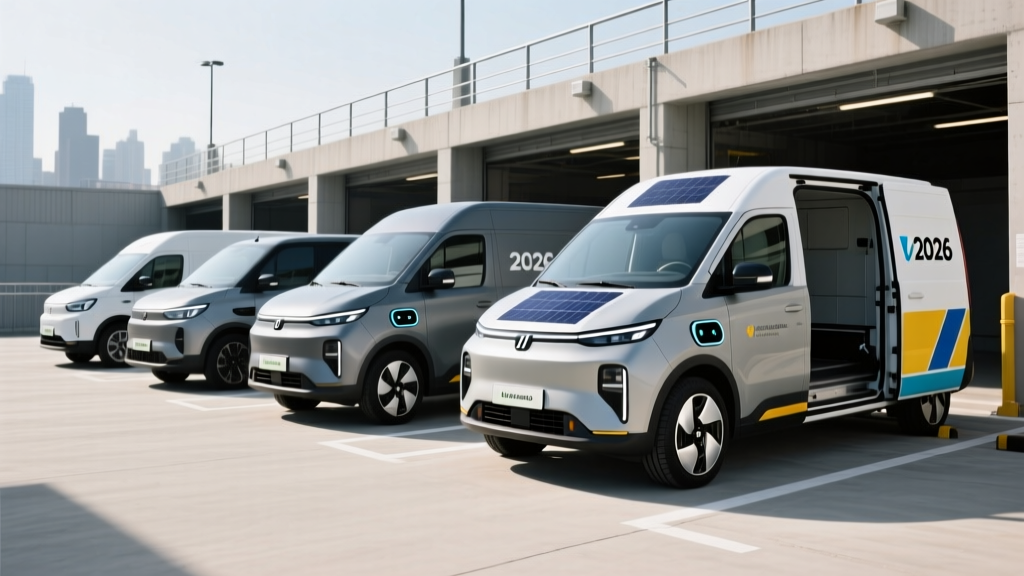
Unlike passenger EVs, commercial van buyers care less about 0–60 times and more about payload, cargo volume, uptime, and total cost per mile. This guide breaks down the four mainstream electric commercial vans available or in fleet delivery for the 2026 model year, with real numbers on range, charging, payload, and five-year ownership costs versus gasoline counterparts.
2026 Electric Commercial Van Spec Comparison
| Spec | Ford E-Transit (2026) | BrightDrop Zevo 600 | Mercedes-Benz eSprinter (2026) | Rivian EDV 700* |
|---|---|---|---|---|
| Base MSRP (approx.) | $47,000 | $74,000 | $75,500 | Fleet-only (Amazon) |
| EPA Range | 126 mi (low-roof cargo) | 250 mi (est.) | ~200 mi (150-kWh pack) | ~161 mi |
| Battery (usable, chemistry) | 68 kWh, NMC | ~140 kWh, NMC | 150 kWh, NMC | ~105 kWh, NMC |
| Peak DC Fast Charge | 115 kW | 120 kW | 115 kW | ~150 kW |
| 10–80% DCFC Time | ~45 min | ~60 min | ~42 min | ~40 min |
| Level 2 Rate | 10.5 kW | 11.5 kW | 11 kW | 11.5 kW |
| Payload Capacity | 3,880 lb | ~2,500 lb | ~2,624 lb | ~2,500 lb |
| Cargo Volume (max) | 487 cu ft | 599 cu ft | 532 cu ft | 660 cu ft |
| Motor Output | 266 hp / 317 lb-ft | ~300 hp | 201 hp / 332 lb-ft | ~250 hp |
| Battery Warranty | 8 yr / 100,000 mi | 8 yr / 100,000 mi | 8 yr / 100,000 mi | 8 yr / 175,000 mi |
| §45W Credit Eligibility | Yes (confirm sourcing) | Yes (confirm sourcing) | Partial (confirm sourcing) | Yes (confirm sourcing) |
*Rivian EDV is currently built exclusively for Amazon; secondary-market availability is limited. Specs are approximate based on fleet disclosures.
For the most current efficiency and range data, cross-check fueleconomy.gov, which lists EPA-certified figures for the E-Transit and eSprinter. BrightDrop and Rivian EDV figures are manufacturer-estimated pending full EPA certification.
Real-World Range: What the EPA Sticker Doesn't Tell You
EPA range numbers for commercial vans are measured under specific drive cycles that don't always reflect a loaded delivery route. Here's what to expect in practice:
- Fully loaded (near max payload): Subtract 10–18% from EPA range. A loaded E-Transit delivering in stop-and-go urban traffic with HVAC running may see 95–110 real miles.
- Cold weather (below 32°F): Expect 15–30% range loss due to cabin heating and battery chemistry slowdown. LFP packs (not used in these vans — all current models use NMC) handle cold slightly better but still lose range.
- Highway-heavy routes (65+ mph): Commercial vans are aerodynamically challenged. Sustained 70-mph driving can reduce range by 20–25% versus the EPA city-biased cycle.
- Regenerative braking advantage: Urban delivery routes with frequent stops actually improve real-world efficiency versus EPA estimates, because regen recaptures energy that a gas van wastes as brake heat.
Rule of thumb for route planning: Budget 70% of EPA range as your safe daily maximum for a loaded van in mixed conditions. For the E-Transit (126 mi EPA), that means ~88 miles of usable daily route before needing to head home. For the Zevo 600 (250 mi), you have ~175 miles of practical range — enough for most suburban delivery loops.
TCO: Electric Commercial Van vs. Gas Van (5-Year Fleet Cost)
The upfront price premium for an electric commercial van is real — often $10,000–$25,000 more than a gas Ford Transit or Mercedes Sprinter. But operating costs tell a different story, especially for high-mileage fleet use.
| Cost Category (5 yr / 75,000 mi) | Ford E-Transit (EV) | Ford Transit 3.5L V6 (Gas) |
|---|---|---|
| Purchase Price (base) | $47,000 | $44,500 |
| Federal §45W Credit | −$7,500 | $0 |
| Net Purchase | $39,500 | $44,500 |
| Fuel/Energy (75k mi) | $5,400 (at $0.13/kWh, 2.2 kWh/mi) | $13,500 (at $3.50/gal, 14 MPG) |
| Maintenance (5 yr) | $2,200 | $6,800 |
| Insurance (5 yr) | $9,500 | $8,200 |
| Estimated Resale Value | −$14,000 | −$16,000 |
| Total 5-Year Cost | $42,600 | $57,000 |
| Cost Per Mile | $0.57 | $0.76 |
Assumptions: 15,000 miles/year, commercial electricity rate $0.13/kWh (varies by utility and time-of-use), gas at $3.50/gal national average. Insurance premiums for EVs run 10–20% higher on average. Maintenance savings come from no oil changes, fewer brake replacements (regen), and simpler drivetrain. Consult IRS.gov §45W for current credit eligibility.
The E-Transit example saves roughly $14,400 over five years — and the gap widens further if gas prices rise or your utility offers off-peak commercial EV rates. For fleets running 25,000+ miles annually, the payback period can drop below three years.
Charging Infrastructure: What Your Depot Actually Needs
Charging is where many fleet conversions stall. Here's the practical breakdown:
| Level | Power (kW) | Miles Added/Hour | Best For |
|---|---|---|---|
| Level 1 (120V) | 1.4 kW | ~3 mi/hr | Emergency/trickle only — not viable for fleet |
| Level 2 (240V, 48A) | 10.5–11.5 kW | ~25–30 mi/hr | Overnight depot charging (8–10 hr = full charge) |
| DC Fast Charge | 115–150 kW peak | ~150–200 mi/hr | Midday top-ups, opportunity charging |
Depot charging reality: A fleet of 10 E-Transits charging simultaneously at Level 2 (11.5 kW each) draws ~115 kW of continuous load — equivalent to adding a small commercial building to your site. Most depots will need a panel upgrade to 400–800A service, which costs $15,000–$60,000 depending on utility proximity and trenching requirements.
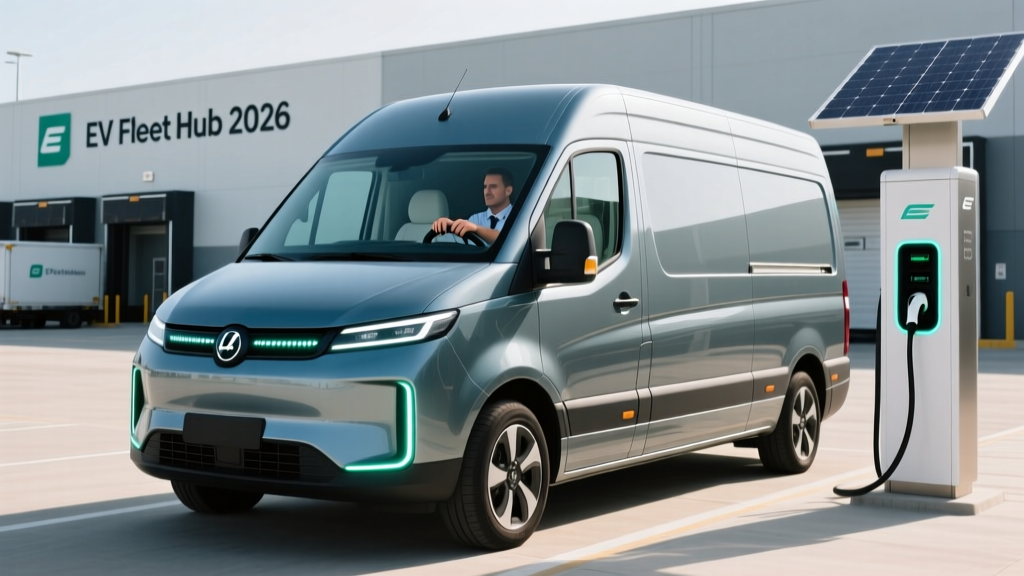
Smart charging software (from providers like Ford Pro, ChargePoint, or AmpUp) can stagger charging sessions to avoid peak-demand charges from your utility, which can otherwise erase your fuel savings. Demand charges — fees based on your highest 15-minute power draw in a billing cycle — are the hidden killer of depot EV economics.
For routes that can't be covered on a single overnight charge, DC fast charging at public stations (Electrify America, EVgo commercial) adds 60–80 miles in 20–25 minutes. But public DCFC reliability remains inconsistent — budget 10% downtime and have a backup plan.
Federal Tax Credits for Commercial EVs: §45W Explained
Commercial electric vans don't qualify for the consumer §30D credit. Instead, businesses use the §45W Commercial Clean Vehicle Credit, which has different rules:
- Credit amount: Up to $7,500 for vehicles under 14,000 lb GVWR (all vans in this guide qualify); up to $40,000 for heavier trucks.
- Calculation: The lesser of 15% of vehicle cost (30% if fully depreciation-expensed) or the incremental cost over a comparable gas vehicle.
- Sourcing requirements: Battery components and critical minerals must meet phased-in domestic/content thresholds — these tighten annually through 2029.
- No MSRP cap: Unlike §30D, there's no manufacturer's suggested retail price limit.
- No buyer income cap: Available to any business entity.
- Transferability: Can be transferred to the dealer for a point-of-sale discount (rules finalized in 2024).
- De minimis exception: Some vehicles may qualify under simplified thresholds — verify with your CPA.
Always confirm a specific VIN's eligibility before purchase. The IRS maintains a list of qualifying vehicles, and manufacturer certification letters are required at point of sale. Rules evolve — check the IRS §45W page before committing.
Common Misconceptions About Electric Commercial Vans
| Myth | Fact |
|---|---|
| "EV vans can't handle real payloads." | The E-Transit carries 3,880 lb — within 200 lb of a gas Transit 250. Payload capacity is competitive, though the battery weight does reduce it slightly. |
| "Batteries will need replacing at 100k miles." | NMC batteries in current commercial vans are warrantied for 8 years/100,000 miles at 70%+ capacity retention. Real-world fleet data (from Amazon's Rivian fleet and DHL's eSprinters) shows ~8–12% degradation at 100,000 miles — well within warranty. |
| "Charging takes too long for commercial use." | Overnight Level 2 charging (8–10 hours) fully replenishes every van in this guide. For a van that returns to depot nightly, charging time is irrelevant — it happens while parked. DCFC handles the rare mid-day top-up. |
| "Cold weather makes EV vans unusable." | Range loss is real (15–30% in deep cold), but route planning around 70% of EPA range accounts for this. Heated seats and steering wheels use far less energy than heating the entire cargo cabin. Many fleets in Minnesota and Canada operate EV vans year-round. |
| "Electricity costs as much as gas." | At the US average commercial rate of $0.13/kWh, an E-Transit costs ~$0.07/mile in energy versus ~$0.18/mile for a 14-MPG gas van. Even at peak utility rates ($0.25/kWh), EV energy cost stays below $0.14/mile. |
Decision Framework: Should Your Fleet Go Electric?
Choose an electric commercial van if:
- Your daily routes are under 150 miles (E-Transit) or 200 miles (Zevo 600/eSprinter) with return-to-base overnight parking.
- Your depot has — or can upgrade to — sufficient electrical service for Level 2 chargers (budget $3,000–$8,000 per charger installed, plus potential panel upgrade).
- Your routes are urban/suburban with frequent stops (maximizes regenerative braking savings).
- You plan to keep vehicles 5+ years (amortizes the upfront premium and captures full TCO savings).
- Your business can utilize the §45W tax credit (consult your tax advisor).
Stick with gas or wait if:
- Your routes regularly exceed 200 miles in a single shift with no mid-day charging opportunity.
- Your depot is rented with no lease provision for charger installation, or your utility quotes a $100,000+ service upgrade.
- You operate in extreme cold (consistently below 0°F) with no heated garage — range loss becomes operationally limiting.
- You need maximum towing capacity — current electric vans are not rated for heavy trailer towing (E-Transit: 0 lb tow rating on most configs).
- Your fleet turns over vehicles every 2–3 years — the EV premium won't pay back in that window.
What First-Time EV Fleet Buyers Should Know
If this is your first commercial EV purchase, these practical points separate a smooth transition from a costly lesson:
- Start with a pilot. Order 1–2 vans and run them on your most predictable routes for 90 days before scaling. Track real energy consumption (kWh/mile), not just range — this is your true operating metric.
- Talk to your utility early. Commercial EV charging often triggers a rate-class change. Ask about EV-specific commercial tariffs, demand-charge holidays for new EV adopters, and make-ready infrastructure programs. Some utilities cover up to 80% of charger installation costs.
- Install chargers before vans arrive. Lead times for commercial-grade Level 2 stations (ChargePoint CT4000, EVBox BusinessLine) run 8–16 weeks including permitting. Order chargers when you order vans.
- Train drivers on regen and preconditioning. One-pedal driving (max regen) extends range by 8–15% in stop-and-go routes. Battery preconditioning before DCFC sessions (if supported) can cut charging time by 20%.
- Budget for insurance increases. Commercial EV insurance premiums run 10–20% higher than gas equivalents due to higher repair costs and specialized parts. Get quotes before committing.
- Monitor battery State of Health (SoH). Most fleet telematics platforms (Ford Pro, Geotab) track SoH. A van dropping below 80% capacity within the warranty period may qualify for a battery replacement at no cost.
Frequently Asked Questions
Can I charge an electric commercial van at a regular public charging station?
Yes, but with caveats. Most public DCFC stations support CCS1 connectors, which all current electric commercial vans use (NACS adapters are becoming available). However, public stations are designed for passenger cars — commercial vans may block adjacent stalls, and some networks restrict commercial-vehicle use during peak hours. Depot charging remains the primary strategy.
What happens if the battery fails out of warranty?
Out-of-warranty battery replacement for a commercial van costs $15,000–$25,000 depending on pack size. However, fleet data from early-adopter operators (DHL, Amazon, FedEx) shows NMC packs retaining 85–92% capacity at 100,000 miles — suggesting most packs will outlast the vehicle's useful commercial life. Modular designs (eSprinter, BrightDrop) allow replacing individual battery modules rather than the full pack, reducing costs to $3,000–$6,000 per module.
Do electric commercial vans qualify for state incentives too?
Many states offer additional fleet electrification incentives on top of the federal §45W credit. California's HVIP program, New York's Truck Voucher Incentive Program, and Colorado's commercial EV credit can add $5,000–$30,000 per vehicle. These programs change frequently — check your state's energy office or air-quality district for current availability.
How does towing work with electric commercial vans?
Poorly, for now. The Ford E-Transit has no official tow rating for most configurations. The eSprinter and BrightDrop Zevo are similarly limited. If your operation requires towing a 5,000+ lb trailer regularly, a gas or diesel van remains the practical choice. Heavier-duty electric trucks (Ford E-Series cutaway, BrightDrop Zevo 400 with tow package) are beginning to address this gap for 2027 model years.
Is an electric commercial van worth it for a single-van small business?
It depends on your route predictability and depot charging access. A solo electrician or plumber doing 40–80 miles daily with home/garage charging can save $2,000–$3,500 annually in fuel and maintenance. The §45W credit brings the E-Transit's effective price near that of a loaded gas Transit. The risk is route unpredictability — if you regularly drive 150+ miles or can't charge overnight, a gas van or PHEV (like the upcoming Ford Transit PHEV) may be safer.
Sources: fueleconomy.gov (EPA range/efficiency data), IRS §45W Commercial Clean Vehicle Credit, manufacturer fleet specification sheets (Ford Pro, BrightDrop, Mercedes-Benz Vans USA, Rivian Commercial). All pricing reflects estimated 2026 model-year MSRP and is subject to change. Confirm tax credit eligibility with a qualified tax professional before purchase.