Quick Answer: What Are the Best Electric Cars for 8 Year Olds?
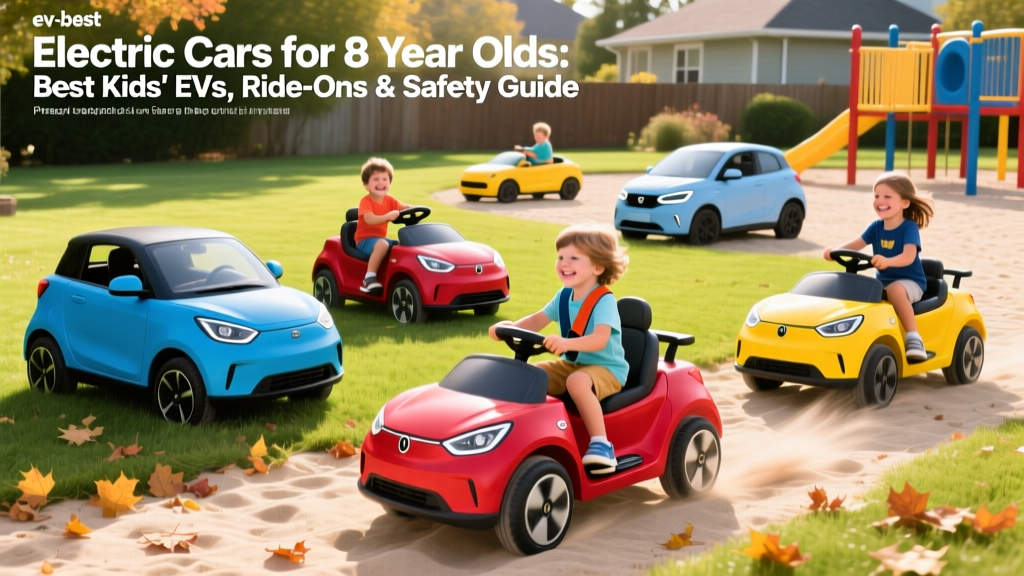
For an 8-year-old, the most appropriate electric cars are 24-volt (24V) battery-powered ride-on vehicles with top speeds between 6–10 mph, weight capacities of 130–150 lbs, and parental remote-override controls. Expect to spend $250–$600 for a quality 24V ride-on, with popular picks including licensed Jeep Wrangler, Ford F-150, and Lamborghini-style models. At this age, children have outgrown most 12V models (which top out around 4–5 mph and max out at ~85 lbs) and are ready for the added power and larger seating of a 24V platform. These are not street-legal vehicles — they are toy/recreational products designed for driveways, parks, and private property.
If you've searched for "electric cars for 8 year olds," you've likely noticed the market is flooded with options ranging from $100 plastic toys to $2,500 mini-Teslas. The differences matter — battery voltage, motor wattage, build quality, and safety features separate a ride-on your child will use for two seasons from one that breaks in three weeks. This guide breaks down the real specs, costs, and safety considerations so you can buy with confidence.
Voltage Matters: 12V vs 24V vs 36V for an 8-Year-Old
The single most important spec on any kids' electric car is battery voltage. Voltage determines the power available to the motors, which directly affects top speed, hill-climbing ability, and how well the vehicle handles grass or gravel. Here's how the three main tiers compare:
| Spec | 12V Ride-On | 24V Ride-On | 36V / Junior Kart |
|---|---|---|---|
| Typical Age Range | 3–6 years | 6–10 years | 10+ years (experienced) |
| Top Speed | 3–5 mph | 6–10 mph | 12–20+ mph |
| Motor Wattage | 30–55W (per motor) | 80–150W (per motor) | 200–500W+ |
| Weight Capacity | 55–85 lbs | 130–150 lbs | 150–220 lbs |
| Runtime per Charge | 45–90 min | 60–120 min | 45–90 min (higher drain) |
| Typical Price | $120–$300 | $250–$600 | $600–$2,500+ |
| Terrain Capability | Paved / flat only | Grass, gravel, mild hills | Varied terrain, hills |
For an average 8-year-old weighing roughly 55–75 lbs, a 24V ride-on is the clear sweet spot. It provides enough speed to feel exciting without reaching dangerous velocities, handles the grass and uneven ground kids inevitably drive on, and has the weight capacity to last through age 10 or 11. A 12V model will feel sluggish and may struggle with the child's weight, while a 36V kart is better suited for older kids with more developed reflexes and judgment.
Real Costs: Purchase Price, Batteries, and Charging
Kids' electric cars are far simpler than full-size EVs, but the ownership economics still deserve a clear breakdown. Here's what you'll actually spend:
| Cost Category | Year 1 | Year 2 | Year 3 | 3-Year Total |
|---|---|---|---|---|
| Vehicle Purchase (24V, mid-range) | $380 | — | — | $380 |
| Replacement Battery (SLA 24V 12Ah) | — | $55 | — | $55 |
| Electricity (charging ~3x/week, 9 mo/yr) | $4 | $4 | $4 | $12 |
| Spare charger | $20 | — | — | $20 |
| Tire/wear repairs | — | — | $25 | $25 |
| Total | $404 | $59 | $29 | $492 |
A few things to note about these numbers:
- Battery replacement is the main recurring cost. Most 24V ride-ons use sealed lead-acid (SLA) batteries, which typically last 1.5–2.5 years depending on usage and whether you avoid deep discharges. A replacement 24V 12Ah SLA pack runs $40–$70.
- Charging costs are negligible. A 24V 12Ah battery holds roughly 0.29 kWh of energy. Even at the US average residential rate of ~$0.17/kWh (per the U.S. Energy Information Administration), a full charge costs about $0.05. You'll spend more on the electricity powering your porch light.
- Some premium models now offer lithium-ion (Li-ion) batteries, which last 3–5 years and weigh significantly less, but add $100–$200 to the purchase price.
Safety Features Every Parent Should Verify
At 6–10 mph, a kids' electric car can scrape knees, tip on slopes, or collide with obstacles. These aren't passive toys — they need real safety engineering. Before purchasing, confirm the model includes:
- Parental remote control override (2.4 GHz): This lets you take over steering and braking from up to ~100 feet away. Non-negotiable for any child under 10.
- Adjustable speed limiter: Most 24V models offer Low (3 mph), Medium (6 mph), and High (8–10 mph) modes. Start on Low and graduate as your child demonstrates control.
- Automatic parking brake / auto-stop: When the child lifts their foot off the pedal, the vehicle should brake to a stop within 2–3 feet — not coast freely.
- Seat belt (lap or 3-point): Keeps the child in the seat during sudden stops or on mild inclines.
- Soft-start technology: Prevents jerky acceleration when the pedal is pressed — reduces tipping risk.
- ASTM F963 compliance: This is the Consumer Product Safety Commission's toy safety standard. Look for it on the packaging or product listing.
Helmets are not legally required for ride-on toys on private property, but a bicycle or multi-sport helmet is strongly recommended — especially at the higher speed settings and on uneven terrain.
Kids' Electric Car vs Gas-Powered Kids' ATV: What's the Real Difference?
Some parents consider a small gas-powered ATV or dirt bike as an alternative. Here's a direct comparison:
| Factor | 24V Electric Ride-On | 50cc Gas Kids' ATV |
|---|---|---|
| Purchase Price | $250–$600 | $800–$1,500 |
| Top Speed | 6–10 mph | 15–25 mph |
| Fuel / Energy Cost (per hour of use) | ~$0.02 | ~$0.80–$1.20 (gas + oil mix) |
| Noise Level | Near silent (~55 dB) | 85–95 dB (hearing protection needed) |
| Maintenance | Battery replacement every 2 yrs | Oil changes, air filter, spark plug, carburetor |
| Emissions | Zero tailpipe | Unburned hydrocarbons, CO |
| Parental Speed Control | Yes (built-in + remote) | Throttle limiter screw (mechanical) |
| Indoor / Garage Use | Yes | No (exhaust fumes) |
The gas ATV offers more speed and genuine off-road capability, but at twice the cost, significantly more maintenance, and a speed range (15–25 mph) that many parents find too aggressive for an 8-year-old. The electric ride-on wins on cost, noise, simplicity, and parental control for most suburban and backyard use cases.
Common Misconceptions About Kids' Electric Cars
| Myth | Fact |
|---|---|
| "They're too slow to be fun." | At 8–10 mph, a 24V ride-on covers ground faster than most kids can sprint. On a driveway or park path, it feels genuinely fast to an 8-year-old. |
| "The battery dies after 20 minutes." | Cheap 12V models may struggle, but a quality 24V 12Ah battery delivers 60–120 minutes of mixed-use runtime. Models with 14Ah or dual-battery setups push past 2 hours. |
| "They can't handle grass or hills." | 12V models stall on thick grass. 24V models with dual rear motors (150W+ each) handle short grass, packed gravel, and slopes up to ~10° without issue. |
| "They're a fire hazard." | Reputable brands use UL-listed chargers and SLA batteries with thermal cutoffs. The fire risk is extremely low when you use the included charger and don't modify the electrical system. Avoid no-name imports with no safety certifications. |
| "My kid will outgrow it in a year." | A 24V model rated to 130–150 lbs can serve a child from age 6 through 10 or 11. That's 4–5 years of use, making the per-year cost roughly $80–$120. |
What to Look For: A Buyer's Decision Framework
Choose Based on Your Child and Environment
- If your child is 8 and a first-time rider → Start with a 24V model that has a strong parental remote, soft-start, and a Low speed mode (3 mph). Licensed Jeep Wrangler and Ford F-150 24V models are proven platforms with good parts availability.
- If your yard is mostly flat pavement → A standard 24V with two 120W rear motors is sufficient. You can prioritize features like MP3/Bluetooth speakers, working LED headlights, and opening doors over raw power.
- If you have grass, gravel, or mild slopes → Insist on EVA foam rubber tires (not hard plastic), dual 150W+ motors, and a 24V system rated for at least 130 lbs. Suspension (spring or shock) makes a noticeable comfort difference on rough terrain.
- If your child is experienced or turning 9–10 soon → Consider a 24V "UTV" or side-by-side style with a roll bar, higher ground clearance, and a 2-seater configuration. These run $400–$650 and extend usability into the pre-teen years.
- If you want to avoid battery replacement hassle → Look for models offering swappable Li-ion battery packs (~$80–$120 extra). They last 3–5 years vs. 1.5–2.5 for SLA and cut weight by ~60%, improving handling.
Top Specs to Check Before You Buy
Regardless of brand, verify these numbers on the product listing:
- Battery: 24V, minimum 12Ah (amp-hours = runtime; higher is better)
- Motors: Dual rear, minimum 100W each (200W total); 150W+ preferred for grass
- Weight capacity: Minimum 130 lbs (gives 4+ years of growth room)
- Top speed: 6–10 mph with selectable modes
- Parental remote range: Minimum 50 ft; 100+ ft preferred
- Charge time: 8–12 hours (standard for SLA; plan overnight charging)
- Warranty: Minimum 1 year on vehicle, 6 months on battery
Frequently Asked Questions
Can an 8-year-old drive a real electric car like a Tesla or Chevy Bolt?
No. Full-size electric vehicles are street-legal motor vehicles that require a licensed driver. An 8-year-old cannot legally operate any full-size car, electric or gas, on public roads. This guide covers kids' battery-powered ride-on vehicles, which are classified as toys and governed by Consumer Product Safety Commission toy standards, not DMV regulations.
How long does a 24V kids' electric car battery last on a single charge?
A typical 24V 12Ah sealed lead-acid battery provides 60–120 minutes of continuous mixed-use driving (some stop-and-go, varied speeds). Runtime drops by roughly 20–30% on grass or hills due to increased motor load. Models with 14Ah or dual-battery configurations can exceed 2 hours. Always charge the battery fully before first use and avoid letting it sit fully discharged — this is the #1 cause of premature battery failure.
Are kids' electric cars safe for use near streets?
No. These vehicles have no crash protection, no turn signals visible to real traffic, and top speeds that make them unpredictable around cars. They should only be used on private property, in parks, or on closed driveways — never on or adjacent to public roads. The parental remote control is a backup, not a substitute for active adult supervision.
Should I buy a 12V or 24V model for my 8-year-old?
For an 8-year-old, 24V is almost always the better choice. A 12V model will feel underpowered, may struggle with the child's weight (most 12V units max out at 65–85 lbs), and your child will likely lose interest within a season. The $100–$150 premium for a 24V model pays for itself in longevity and enjoyment.
What's the best brand for kids' electric ride-on cars?
Established brands with reliable parts availability include Peg Perego, Power Wheels (Fisher-Price/Mattel), Best Choice Products, Costzon, and Tobbi. Prioritize brands that sell replacement batteries and chargers separately — this signals they support the product long-term. Read recent reviews on retail sites and watch YouTube teardowns to assess build quality before purchasing.
Do I need to register or insure a kids' electric ride-on car?
No. Battery-powered ride-on toys are not motor vehicles and do not require registration, insurance, or a driver's license in any US state. However, your homeowner's or renter's insurance may cover property damage or injury caused by the toy — check with your provider if you want confirmation.
The kids' electric car market has matured considerably. A well-chosen 24V ride-on gives an 8-year-old genuine driving excitement at safe speeds, costs less than $500 all-in over three years, and requires almost no maintenance beyond an eventual battery swap. Focus on the specs that matter — voltage, motor wattage, weight capacity, and parental remote quality — and skip the models that compete on price alone.