Quick Answer: What Are the Best Electric Cars for 7 Year Olds?
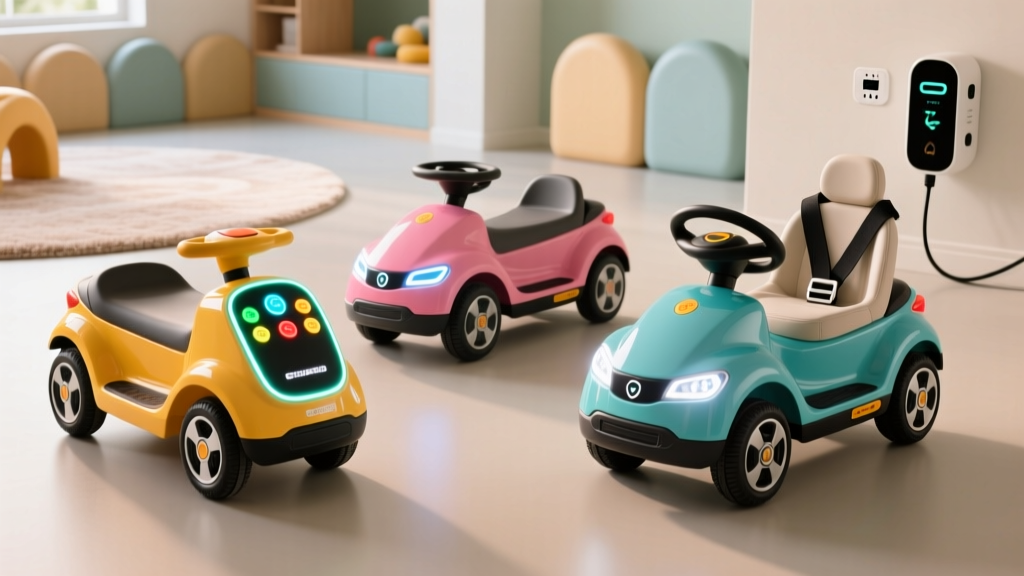
The best electric cars for 7 year olds are battery-powered ride-on toy vehicles — not real passenger EVs. At age 7, most children fit ride-on models rated for ages 6–10, which typically run on 12V or 24V lead-acid or lithium batteries, reach speeds of 3–8 mph, and offer 45–90 minutes of run time per charge. Expect to spend $150–$450 for a quality unit. If your child is tall for their age, look for models with adjustable seats and a 130 lb weight capacity. Parents should prioritize parental remote override, seat belts, and speed limiters over cosmetic features like working horns or LED lights.
Why Ride-On Electric Cars Matter for Kids (And What Parents Get Wrong)
Ride-on electric cars for 7 year olds sit in a transitional zone: children this age are often too large for the 6V toddler models but not yet ready for gas-powered youth ATVs or dirt bikes. A 24V electric ride-on bridges that gap with enough torque to handle grass and gravel while remaining safe enough for driveway and cul-de-sac use.
Many parents make two common mistakes when shopping for these toys. First, they buy a 12V model that their 7-year-old will outgrow within a year. Second, they confuse "battery voltage" with actual speed and performance — a 24V system with a weak motor and plastic gears will underperform a well-engineered 12V unit with steel gears and a higher-watt motor. The voltage alone does not determine capability.
Ride-On EV Toy Specs: What the Numbers Actually Mean
Just like full-size electric vehicles, ride-on toys run on rechargeable battery packs measured in voltage (V) and amp-hours (Ah). Here is what those numbers translate to in real-world use:
| Spec | 6V (Ages 2–4) | 12V (Ages 3–7) | 24V (Ages 6–10) | 36V+ (Ages 10+) |
|---|---|---|---|---|
| Top Speed | 2–3 mph | 3–5 mph | 5–8 mph | 10–15 mph |
| Battery Type | Sealed lead-acid (SLA) | SLA or Li-ion | SLA or Li-ion | Li-ion |
| Typical Capacity | 4–7 Ah | 7–12 Ah | 10–18 Ah | 12–20 Ah |
| Run Time | 30–45 min | 45–60 min | 60–90 min | 60–120 min |
| Charge Time | 8–12 hrs | 8–14 hrs | 6–10 hrs | 3–6 hrs |
| Weight Capacity | 44–55 lbs | 66–88 lbs | 88–143 lbs | 143–220 lbs |
| Terrain | Smooth floors only | Pavement, flat grass | Grass, gravel, mild hills | Rough terrain, hills |
| Avg Price | $80–$150 | $150–$300 | $250–$500 | $500–$1,200 |
For a typical 7-year-old weighing 45–60 lbs, a 24V model with at least 12 Ah capacity provides the best balance of speed, terrain capability, and longevity. A 12V unit may technically support the weight, but it will struggle on inclines and lose run time quickly as the motor works harder under load.
Cost Breakdown: Purchase, Battery Replacement, and Electricity
Unlike real EVs, the ongoing cost of a ride-on electric car is minimal — but battery replacement is the hidden expense most parents do not anticipate.
| Cost Item | 12V Ride-On | 24V Ride-On | Notes |
|---|---|---|---|
| Purchase Price | $150–$300 | $250–$500 | Licensed models (e.g., Mercedes, Jeep branding) cost $50–$100 more |
| Replacement Battery | $20–$35 | $40–$75 | SLA batteries last 1–3 years depending on care |
| Replacement Charger | $10–$20 | $15–$30 | Use only OEM or matched-voltage chargers |
| Electricity per Charge | ~$0.01–$0.02 | ~$0.02–$0.04 | Based on $0.16/kWh national avg; these use <0.2 kWh per charge |
| Tire/Gear Replacement | $10–$25 | $15–$40 | Plastic gears wear faster; steel-gear models cost more upfront but last longer |
| 3-Year Total Cost | $200–$400 | $350–$650 | Including 1–2 battery swaps |
The electricity cost is essentially negligible. Even charging a 24V 18Ah battery (0.432 kWh) daily for a full year costs under $25 at the U.S. average residential rate of $0.16/kWh. The real financial decision is whether to invest in a higher-voltage model upfront or buy a cheaper 12V unit knowing your child will outgrow it faster.
Safety Features Parents Must Verify Before Buying
At 7 years old, children are developing spatial awareness but lack consistent hazard judgment. The following features are non-negotiable for this age group:
- Parental remote control override: A 2.4 GHz remote lets you stop, steer, or reverse the vehicle instantly. Effective range should be at least 50 feet. Test it before first use — some budget models have significant input lag.
- 3-point seat belt or lap belt: Prevents ejection on bumps or sudden stops. Many budget models omit this entirely.
- Speed limiter or dual-speed switch: Allows parents to cap speed at 3 mph for beginners and unlock full speed later.
- Soft-start (gradual acceleration): Prevents the jerky launch that can throw a lighter child backward in the seat.
- Automatic brake on pedal release: The vehicle should stop within 2–3 feet when the child lifts off the accelerator. Some models coast for 8–10 feet — unacceptable near driveways or streets.
Never allow a 7-year-old to operate a ride-on vehicle near any road, pool, or slope exceeding 5 degrees without direct adult supervision within arm's reach. These are toys, not vehicles — they have no crash structure, no airbags, and no meaningful braking power at speed.
Real-World Ownership: What Parents Actually Deal With
Based on common ownership patterns and product testing, here is what daily life with a ride-on electric car looks like:
Battery care is the #1 ownership issue. Sealed lead-acid batteries — still the most common chemistry in ride-ons under $400 — degrade rapidly if stored in a discharged state. If you leave a 12V or 24V SLA battery uncharged for 3–4 weeks, it can sulfate and lose 30–50% of its capacity permanently. The fix is simple: charge after every use, and if storing for winter, charge monthly. Lithium-ion models are more forgiving but cost $50–$100 more.
Run time claims are almost always overstated. A box that says "90 minutes of run time" typically means 90 minutes on a flat, paved surface with a 40 lb child at low speed. A 60 lb 7-year-old driving on grass at full speed will drain that same battery in 35–50 minutes. Plan accordingly — and consider buying a second battery for swap-out use if your child will play for extended periods.
Tire material matters more than you expect. Hard plastic wheels are loud, offer poor traction on wet surfaces, and transmit every bump. EVA foam or rubber tires add $20–$40 to the price but dramatically improve ride quality and grip, especially on driveways and sidewalks.
Myths vs. Facts About Kids' Electric Cars
| Myth | Fact |
|---|---|
| "Higher voltage always means faster." | Speed depends on voltage, motor wattage, gear ratio, and weight load. A 24V model with a 60W motor can be slower than a 12V model with a 120W motor and aggressive gearing. |
| "These are safe to use on the street." | Ride-on toys have no lights visible to drivers, no horn loud enough for traffic, and stopping distances of 6–15 feet. They belong on private property only. |
| "A 7-year-old will be fine with a 12V model." | A 12V model may support the weight, but acceleration, hill-climbing, and run time will all be compromised. Most 7-year-olds are better served by a 24V unit. |
| "Battery replacement is expensive." | A replacement 12V 7Ah SLA battery costs $20–$25. Even a 24V pack runs $40–$75. These are commodity batteries available from multiple vendors. |
| "Licensed models (BMW, Mercedes) are higher quality." | Licensing adds $50–$100 for badges and body styling. Internal components are often identical to unlicensed models from the same factory. Judge by motor wattage, gear material, and battery Ah — not the logo on the hood. |
Decision Framework: Which Electric Car Fits Your 7-Year-Old?
Choose a 12V Model If:
- Your child is under 50 lbs and primarily drives on smooth pavement
- Your budget is under $200
- You want a lighter unit (30–45 lbs) that is easy to move and store
- Your child will use it for short sessions (under 30 minutes)
Choose a 24V Model If:
- Your child is 50–90 lbs and will drive on grass, gravel, or mild slopes
- You want 2–3 years of usable life before they outgrow it
- You can spend $250–$500 for better performance and run time
- You want parental remote override with adequate range and responsiveness
Choose a 36V+ Youth Vehicle If:
- Your child is 10+ years old (these are generally too fast for most 7-year-olds)
- You are prepared for helmet use, protective gear, and constant supervision
- Your budget exceeds $500 and you have secure storage space
Frequently Asked Questions
Can a 7-year-old drive a real electric car like a Tesla or Chevy Bolt?
No. Real passenger EVs require a valid driver's license, and no U.S. state issues licenses to 7-year-olds. If you are searching for "electric cars for 7 year olds" hoping to find a real vehicle, the answer is strictly ride-on toys designed for children. Full-size EVs are discussed elsewhere on this site for licensed adult drivers.
How long do ride-on EV toy batteries last before needing replacement?
Sealed lead-acid batteries typically last 1–3 years (roughly 200–400 charge cycles) depending on maintenance. Lithium-ion batteries last 3–5 years (500–1,000 cycles) but are less common in toys under $300. Never let an SLA battery sit discharged — that is the single biggest cause of premature failure.
Are 24V ride-on cars safe for a 7-year-old?
Yes, with supervision and proper safety features. A 24V ride-on tops out at 5–8 mph — comparable to a brisk adult jog. Ensure the model has a parental remote, seat belt, speed limiter, and auto-brake on pedal release. Always supervise use and keep the vehicle away from roads, pools, and steep slopes.
Should I buy a ride-on car with 2WD or 4WD?
For a 7-year-old driving on grass or gravel, 4WD (four motors, one per wheel) provides significantly better traction and hill-climbing ability. On smooth pavement, 2WD is sufficient and typically costs $30–$60 less. 4WD models also drain batteries faster — expect 20–30% less run time compared to the same model in 2WD mode.
What is the best surface for a kids' electric car?
Smooth, flat pavement (driveways, parking lots, smooth sidewalks) provides the best run time and speed. Short grass and packed gravel are manageable on 24V 4WD models. Sand, mud, wet grass, and steep hills will dramatically reduce performance and accelerate battery drain.