Quick Answer: What Is an Electric Carrier and Which Should You Buy?
An electric carrier is any battery-electric vehicle (BEV) designed to transport cargo, passengers, or equipment — from light-duty pickup trucks and commercial vans to medium-duty box trucks. For most buyers in 2026, the best electric carrier depends on your payload, range needs, and charging access:
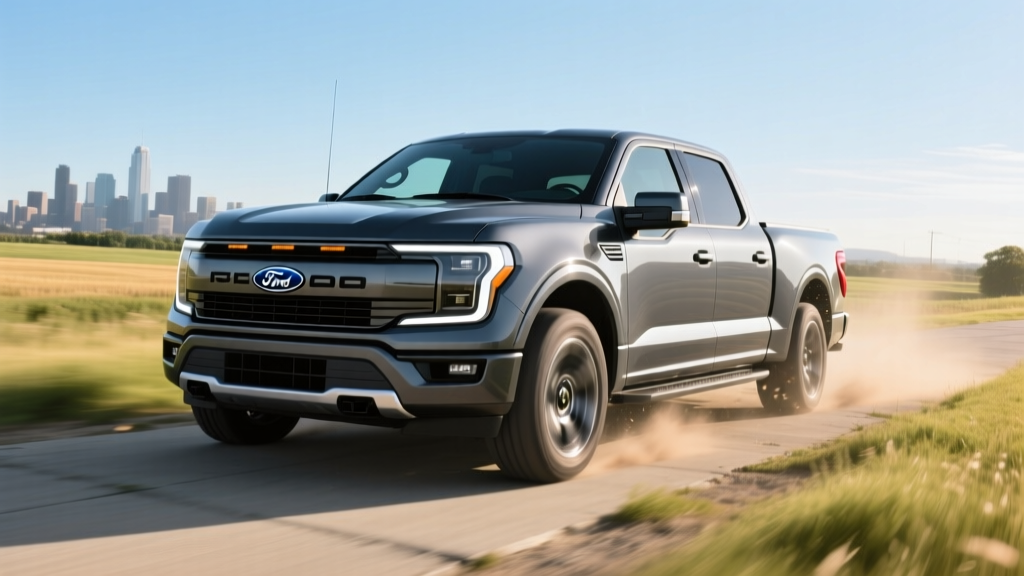
- Light-duty truck (personal/small business): Ford F-150 Lightning — 320 mi EPA range, 7,700 lb towing, ~$55,000 base
- Adventure/premium truck: Rivian R1T — 352 mi EPA (Max Pack), 11,000 lb towing, ~$79,900
- Heavy towing/long bed: Chevy Silverado EV — 440 mi EPA (4WT), 10,000 lb towing, ~$57,900
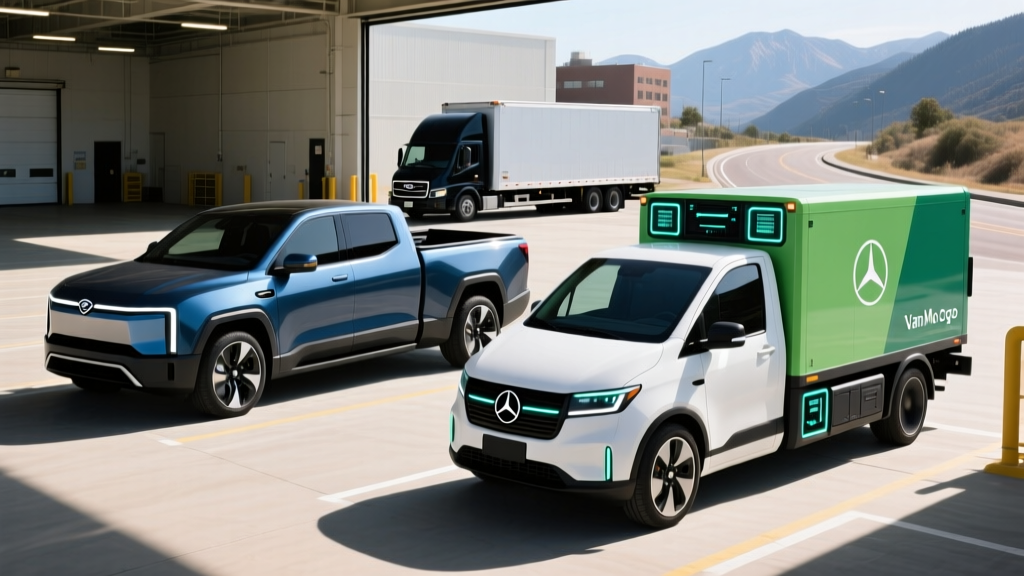
- Commercial van (fleet/delivery): Ford E-Transit — 126 mi EPA range, 3,880 lb payload, ~$47,000
If you can charge at home and drive under 200 miles daily, an electric carrier will cost significantly less per mile to operate than a gas equivalent. If you regularly tow over 7,000 lbs on highways or operate in extreme cold without depot charging, a diesel or hybrid may still be the pragmatic choice.
The Electric Carrier Landscape in 2026
The electric carrier market has matured considerably. What began with the Ford F-150 Lightning's 2022 launch has expanded into a competitive segment with real choices across truck and van categories. Battery chemistries have diversified — Ford and GM now offer both NMC (nickel manganese cobalt) for energy density and LFP (lithium iron phosphate) for cost and longevity — and the NACS connector has largely standardized DC fast charging access across networks.
For buyers evaluating an electric carrier, the decision hinges on five concrete factors: usable battery capacity (kWh), real-world loaded range, DC fast-charge speed (kW), payload/towing ratings, and total operating cost versus a gas or diesel equivalent.
Side-by-Side: Top Electric Carrier Specs
| Spec | Ford F-150 Lightning (Ext Range) | Rivian R1T (Max Pack) | Chevy Silverado EV 4WT | Ford E-Transit (High Roof) |
|---|---|---|---|---|
| EPA Range | 320 mi | 352 mi | 440 mi | 126 mi |
| Battery (usable) | 131 kWh (NMC) | 149 kWh (NMC) | 200+ kWh (NMC) | 68 kWh (NMC) |
| Peak DC Charge Rate | 150 kW | 220 kW | 350 kW | 115 kW |
| 10–80% Charge Time | ~41 min | ~30 min | ~25 min | ~45 min |
| Max Towing | 7,700 lb | 11,000 lb | 10,000 lb | N/A (van) |
| Max Payload | 1,800 lb | 1,760 lb | 1,800 lb | 3,880 lb |
| Horsepower | 580 hp | 1,025 hp (Quad) | 510 hp | 266 hp |
| 0–60 mph | ~4.0 sec | ~3.0 sec (Quad) | ~4.5 sec | ~8.0 sec |
| Base MSRP | ~$54,995 | ~$79,900 | ~$57,900 | ~$47,000 |
| Battery Warranty | 8 yr / 100,000 mi | 8 yr / 175,000 mi | 8 yr / 100,000 mi | 8 yr / 100,000 mi |
Sources: fueleconomy.gov, manufacturer press sites. MSRP reflects base/entry trims for the 2026 model year; options and destination charges add $1,500–$8,000+.
Real-World Range: What the EPA Sticker Doesn't Tell You
EPA vs. Reality for Electric Carriers
EPA range figures assume moderate temperatures, mixed driving, and no payload. In real-world cargo and towing use, expect significant reductions:
- Loaded bed (near max payload): subtract 10–15% from EPA range
- Towing 5,000+ lb trailer: subtract 30–50% from EPA range
- Cold weather (below 30°F): subtract 15–30% (battery chemistry-dependent)
- Sustained highway speeds (75+ mph): subtract 10–20% vs. combined EPA cycle
For the F-150 Lightning Ext Range (320 mi EPA), towing a 6,000 lb camper at highway speed in 40°F weather could drop effective range to 160–190 miles before needing a charge. The Silverado EV 4WT's 440 mi EPA gives more buffer, but the physics of pushing a heavy, un-aerodynamic load through air remain the same.
This is the single most important calculation for any electric carrier buyer. Map your longest typical route, add your heaviest common load, factor in your coldest operating month, and see if the remaining range works with available charging infrastructure along that route.
Electric Carrier vs. Gas Truck: The Cost Equation
| Cost Factor (5-Year / 75,000 mi) | F-150 Lightning (Ext Range) | F-150 Gas (3.5L EcoBoost, 4WD) | Savings (EV) |
|---|---|---|---|
| Purchase Price (after incentives) | ~$47,500* | ~$52,000 | +$4,500 |
| Fuel / Electricity | ~$4,200** | ~$11,250*** | +$7,050 |
| Maintenance | ~$1,800 | ~$4,500 | +$2,700 |
| Insurance (avg) | ~$10,500 | ~$8,250 | -$2,250 |
| Estimated Depreciation | ~$22,000 | ~$18,000 | -$4,000 |
| 5-Year Total Cost | ~$86,000 | ~$94,000 | +$8,000 |
*Assumes eligibility for a partial federal §30D credit and applicable state incentives. Actual credit depends on battery sourcing, buyer income, and MSRP caps — verify at IRS.gov.
**Based on $0.14/kWh home charging average; public DC fast charging at $0.40–0.60/kWh raises this figure significantly if you can't charge at home.
***Based on $3.50/gal and 19 MPG combined for the gas F-150 4WD.
The electric carrier wins on fuel and maintenance — no oil changes, no transmission fluid, regenerative braking extends pad life to 100,000+ miles. The losses come from higher insurance premiums (EV repair costs remain elevated) and steeper depreciation, though the gap has narrowed as the used-EV market stabilizes.
Charging Infrastructure: The Make-or-Break Factor
Every electric carrier decision starts with one question: Where will you charge?
Home / Depot Charging (Level 2)
A Level 2 home charger (240V, 40–80 amp circuit) adds 20–40 miles of range per hour and fully replenishes any truck battery overnight. Installation typically costs $1,200–$3,500 depending on panel capacity and run length. For commercial fleets, depot charging at 19.2 kW per vehicle is the standard operating model.
If your electrical panel is maxed out (common in older homes), a panel upgrade adds $2,000–$4,000. A licensed electrician should evaluate this before purchase.
Public DC Fast Charging
| Level | Power (kW) | Miles Added per Hour | Typical Use Case |
|---|---|---|---|
| Level 1 (120V) | 1.4 kW | ~3–5 mi/hr | Overnight trickle; inadequate for trucks |
| Level 2 (240V) | 7.7–19.2 kW | 20–55 mi/hr | Home, workplace, depot overnight |
| DC Fast (50–150 kW) | 50–150 kW | 150–400 mi/hr | Road-trip stops, 20–40 min sessions |
| DC Ultra-Fast (200–350 kW) | 200–350 kW | 500–900 mi/hr | 10–80% in 15–25 min (compatible vehicles) |
Remember: kW is power (how fast energy flows), kWh is energy (how much the battery holds). A 131 kWh battery charging at a sustained 150 kW would theoretically fill in ~52 minutes, but charge curves taper significantly above 80% State of Charge to protect battery health. That's why manufacturers quote 10–80% times rather than full-charge times.
For commercial electric carrier use (e.g., E-Transit delivery routes), depot Level 2 charging is the economic model. Public DC fast charging at $0.40–0.60/kWh erases much of the fuel-cost advantage over diesel for high-mileage fleet operations.
Tax Credits and Incentives for Electric Carriers
The federal §30D clean vehicle credit offers up to $7,500 for qualifying new EVs, but eligibility is far from universal. Key requirements for 2026:
- MSRP caps: Trucks and vans must be under $80,000; sedans under $55,000
- Buyer income limits: AGI under $150,000 (single) / $300,000 (joint)
- Battery sourcing: Critical minerals and battery components must meet phased-in domestic/free-trade-partner thresholds that tighten annually
- Point-of-sale transfer: You can apply the credit at purchase rather than waiting for tax filing
The commercial clean vehicle credit (§45W) applies separately to business-purchased electric carriers and has different rules — consult a tax professional. Some states (California, Colorado, Massachusetts, New York) offer additional rebates of $2,000–$7,500 that stack with federal credits.
Always verify current eligibility on IRS.gov before committing to a purchase. Battery sourcing requirements have disqualified several previously eligible models.
Common Misconceptions About Electric Carriers
| Myth | Fact |
|---|---|
| "Electric trucks can't tow anything useful." | The Rivian R1T tows 11,000 lb; Silverado EV tows 10,000 lb. The limitation is range while towing, not capability. Expect range to drop 30–50% under heavy tow loads. |
| "The battery will need replacing in 5 years." | Modern NMC and LFP packs are warrantied for 8 years / 100,000+ miles at 70%+ capacity retention. Real-world degradation data from early Lightnings shows ~5–8% loss over 60,000 miles. Full replacement costs $15,000–$25,000 but is rarely needed within typical ownership. |
| "Electric carriers are always cheaper to own." | Not if you lack home charging (public DC rates can exceed gasoline cost-per-mile), drive very low annual miles (can't recoup the upfront premium), or tow heavy loads daily (range limitation forces inefficient charging stops). |
| "You'll be stranded without charging stations." | The Tesla Supercharger network (now open to NACS-equipped Fords and GMs) has 25,000+ stalls in North America. Electrify America, EVgo, and others add coverage. But rural routes in the Mountain West and parts of the South remain charging deserts — plan accordingly. |
| "Cold weather kills electric trucks entirely." | Cold reduces range by 15–30% (worse with cabin heating at extreme temps). Preconditioning the battery while plugged in mitigates charging-speed loss. Many owners in Minnesota and Maine operate Lightnings year-round successfully — but they plan routes with the reduction in mind. |
Decision Framework: Is an Electric Carrier Right for You?
Choose an electric carrier if:
- You can install a Level 2 charger at home or your depot
- Your typical daily route is under 200 miles (loaded) or under 280 miles (unloaded)
- You value instant torque for towing/hauling and low per-mile operating cost
- You qualify for federal/state incentives that close the upfront price gap
- You want V2L (vehicle-to-load) capability — the F-150 Lightning's Pro Power Onboard can run 9.6 kW of tools or home backup power
Stick with gas, diesel, or a hybrid for now if:
- You regularly tow 7,000+ lbs over 200+ mile routes without reliable fast-charging access
- You live in an apartment or park on-street with no charging option
- Your routes pass through known charging deserts (rural I-10 in West Texas, stretches of I-80 in Wyoming)
- You operate in extreme cold (-20°F or below) where range loss exceeds 30% and charging infrastructure is sparse
- Your annual mileage is under 6,000 miles — the fuel savings won't offset the purchase premium within a reasonable timeframe
Consider a PHEV (plug-in hybrid) truck as a bridge if:
- You want electric-only commuting (the Ford Maverick Hybrid achieves 42 MPG combined and may gain PHEV variants) but need unlimited range for long towing days
What First-Time Electric Carrier Buyers Must Know
If this is your first EV purchase, here are the operational realities no brochure will emphasize:
- Charging speed isn't constant. A "350 kW peak" charge rate only applies at low State of Charge. Above 80%, charging slows dramatically to protect the battery. Plan road-trip stops around the 10–80% window.
- Regenerative braking changes how you drive. Most electric carriers offer one-pedal driving modes — lifting off the accelerator slows the truck substantially, recovering energy. With a loaded bed, this effect is pronounced and takes adjustment.
- Tire costs are higher. Electric trucks are 1,000–2,000 lbs heavier than gas equivalents due to the battery pack. Expect tire replacement every 25,000–35,000 miles rather than 50,000+. Budget $1,200–$2,000 for a set of EV-rated tires.
- Preconditioning matters. Using the vehicle's app to warm the battery while still plugged in before a DC fast charge session can cut charge time by 20–30% in cold weather.
- Insurance quotes vary wildly. Get quotes before purchasing. Some insurers charge 30–50% more for electric carriers due to repair complexity; others offer EV discounts. Shop at least three carriers.
Frequently Asked Questions
Can an electric carrier handle a daily work route?
Yes, if the route is under the vehicle's loaded range and you can charge overnight at home or a depot. The Ford E-Transit's 126-mile EPA range covers most urban delivery routes, and the F-150 Lightning's 320-mile range handles most contractor daily drives with margin. The key constraint is charging access — without overnight Level 2, daily operational cost rises sharply.
How long do electric truck batteries last?
Current NMC batteries in the Lightning, R1T, and Silverado EV are warrantied for 8 years / 100,000 miles at 70% capacity retention. Industry data from early adopters suggests 85–92% capacity retention at 100,000 miles with normal use. LFP chemistry (available in some commercial configurations) offers longer cycle life at the cost of lower energy density and reduced cold-weather performance.
What happens if I need to tow long-distance?
Plan charging stops every 120–170 miles when towing near max capacity. At a 200+ kW DC fast charger, the Silverado EV can add ~150 miles of towing range in 20 minutes. It's slower and more expensive than refueling a diesel, but feasible on well-served corridors (I-5, I-95, I-70 East). It's impractical on remote routes without advance planning.
Do electric carriers qualify for the $7,500 tax credit?
Some do, depending on the specific model, your income, and current battery-sourcing rules. Trucks and vans must have an MSRP under $80,000 to qualify under §30D. The buyer's adjusted gross income must be under $150,000 (single) or $300,000 (joint). Battery critical-mineral and component sourcing requirements tighten annually and have removed some models from eligibility. Verify at IRS.gov and consult a tax professional.
Is V2L (vehicle-to-load) actually useful?
For contractors and outdoor workers, yes. The F-150 Lightning's Pro Power Onboard delivers up to 9.6 kW through bed and cab outlets — enough to run a job-site compressor, circular saw, and lights simultaneously, or power essential home circuits during an outage. This feature alone has converted many fleet buyers who previously ran idle-heavy gas trucks for auxiliary power.