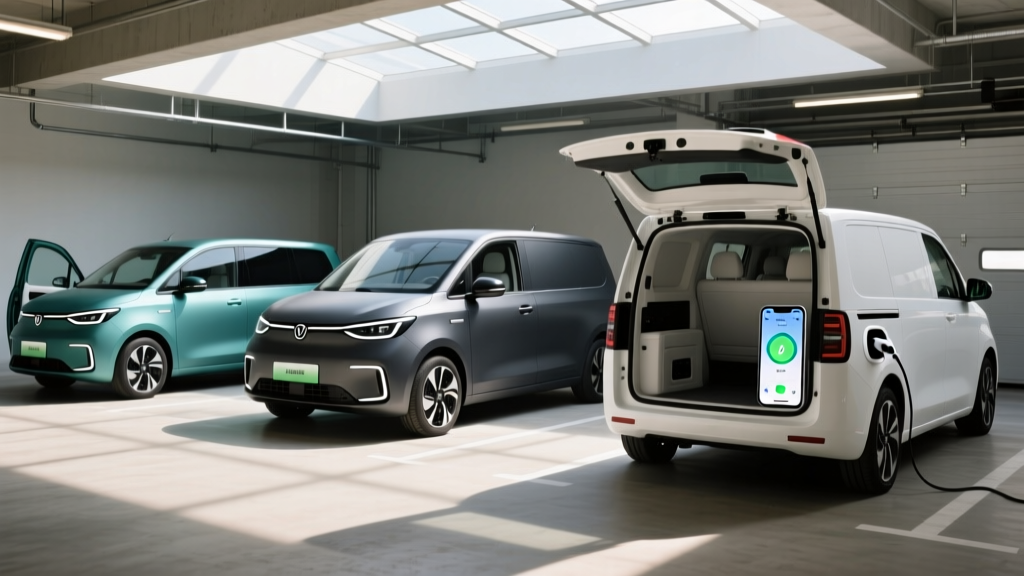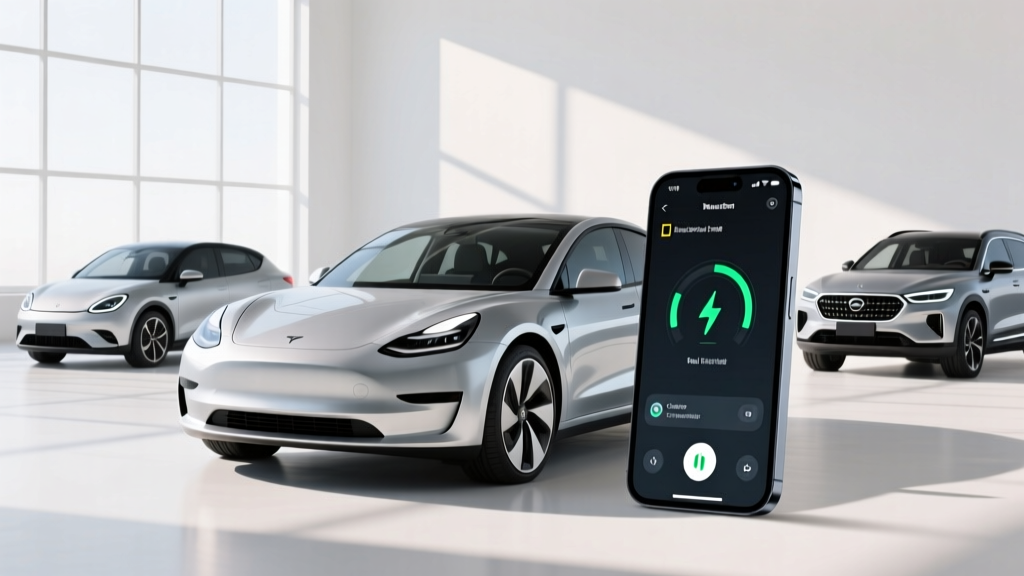
What Does "Remote Control" Actually Mean for an Electric Car?
Quick answer: When shoppers search for an "electric car with remote control," they're almost always looking for smartphone-based vehicle control — not a literal remote-control toy car. Today's EVs let you remotely start climate control, lock/unlock doors, check battery state of charge (SoC), locate your vehicle, and in some cases summon the car forward or backward in a parking space. These features work through manufacturer apps over cellular connections (and Bluetooth at close range). The most capable systems in 2026 include Tesla's app with Smart Summon, Hyundai/Genesis's Digital Key 2, BMW's Remote Maneuver Assistant, and Rivian's Gear Guard + remote features. Most cost $0-$15/month after a free trial period, though some advanced features require paid subscriptions.
Remote vehicle control is one of the most tangible daily benefits of EV ownership. Unlike a gas car that you must physically enter to start, an EV's high-voltage traction battery and thermal management system can be activated remotely to precondition the cabin and battery — which directly improves real-world range in cold weather. Let's break down what's available, what it costs, and whether these features justify an EV purchase over a hybrid or gas vehicle.
Remote Control Features Compared Across Top EV Brands
Not all EV apps are created equal. Here's how the major manufacturers stack up in 2026 on the remote features buyers actually care about:
| Feature | Tesla (Model 3/Y) | Hyundai (Ioniq 5/6) | BMW (i4/iX) | Rivian (R1T/R1S) | Ford (Mach-E/Lightning) |
|---|---|---|---|---|---|
| Remote climate control | ✅ Yes | ✅ Yes | ✅ Yes | ✅ Yes | ✅ Yes |
| Remote lock/unlock | ✅ Yes | ✅ Yes | ✅ Yes | ✅ Yes | ✅ Yes |
| Check SoC & range | ✅ Yes | ✅ Yes | ✅ Yes | ✅ Yes | ✅ Yes |
| Phone-as-key (BLE) | ✅ Yes | ✅ Digital Key 2 | ✅ Digital Key Plus | ✅ Yes | ✅ Phone As A Key |
| Remote parking/summon | ✅ Smart Summon (FSD req.) | ✅ Remote Smart Parking Assist | ✅ Remote Maneuver Assistant | ❌ No | ❌ No |
| Scheduled departure/charging | ✅ Yes | ✅ Yes | ✅ Yes | ✅ Yes | ✅ Yes |
| Vehicle location/tracking | ✅ Yes | ✅ Yes | ✅ Yes | ✅ Gear Guard | ✅ Yes |
| Monthly app cost (after trial) | $0 basic / $9.99 Premium | $0 (3 yrs free Bluelink) | $0 (3 yrs) / then ~$12.50/mo | $0 included | $0 (FordPass) |
| UWB support (precise key) | ✅ (2024+ HW4) | ✅ (Digital Key 2) | ✅ (Digital Key Plus) | ❌ BLE only | ✅ (2025+ PAAK) |
Key takeaway: If remote parking assistance (moving the car in and out of a tight space from outside the vehicle) is your priority, Tesla, Hyundai, and BMW lead. If you just want reliable remote climate, locking, and SoC monitoring, every major EV brand in 2026 covers the basics — and most do it at no extra monthly cost for the first few years.
Why Remote Preconditioning Matters More on an EV Than a Gas Car
Remote climate control on a gas car is a convenience. On an EV, it's a range optimization tool. Here's the physics:
- Lithium-ion batteries lose efficiency in cold temperatures. At 20°F, an EV can lose 20-30% of its EPA-rated range due to increased internal resistance and cabin heating demands, according to fueleconomy.gov testing data.
- Preconditioning while plugged in uses grid power, not battery power. When you remotely activate climate control via app while the car is connected to your Level 2 home charger, the cabin and battery warm up using electricity from the grid. You leave home with a warm car, a warm battery (which charges faster and delivers more power), and 100% SoC — instead of burning 5-10% of your battery just heating the cabin in the first 15 minutes of driving.
- Heat pumps amplify this benefit. EVs equipped with heat pumps (standard on the 2026 Tesla Model Y, Hyundai Ioniq 5, and BMW i4) use 2-3x less energy for cabin heating than resistive heaters. Remote-preconditioning a heat-pump-equipped EV in winter is one of the single most effective ways to preserve real-world range.
For comparison, a gas car wastes most of its engine heat anyway and has no equivalent battery preconditioning need. The remote-start function on an ICE vehicle is purely about cabin comfort and wastes fuel while idling.
Real Costs: EV Remote Features vs. Gas Car Ownership
Let's put concrete numbers behind the total cost picture when you factor in the remote features, charging, and ownership economics.
| Cost Category | 2026 Tesla Model Y LR ($46,990 MSRP) | 2026 Toyota RAV4 Gas ($32,675 MSRP) | 2026 Toyota RAV4 Hybrid ($35,425 MSRP) |
|---|---|---|---|
| Purchase price (before incentives) | $46,990 | $32,675 | $35,425 |
| Federal §30D tax credit (if eligible) | Up to $7,500 (see IRS rules) | $0 | $0 (HEV ineligible) |
| Effective price after credit | ~$39,490 | $32,675 | $35,425 |
| Fuel/energy cost per mile (nat'l avg.) | ~$0.045/mi (home L2 at $0.16/kWh) | ~$0.14/mi (28 MPG, $3.50/gal) | ~$0.09/mi (39 MPG, $3.50/gal) |
| Annual fuel/energy (12,000 mi/yr) | $540 | $1,680 | $1,080 |
| Annual maintenance | ~$300 (no oil, fewer brake jobs) | ~$650 | ~$600 |
| App/remote features cost (annual) | $0-$120/yr (Tesla Premium optional) | $0-$200/yr (Remote Connect trial then paid) | $0-$200/yr (same) |
| Insurance (annual avg.) | ~$2,200 | ~$1,500 | ~$1,550 |
| 5-year total cost (fuel + maint. + insur.) | ~$15,200 | ~$19,150 | ~$16,150 |
The EV's lower per-mile energy cost and reduced maintenance typically recover the higher purchase price within 4-6 years, depending on your local electricity rates, annual mileage, and tax credit eligibility. The remote control features themselves add negligible cost — most are included free for 3+ years, and ongoing subscriptions are $0-$15/month. The real financial consideration is whether you can charge at home, which determines whether you get the $0.045/mile rate or must rely on public DC fast charging at $0.12-$0.35/mile.
Remote Parking and Summon: What It Can and Can't Do
This is where expectations often exceed reality. Let's separate marketing from function:
| Claim | Reality |
|---|---|
| "The car can park itself remotely." | Partially true. Hyundai's Remote Smart Parking Assist and BMW's Remote Maneuver Assistant let you move the car forward/backward and into/out of a parking space using the key fob or phone app while standing outside. The car moves at very low speed (<2 mph), and you must hold the button continuously. It's useful for tight garages — not a substitute for a parking attendant. |
| "Tesla's Summon drives the car to me in a parking lot." | True, with caveats. Smart Summon (requires FSD subscription, currently $99/month or $8,000 lifetime) navigates a parking lot at low speed to come to you. However, it requires SAE Level 2 supervision — you must maintain visual contact and be ready to stop the vehicle. Performance varies with lot complexity, weather, and sensor conditions. |
| "Remote control means the car is self-driving." | False. All current remote parking/summon features are SAE Level 2 automation. The driver is legally responsible at all times. No consumer vehicle sold in 2026 offers Level 4 autonomous operation outside of geofenced robotaxi services like Waymo. |
| "I can start my EV remotely from anywhere." | True for climate/locks. As long as the vehicle has cellular connectivity and your phone has internet, you can activate climate control, check SoC, or lock/unlock from virtually anywhere. Remote driving/parking features require close proximity (Bluetooth range, typically 10-30 feet). |
Real-World Ownership Considerations Before You Buy
Remote control features are compelling, but they shouldn't drive your EV purchase in isolation. Here's what actually determines EV ownership satisfaction:
Home Charging Access
This is the single biggest factor. If you can install a Level 2 (240V) home charger — typically a $500-$2,000 equipment and electrician cost for a 48A hardwired unit — you'll wake up every morning with a full "tank" and use the remote preconditioning feature to maximum effect. If you live in an apartment without charging access, remote SoC monitoring becomes more of a stress reminder than a convenience. Check your electrical panel capacity first: a 200-amp panel usually supports a 48A charger; older 100-amp panels may need a $1,500-$3,000 upgrade.
Climate and Driving Patterns
Remote preconditioning delivers the most value in extreme climates. If you live in Minnesota or Maine, warming the battery and cabin from your phone every winter morning recovers meaningful range. In Southern California, the benefit is mostly cabin comfort. Similarly, if your daily commute is under 40 miles round-trip, even a modest-range EV (EPA 250+ miles) will cover your needs with room for cold-weather and highway degradation.
Connectivity Requirements
All remote features depend on the vehicle's embedded cellular modem. In areas with poor LTE/5G coverage (rural zones, underground garages), app commands can be delayed or fail entirely. Tesla, Hyundai, and BMW all use embedded SIMs with major carriers, but dead zones are universal. UWB-based phone-as-key features (precise unlock within a few feet) work without cellular but require Bluetooth and UWB hardware in both your phone and car.
Decision Framework: Should Remote Features Drive Your EV Choice?
Choose an EV with advanced remote parking (Tesla, Hyundai, BMW) if:
- You park in a tight garage or narrow space regularly and want to exit the car before parking it
- You value phone-as-key convenience and don't want to carry a fob
- You have home Level 2 charging and want to maximize cold-weather range via remote preconditioning
- You're comfortable with app-dependent vehicle interaction (no physical key backup for some models)
Choose a simpler-remote EV (Rivian, Ford, basic trims) if:
- Your priority is remote climate, locking, and SoC monitoring — the basics every brand offers
- You don't want to pay a monthly subscription for premium remote features
- You prefer a traditional key fob as your primary access method
- You're buying primarily for fuel savings and don't need parking assistance
Stick with a hybrid (PHEV or HEV) if:
- You lack reliable home charging access and can't install a Level 2 unit
- Your driving includes frequent 400+ mile trips through areas with sparse DC fast charging
- Your budget is under $30,000 and you need maximum flexibility (consider the Toyota RAV4 Hybrid at 39 MPG combined, or the Toyota RAV4 Prime PHEV with 42 miles of electric-only range)
Common Misconceptions About EV Remote Control
| Myth | Fact |
|---|---|
| "Remote features drain the 12V battery." | Modern EVs use the high-voltage traction battery to maintain the 12V system. As long as the main battery has charge (even 10-20%), the 12V stays topped up. A dead 12V in an EV is almost always caused by a fault, not normal remote usage. |
| "I need Wi-Fi in my car for remote features." | No. Remote commands use the car's embedded cellular modem (LTE/5G). Home Wi-Fi is only needed for over-the-air software updates, which speed up downloads but aren't required for remote control. |
| "Remote start on an EV wastes electricity." | Minimal impact. Running climate control remotely for 10-15 minutes while plugged in uses roughly 0.5-1.5 kWh — about $0.08-$0.24 at residential rates. When preconditioning while plugged in, it costs nothing from the battery and actually preserves driving range. |
| "All EV apps are unreliable." | Early-generation apps (2018-2021) had connectivity issues. In 2026, Tesla, Hyundai (Bluelink), and BMW (ConnectedDrive) report 95%+ command success rates. Ford's FordPass had a well-publicized outage in 2023 but has since rebuilt its backend. Reliability varies, but the category has matured significantly. |
| "The federal tax credit covers the app subscription." | The §30D Clean Vehicle Credit applies to the vehicle purchase price, not ongoing services. In 2026, eligibility requires meeting battery critical-mineral and component sourcing rules, MSRP caps ($55,000 for sedans, $80,000 for SUVs/trucks), and buyer income limits ($150K single / $300K joint). The credit can be transferred to the dealer at point of sale for an instant price reduction. Always verify current eligibility on the IRS site or with a tax professional. |
Frequently Asked Questions
Can I control my EV remotely if I don't have a smartphone?
Most manufacturers also offer key fob-based remote features (lock/unlock, panic alarm, sometimes remote start) that work within ~100 feet via RF. However, the full suite of remote features — SoC monitoring, remote climate from any distance, vehicle location — requires the smartphone app. If you don't use a smartphone, you'll miss most of the remote functionality.
Are EV remote features a security risk? Can someone hack into my car?
Manufacturer apps use encrypted TLS connections and multi-factor authentication (your account password + phone-based verification). While no connected system is 100% immune, there have been no widespread remote-hijacking incidents in production EVs. The greater security risk is account compromise from weak passwords — use a unique, strong password and enable two-factor authentication on your vehicle app account.
Does using remote features affect my EV's battery warranty?
No. Remote preconditioning, climate control, and SoC monitoring are intended uses covered under normal operation. Battery warranties (typically 8 years / 100,000 miles for capacity retention above 70%) are not voided by using the manufacturer's own app features. In fact, preconditioning the battery before fast charging can reduce degradation by bringing the cells to optimal temperature before accepting high charge rates.
Which EV has the best remote control app in 2026?
For sheer feature depth, Tesla's app remains the most comprehensive — offering remote climate, Summon, Sentry Mode live camera access, software update scheduling, and service requests all in one interface. For no-subscription cost with strong remote parking, Hyundai's Bluelink (free for 3 years) with Remote Smart Parking Assist on the Ioniq 5 is the best value. For premium integration with UWB phone-as-key, BMW's Digital Key Plus on the i4 and iX is the most seamless. Your best choice depends on which specific remote features matter most and whether you're willing to pay a monthly subscription.
Do I need to pay a monthly fee for remote EV features?
Most brands include basic remote features (climate, lock/unlock, SoC check) free for 3-5 years with new vehicle purchase. After that, costs range from $0 (Rivian currently includes all features) to ~$12.50/month (BMW ConnectedDrive after trial). Tesla's basic app is free; Tesla Premium Connectivity (live traffic, satellite maps, Sentry Mode live view) is $9.99/month. Advanced features like Tesla Smart Summon require the FSD package ($99/month subscription or $8,000 one-time), which is the most expensive remote feature in the market.