The short answer: If you're searching for an electric car mini or compact EV in 2026, your best US-market options cluster around $28,000–$40,000 before incentives, deliver 200–280 miles of EPA range, and charge from 10–80% in roughly 20–30 minutes on DC fast chargers. The segment's sweet spot for city drivers who need easy parking, low running costs, and enough range for occasional highway trips is a compact crossover or subcompact hatchback with a 50–65 kWh battery. Just know the real limitations: cold-weather range loss of 20–35%, sparse fast-charging in rural corridors, and insurance premiums that run 15–25% higher than equivalent gas cars.
What "Electric Car Mini" Actually Means in the 2026 US Market
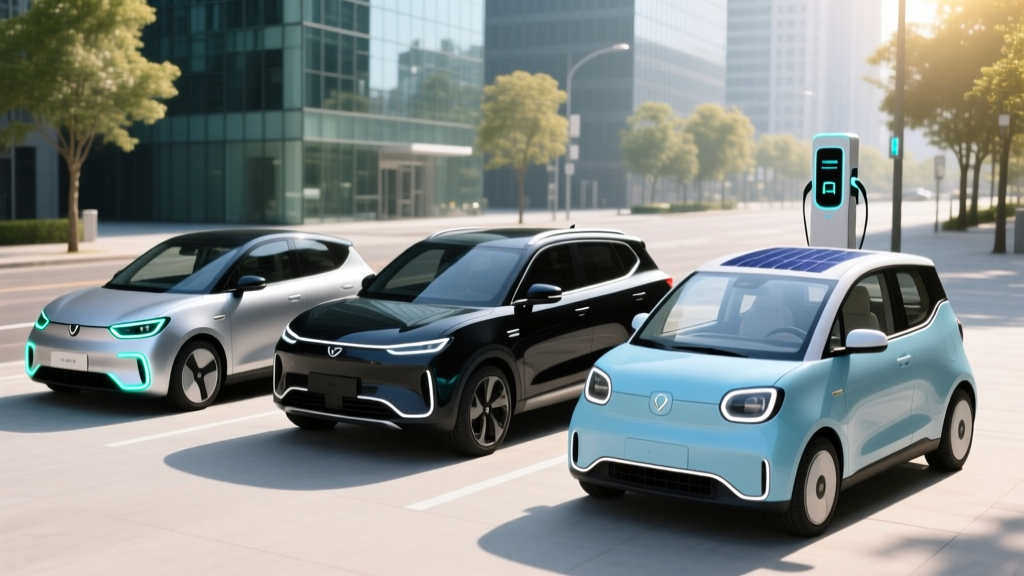
The term "electric car mini" doesn't map to a single vehicle class in the United States the way it might in Europe or Japan. American buyers searching for the smallest practical EVs are typically looking at three overlapping categories: subcompact hatchbacks (think Chevrolet Bolt EV/EUV successors, the Mini Cooper Electric), compact crossovers (Hyundai Kona Electric, Volvo EX30), and the occasional micro-mobility vehicle that technically qualifies as a neighborhood electric vehicle (NEV) rather than a highway-capable car.
For this guide, we're focusing on highway-capable, crash-tested compact and subcompact battery-electric vehicles — cars you can actually drive on the interstate, insure with a standard policy, and charge on public DC fast-charging networks. That rules out NEVs like the Polaris GEM or low-speed urban pods, which max out at 25 mph and don't meet federal crash standards.
Here's what the compact EV segment looks like in the 2026 model year:
| Model | EPA Range | Battery (kWh usable) | Chemistry | Peak DC Charge (kW) | 10–80% Time | 0–60 mph | Base MSRP |
|---|---|---|---|---|---|---|---|
| Hyundai Kona Electric (SEL) | 261 mi | 63 kWh | NMC | 100 kW | ~43 min | 7.2 sec | $34,975 |
| Mini Cooper Electric (SE) | 183 mi | 40.7 kWh | NMC | 95 kW | ~30 min | 6.7 sec | $33,950 |
| Volvo EX30 (Core) | 265 mi | 64 kWh | NMC | 153 kW | ~27 min | 5.1 sec | $37,950 |
| Chevrolet Bolt EV (2LT, 2026 gen) | 255 mi (est.) | 60 kWh (est.) | NMC | 150 kW (est.) | ~25 min (est.) | ~7.0 sec | ~$28,000 (est.) |
| Nissan LEAF (SV Plus) | 212 mi | 57 kWh | NMC | 100 kW | ~45 min | 7.4 sec | $31,570 |
Sources: fueleconomy.gov, manufacturer press sites. Chevrolet Bolt EV 2026 figures are preliminary estimates based on GM's announcement of the next-generation Bolt on the Ultium platform. Always verify current-year specs before purchasing.
Real-world range reality check: Those EPA numbers assume moderate temperatures, mixed driving, and speeds under 65 mph. In practice, expect to see 15–25% less range on sustained highway driving above 70 mph, and 20–35% loss in freezing temperatures (below 30°F) without preconditioning. A Kona Electric rated at 261 miles EPA might deliver 200–220 miles on a 75 mph winter road trip. Plan your charging stops accordingly.
Compact EV vs. Gas Car vs. Hybrid: The Numbers
Most buyers cross-shopping a compact EV are comparing it against a gasoline subcompact (Honda HR-V, Hyundai Venue) or a hybrid (Toyota Corolla Cross Hybrid). Here's how the economics stack up over five years, assuming 12,000 miles per year and national-average energy prices:
| Cost Factor | Compact EV (e.g., Kona Electric) | Gas Subcompact (e.g., HR-V, 28 MPG comb.) | Compact Hybrid (e.g., Corolla Cross Hybrid, 42 MPG comb.) |
|---|---|---|---|
| Base MSRP | $34,975 | $26,400 | $31,050 |
| Fed. tax credit (§30D) | Up to $7,500 (eligibility varies) | $0 | $0 |
| Effective purchase price | ~$27,475 | $26,400 | $31,050 |
| Fuel/energy cost (5 yr) | $2,900 (home L2 @ $0.14/kWh) | $7,140 (@ $3.50/gal) | $4,760 (@ $3.50/gal) |
| Maintenance (5 yr) | $1,200 | $2,800 | $2,400 |
| Insurance (5 yr est.) | $8,500 | $6,800 | $7,200 |
| 5-year total cost | ~$40,075 | ~$43,140 | ~$45,410 |
Assumptions: Electricity at $0.14/kWh national average; EV efficiency at 3.5 miles/kWh; gas at $3.50/gallon. Insurance estimates based on industry averages for compact crossovers — your rate will vary by state, driving record, and insurer. Federal tax credit eligibility depends on income caps, MSRP caps, battery-sourcing requirements, and point-of-sale transfer rules per IRS §30D. Consult a tax professional.
The EV wins on total cost over five years primarily through fuel savings and reduced maintenance (no oil changes, fewer brake replacements thanks to regenerative braking, no transmission fluid). But the gap narrows or reverses if you rely entirely on public DC fast charging at $0.35–$0.50/kWh, which can push five-year energy costs to $5,000–$7,000.
Real Costs of Owning a Compact EV: Beyond the Sticker
First-time EV buyers often focus on the purchase price and range but overlook the infrastructure and operational costs that define the ownership experience. Here's what actually matters:
| Cost Item | Typical Range | Notes |
|---|---|---|
| Home Level 2 charger (hardware) | $300–$700 | Brands like ChargePoint, Emporia, Wallbox; 32–48A units |
| Electrical installation (240V circuit) | $500–$2,500 | Depends on panel capacity, run length, permit fees; panel upgrade adds $1,500–$4,000 |
| Public DC fast charging | $0.30–$0.55/kWh | Tesla Superchargers, Electrify America, EVgo; membership plans reduce per-kWh cost |
| Home electricity (charging) | $0.08–$0.25/kWh | Varies wildly by state and utility; time-of-use plans can cut costs |
| Tire replacement | $600–$1,200/set | EVs wear tires 20–30% faster due to instant torque and heavier weight |
| Battery out of warranty (long-term risk) | $8,000–$18,000 | Rare under warranty, but a consideration for 10+ year ownership |
Home Charging Access: The Make-or-Break Factor
Compact EV ownership is dramatically better when you can charge at home overnight. A Level 2 home charger (7.2–11.5 kW) replenishes a 60 kWh battery in 5–8 hours — more than enough to wake up with a full "tank" every morning. But if you live in an apartment, condo, or street-parking situation without charging access, you'll depend on public infrastructure, and that changes the calculus.
Public charging reliability varies enormously. Networks like Tesla Supercharger (now open to NACS-equipped non-Tesla vehicles) and Electrify America have improved uptime, but you'll still encounter broken stalls, blocked chargers, and slower-than-advertised speeds — especially on road trips through rural areas. If you can't charge at home, a plug-in hybrid (PHEV) might be a more practical bridge.
Tax Credits and Incentives: What You Actually Qualify For
The federal EV tax credit under IRS §30D can knock up to $7,500 off the cost of a new qualifying EV — but "up to" is doing heavy lifting. Eligibility in 2026 depends on a web of requirements:
- MSRP cap: Vans, SUVs, and trucks must be under $80,000; sedans and hatchbacks under $55,000. Most compact EVs qualify.
- Income cap: Modified adjusted gross income (MAGI) must not exceed $150,000 (single), $225,000 (head of household), or $300,000 (married filing jointly).
- Battery sourcing: The battery must meet critical-mineral and component sourcing requirements that tighten annually. This disqualifies some models depending on supply chain shifts.
- Point-of-sale transfer: As of 2024, you can transfer the credit to the dealer at purchase, getting the discount upfront rather than waiting until tax filing. This is a significant cash-flow advantage.
- Used EV credit: A separate credit of up to $4,000 (or 30% of sale price, whichever is less) exists for qualifying used EVs under $25,000 — relevant if you're looking at a pre-owned compact EV.
State and local incentives add another layer — some states offer $1,000–$5,000 in additional rebates, HOV lane access, or reduced registration fees. Check your state's energy office or the Alternative Fuels Data Center for current programs. These vary by jurisdiction and change frequently, so verify before relying on them in your budget.
Common Misconceptions About Small EVs
| Myth | Fact |
|---|---|
| "Small EVs have terrible range." | The 2026 Kona Electric delivers 261 miles EPA, and the Volvo EX30 hits 265 miles — enough for most daily driving and manageable for road trips with one or two charging stops. |
| "Charging takes too long." | At home on Level 2, you charge while sleeping (6–8 hours for a full charge). On road trips, DC fast charging adds 150–200 miles in 20–30 minutes at 100–150 kW. It's a different rhythm, not necessarily slower overall for daily use. |
| "The battery will need expensive replacement in a few years." | Modern NMC and LFP batteries typically degrade 10–15% over 8–10 years. Federal law mandates battery warranties of at least 8 years/100,000 miles. Most owners never need a replacement. (fueleconomy.gov) |
| "EVs are worse in cold weather." | Range drops 20–35% in sub-freezing temps — that's real. But EVs start instantly in cold (no cranking), heat the cabin quickly with a heat pump, and precondition the battery while plugged in. With planning, winter driving is very manageable. |
| "Small EVs aren't safe." | Modern compact EVs earn top marks from the IIHS and NHTSA. Their low center of gravity (battery pack in the floor) reduces rollover risk, and crumple zones are engineered around the heavier chassis. |
Decision Framework: Which Compact EV Approach Fits You?
Choose a compact BEV (Kona Electric, EX30, Mini Cooper Electric) if:
- You have reliable home or workplace Level 2 charging access
- Your daily commute is under 80 miles round-trip
- You take road trips fewer than 5–6 times per year (and can plan charging stops)
- You want the lowest per-mile energy cost and minimal maintenance
- You qualify for the federal tax credit, bringing effective price close to a gas equivalent
Choose a compact PHEV (Toyota Prius Prime, Hyundai Tucson PHEV) instead if:
- You can't charge at home but want some electric-only driving
- You frequently drive in areas with sparse charging infrastructure
- You want the flexibility of gas for long road trips without planning
- You're in a cold climate (below 10°F regularly) and don't want range-loss anxiety
Wait or reconsider if:
- You rely entirely on street parking with no charging access — public charging costs and inconvenience may erode savings
- Your budget is under $25,000 and you don't qualify for the used-EV credit — the compact EV market at that price point is thin
- You tow or haul heavy loads regularly — compact EVs aren't designed for this, and range drops sharply under load
What First-Time EV Buyers Should Know Before Signing
If you've never owned an EV, here are the practical realities no brochure will tell you:
Charging speed isn't linear. When a manufacturer says "charges at 150 kW," that's the peak rate, sustained only between roughly 10–50% state of charge. Above 80%, charging slows dramatically to protect the battery — sometimes to under 30 kW. This is called the charge curve taper. On a road trip, it's almost always faster to charge from 10–80% and keep moving than to sit and wait for a full 100%.
kW and kWh are not the same thing. kW (kilowatts) measures power — how fast energy flows into your car. kWh (kilowatt-hours) measures energy — how much your battery holds. Think of kW as the width of the hose and kWh as the size of the bucket. A 60 kWh battery charging at 100 kW would theoretically fill in 36 minutes (60 ÷ 100 × 60), but real-world charge curves make it longer.
Preconditioning matters. Most modern EVs let you "precondition" the battery — warming it to optimal temperature before you arrive at a DC fast charger. This can cut 10–80% charging time by 20–40%, especially in cold weather. Always precondition if your car supports it (navigation to a charger usually triggers this automatically).
Tire costs are higher. EVs are heavier (battery weight) and deliver instant torque, which accelerates tire wear by 20–30% compared to gas cars. Budget for tire replacement every 30,000–40,000 miles instead of 50,000+. EV-specific tires (like Michelin e.Primacy or Hankook iON) can help, but they cost more upfront.
Insurance is typically 15–25% higher. EVs cost more to repair (specialized parts, high-voltage safety protocols, fewer qualified body shops), and insurers price that in. Get quotes before buying — the difference between insurers can be $500–$1,500/year for the same vehicle.
FAQ: Compact and Mini Electric Cars
Is the Mini Cooper Electric worth buying in 2026?
The Mini Cooper Electric (SE) offers a fun, premium driving experience with 183 miles of EPA range — enough for city commuting and short suburban trips, but tight for road trips. Its 95 kW DC fast-charging speed means 10–80% in about 30 minutes. At $33,950 base, it's a lifestyle choice more than a value play. If your daily driving is under 60 miles and you love the design, it's a compelling urban EV. If you need 250+ miles of range, look at the Kona Electric or EX30.
What's the cheapest compact EV available in the US?
As of the 2026 model year, the upcoming Chevrolet Bolt EV (next-gen, Ultium platform) is expected to start around $28,000, making it the most affordable highway-capable EV in the US market. The Nissan LEAF SV Plus starts at $31,570 but uses the older CHAdeMO charging connector, which limits DC fast-charging options as networks standardize on NACS and CCS. Always check whether the vehicle qualifies for the §30D tax credit, which can reduce effective cost by $3,750–$7,500.
Can I take a compact EV on a road trip?
Yes, but plan your stops. A compact EV with 250 miles of EPA range will realistically deliver 190–220 miles at highway speeds (70–75 mph), less in cold or mountainous terrain. Use apps like PlugShare or A Better Routeplanner to map DC fast-charging stops. Expect each stop to take 20–35 minutes (10–80% charge). It's slower than a gas stop, but most road-trippers find the break refreshing.
How long will a compact EV battery last?
Based on current degradation data, expect a modern NMC battery to retain 85–90% of its original capacity after 8 years and 100,000 miles. Federal law mandates that EV batteries carry a warranty of at least 8 years/100,000 miles (10 years/150,000 miles in CARB states like California). Catastrophic battery failure is rare. The more likely scenario is gradual capacity loss that slightly reduces range over a decade — not a sudden, expensive replacement.
Do compact EVs qualify for the $7,500 federal tax credit?
Many do, but eligibility depends on your income, the vehicle's MSRP, and battery-sourcing requirements that change annually. Under IRS §30D, the credit can range from $0 to $7,500 depending on how many sourcing criteria the battery meets. The point-of-sale transfer option lets you apply the credit as a down-payment reduction at the dealer. Always check the current eligibility list on fueleconomy.gov and verify with your tax professional before counting on a specific credit amount.