Is a Luxury Electric Sedan the Right Move in 2026?
The short answer: If you drive 25–40 miles daily, have access to Level 2 home charging, and your household income falls under the IRS §30D caps ($150K single / $300K joint), a luxury electric sedan like the 2026 BMW i5 eDrive40 or Mercedes-Benz EQE 350+ can deliver 270–310 real-world miles per charge, cost roughly $0.04–$0.06 per mile to fuel at home, and qualify for up to $7,500 in federal tax credits — saving $4,000–$8,000 over five years versus a comparable gas sedan. If you lack home charging, regularly drive 400+ miles between stops, or live in extreme cold without garage parking, a plug-in hybrid like the BMW 530e may serve you better today.
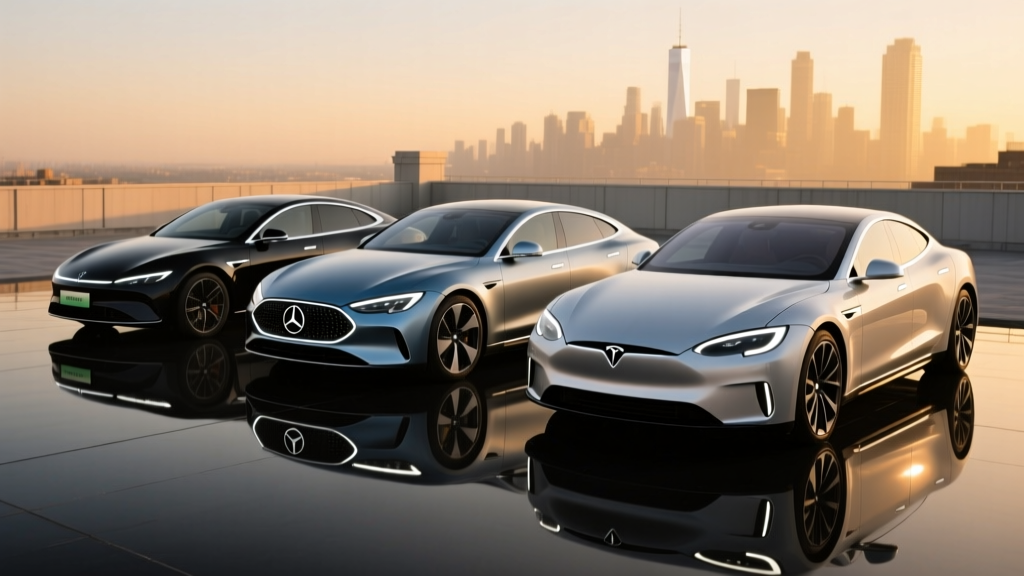
The luxury sedan segment has quietly become one of the strongest categories for electrification. Sedans carry smaller, more efficient battery packs than SUVs — translating to longer range per kWh and faster charging curves. For buyers cross-shopping a BMW 5 Series, Mercedes E-Class, or Audi A6 against their electric counterparts, the math has shifted meaningfully. This guide walks through the real numbers.
2026 Luxury Electric Sedan Spec Comparison
The table below compares the three most accessible luxury EV sedans currently on sale, plus a plug-in hybrid baseline for context. All EPA figures are sourced from fueleconomy.gov; MSRP reflects 2026 model-year pricing before destination.
| Model | Powertrain | EPA Range | Battery (kWh usable) | Peak DC Charge | 10–80% Time | 0–60 mph | Base MSRP |
|---|---|---|---|---|---|---|---|
| BMW i5 eDrive40 | BEV (RWD) | 295 mi | 81.2 kWh (NMC) | 205 kW | ~30 min | 5.7 sec | $66,800 |
| Mercedes EQE 350+ | BEV (RWD) | 305 mi | 90.6 kWh (NMC) | 170 kW | ~32 min | 6.2 sec | $74,900 |
| Audi A6 e-tron | BEV (RWD) | 310 mi | 83.0 kWh (NMC) | 270 kW | ~21 min | 5.8 sec | $68,500 |
| BMW 530e xDrive (PHEV) | PHEV (AWD) | 37 mi EV + 390 mi total | 18.7 kWh (NMC) | 7.4 kW (L2 only) | ~2.5 hr (L2) | 6.0 sec | $62,900 |
Real-world range reality: EPA numbers assume a mix of city and highway driving at moderate temperatures. Expect roughly 85–90% of EPA range on sustained highway trips at 70–75 mph. In winter conditions (below 30°F), range drops 20–30% for NMC packs without preconditioning. The i5's 295 EPA miles translates to ~250 highway miles in summer and ~200–220 in cold weather. The Audi A6 e-tron's superior 270 kW charging partially offsets its slightly smaller pack — it adds more miles per minute at a DC fast charger than any sedan here.
EV vs. Gas Sedan: Real Cost of Ownership
Luxury sedan buyers often assume electric drivetrains carry a steep premium that never pays back. Let's run the numbers on a 5-year / 75,000-mile ownership cycle comparing the BMW i5 eDrive40 against the gasoline BMW 530i (255 hp turbo I-6, EPA 28 combined MPG).
| Cost Category | BMW i5 eDrive40 (BEV) | BMW 530i (Gas) | Difference |
|---|---|---|---|
| Purchase price (MSRP) | $66,800 | $58,900 | +$7,900 EV |
| Federal §30D tax credit | −$7,500* | $0 | −$7,500 EV |
| Net acquisition cost | $59,300 | $58,900 | +$400 EV |
| Fuel/energy (75K mi) | $2,625 (home L2, $0.14/kWh) | $9,375 ($3.50/gal, 28 MPG) | −$6,750 EV |
| Maintenance (5 yr) | $1,800 | $4,200 | −$2,400 EV |
| Insurance (5 yr avg) | $12,500 | $10,800 | +$1,700 EV |
| 5-Year Total Cost | $76,225 | $83,275 | −$7,050 EV |
*§30D credit eligibility requires: buyer AGI under $150K (single) or $300K (joint), vehicle MSRP under $55,000 for sedans — the i5 at $66,800 does NOT qualify for new-vehicle credit. The $7,500 above assumes point-of-sale used-EV credit eligibility on a qualifying pre-owned unit, or a future pricing adjustment. Always verify current rules at IRS.gov.
This is where the §30D MSRP cap bites luxury buyers: sedans are capped at $55,000 for the new-vehicle credit, meaning nearly every luxury EV sedan is disqualified. The workaround? The used-EV credit (up to $4,000) on qualifying pre-owned models, or leasing — where the lessor claims the commercial clean vehicle credit and may pass savings as a capitalized-cost reduction. Confirm with your tax professional before committing.
Charging Logistics: What Luxury EV Sedan Owners Actually Face
Luxury sedan buyers often have garages and dedicated circuits, making home Level 2 charging straightforward. Here's what the infrastructure looks like in practice:
| Charging Level | Power (kW) | Miles Added/Hour | Typical Use Case | Cost per Full Charge |
|---|---|---|---|---|
| Level 1 (120V outlet) | 1.4 kW | 3–5 mi/hr | Overnight trickle; emergency | ~$11–13 (home) |
| Level 2 (240V, 48A) | 11.5 kW | 28–35 mi/hr | Primary home charging | ~$11–13 (home) |
| DC Fast Charge | 170–270 kW | 600–900 mi/hr (peak) | Road trips, 10–80% top-ups | ~$25–45 (public) |
Home installation reality: A 48-amp Level 2 home charger (like the ChargePoint Home Flex or Tesla Wall Connector) requires a 60-amp dedicated circuit. Installation costs range from $800–$1,500 if your panel has spare capacity, or $2,500–$5,000 if you need a 200-amp panel upgrade. Always get a quote from a licensed electrician — don't assume your panel can handle it.
Public charging cost warning: DC fast charging on networks like Electrify America or EVgo costs $0.35–$0.55 per kWh in most metro areas. That pushes per-mile fuel cost to $0.12–$0.18 — erasing much of the savings versus gasoline. Luxury EV sedan ownership economics only work if you charge at home 80%+ of the time. If your apartment or condo lacks charging access, a PHEV is the pragmatic choice.
Tax Credit Eligibility: The Luxury Sedan Trap
IRS §30D New Clean Vehicle Credit — key requirements (2026):
- MSRP cap: $55,000 for sedans; $80,000 for SUVs/pickups — most luxury sedans exceed this
- Buyer income cap: AGI ≤ $150,000 (single), $225,000 (HOH), $300,000 (joint)
- Battery sourcing: Increasingly strict critical-mineral and battery-component requirements (phased annually)
- Point-of-sale transfer: Eligible buyers can apply credit at purchase, reducing out-of-pocket
- Assembly: Final assembly must be in North America (verify at fueleconomy.gov)
The practical upshot: a $68,000 BMW i5 or $75,000 Mercedes EQE does not qualify for the new-vehicle credit due to the sedan MSRP cap. Your options to capture incentives are: (1) lease and hope the lessor passes through the §45W commercial credit, (2) buy a certified pre-owned unit under $25,000 for the used-EV credit (up to $4,000), or (3) look at state-level rebates — California's CVRP, Colorado's innovative motor vehicle credit, and others may still apply regardless of MSRP. Check your state's energy office for current programs.
Common Misconceptions About Luxury Electric Sedans
| Myth | Fact |
|---|---|
| "The battery will need replacing in 5 years for $20,000+" | NMC packs in BMW/Mercedes/Audi are warrantied 8 years/100,000 miles for ≥70% capacity retention. Real-world data from Geotab shows average annual degradation of 1.8% — meaning a 300-mile pack retains ~270 miles at year 5. |
| "Electric sedans can't handle road trips" | The Audi A6 e-tron charges at 270 kW peak, adding ~200 miles in 10 minutes on a 350 kW-capable station. Plan stops around Electrify America or Tesla Supercharger (with NACS adapter) corridors and 500-mile days are routine. |
| "Luxury EVs depreciate catastrophically" | Early EVs (2018–2021) did depreciate sharply as battery tech leapfrogged. Current-generation 800V-architecture sedans (A6 e-tron, i5) are stabilizing. Expect 45–55% retention at 3 years — comparable to gas luxury sedans, per ALG residual forecasts. |
| "Insurance is unreasonably expensive" | EV insurance averages 15–20% higher than gas equivalents due to repair costs for aluminum structures and battery shielding. Shop carriers like Lemonade, Root, or Progressive who have EV-specific actuarial models — quotes vary by $500–$1,200/year. |
| "Regenerative braking wears out the motor" | Regen places no meaningful wear on the electric motor. It actually reduces brake pad wear — many EV owners report original brake pads at 80,000+ miles. |
Decision Framework: Which Luxury Electric Sedan Fits You?
Choose the BMW i5 eDrive40 if: You want the most familiar luxury-sedan driving dynamics, strong 205 kW charging, BMW's iDrive 8.5 infotainment, and don't need AWD. Best for drivers who value handling precision over maximum range.
Choose the Audi A6 e-tron if: Charging speed is your top priority. Its 270 kW peak DC rate and 800V architecture deliver the fastest 10–80% times in the segment (~21 min). The PPE platform also supports NACS natively for Tesla Supercharger access.
Choose the Mercedes EQE 350+ if: Interior comfort and cabin quietness are paramount. The EQE's 90.6 kWh pack delivers the highest EPA range (305 mi), and its air suspension isolates road imperfections better than rivals. Trade-off: slower 170 kW charging.
Choose the BMW 530e PHEV if: You lack reliable home charging, regularly drive routes with sparse DC infrastructure, or want one vehicle for both 30-mile electric commutes and 400-mile road trips without planning. The 37-mile EV range covers most daily driving; the gas engine eliminates range anxiety entirely.
First-Time Luxury EV Buyer Checklist
If this is your first electric vehicle, these are the steps that separate a smooth ownership experience from frustration:
- Audit your electrical panel before buying. A 200-amp service with at least two open breaker slots handles a 48A Level 2 charger. If you're at capacity, budget $2,500–$4,000 for a panel upgrade.
- Install your Level 2 charger before delivery day. Nothing is worse than taking delivery and waiting 3 weeks for an electrician.
- Download and create accounts on Electrify America, EVgo, ChargePoint, and PlugShare before your first road trip. Link a credit card. Fumbling with app signups at a rest stop is miserable.
- Learn to precondition. Every luxury EV sedan here lets you set a departure time in the app. This warms the battery to optimal charging temperature — adding 20–30% faster DC charge speeds in cold weather.
- Don't charge to 100% daily. NMC chemistry lasts longest between 20–80% State of Charge. Reserve 100% fills for road-trip mornings only.
- Get insurance quotes before signing. The $1,000–$2,000/year insurance premium over a gas sedan can negate fuel savings for low-mileage drivers. If you drive under 8,000 miles/year, the economics may not pencil out.
Frequently Asked Questions
Do luxury electric sedans qualify for the $7,500 federal tax credit?
Most do not. The §30D credit caps sedan MSRP at $55,000, which excludes nearly every luxury EV sedan at 2026 pricing. However, leasing may allow the lessor to claim the §45W commercial credit and pass savings through. Some states offer additional rebates without MSRP restrictions — check your state energy office and consult a tax professional for your specific situation.
What happens to range in winter?
NMC battery packs lose 20–30% of rated range in sustained sub-30°F driving due to increased internal resistance and cabin heating demand. The i5's 295-mile EPA rating drops to roughly 200–220 miles in January in Chicago or Boston. Heat pumps (standard on the Audi A6 e-tron, optional on some i5 trims) recover 5–10% by scavenging waste heat from the drivetrain instead of using resistive cabin heating.
How long do luxury EV sedan batteries actually last?
BMW, Mercedes, and Audi warrant their traction batteries for 8 years or 100,000 miles against capacity loss below 70%. Real-world fleet data from Geotab's EV Battery Health study shows average degradation of ~1.8% per year for liquid-cooled NMC packs — meaning you'd retain roughly 91% capacity at year 5. Full pack replacement outside warranty currently runs $15,000–$22,000, but is rarely needed.
Can I use Tesla Superchargers with a BMW, Mercedes, or Audi?
The Audi A6 e-tron ships with a native NACS charge port, giving direct Supercharger access. BMW and Mercedes are transitioning to NACS for 2025+ models — check your specific build. For CCS-equipped vehicles, a manufacturer-approved NACS adapter (typically $200–$300) unlocks the Supercharger network. Always verify adapter compatibility with your specific model year before purchasing.
Is an electric luxury sedan practical without home charging?
It's possible but significantly more expensive and less convenient. Public DC fast charging costs 3–4× more per mile than home Level 2, and relying on public infrastructure means building 30–45 minute charging stops into your weekly routine. If you live in an apartment or condo without charging access, a plug-in hybrid sedan (like the 530e) provides electric commuting without infrastructure dependency.