Quick Answer: California EV Carpool Lane Access in 2026
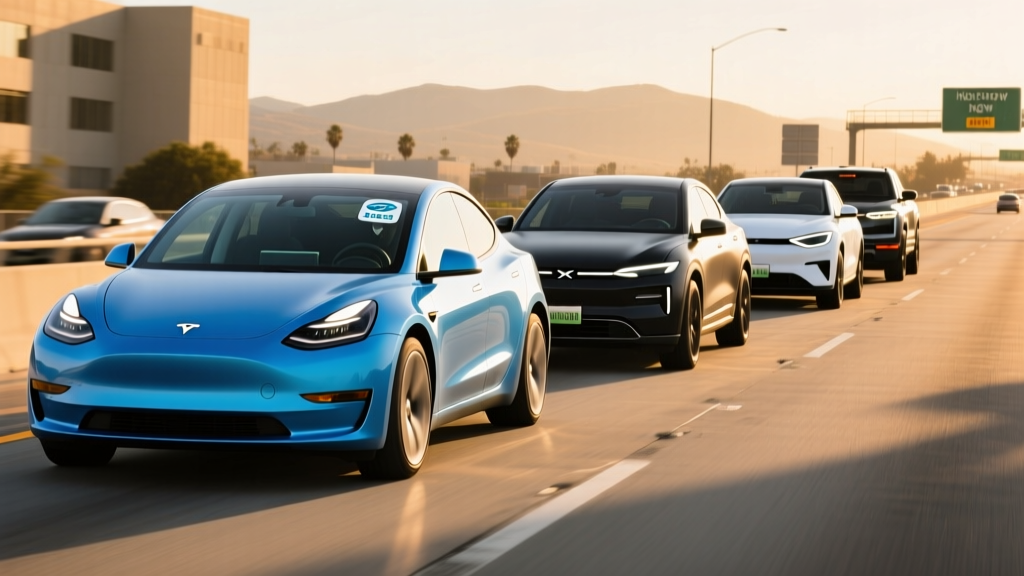
Yes — buying a qualifying zero-emission electric vehicle in California grants you access to carpool (HOV) lanes with a single occupant through the state's Clean Air Vehicle (CAV) decal program. As of 2026, new BEV purchases receive a white CAV decal valid through January 1, 2029 (or until the program sunsets, whichever comes first). You apply through the California DMV after registering your EV, and the decal is free for zero-emission vehicles. The time savings for commuters on corridors like the I-405, I-10, and US-101 can be substantial — Caltrans data has shown HOV lane travel times 30–50% faster during peak congestion.
How California's CAV Decal Program Works for EVs
California's High Occupancy Vehicle lane access for low- and zero-emission vehicles has gone through several iterations. The current framework, administered by the California DMV in coordination with the California Air Resources Board (CARB), issues white decals to battery-electric vehicles (BEVs) and hydrogen fuel cell vehicles (FCVs). Plug-in hybrids (PHEVs) that meet enhanced AT-PZEV or TZEV emissions standards qualify for a separate green decal, but these have different expiration timelines and eligibility windows.
Here's what you need to know about the 2026 decal rules:
- White CAV decals (BEV/FCV): Issued to new zero-emission vehicle purchases. Valid through January 1, 2029, or per the program sunset date set by the California legislature.
- Green CAV decals (qualifying PHEVs): Available for new TZEV-certified plug-in hybrids purchased within the program window. These have historically had shorter validity periods and may require income-based eligibility for newer issuance rounds.
- Application: Submit DMV Form REG 256 along with your vehicle registration. Processing typically takes 2–4 weeks.
- Cost: Free for zero-emission vehicles. Green decals for PHEVs may carry a nominal fee depending on current DMV rules.
- Transfer rules: CAV decals are tied to the vehicle, not the owner. If you sell the car, the decal transfers to the new owner — which can boost resale value.
One critical caveat: the program has faced repeated legislative reauthorizations. If you're buying an EV primarily for HOV access, understand that future extensions are not guaranteed, and decal expiration dates are fixed at issuance.
EV vs Gas vs Hybrid: Does Carpool Lane Access Justify the Switch?
For a California commuter spending 45+ minutes daily in stop-and-go traffic, HOV lane access is often the single most tangible daily benefit of going electric — even more immediately felt than fuel savings. Let's compare what the three powertrain options actually look like for a typical Southern California commuter doing 40 miles round-trip, five days a week.
| Factor | BEV (e.g., Tesla Model 3 RWD) | PHEV (e.g., Toyota Prius Prime) | Gas (e.g., Toyota Camry LE) |
|---|---|---|---|
| EPA Combined Efficiency | 132 MPGe / 25 kWh/100mi | 52 MPG (hybrid) / 127 MPGe (EV mode) | 32 MPG combined |
| Annual Fuel/Energy Cost | ~$625 (CA avg $0.25/kWh residential) | ~$550 (mix of electric + gas) | ~$1,406 (CA avg $4.50/gal) |
| HOV Lane Access (2026) | Yes — white CAV decal | Yes — green CAV decal (if qualifying TZEV) | No |
| Estimated Daily Time Saved (HOV) | 15–25 min | 15–25 min | 0 min |
| Annual Maintenance | ~$300 | ~$500 | ~$750 |
| Federal Tax Credit (§30D) | Up to $7,500 (varies by sourcing/income) | Up to $7,500 (varies) | None |
The time savings alone are striking. If HOV lane access saves you 20 minutes per day, that's roughly 83 hours per year — more than three full days reclaimed. For many buyers, this is the deciding factor that tips the scale from a conventional hybrid to a plug-in or full BEV.
Which 2026 EVs Qualify for California Carpool Lane Decals?
Every new battery-electric vehicle sold in California qualifies for the white CAV decal — there is no price cap or model restriction on the state HOV program (unlike the federal §30D tax credit, which has MSRP caps of $55,000 for sedans and $80,000 for SUVs/trucks). Here's a snapshot of popular 2026 models and what they bring beyond HOV access:
| Model | EPA Range | Battery (kWh) | Peak DC Charge | 10–80% Time | Base MSRP | §30D Credit Eligible? |
|---|---|---|---|---|---|---|
| Tesla Model 3 RWD | 272 mi | 57.5 (LFP) | 170 kW | ~25 min | $38,990 | Yes — up to $7,500 |
| Tesla Model Y LR AWD | 320 mi | 75 (NMC) | 250 kW | ~18 min | $44,990 | Yes — up to $7,500 |
| Hyundai Ioniq 5 SE | 303 mi | 77.4 (NMC) | 240 kW | ~18 min | $42,600 | Partial — varies by sourcing |
| Chevrolet Equinox EV 2LT | 319 mi | 85 (NMC) | 150 kW | ~30 min | $33,600 | Yes — up to $7,500 |
| Ford Mustang Mach-E Select | 250 mi | 72 (LFP) | 150 kW | ~32 min | $39,995 | Limited — check IRS sourcing |
| BMW i4 eDrive40 | 307 mi | 83.9 (NMC) | 200 kW | ~22 min | $57,900 | Yes — up to $7,500 (sedan cap applies) |
Real-world range note: EPA figures assume mixed driving at moderate temperatures. On California's I-5 corridor in summer heat with A/C running at 75 mph, expect 10–15% range reduction from the EPA sticker. A Model 3 RWD rated at 272 miles will realistically deliver 230–245 miles in those conditions. For Bay Area commuters dealing with hill climbs on I-280 or I-680, budget another 5–10% off for elevation changes.
The Real Cost of Buying an EV for HOV Lane Access
HOV access is a powerful incentive, but it shouldn't be the only factor. Here's a full ownership cost picture for a typical California buyer considering a 2026 Tesla Model 3 Rear-Wheel Drive — one of the most popular HOV-commuter EVs in the state.
| Cost Category | Tesla Model 3 RWD | Toyota Camry LE (Gas) |
|---|---|---|
| Base MSRP | $38,990 | $28,700 |
| Federal Tax Credit (§30D) | –$7,500 (if eligible) | $0 |
| California Clean Fuel Rebate (if active) | Up to –$1,000 | $0 |
| Effective Purchase Price | ~$30,490 | $28,700 |
| 5-Year Fuel/Energy (10K mi/yr) | $3,125 | $7,030 |
| 5-Year Maintenance | $1,500 | $3,750 |
| 5-Year Insurance (CA avg) | $9,500 | $7,250 |
| Home Charger Install (Level 2) | $1,200–$2,500 | N/A |
| 5-Year Depreciation (est.) | $14,000 | $10,500 |
| Estimated 5-Year Total | ~$59,815–$61,115 | ~$57,230 |
The numbers are closer than many expect. After incentives, the Model 3's effective purchase price is competitive with a mid-trim Camry. The fuel and maintenance savings are significant — roughly $6,155 over five years. However, higher insurance premiums (EVs typically cost 15–25% more to insure in California) and the home charger installation partially offset those gains.
The HOV time savings don't appear in a financial ledger, but if you value your commute time at even $25/hour, saving 83 hours annually is worth $2,075 per year or $10,375 over five years. That alone makes the EV the more rational choice for heavy commuters.
Federal Tax Credit (§30D): What California EV Buyers Must Know
The IRS §30D Clean Vehicle Credit remains available for 2026, but eligibility is layered. Not every EV buyer qualifies for the full $7,500, and the rules involve three separate hurdles:
§30D Eligibility Checklist (2026)
- Income caps: Modified AGI must not exceed $150,000 (single), $225,000 (head of household), or $300,000 (joint).
- MSRP caps: Sedans/wagons ≤ $55,000; SUVs/pickups/vans ≤ $80,000.
- Battery sourcing: Increasing percentages of critical minerals and battery components must be sourced from the US or FTA partners. This requirement tightens annually — some 2026 models may only qualify for $3,750 (half credit) if they don't meet both thresholds.
- Point-of-sale transfer: You can elect to transfer the credit to the dealer at purchase, reducing your out-of-pocket cost immediately rather than waiting for tax filing.
- Final assembly: Vehicle must undergo final assembly in North America (check VIN at fueleconomy.gov).
Practical tip: Before committing to a purchase, verify the specific model and trim's credit status on the IRS qualified vehicles list. Battery sourcing requirements have disqualified some previously eligible trims mid-year in past cycles. The IRS Clean Vehicle Credit page is the authoritative source — dealer claims alone are not sufficient verification.
Common Misconceptions About California EV HOV Lane Access
| Myth | Fact |
|---|---|
| "Any electric car gets you into the carpool lane forever." | CAV decals have fixed expiration dates. White decals issued in 2026 expire January 1, 2029. Access is not permanent. |
| "Used EVs come with HOV lane access." | Decals transfer with the vehicle, but only if they haven't expired. A used 2022 EV with a decal expiring in 2025 gives you no remaining solo HOV access. Always verify decal status before buying used. |
| "All plug-in hybrids qualify." | Only PHEVs certified to TZEV or enhanced AT-PZEV standards qualify for green decals. Some older or lower-electric-range PHEVs do not meet the threshold. |
| "I don't need to display the decal — my EV plates are enough." | You must physically affix the CAV decal to your vehicle's bumper as instructed. Driving in the HOV lane without the visible decal, even in a qualifying EV, is a citable offense (fines typically $490+). |
| "HOV access works in every state." | California's CAV program is state-specific. Other states (Arizona, Colorado, Florida, Georgia, Virginia, etc.) have their own HOV exemption programs with different rules. Your California decal does not grant HOV access outside California. |
Real-World Ownership: What First-Time California EV Buyers Should Know
HOV lane access is compelling, but daily EV ownership in California comes with practical considerations that vary enormously depending on your living situation and commute pattern.
Home Charging Access
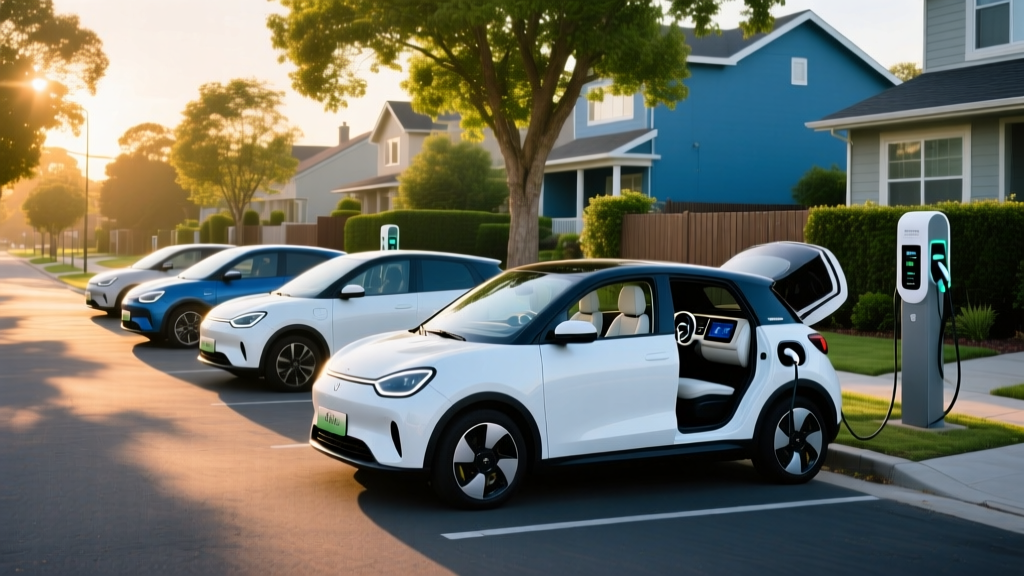
If you own a single-family home or have a dedicated garage, a Level 2 home charger (240V, 32–48 amps, delivering 7.7–11.5 kW) is the backbone of hassle-free EV ownership. Installation in California typically runs $1,200–$2,500 for a straightforward setup, but can reach $4,000+ if your electrical panel needs an upgrade from 100A to 200A service.
For apartment dwellers and condo owners, the picture is more complicated. California's Energy Commission has funded multi-unit dwelling charging programs, and the state's "right to charge" law (Civil Code §4745) prevents HOAs from unreasonably blocking charger installations. But shared-parking EV charging remains a real barrier — plan for it before purchasing.
California's Charging Network Reality
California has the most developed public charging infrastructure in the US, with over 40,000 public charging ports as of late 2025. The Tesla Supercharger network (now open to NACS-equipped non-Tesla vehicles) remains the most reliable for highway travel. Electrify America, EVgo, and ChargePoint cover urban corridors well, but reliability varies — expect 5–10% of non-Tesla DC fast chargers to be out of service at any given time based on industry reliability studies.
For a daily commuter with home charging, public infrastructure matters mainly for road trips. A Tesla Model Y Long Range with 320 miles of EPA range can handle LA-to-San Francisco (382 miles) with a single 15–20 minute Supercharger stop — practical and painless.
Cold Weather Isn't a Factor (Mostly)
Unlike EV owners in Minnesota or Maine, California drivers face minimal cold-weather range loss. Even in the Central Valley's winter lows (35–40°F), range reduction is typically 5–8% — far less than the 20–30% losses seen in sub-freezing climates. The bigger efficiency variable in California is summer A/C use and high-speed highway driving.
Decision Framework: Is an EV for HOV Access Right for You?
Choose a BEV with CAV Decal If:
- Your one-way commute exceeds 20 miles on congested freeways (I-405, I-5, I-10, US-101, I-680, I-880)
- You have access to home charging (garage, driveway, or workplace Level 2)
- Your household income qualifies for the §30D credit or you can absorb the upfront cost
- You plan to keep the vehicle through at least 2028 (maximizing HOV decal value)
- You value time savings at $20+/hour
Choose a Qualifying PHEV (Green Decal) If:
- You lack reliable home charging and want HOV access without range dependence on public infrastructure
- Your commute is under 30 miles and can be covered mostly on electric power (e.g., Prius Prime's 44-mile EV range)
- You want HOV access with the fallback of a gas engine for longer trips
- You want a lower entry price — a Prius Prime starts around $33,000 before incentives
Stick with a Gas/Conventional Hybrid If:
- You don't commute on HOV-equipped freeways, or your commute is under 10 miles
- You live in an apartment without any charging access and workplace charging isn't available
- Your budget is under $28,000 and you need a vehicle immediately
- You drive fewer than 6,000 miles per year (fuel savings won't offset the EV premium)
Frequently Asked Questions
How long does it take to get a CAV decal after buying an EV in California?
After registering your new EV with the California DMV, submit Form REG 256 for the Clean Air Vehicle decal. Processing typically takes 2–4 weeks by mail. You cannot legally use the HOV lane solo until the physical decal is affixed to your vehicle. Some buyers report faster turnaround when applying online through the DMV portal.
Does the Tesla Model 3 qualify for California's carpool lane decal in 2026?
Yes. The 2026 Tesla Model 3 (all trims) is a zero-emission battery-electric vehicle and qualifies for the white CAV decal. At a base MSRP of $38,990 for the RWD trim, it also falls well under the $55,000 sedan cap for the federal §30D tax credit.
Can I use the HOV lane in an EV without a decal if I have a passenger?
Yes. HOV lanes require a minimum number of occupants (typically 2+ or 3+, depending on the corridor and signage) regardless of vehicle type. The CAV decal's benefit is solo HOV lane access — you still need the decal even with a passenger if you want to use lanes marked "HOV 2+ CAV OK" or similar configurations where the decal is specifically required for single-occupant use.
What happens to my HOV decal when I sell or trade in my EV?
The CAV decal is affixed to the vehicle, not the owner. When you sell the car, the decal transfers to the new owner for its remaining validity period. This can add resale value — a 2026 EV with a decal valid through 2029 is more attractive to a buyer than one without. If the decal has expired, the new owner cannot reapply for the same vehicle.
Do I still qualify for HOV lane access if I lease an EV?
Yes. Leased EVs qualify for CAV decals just like purchased vehicles. The lessee (you) applies for the decal through the DMV. The decal remains on the vehicle through the lease term and beyond, transferring to whoever holds the registration.
Are there income limits for California's CAV decal program?
For white decals (zero-emission BEVs and FCVs), there are currently no income restrictions — any buyer of a qualifying new ZEV can apply. For green decals (PHEVs), income-based eligibility has been introduced in recent program phases to target the incentive toward moderate-income buyers. Check the current CARB/DMV guidelines for the latest income thresholds if you're pursuing a PHEV decal.
California's HOV lane access program remains one of the most practical, daily-use incentives for going electric. For commuters on the state's most congested corridors, the time savings alone can justify the switch — and when combined with fuel savings, reduced maintenance, and available tax credits, the financial case strengthens considerably. Just go in with clear eyes on the decal expiration timeline, your charging situation, and the full cost picture.