The short answer: An electric camping van is viable in 2026 if your trips stay within ~200 miles of reliable charging and you can charge at home or at campgrounds with 240V outlets. The Mercedes-Benz eSprinter (200-mile EPA range, 118 kWh battery) and the upcoming Volkswagen ID. Buzz Cargo-based camper conversions lead the market. Expect to pay $55,000–$85,000+ before upfitting. Compared to a gas Sprinter or Transit, you'll save $2,000–$4,000 annually on fuel and maintenance but face longer charging stops (30–50 minutes at DC fast chargers) and a 25–40% range hit in cold weather or mountain driving.
Why Electric Camping Vans Are Gaining Traction
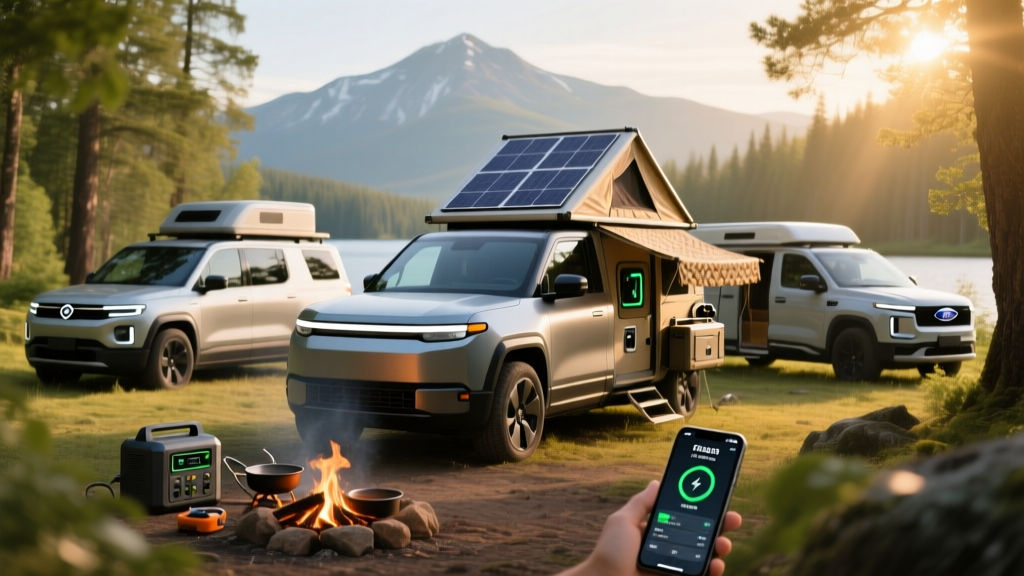
The vanlife movement and EV adoption have been on parallel tracks for years, and they're finally converging. The appeal is straightforward: silent operation at campsites (no generator noise or fumes), zero tailpipe emissions in sensitive natural areas, a large flat battery pack that doubles as a power source for appliances, and dramatically lower operating costs per mile.
But the practical reality is more nuanced. A loaded camping van is heavy — often 8,000–10,000 lbs GVWR — and that mass cuts into range significantly compared to the EPA sticker figures. Add roof racks, a pop-top, water tanks, and a kitchen build, and you're looking at real-world range 20–35% below the published number on highway trips.
As of 2026, the electric van market has matured enough to offer real options, though the selection remains narrow compared to passenger EVs. Here's what's actually available or in active production.
Current Electric Van Platforms for Camper Builds
| Platform | Usable Battery | EPA Range | Peak DC Charge | 10–80% Time | Starting MSRP (2026) |
|---|---|---|---|---|---|
| Mercedes-Benz eSprinter (150" WB, high roof) | 118 kWh (NMC) | ~200 mi | 115 kW | ~42 min | $74,000 (cargo van) |
| BrightDrop Zevo 400 | 120 kWh (NMC) | ~205 mi | 120 kW | ~40 min | $68,000 (fleet/commercial) |
| Ford E-Transit (cutaway/cargo) | 68 kWh (NMC) | ~126 mi | 115 kW | ~45 min | $52,000 (cargo van) |
| VW ID. Buzz (passenger, SWB) | 86 kWh (NMC) | ~234 mi | 185 kW | ~26 min | $59,995 |
| Winnebago e-RV (eSprinter-based) | 118 kWh + 15 kWh house | ~150 mi (loaded) | 115 kW | ~42 min | $130,000+ (turnkey camper) |
Sources: fueleconomy.gov, manufacturer spec sheets. Real-world loaded range will be lower — expect 15–35% reduction depending on weight, speed, and terrain.
The eSprinter has become the default platform for serious electric camper builds because of its high-roof interior (6'6" standing height), 118 kWh battery, and established upfitter network. Companies like Winnebago, Outside Van, and custom shops are producing turnkey or semi-custom builds on this chassis. The Ford E-Transit's 126-mile EPA range makes it impractical for anything beyond urban delivery or weekend trips within a tight radius — it's a poor camping platform unless your use case is strictly local.
The VW ID. Buzz occupies a different niche: it's smaller (roughly Transit Connect size), more affordable, and charges faster thanks to its 185 kW peak DC rate, but interior cargo volume (roughly 100 cu ft behind the second row) limits full-time camper builds. It works well as a weekend adventure vehicle with a removable bed platform and portable kitchen.
EV Camper Van vs. Gas Van: The Real Cost Breakdown
The upfront price gap between electric and gas vans is substantial. A gas Mercedes-Benz Sprinter 2500 cargo van starts around $50,000 in 2026 — roughly $24,000 less than the eSprinter. A gas Ford Transit 350 HD starts near $48,000 versus the E-Transit's $52,000. But the operating cost story flips once you start driving.
| Cost Factor (Annual, 12,000 mi/yr) | Gas Sprinter 2500 (19 MPG) | eSprinter (2.0 kWh/mi) |
|---|---|---|
| Fuel / Electricity | $2,526 (gas at $4.00/gal) | $720 (home L2 at $0.15/kWh) – $1,440 (public DC at $0.30/kWh) |
| Maintenance | $1,200 (oil, filters, brakes, trans) | $400 (cabin filter, wipers, brake inspection) |
| Insurance | $1,800 | $2,200 (higher replacement cost) |
| Annual Total Operating | $5,526 | $1,120 – $1,840 |
At 12,000 miles per year, the eSprinter saves roughly $3,700–$4,400 annually in operating costs. That means the $24,000 price premium pays for itself in 5.5–6.5 years of ownership — not accounting for potential federal §30D tax credits or state incentives, which can shorten the payback further.
Tax credit reality check: As of 2026, the §30D credit for new clean vehicles offers up to $7,500, but eligibility depends on MSRP caps ($80,000 for vans/SUVs), buyer income limits ($300K joint / $150K single modified AGI), and battery critical-mineral and component sourcing requirements. Many electric vans at higher trims or with upfitting exceed the MSRP cap. The credit can be transferred to the dealer at point of sale, effectively reducing the purchase price. Always verify current eligibility on irs.gov and consult a tax professional before relying on the credit in your budget.
Charging an Electric Camping Van: What You Actually Need
Charging a van with a 100+ kWh battery is a different proposition than charging a sedan. Here's the reality across charging levels:
| Level | Power (kW) | Miles Added per Hour | Use Case |
|---|---|---|---|
| Level 1 (120V household) | 1.4 kW | ~3–4 mi/hr | Emergency trickle; not practical for daily use |
| Level 2 (240V, 40A) | 9.6 kW | ~25–30 mi/hr | Overnight home/campground charging; 10–12 hrs for full charge |
| Level 2 (240V, 48A) | 11.5 kW | ~30–35 mi/hr | Faster overnight; requires 60A circuit |
| DC Fast Charge | 115–185 kW peak | ~180–250 mi/hr (peak) | Road trips; 10–80% in 26–45 min depending on platform |
Campground charging is the hidden advantage. Most RV parks and many state/national park campgrounds have 240V 50-amp (NEMA 14-50) or 30-amp outlets. A van with a portable Level 2 EVSE (like the Tesla Universal Wall Connector with a NACS-to-J1772 adapter, or a Lectron/JuiceBox portable unit) can add 25–35 miles of range per hour while you're parked overnight. For a typical campsite stay of 12–16 hours, that's enough to fully recharge even the largest van battery.
Home charging setup: For a 118 kWh eSprinter, a 48A Level 2 home charger (11.5 kW) requires a dedicated 60A circuit and typically costs $1,200–$2,500 installed (equipment + licensed electrician + permit), assuming your electrical panel has capacity. If you need a panel upgrade from 100A to 200A service, add $2,000–$4,000. This is a one-time cost that makes daily charging essentially effortless.
The DC fast-charging caveat: Peak charge rates are not sustained rates. The eSprinter peaks at 115 kW but tapers significantly above 60% state of charge. Expect the 10–80% session to take roughly 42 minutes — plan for that in your road-trip itinerary. The VW ID. Buzz charges faster (185 kW peak, ~26 minutes 10–80%) thanks to its smaller battery and more aggressive charge curve, but its smaller battery also means more frequent stops on long trips.
Real-World Range: What the EPA Number Doesn't Tell You
EPA vs. Reality for Loaded Camper Vans:
- eSprinter (stock cargo): EPA ~200 mi → Expect 155–175 mi loaded with camper build at highway speeds (65–70 mph)
- eSprinter (full camper, 9,500 lbs): Expect 130–160 mi highway, 110–140 mi in mountains or cold weather
- VW ID. Buzz (passenger): EPA ~234 mi → Expect 185–210 mi loaded, 150–175 mi cold/highway
- Ford E-Transit: EPA ~126 mi → Expect 90–105 mi loaded; not recommended for highway touring
Highway driving at 70+ mph, headwinds, roof accessories, cold temperatures below 40°F, and mountain grades all compound range loss. Plan charging stops conservatively.
The single biggest range killer for camper vans is weight and aerodynamics. A stock eSprinter cargo van achieves its EPA rating at a base curb weight around 5,900 lbs. A full camper build with water tanks (40 gal = 334 lbs), a lithium house battery bank, kitchen, bed platform, insulation, and personal gear can push the vehicle to 9,000–9,500 lbs — a 50–60% weight increase. Energy consumption rises roughly proportionally.
Roof-mounted solar panels (common on camper builds) help offset house-battery loads but contribute negligibly to traction-battery range — a 400W solar array generates roughly 1.5–2 kWh per day in good sun, enough for lights and a fridge, not for meaningful driving range.
Cold weather compounds the problem. NMC batteries lose 25–40% of usable capacity in sustained sub-freezing temperatures. The eSprinter does include a heat pump for cabin heating (more efficient than resistive heating), but battery preconditioning for DC fast charging still consumes energy. If you're camping in Colorado in January, plan for 110–130 miles of real range from a full charge.
House Power: The Camper Van Advantage of Going Electric
One area where electric vans genuinely outperform gas alternatives is house power management. In a traditional Sprinter camper, you rely on a secondary system: auxiliary lithium batteries charged by the alternator, shore power, solar, or a gasoline/diesel generator. That's added weight, complexity, cost ($3,000–$8,000 for a robust house system), and noise.
An electric van's traction battery is, effectively, a massive house battery. The eSprinter's 118 kWh pack dwarfs the typical 5–15 kWh camper house battery. With vehicle-to-load (V2L) capability or a properly installed inverter system, you can run induction cooktops, a residential refrigerator, LED lighting, laptops, and even a rooftop A/C unit directly from the traction battery — without a generator or separate house bank.
Running a 1,500W induction cooktop for 30 minutes consumes roughly 0.75 kWh — less than 1% of the eSprinter's battery. A full weekend of cooking, lighting, and device charging might use 5–8 kWh, reducing your driving range by roughly 10–15 miles. This is a manageable trade-off, and it eliminates the need for a separate house battery system entirely in many builds.
Common Misconceptions About Electric Camper Vans
| Myth | Fact |
|---|---|
| "You can't take an EV camping — no chargers in the wilderness." | Most popular campgrounds have 240V outlets (RV hookups). Portable Level 2 EVSEs let you charge overnight at 9.6–11.5 kW. Destination charging is often sufficient for multi-day stays. |
| "The battery will degrade and cost $30,000 to replace." | Mercedes-Benz warranties the eSprinter battery for 8 years/100,000 miles (70% capacity retention). NMC degradation in commercial van use averages 10–15% over 100,000 miles based on fleet data. Replacement cost is high ($18,000–$28,000 out of warranty) but rarely needed within the vehicle's useful life. |
| "Electric vans can't tow." | The eSprinter is rated to tow up to 5,000 lbs. However, towing cuts range by 30–50%. A teardrop trailer adds drag and weight — plan for 90–110 miles of range when towing. |
| "Charging takes too long for road trips." | 10–80% in 42 minutes (eSprinter) or 26 minutes (ID. Buzz). Combined with meal breaks and rest stops, the time penalty is 20–30 minutes per stop on a long trip. For camping trips where you stay 2–7 days at a destination, the charging stop is a minor factor. |
| "You need solar panels on the roof to make it work." | Roof solar is excellent for house loads but produces negligible traction range (1–2 kWh/day from 400W). Grid charging and campground Level 2 are the primary energy sources. Solar is a supplement, not a solution. |
Decision Framework: Is an Electric Camping Van Right for You?
Choose an electric camping van if:
- You have reliable home Level 2 charging (240V, 40A+)
- Your typical camping trips are within 150 miles of home, or along corridors with DC fast chargers
- You camp at established campgrounds with RV electrical hookups at least part of the time
- You value silent, emission-free operation at campsites and in nature
- You want to eliminate the complexity and cost of a separate house battery/generator system
- You drive 8,000+ miles/year, making the operating-cost savings meaningful
- You plan to keep the van 5+ years (to recoup the purchase premium)
Stick with a gas or diesel van if:
- You regularly boondock in remote areas far from any charging infrastructure
- Your trips routinely exceed 300 miles between overnight stops in areas with limited chargers
- You need to tow a heavy trailer (4,000+ lbs) over long distances
- You camp primarily in extreme cold (sustained below 20°F) where range loss is severe
- You lack home charging access and rely entirely on public infrastructure
- Your budget is under $50,000 for the base vehicle
Consider a PHEV van (when available) or a gas van with a robust house battery/solar system if:
- You want some electric-only range for campground use and short trips but need unlimited highway range
- Your use case splits between urban weekday driving and long-distance weekend camping
What a First-Time EV Camper Buyer Should Know
If you're transitioning from a gas van or considering your first EV in a camper configuration, here are the non-obvious ownership realities:
1. Plan your routes around charging, not just destinations. Apps like A Better Routeplanner (ABRP) let you input your specific vehicle, weight, and route to predict energy consumption and suggest charging stops. Use this before every trip. The public DC charging network along major interstates (Electrify America, EVgo, Tesla Superchargers with NACS adapters) is adequate for van travel in most of the U.S., but rural routes in the Mountain West, Great Plains, and parts of the Southeast still have gaps.
2. Your van's onboard charger matters. The eSprinter's onboard AC charger is rated at 11.5 kW (48A). This means even if you plug into a 80A Level 2 station, you'll only pull 48A. Know your vehicle's AC charge ceiling before investing in high-amperage home equipment.
3. Regenerative braking changes how you drive a heavy van. A loaded 9,500-lb van generates significant regen on downhill grades — enough to slow the vehicle without touching the brake pedal in many situations. This also recovers energy on mountain descents, partially offsetting the uphill consumption. On a pass with 3,000 ft of elevation loss, expect to recover 5–10 kWh.
4. Battery preconditioning is critical for fast charging. If you navigate to a DC fast charger using the van's built-in navigation, most platforms will precondition the battery to its optimal charging temperature. Arriving at a fast charger with a cold battery (below 50°F) can cut your peak charge rate in half. Always precondition.
5. Insurance costs more. EV-specific insurance premiums run 15–25% higher than equivalent gas vans, reflecting higher repair costs and battery replacement values. Shop quotes from EV-friendly insurers (Geico, Progressive, and specialty providers like Lemonade or Root) before finalizing your purchase.
Frequently Asked Questions
Can I build my own electric camper van on an eSprinter chassis?
Yes. The eSprinter cargo van is available as a bare chassis, and many custom upfitters (Outside Van, Cascade Vans, Contravans) offer EV-compatible builds. Expect a custom interior build to cost $30,000–$70,000 on top of the $74,000 base vehicle. DIY builds are possible but require careful weight management and electrical integration — the 400V traction system should only be tapped by qualified high-voltage technicians.
How does cold weather affect an electric camper van?
In sustained temperatures below 40°F, expect 20–30% range loss from battery chemistry effects and cabin heating demand. Below 20°F, loss can reach 35–40%. The eSprinter's heat pump is more efficient than resistive heaters, but a well-insulated camper build with a diesel heater (using a small fuel tank for heat only) is a popular hybrid approach that preserves battery range for driving.
Do I qualify for the $7,500 federal tax credit on an electric van?
Possibly, but it depends on multiple factors. Under IRS §30D rules, the vehicle MSRP must not exceed $80,000 for vans, your modified AGI must be under $300,000 (joint) or $150,000 (single), and the battery must meet critical-mineral and component-sourcing thresholds that tighten annually. Many upfitted camper vans exceed the MSRP cap. The credit can be applied at point of sale as a price reduction. Verify eligibility at the time of purchase — rules change, and a tax professional should confirm your specific situation.
What's the best electric van for full-time vanlife?
The Mercedes-Benz eSprinter with a high-roof, 170" wheelbase is the current best platform for full-time electric vanlife due to its interior volume (533 cu ft cargo), 118 kWh battery, and established upfitter ecosystem. However, full-time living means higher daily energy demands (cooking, heating, devices), and you'll need reliable daily access to Level 2 charging. If you boondock frequently or travel in remote areas, a diesel Sprinter with a large solar/lithium house system remains more practical in 2026.
How long does the battery last, and what does replacement cost?
Mercedes-Benz warranties the eSprinter high-voltage battery for 8 years or 100,000 miles, whichever comes first, guaranteeing at least 70% of original capacity. Real-world fleet data from commercial eSprinter deployments suggests 10–15% degradation at 100,000 miles under normal use. Out-of-warranty battery replacement costs $18,000–$28,000 (parts and labor) as of 2026, though prices are declining as the supply chain matures. Most batteries outlast 200,000+ miles with 15–25% degradation.