The Quick Answer on Electric Camper Vans
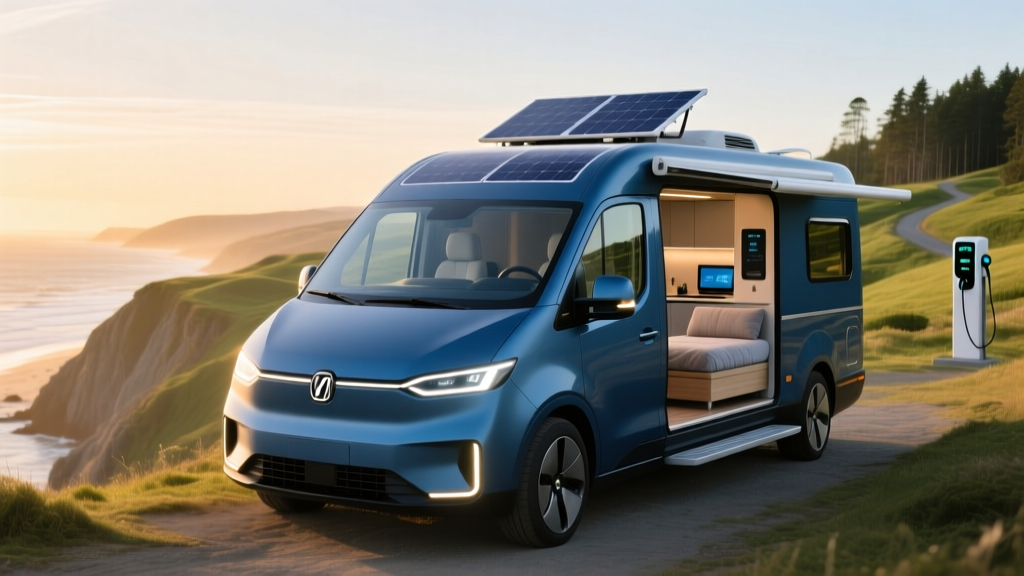
Electric camper vans are viable in 2026 for weekend trips, regional boondocking, and urban-to-trailhead adventures — but not for cross-country touring without careful planning. Current models deliver 120 to 250 miles of real-world range (depending on payload, terrain, and temperature), charge at 50–150 kW DC fast-charging speeds, and cost $55,000–$120,000+ before incentives. They eliminate fuel and generator noise at camp but require route planning around DC chargers and acceptance of 30–60 minute charge stops. If your trips stay within a 200-mile radius of home or you camp near electrified campgrounds, an electric camper van can work. If you regularly drive 500+ miles into remote desert or mountain regions, a gas or diesel van remains the more practical choice today.
What Electric Camper Vans Are Actually Available?
The electric camper van market in 2026 remains niche but growing. Most offerings are conversions built on commercial electric van platforms rather than purpose-built RVs from major manufacturers. Here's what you can actually buy or order:
| Platform / Conversion | Battery (kWh) | EPA Range | Real-World Range (Loaded) | DC Fast Charge | Base Price (Van + Build) |
|---|---|---|---|---|---|
| Ford E-Transit (Cutaway/Cargo + upfit) | 68 kWh (NMC) | 126 mi | 85–105 mi | 115 kW peak, 10–80% ~45 min | $55,000–$80,000 |
| Mercedes eSprinter (Cargo + upfit) | 113 kWh (NMC) | ~200 mi (est.) | 140–170 mi | 115 kW peak, 10–80% ~42 min | $75,000–$120,000 |
| BrightDrop Zevo 600 + conversion | 165 kWh (NMC) | ~250 mi (est.) | 175–210 mi | ~120 kW peak | $90,000–$130,000 |
| VW ID. Buzz (LWB, aftermarket camper upfit) | 91 kWh (NMC) | 234 mi | 180–210 mi | 175 kW peak, 10–80% ~26 min | $65,000–$95,000 |
| Winnebago e-RV (announced, limited) | ~90 kWh | ~125 mi (est.) | 85–110 mi | ~50 kW | ~$120,000+ |
Key caveat: The EPA range figures above assume a stock cargo van at moderate speeds. Once you add a camper build-out (insulation, cabinetry, water tanks, batteries for house systems, beds, kitchens), payload increases by 1,500–3,000 lbs, which can reduce range by 15–30%. Highway speeds above 65 mph and cold weather below 40°F compound the loss further.
Electric Camper Van vs. Gas Van: Cost & Capability Comparison
How does an electric camper van stack up against a traditional gas or diesel Sprinter, Transit, or ProMaster conversion? Here's a data-driven look:
| Factor | Electric Camper Van (eSprinter-class) | Gas/Diesel Camper Van (Sprinter 2500 Diesel) |
|---|---|---|
| Upfront purchase (van + build) | $75,000–$120,000 | $55,000–$90,000 |
| Fuel/energy cost per mile | $0.08–$0.14 (home charging at $0.13/kWh; DCFC $0.35–$0.55/kWh) | $0.22–$0.30 (diesel at $4.20/gal, 18 mpg) |
| Real-world range (loaded) | 140–170 mi | 400–550 mi |
| "Refuel" time | 30–45 min (10–80% DCFC) | 5–8 min (diesel fill-up) |
| Annual maintenance | ~$300–$500 (no oil, fewer moving parts) | ~$1,200–$2,000 (oil, filters, DEF, transmission) |
| Generator at camp | Not needed — vehicle battery powers house systems via inverter | Required ($800–$3,000 + fuel + noise) |
| Boondocking power | Vehicle battery (90–165 kWh) = days of power | Separate house batteries + solar + generator |
| Cold-weather range loss | 25–40% below 30°F | 5–10% |
| Charging infrastructure in remote areas | Limited to nonexistent | Gas stations everywhere |
The electric van wins on per-mile energy cost, maintenance, and campsite power silence. The gas/diesel van wins decisively on range, refueling speed, and remote-area access. For most van-lifers who travel to national parks, BLM land, and forest service roads far from DC fast chargers, the range gap is the dealbreaker.
The Real Costs of Electric Camper Van Ownership
Beyond the sticker price, here's what ownership actually costs over five years:
| Cost Category | Electric Camper Van (5-Year) | Diesel Camper Van (5-Year) |
|---|---|---|
| Purchase price (mid-range build) | $95,000 | $72,000 |
| Federal tax credit (§30D or §45W commercial) | –$7,500 (if eligible under IRS §30D income/MSRP rules) or §45W commercial credit | $0 |
| Home Level 2 charger install | $1,200–$3,500 (240V/40–80A circuit) | $0 |
| Energy/fuel (12,000 mi/yr × 5 yrs) | $4,800–$8,400 | $13,200–$18,000 |
| Maintenance (5 years) | $1,500–$2,500 | $6,000–$10,000 |
| Insurance (5 years) | $9,000–$14,000 (higher premiums for EVs + RV classification) | $7,000–$11,000 |
| Estimated 5-year total cost | $103,000–$120,900 | $98,200–$111,000 |
The bottom line: Over five years, the electric camper van's higher purchase price is only partially offset by fuel and maintenance savings. The total cost of ownership is typically $5,000–$15,000 more than a comparable diesel van build. The financial case improves if you drive mostly locally (more home charging, less DCFC premium pricing) and if your state offers additional EV incentives.
Tax credit note: The federal §30D clean vehicle credit has income caps ($150K single / $300K joint), MSRP limits ($80,000 for vans/SUVs), and battery sourcing requirements that change annually. Some commercial van platforms may qualify under the §45W commercial clean vehicle credit instead. Consult a tax professional and check the latest IRS guidance before counting on any credit.
Charging Logistics: The Make-or-Break Factor
Charging is where the electric camper van dream meets reality. Here's what you need to know:
Home Charging (Your Base Camp)
A Level 2 home charger (240V, 40–80 amps) is essentially mandatory. A 113 kWh battery (eSprinter-class) charging at 7.7 kW (32A) takes roughly 14–15 hours from empty to full. At 11.5 kW (48A), that drops to about 10 hours — fine for overnight charging between trips. Expect to pay $1,200–$3,500 for a quality Level 2 unit plus electrician installation, with a potential $2,000–$5,000 panel upgrade if your home has a 100A service panel that needs upgrading to 200A.
DC Fast Charging on the Road
Most electric van platforms peak at 115–175 kW on DC fast chargers. But remember the charging curve: peak rate only applies between roughly 10–50% State of Charge (SoC). Above 80%, charging slows dramatically to protect the battery. A realistic 10–80% session takes 30–45 minutes.
The bigger problem: DC fast chargers are scarce in the places camper vans go. National parks, BLM land, forest service roads, and rural campgrounds rarely have 50+ kW chargers nearby. Apps like PlugShare and A Better Routeplanner are essential for trip planning, but you'll frequently find yourself choosing between a campsite and a charging detour.
Campground Charging
Some progressive campgrounds and RV parks now offer Level 2 (240V/30A or 50A) outlets at sites. With a mobile charger, you can add 15–25 miles of range per hour at a 50A outlet — enough to fully recharge overnight. However, this is far from universal. Call ahead and confirm outlet type and availability before relying on it.
The Boondocking Advantage: Where Electric Vans Shine
Here's the counterintuitive upside: an electric camper van is arguably the best boondocking platform ever made — if you can get to your spot.
A diesel Sprinter camper van typically carries 200–400 Ah of house batteries (roughly 2.5–5 kWh usable with lithium) plus a gasoline or propane generator for recharging. An electric van carries 68–165 kWh of traction battery. Even reserving 30% for driving, that leaves 45–115 kWh available for camp use through an inverter.
What does that power? A typical van camper setup (LED lights, fridge, laptop charging, fan, phone, water pump) draws 2–4 kWh per day. An eSprinter with 113 kWh could theoretically power camp systems for 20+ days without driving or plugging in. No generator noise, no exhaust fumes, no fuel to carry. This is a genuine paradigm shift for off-grid camping.
Common Misconceptions About Electric Camper Vans
| Myth | Fact |
|---|---|
| "Electric vans can't tow." | Most electric cargo van platforms are rated for 5,000–7,500 lbs towing. However, towing reduces range by 30–50%. A trailer is feasible for short, local trips but impractical for long-distance travel. |
| "The battery will die and cost $30,000 to replace." | Modern NMC batteries are warranted for 8 years/100,000 miles (some up to 150,000 mi for commercial vans) with capacity retention thresholds of 70%. Real-world degradation data from fleet use shows 10–15% loss over 100,000 miles. Replacement costs are declining; a full pack swap in 2026 runs $15,000–$25,000 for these platforms. |
| "You can charge from solar panels on the roof." | Roof-mounted solar on a van (300–600W typical) produces 1.5–3 kWh per day in good sun. That's roughly 5–10 miles of range — useful for maintaining house batteries but negligible for driving range. |
| "Electric vans are slower and less capable off-road." | Electric motors deliver instant torque — most electric vans hit 0–60 in 8–12 seconds, comparable to diesel equivalents. However, ground clearance and 4WD options remain limited on EV platforms. Most are 2WD only. |
| "You'll save a ton of money going electric." | Energy and maintenance savings are real but modest — roughly $1,500–$3,000/year vs. diesel. The higher purchase price takes 5–8 years to recoup through savings alone. The value proposition is about the camping experience, not pure economics. |
Decision Framework: Should You Buy an Electric Camper Van?
Choose an Electric Camper Van If:
- Your trips are primarily within 200 miles of home or along corridors with reliable DC fast charging (I-5, I-95, I-70 front range, etc.)
- You have home charging access (garage, driveway, or dedicated parking with 240V)
- You prioritize silent, generator-free camping and want massive off-grid power reserves
- You camp mostly at established campgrounds or near towns, not deep backcountry
- You want to reduce fossil fuel use and accept the range trade-offs
- Your climate is moderate (extreme cold compounds range loss significantly)
Stick With a Gas/Diesel Camper Van If:
- You regularly drive 400+ miles to reach remote destinations (desert BLM land, Alaskan highway, mountain forest service roads)
- You cannot install a home Level 2 charger (street parking, apartment, HOA restrictions)
- You travel in extreme cold (below 20°F) for extended periods
- You need 4WD/AWD for rough access roads — EV van platforms are mostly 2WD in 2026
- You tow a trailer (cargo, boat, or teardrop) on long trips
- Budget is tight — a solid diesel van build costs $20,000–$40,000 less upfront
What First-Time Electric Camper Van Buyers Must Know
If you're seriously considering the leap, here are the non-obvious realities that will shape your ownership experience:
1. Payload kills range. Every 500 lbs of camper build-out reduces range by roughly 5–8%. Get a detailed weight estimate from your upfitter before choosing a platform. The Mercedes eSprinter's 113 kWh battery gives you more range buffer than the Ford E-Transit's 68 kWh pack — but costs $20,000+ more.
2. Plan your trips around chargers, not destinations. Use A Better Routeplanner (ABRP) to simulate routes with your van's weight and battery specs. You'll quickly learn which corridors work and which don't. The U.S. Department of Energy's EV infrastructure data can help you understand regional charging density.
3. The house-battery question changes. In a traditional van build, you spend $3,000–$8,000 on a separate lithium house battery bank, solar controller, inverter/charger, and wiring. In an electric van, the traction battery IS your house battery (via a properly sized inverter). This simplifies the build and saves weight and cost — but requires an upfitter experienced with EV power integration.
4. Insurance is complicated. Electric camper vans often require specialty RV insurance, and EV surcharges can push premiums 20–40% higher than equivalent diesel builds. Get quotes before committing to a purchase. Companies like National General, Progressive RV, and specialty brokers like NHTSA-listed RV insurers are starting to cover these builds, but it's still a developing market.
5. Resale value is uncertain. The electric camper van market is so new that long-term depreciation data doesn't exist yet. Early electric commercial vans have depreciated faster than their diesel counterparts (some losing 40–50% in 3 years), though the camper conversion adds value. Factor in higher depreciation risk when budgeting.
Frequently Asked Questions
Can you live full-time in an electric camper van?
Yes, but with significant lifestyle adjustments. Full-time van life typically involves frequent relocation, which means regular charging stops and careful route planning. Most full-time electric van lifers stay regional — working remotely from areas with reliable charging infrastructure and moving seasonally to moderate climates to avoid cold-weather range loss. It's doable but demands more planning than a diesel van.
How long does it take to charge an electric camper van at home?
On a Level 2 home charger (240V, 48A/11.5 kW), a fully depleted 113 kWh battery (eSprinter-class) takes approximately 10 hours. Most owners charge overnight and wake up to a full battery. A standard 120V household outlet (Level 1) adds only about 3–5 miles per hour of charging — essentially useless for a heavy van and not recommended as a primary charging strategy.
Do electric camper vans qualify for the $7,500 federal tax credit?
It depends. The IRS §30D credit requires the vehicle's MSRP to be under $80,000 (for vans classified as SUVs/trucks), your income to be below $150K (single) or $300K (joint), and the battery to meet critical-mineral and component sourcing requirements that tighten each year. Many electric van platforms start above the MSRP cap once a camper build is included. Some may qualify under the §45W commercial clean vehicle credit (up to $7,500 for vehicles under 14,000 lbs GVWR) if purchased through a business entity. Consult a tax professional for your specific situation.
What happens if the battery runs out in a remote area?
You'll need a tow to the nearest charger — just like running out of gas, but with fewer options for a quick fix. Most EVs, including electric vans, support roadside assistance programs that include flatbed towing to a charger. Some services now offer mobile DC charging trucks. The real lesson: never cut it close. Plan routes with a 20–30% range buffer in remote areas, and always know where the nearest DC fast charger is before heading out.
Are there any all-electric RVs or Class B camper vans from major manufacturers?
As of 2026, no major RV manufacturer (Winnebago, Airstream, Roadtrek, Pleasure-Way) offers a widely available, purpose-built electric Class B van. Winnebago has shown the e-RV concept based on the Ford E-Transit, but production has been extremely limited. The market is currently served by specialty upfitters who convert electric cargo vans (eSprinter, E-Transit, ID. Buzz) into campers. Expect more factory offerings as electric van platform availability expands through 2027–2028.