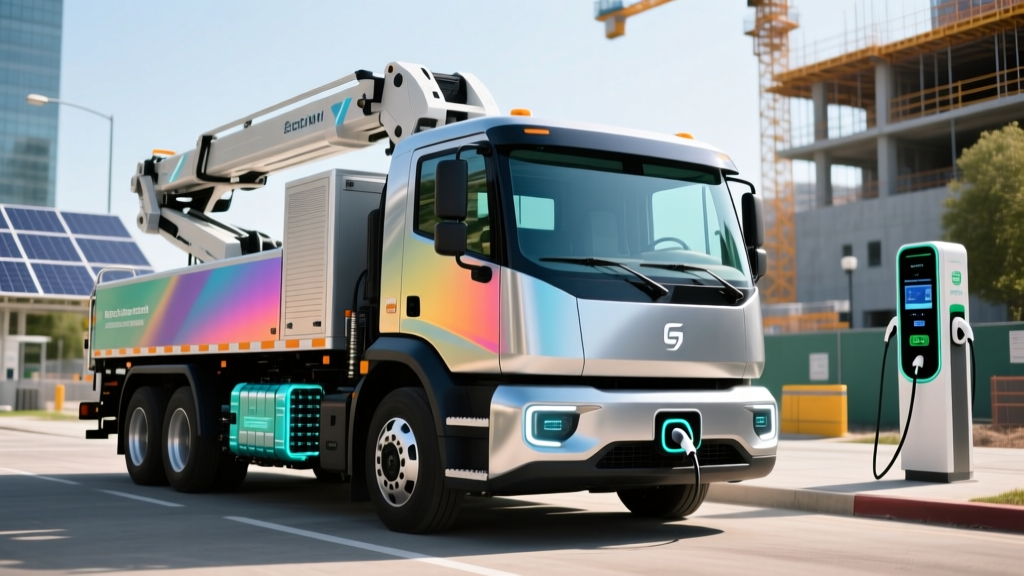
Quick answer: An electric bucket truck (also called an EV aerial device truck) replaces a diesel Class 5–7 chassis with a battery-electric powertrain while retaining a hydraulic boom and bucket for utility, telecom, and municipal work. Current 2026 models offer 110–150 miles of real-world range, 125–250 kWh battery packs (NMC chemistry), DC fast charging from 10–80% in roughly 45–75 minutes at 60–150 kW, and base prices between $180,000 and $320,000 before incentives. Fleet operators typically recoup the higher upfront cost within 5–8 years through fuel and maintenance savings, but success depends on depot-based overnight Level 2 charging and predictable daily routes under 120 miles.
What Is an Electric Bucket Truck and Who Needs One?
Electric bucket trucks are medium-duty commercial vehicles built on battery-electric chassis from manufacturers like Lightning eMotors, XOS Trucks, and Ford (E-Transit cutaway configurations), paired with aerial devices from Altec, Terex, or Versalift. They serve utility line crews, telecom technicians, municipal tree-trimming teams, and sign/lighting maintenance fleets.
The core value proposition: eliminate diesel fuel costs, reduce maintenance (no diesel particulate filters, no DEF fluid, far fewer moving parts), enable worksite power export (V2L capability to run tools without an idling diesel engine), and meet increasingly strict municipal and corporate zero-emission fleet mandates. California's Advanced Clean Fleets rule, for example, requires many medium-duty fleets to transition to zero-emission vehicles on a set timeline.
However, these trucks are not a universal replacement for diesel. They work best for depot-based fleets with predictable daily routes, overnight charging access, and duties that don't exceed their range or payload capacity.
Top 2026 Electric Bucket Truck Platforms: Specs at a Glance
| Spec | Lightning eMotors ZEV4 (Class 4–5) | XOS Medium-Duty (Class 5–7) | Ford E-Transit Cutaway + Upfit |
|---|---|---|---|
| Battery Capacity (usable) | 127 kWh (NMC) | 150–250 kWh (NMC) | 68 kWh (NMC) |
| EPA-Estimated Range | ~150 miles | ~130–150 miles | ~108–126 miles |
| Real-World Range (loaded, mixed) | ~110–130 miles | ~100–130 miles | ~75–100 miles |
| Peak DC Fast Charge Rate | 115 kW | 60–150 kW | 115 kW |
| 10–80% DC Charge Time | ~60 min | ~45–75 min | ~45 min |
| Level 2 Charge Rate (AC) | 19.2 kW | 19.2 kW | 10.5 kW |
| Motor Output | 200 kW (~268 HP) | 220 kW (~295 HP) | 198 kW (~266 HP) |
| GVWR Range | Class 4–5 (15,000–19,500 lbs) | Class 5–7 (19,500–33,000 lbs) | Class 3–4 (up to 15,000 lbs) |
| Approx. Base Price (before upfit) | $180,000–$220,000 | $230,000–$320,000 | $55,000–$70,000 (chassis only) |
| Aerial Device Upfit Cost | $40,000–$80,000 | $40,000–$80,000 | $35,000–$65,000 |
| Battery Warranty | 10 yr / 250,000 mi | 10 yr / 250,000 mi | 8 yr / 100,000 mi |
Note: Prices reflect announced/estimated 2026 model-year figures from manufacturer spec sheets. Final pricing varies with aerial device configuration, boom height (30–55 ft typical), and chassis specifications. Always confirm current pricing with the OEM or authorized dealer.
Electric vs. Diesel Bucket Truck: The Real Cost Comparison
The sticker price of an electric bucket truck is typically 2–3× higher than a comparable diesel. But the total cost of ownership (TCO) story flips over a 7–10 year service life. Here's how the numbers break down for a typical utility fleet truck driving 65 miles/day, 250 working days/year.
| Cost Factor (7-Year / 109,375 Miles) | Electric Bucket Truck | Diesel Bucket Truck |
|---|---|---|
| Purchase Price (incl. aerial device) | $270,000 | $130,000 |
| Federal Commercial EV Tax Credit (§45W) | −$40,000 | $0 |
| Net Purchase Cost | $230,000 | $130,000 |
| Fuel / Energy (diesel at $4.20/gal @ 8 MPG vs. electricity at $0.14/kWh) | $14,200 | $57,400 |
| Maintenance (oil, filters, DEF, emissions, engine) | $8,500 | $28,000 |
| Brake Replacement (regen extends life) | $1,200 | $4,800 |
| Downtime Cost (fewer unplanned repairs) | $3,500 | $9,000 |
| Total 7-Year Cost | $257,400 | $229,200 |
| Cost Per Mile | $2.35 | $2.10 |
At current diesel and electricity prices, the electric truck reaches cost parity around year 7–8. Extend the horizon to 10 years and the EV pulls ahead by $20,000–$40,000. Fleet operators in states with commercial EV rebates (such as California's Hybrid and Zero-Emission Truck and Bus Voucher Incentive Project, or HVIP) or utility-make-ready programs can reach parity much sooner — sometimes within 3–5 years.
The §45W commercial clean vehicle credit provides up to $40,000 for vehicles over 14,000 lbs GVWR (30% of the vehicle's cost basis, capped at $40,000). According to the IRS, eligibility requires the vehicle to be used in a trade or business and meet battery sourcing requirements. Consult a tax professional for your fleet's specific situation.
Charging Infrastructure: What Fleets Actually Need
The single biggest barrier to electric bucket truck adoption isn't the truck — it's depot charging. Unlike passenger EVs that can rely on public networks, medium-duty electric trucks require dedicated, high-power Level 2 or DC fast charging infrastructure at the fleet yard.
| Charging Level | Power (kW) | Range Added Per Hour | Use Case | Install Cost Per Stall |
|---|---|---|---|---|
| Level 2 (AC) | 19.2 kW | ~25–35 miles | Overnight depot charging (8–10 hrs) | $8,000–$25,000 |
| DC Fast Charge | 60 kW | ~80–100 miles | Mid-shift top-up, smaller depots | $40,000–$80,000 |
| DC Fast Charge | 150 kW | ~150–200 miles | High-throughput fleet depots | $80,000–$150,000 |
Key infrastructure considerations:
- Panel upgrades: A depot adding 5–10 Level 2 chargers at 19.2 kW each needs 96–192 kW of additional electrical capacity. Many commercial sites require a utility service upgrade ($20,000–$100,000+) or a dedicated transformer.
- Demand charges: Commercial electricity billing includes demand charges based on peak kW draw. Unmanaged simultaneous charging of multiple trucks can spike demand charges dramatically. Smart charging software (ChargePoint Fleet, EV Connect, AmpUp) that staggers charge sessions is essential.
- Utility make-ready programs: Many investor-owned utilities (PG&E, SCE, Con Edison, National Grid) cover 50–100% of the wiring and infrastructure costs for commercial EV depot charging. Check with your utility's transportation electrification department.
- Cold-weather charging: NMC batteries charge significantly slower when cold. Depot charging in northern climates should include battery preconditioning protocols or heated parking structures to maintain charge speeds and preserve battery health.
For most fleet operations, overnight Level 2 charging at 19.2 kW is sufficient. A truck with a 150 kWh battery charging at 19.2 kW will go from 10% to 100% in roughly 7.3 hours — well within an overnight shift. DC fast chargers at the depot are only necessary if trucks run double shifts or need mid-day opportunity charging.
Real-World Range: What the Sticker Doesn't Tell You
EPA range vs. reality: A 150-mile EPA-rated electric bucket truck will typically deliver 110–130 miles in real-world loaded operation. Factors reducing range include:
- Payload and upfit weight: A fully loaded bucket truck with tools, materials, and a 45-ft aerial device can add 5,000–10,000 lbs, reducing range by 10–20%.
- PTO/aerial device use: Operating the boom and bucket draws from the traction battery. Expect 1–3 kWh per hour of boom operation, reducing available range by 5–15 miles on a heavy-use day.
- Cold weather (below 32°F): NMC battery range drops 15–30% in freezing temperatures due to increased internal resistance and cabin/defrost heating loads.
- Highway speeds: Electric trucks are least efficient above 55 mph. Stop-and-go urban routes with regenerative braking actually maximize range.
Fleet managers should plan routes using a 25–30% range buffer. A truck rated at 150 miles EPA should be dispatched on routes of 100–110 miles maximum, especially in winter. For fleets with routes exceeding 120 miles, a diesel or hybrid remains the practical choice until battery energy density improves further.
Common Misconceptions About Electric Bucket Trucks
| Myth | Fact |
|---|---|
| "The battery won't last the life of the truck." | NMC batteries in commercial EVs are warrantied for 10 years / 250,000 miles at 70% capacity retention. Real-world fleet data shows degradation of 2–3% per year for depot-charged trucks that avoid daily 100% charges. Most batteries outlast the truck's service life. |
| "You can't run the boom without the engine idling." | Electric PTO (ePTO) systems draw directly from the traction battery, providing full hydraulic power to the aerial device without any engine noise or emissions. This is a major safety and quality-of-life improvement for crews working in residential areas. |
| "Charging takes too long for a work truck." | Overnight Level 2 charging (7–8 hours) fully replenishes the battery for next-day duty. For mid-shift needs, DC fast charging adds 50–80 miles in 30 minutes — enough for most lunch-break top-ups. |
| "Electric trucks can't handle cold climates." | Range reduction is real (15–30%), but fleets in Minnesota, Michigan, and New England operate electric medium-duty trucks successfully by planning routes within the de-rated range and using battery preconditioning. Heated battery thermal management systems are standard on 2026 models. |
| "There are no incentives for commercial EVs." | The §45W commercial clean vehicle credit offers up to $40,000. Many states and utilities stack additional incentives: HVIP vouchers (up to $120,000 in California), utility make-ready programs, and local air quality district grants. Some fleets acquire electric bucket trucks at net cost parity with diesel after incentives. |
Decision Framework: Is an Electric Bucket Truck Right for Your Fleet?
Choose an electric bucket truck if:
- Daily routes are under 110 miles (loaded, real-world)
- Your fleet returns to a central depot nightly for 8+ hours
- You can install or access depot Level 2 charging (19.2 kW per stall)
- You operate in a state or municipality with EV fleet mandates or strong incentives
- Your trucks idle extensively at worksites (ePTO eliminates diesel idling cost and emissions)
- You plan to hold the truck 7+ years to reach TCO parity
Stick with diesel (or wait) if:
- Daily routes regularly exceed 130 miles
- Your fleet lacks a fixed depot or overnight charging access
- Trucks operate in extreme cold (below 0°F) with no garage storage
- You need heavy towing capacity beyond current EV chassis ratings
- Turnover is rapid (under 5 years), preventing TCO payback
- Your utility cannot provide adequate electrical service for depot charging within a reasonable timeline
First-Time EV Fleet Buyer: What to Know Before You Spec
If you're evaluating your fleet's first electric bucket truck, these practical steps will prevent costly missteps:
- Audit your actual routes. Pull GPS telematics data from your existing diesel trucks for 30 days. Record daily miles, stop counts, idle time, and payload weight. This data — not the EPA sticker — determines whether an EV works.
- Engage your utility early. Commercial charging infrastructure can take 6–18 months to permit, install, and energize. Contact your utility's EV programs team before ordering trucks.
- Spec the battery for your worst day, not your average day. If your longest route is 120 miles in January, you need a truck that can deliver 120 miles at 70% capacity (accounting for cold-weather loss and end-of-life degradation). That likely means a 200+ kWh pack.
- Pilot before scaling. Order 1–2 trucks for a 12-month pilot. Track energy consumption, charge times, maintenance events, and driver satisfaction before committing to a fleet-wide transition.
- Train your technicians. High-voltage battery systems require certified EV technicians. Budget for training or a service contract with the OEM. The NHTSA and OEMs offer safety protocols for working on vehicles with 400–800V battery systems.
- Model your electricity costs. Request a commercial EV rate schedule from your utility. Time-of-use rates can cut charging costs by 30–50% if you charge during off-peak hours (typically 9 PM – 6 AM).
Frequently Asked Questions
Can an electric bucket truck power tools at the worksite?
Yes. Most 2026 electric bucket truck platforms offer Vehicle-to-Load (V2L) capability, exporting 10–25 kW of AC power through onboard outlets. This replaces portable generators and allows crews to run hydraulic tools, stringing equipment, lighting, and even job-site heaters directly from the truck's battery — silently and with zero local emissions.
What happens if the battery runs out on a job?
Range planning is critical, as towing a dead medium-duty EV requires a heavy-duty wrecker and can cost $1,500–$3,000. Fleet telematics with real-time state-of-charge monitoring and geofenced range alerts prevent this scenario. Some fleets spec a small onboard range-extender generator for emergencies, though this adds weight and complexity.
How does battery replacement cost compare to a diesel engine overhaul?
A replacement NMC battery pack for a medium-duty electric truck costs approximately $150–$250 per kWh in 2026, meaning a 150 kWh pack replacement would run $22,500–$37,500 (installed). A diesel engine overhaul or replacement on a comparable truck typically costs $15,000–$25,000. However, battery replacement is rarely needed within the truck's normal service life if proper charging practices are followed (avoiding daily 100% charges, using thermal preconditioning).
Do electric bucket trucks qualify for the federal EV tax credit?
Commercial fleets purchasing electric bucket trucks may qualify for the §45W Commercial Clean Vehicle Credit — up to $40,000 for vehicles over 14,000 lbs GVWR (30% of cost basis). This is separate from the §30D consumer credit and has different eligibility rules. Tax-exempt entities (municipalities, tribal governments) can receive the credit as a direct payment. Always consult a tax professional for your specific situation.
What's the resale value of an electric bucket truck?
Used EV medium-duty truck resale values are still establishing as a market. Early data suggests higher depreciation in years 1–4 compared to diesel (due to rapid battery tech advancement and buyer uncertainty), but stabilization by years 5–7 as fleet buyers gain confidence in battery health data. Documented battery State of Health (SoH) reports from telematics systems will be essential for maximizing resale value.