The Quick Answer: Which Electric Blue Car Should You Buy?
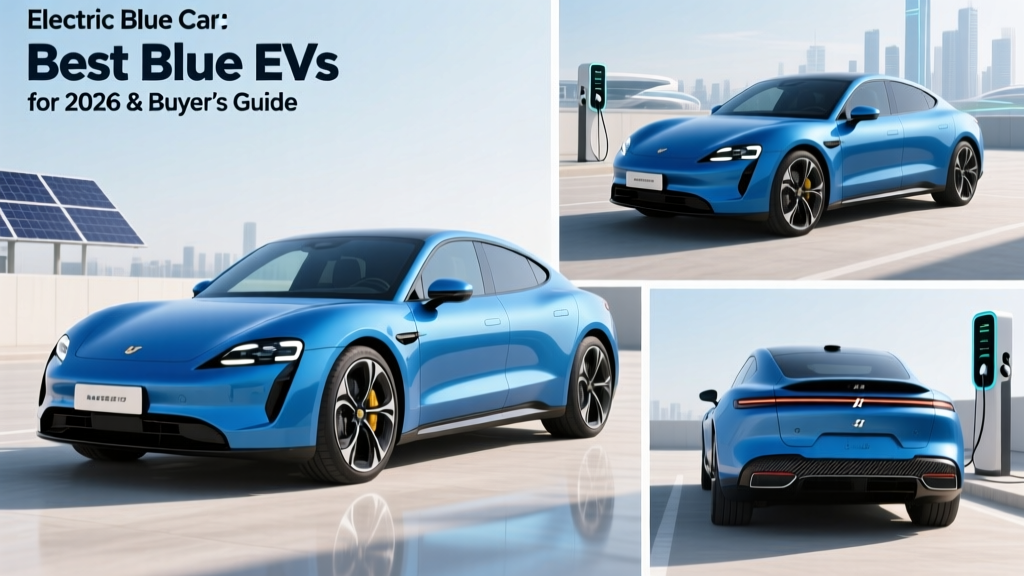
If you're searching for an electric blue car in 2026, you have more options than ever — but color availability varies sharply by brand and trim. The most popular blue EVs right now include the Hyundai Ioniq 5 (Gravity Blue / Lucid Blue), BMW i4 (Tanzanite Blue, Portimao Blue), Ford Mustang Mach-E (Vapor Blue), Subaru Solterra (Harbor Mist Blue), and the Tesla Model Y (Blue — newly available since late 2024). Expect EPA ranges from 222 to 318 miles, base MSRPs from $38,000 to $56,000, and potential §30D federal tax credits of up to $7,500 depending on sourcing, income, and MSRP caps. The real deciding factor isn't color — it's whether the vehicle fits your daily range needs, charging access, and budget.
Choosing an EV based on aesthetics is more complicated than picking a gas car. Many automakers restrict bold colors to specific trims, and some "blue" options are so dark they read as black in overcast light. Below, we break down the best blue electric vehicles available for the 2026 model year, the real costs of ownership, and a practical framework for deciding if any of them make sense for you.
Top Blue Electric Vehicles for 2026: Spec Comparison
Not every EV comes in blue. Tesla only reintroduced a true blue for Model Y in late 2024, while Hyundai, BMW, and Subaru have offered signature blues for several model years. Here's how the most popular blue EVs stack up on the numbers that matter:
| Model | Blue Paint Option | EPA Range | Battery (kWh) | Peak DC Charge (kW) | 10–80% Time | 0–60 mph | Base MSRP |
|---|---|---|---|---|---|---|---|
| Hyundai Ioniq 5 (Long Range RWD) | Gravity Blue, Lucid Blue | 318 mi | 84 kWh (NMC) | 240 kW | ~18 min | 7.1 sec | $44,100 |
| BMW i4 eDrive40 | Tanzanite Blue, Portimao Blue | 307 mi | 81.5 kWh (NMC) | 205 kW | ~22 min | 5.5 sec | $56,200 |
| Ford Mustang Mach-E (Ext. Range) | Vapor Blue | 320 mi | 91 kWh (NMC) | 150 kW | ~33 min | 5.1 sec | $42,995 |
| Subaru Solterra (Limited) | Harbor Mist Blue | 222 mi | 72.8 kWh (NMC) | 100 kW | ~56 min | 6.5 sec | $44,995 |
| Tesla Model Y (Long Range) | Blue (new) | 308 mi | 75 kWh (NMC) | 250 kW | ~15 min | 4.8 sec | $46,630 |
| Volvo EX40 (Single Motor) | Fjord Blue | 254 mi | 82 kWh (NMC) | 200 kW | ~25 min | 7.2 sec | $52,450 |
Sources: fueleconomy.gov, manufacturer US spec sheets. All ranges are EPA combined estimates. Real-world highway range typically runs 10–20% lower; cold-weather range can drop 20–30% in sub-freezing temperatures.
Real-World Range Reality Check: The Ioniq 5's EPA rating of 318 miles is among the best here, but on a 75°F highway drive at 70 mph, expect closer to 265–280 miles. In 20°F winter conditions with cabin heat, plan for 220–240 miles between charges. The Solterra's 222-mile EPA figure becomes especially tight in winter — real-world cold-weather range can dip below 175 miles on highway trips.
EV vs Gas vs Hybrid: Cost and Efficiency Compared
If you're cross-shopping a blue EV against a blue gas car or hybrid, here's how the math works using the Hyundai Ioniq 5 (a popular electric blue car choice) versus the similarly sized Hyundai Tucson gas and Tucson Hybrid:
| Metric | Ioniq 5 (EV) | Tucson Hybrid (HEV) | Tucson (Gas, 2.5T AWD) |
|---|---|---|---|
| EPA Efficiency | 114 MPGe (30 kWh/100 mi) | 38 MPG combined | 26 MPG combined |
| Fuel/Energy Cost per Mile | $0.042 (home L2, $0.14/kWh) | $0.092 ($3.50/gal) | $0.135 ($3.50/gal) |
| Annual "Fuel" (12,000 mi) | $504 | $1,105 | $1,615 |
| Estimated Annual Maintenance | $300–$400 | $600–$800 | $700–$900 |
| Base MSRP (2026) | $44,100 | $34,500 | $35,500 |
| Max Federal Tax Credit (§30D) | Up to $7,500* | $0 | $0 |
*§30D credit eligibility depends on buyer AGI, vehicle MSRP cap, and battery-sourcing requirements. Check IRS §30D rules and consult a tax professional. Credit can now be transferred to the dealer at point of sale.
The EV's higher sticker price narrows significantly after the federal credit (if eligible), and the per-mile energy savings compound: over five years at 12,000 miles/year, the Ioniq 5 saves roughly $3,000–$5,500 in fuel costs compared to the gas Tucson, plus another $1,500–$2,500 in maintenance (no oil changes, fewer brake replacements due to regenerative braking).
Real Costs of Owning a Blue EV: 5-Year Breakdown
| Cost Category | Ioniq 5 (EV, after $7,500 credit) | Tucson Gas (AWD) |
|---|---|---|
| Net Purchase Price | $36,600 | $35,500 |
| 5-Year Energy/Fuel | $2,520 | $8,075 |
| 5-Year Maintenance | $1,750 | $4,000 |
| 5-Year Insurance (avg) | $8,500 | $6,800 |
| Estimated 5-Year Depreciation | $14,500 | $12,000 |
| Total 5-Year Cost of Ownership | $63,870 | $66,375 |
Insurance is typically 15–25% higher for EVs due to repair costs and parts pricing, which eats into some of the fuel savings. Depreciation has been volatile — EVs depreciated steeply in 2023–2024 after price wars, but stabilized in 2025–2026. The Ioniq 5 has held value better than average thanks to strong demand and Hyundai's 10-year/100,000-mile powertrain warranty.
What First-Time EV Buyers Need to Know
Home Charging Is the Make-or-Break Factor
If you can install a Level 2 (240V) home charger, EV ownership is dramatically more convenient — you wake up every morning with a full "tank." A typical Level 2 installation runs $800–$2,500 depending on whether your electrical panel needs an upgrade (200-amp service is recommended). Without home charging, you'll rely on public DC fast chargers and Level 2 destination chargers, which is workable but adds time and cost.
Charging Speeds: kW vs. kWh Matters
The most common first-time buyer mistake is confusing kW (power — how fast you charge) with kWh (energy — how big the battery is). A 240 kW peak charge rate on the Ioniq 5 means you can add roughly 180 miles in 18 minutes at a compatible DC fast charger. But peak rate isn't sustained — the charge curve tapers above 80% State of Charge (SoC) to protect the battery. Plan your road-trip stops around 10–80% charging windows for the fastest sessions.
Connector Compatibility in 2026
The industry is mid-transition from CCS1 to Tesla's NACS connector. For 2026, Hyundai, Ford, and Volvo now ship with NACS ports natively. The BMW i4 and Subaru Solterra still use CCS1 but can access Tesla Superchargers via adapter. Always verify connector type before planning long trips.
Common EV Misconceptions — Fact vs. Fiction
| Myth | Fact |
|---|---|
| "EV batteries need replacing every 5 years" | Modern NMC and LFP batteries are warrantied for 8 years/100,000 miles and typically retain 85–90%+ capacity at that point. fueleconomy.gov data and long-term fleet studies show most packs last 150,000–200,000 miles before falling below 70% SoH. |
| "EVs are worse in the cold" | Range does drop 20–30% in sub-freezing temps due to battery chemistry and cabin heating demands. But preconditioning (warming the battery while plugged in) mitigates charging-speed loss. EVs also start instantly in cold weather — no cranking a frozen engine. |
| "Public charging is unreliable everywhere" | Network reliability varies. Tesla Superchargers average 99.5%+ uptime. Electrify America and EVgo have improved significantly since 2024, but rural corridors remain spotty. Check PlugShare for real-time station status before trips. |
| "All EVs qualify for the $7,500 tax credit" | Fewer than half of EVs on sale in 2026 qualify for the full credit. Battery sourcing, critical-mineral requirements, buyer income caps ($150K single / $300K joint AGI), and MSRP caps ($55K sedans / $80K SUVs/trucks) all apply. Verify at IRS.gov. |
| "Blue paint costs the same as white" | Most automakers charge $0 for standard blues but $395–$1,200 for premium metallic blues (e.g., BMW Tanzanite Blue adds $1,450; Tesla Blue adds $1,000). Factor this into your build. |
Decision Framework: Which Electric Blue Car Fits You?
Choose the Hyundai Ioniq 5 if: You want the best combination of range (318 mi EPA), fast charging (240 kW peak, NACS native), and value. Best for daily commuters and road-trippers who want quick DC stops. Fits most budgets after the potential §30D credit.
Choose the BMW i4 if: You prioritize driving dynamics and premium interior over price. The i4 handles like a sports sedan, but at $56,200+ base (before options), it exceeds the §30D MSRP cap for sedans ($55,000), meaning it likely won't qualify for the federal credit.
Choose the Ford Mustang Mach-E if: You need SUV cargo space (29.7 cu ft rear, 59.7 cu ft folded) with strong range (320 mi) and available AWD. Vapor Blue is a striking, no-cost color. Note that its 150 kW peak charge rate means longer DC fast-charging stops than the Ioniq 5 or Model Y.
Choose the Subaru Solterra if: You need standard symmetrical AWD, 8.3 inches of ground clearance, and Subaru's safety reputation. Trade-off: the shortest range here (222 mi EPA) and slowest DC charging (100 kW peak). Best for shorter commutes and mild climates.
Choose the Tesla Model Y if: You want the most mature Supercharger network access (native NACS, no adapter needed), the quickest 10–80% charge time (~15 min at V3/V4 stalls), and strong resale. Blue is a $1,000 premium color.
Choose the Volvo EX40 if: You value Scandinavian design, a quiet cabin, and Volvo's safety engineering. Fjord Blue is a no-cost option. Range (254 mi) and price ($52,450) put it in a niche — best for urban owners with reliable home charging.
Frequently Asked Questions
Do blue EVs cost more than white or black ones?
It depends on the brand. Hyundai, Ford, and Subaru typically offer blue as a no-cost standard color. Tesla charges $1,000 for Blue on the Model Y. BMW charges $1,450 for Tanzanite Blue metallic on the i4. Always check the configurator for your specific trim.
Can I get a blue EV under $40,000?
Yes. The Chevrolet Equinox EV (available in Radiant Red Tintcoat and Riptide Blue Metallic) starts around $33,600 for the 2LT trim with ~319 miles of EPA range. It qualifies for the §30D credit if battery-sourcing requirements are met, potentially bringing the net price to ~$26,100.
Is it harder to resell a blue EV compared to white or black?
Neutral colors (white, black, gray) historically dominate resale, but distinctive blues like Vapor Blue (Mach-E) and Gravity Blue (Ioniq 5) have enthusiast followings that can support strong resale. The impact is marginal — condition, mileage, and battery health matter far more than color.
What's the longest-range blue electric car available?
Among mainstream models, the Ford Mustang Mach-E Extended Range RWD offers 320 miles EPA in Vapor Blue. The Hyundai Ioniq 5 Long Range RWD follows at 318 miles. For luxury, the BMW iX xDrive50 in Deep Blue Metallic reaches 324 miles EPA, but starts at $87,250.
Do blue EVs qualify for the federal tax credit?
Color has no bearing on §30D eligibility. What matters is the vehicle's battery sourcing, your income (AGI limits: $150K single / $225K head of household / $300K joint), the MSRP cap ($55K sedans / $80K SUVs, trucks, vans), and whether the vehicle is assembled in North America. The Ioniq 5, Mach-E, and Model Y are assembled in the US and may qualify. The Solterra is assembled in Japan and may qualify only if leased (commercial clean vehicle credit loophole). Always verify current rules at IRS.gov.
Should I choose NACS or CCS for my blue EV?
For 2026 model-year purchases, prioritize NACS-native vehicles (Ioniq 5, Mach-E, Model Y, EX40) for the broadest Supercharger access without adapters. CCS vehicles (i4, Solterra) still work with adapters, but native NACS means one less failure point and cleaner integration with Tesla's V3/V4 stalls delivering up to 250 kW.