The Short Answer: No Fully Electric MDX Exists Yet
As of the 2026 model year, Acura does not sell a fully electric MDX. The MDX lineup remains powered exclusively by gasoline engines, including the 355-hp turbocharged V6 in the Type S. Acura's parent company Honda has announced a next-generation electric SUV platform (built on a new dedicated EV architecture expected around 2026–2027), but no production electric MDX is currently available to order or drive.
If you're a current MDX owner or shopper looking to go electric, you have three realistic paths: wait for Acura's upcoming electric SUV, buy the closest Acura electrified option (the 2026 MDX with the available mild-hybrid assist on certain trims), or cross-shop the best three-row electric SUVs from competing brands. This guide breaks down all three with real numbers.
Where Acura Stands on Electrification in 2026
Acura's EV roadmap has been slower than some luxury competitors. The brand previously offered the Acura ZDX, a rebadged Chevrolet Blazer EV built on GM's Ultium platform, which was sold for the 2024–2025 model years before Honda and Acura pivoted away from the GM partnership toward their own dedicated EV architecture.
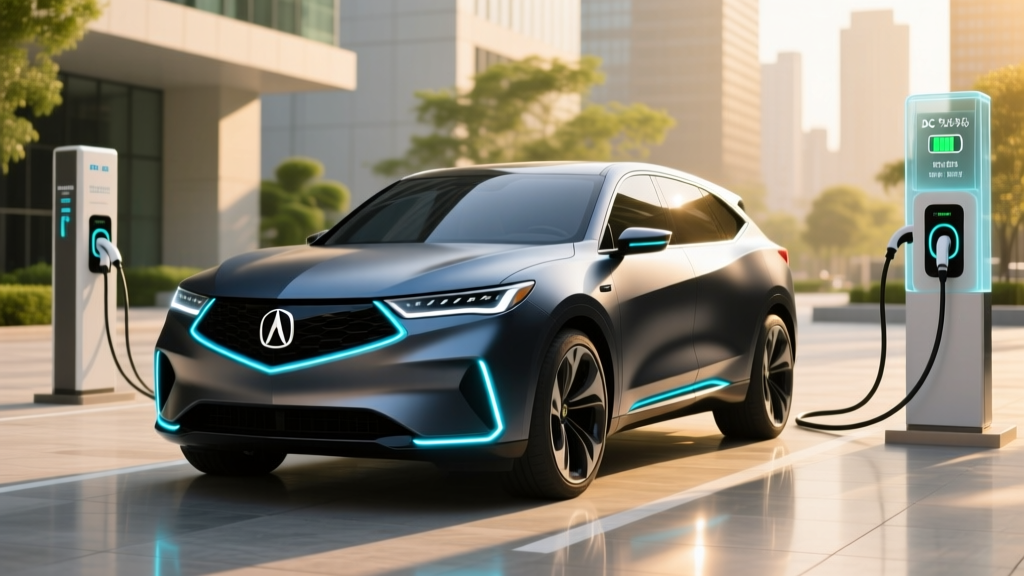
Honda has confirmed that a new midsize electric SUV — widely expected to serve as the spiritual successor to the MDX in electric form — is in development on Honda's newly announced "0 Series" EV platform. However, Honda has not released final specs, pricing, or an on-sale date for this vehicle. Until that vehicle reaches showrooms, there is no electric Acura MDX you can buy today.
What Acura does offer is the conventional 2026 MDX, available in standard form (290 hp, 3.5L V6) and the performance-oriented Type S (355 hp, 3.0L turbo V6). Neither variant is a hybrid or plug-in hybrid. EPA fuel economy for the 2026 MDX with front-wheel drive sits at 19 city / 26 highway / 22 combined mpg, per fueleconomy.gov.
Three-Row Electric SUVs to Cross-Shop Instead
If the goal is a premium, three-row electric SUV in the MDX's size and price class, these are the strongest contenders for 2026. Each is evaluated on the metrics MDX shoppers care about: range, charging speed, interior space, and price.
| Spec | 2026 Acura MDX (Gas) | Kia EV9 GT-Line AWD | Hyundai Ioniq 9 Long Range AWD | Rivian R1S Dual-Motor Max |
|---|---|---|---|---|
| Powertrain | 3.5L V6 Gas | Dual-Motor BEV | Dual-Motor BEV | Dual-Motor BEV |
| EPA Range | ~418 mi (19-gal tank) | 279 mi | 311 mi | 352 mi |
| Usable Battery | N/A | 99.8 kWh (NMC) | 110.3 kWh (NMC) | 141 kWh (NMC) |
| Peak DC Charge Rate | N/A | 239 kW | 240 kW | 220 kW |
| 10–80% DC Fast Charge | N/A | ~24 min | ~24 min | ~28 min |
| 0–60 mph | 6.4 sec | 4.9 sec | 5.3 sec | 3.5 sec |
| Horsepower | 290 hp | 379 hp | 320 hp | 665 hp |
| Cargo (Behind 3rd Row) | 16.3 cu ft | 20.2 cu ft | 21.0 cu ft | 17.6 cu ft (+10.6 frunk) |
| Starting MSRP | $51,500 | $73,900 | $72,500 | $83,900 |
| Federal Tax Credit (§30D) | N/A | Up to $7,500* | Up to $7,500* | Up to $7,500* |
*§30D credit eligibility depends on buyer income caps (AGI ≤ $150K single / $300K joint), vehicle MSRP caps ($80K for SUVs), and battery-critical-mineral sourcing requirements. Verify current eligibility at irs.gov. Point-of-sale transfer is available at participating dealers.
Real Costs: Electric SUV vs. Gas MDX Over 5 Years
The sticker price of an electric three-row SUV is higher than a gas MDX, but the total cost of ownership tells a more nuanced story. Below is a 5-year/75,000-mile cost projection comparing the 2026 Acura MDX AWD (22 mpg combined) against the Kia EV9 GT-Line AWD (85 MPGe combined), assuming 15,000 miles/year.
| Cost Category | 2026 Acura MDX AWD | Kia EV9 GT-Line AWD |
|---|---|---|
| Purchase Price (MSRP) | $56,000 | $73,900 |
| Federal Tax Credit | $0 | –$7,500 (if eligible) |
| Effective Purchase Price | $56,000 | $66,400 |
| Fuel / Electricity (75K mi) | $9,940 (gas @ $3.50/gal, 22 mpg) | $3,190 (elec @ $0.15/kWh, 35 kWh/100mi) |
| Maintenance (5 years) | $3,200 (oil, filters, brakes) | $1,100 (cabin filter, tires, wipers) |
| Insurance (5-year est.) | $7,500 | $9,000 |
| Estimated Depreciation | $22,400 (~40%) | $33,200 (~50%) |
| 5-Year Total Cost | $99,040 | $112,890 |
| Cost Per Mile | $1.32 | $1.51 |
Key takeaway: The EV9 saves roughly $6,750 in fuel and $2,100 in maintenance over five years, but higher purchase price, insurance premiums (typically 15–25% above comparable gas vehicles), and steeper EV depreciation erase those savings in this comparison. The math improves significantly if you have access to free or low-cost home charging (below $0.10/kWh), qualify for state incentives, or plan to keep the vehicle beyond 5 years.
One critical variable: home charging access. If you can install a Level 2 (240V) home charger, your per-mile electricity cost drops to roughly $0.04–0.05/mile. If you rely entirely on public DC fast charging (averaging $0.35–0.50/kWh nationally), your fuel cost nearly triples to $7,400+ over 75,000 miles — eliminating most of the EV fuel advantage.
What First-Time EV Buyers Must Know Before Switching
If you've spent years in an MDX and are considering your first electric SUV, these are the realities that spec sheets don't always surface:
Real-World Range Is Not the EPA Sticker
EPA range estimates assume a mix of city and highway driving at moderate temperatures. In practice:
- Highway driving at 75+ mph reduces range by 15–25% compared to EPA (a 279-mile EV9 may deliver 215–235 miles on a flat interstate run).
- Cold weather (below 32°F) can reduce range by 20–35% due to battery chemistry limitations and cabin heating load. An EV9 rated at 279 miles might deliver 185–210 miles in a 20°F January commute.
- Towing cuts range roughly in half. If you tow a 3,500-lb trailer, expect 140–160 miles from a 279-mile-rated EV.
For comparison, the gas MDX with its 19-gallon tank and 22 mpg combined delivers roughly 418 miles between fill-ups, and that number barely changes in cold weather or on the highway.
Charging Speed Is a Curve, Not a Peak Number
When a manufacturer advertises "239 kW DC fast charging," that's the peak rate, achieved only at a low state of charge (typically 10–30% SoC) and optimal battery temperature. The charge curve tapers significantly above 50% SoC, and drops sharply above 80%.
On a Kia EV9 at a 350 kW charger:
- 10–50%: sustains ~200–239 kW (~12 minutes)
- 50–80%: tapers to ~100–130 kW (~12 additional minutes)
- 80–100%: drops below 50 kW (~20+ additional minutes)
The 10–80% time of ~24 minutes is a useful benchmark, but plan road-trip stops around the 10–60% window for the fastest throughput.
Home Charging Is the Make-or-Break Factor
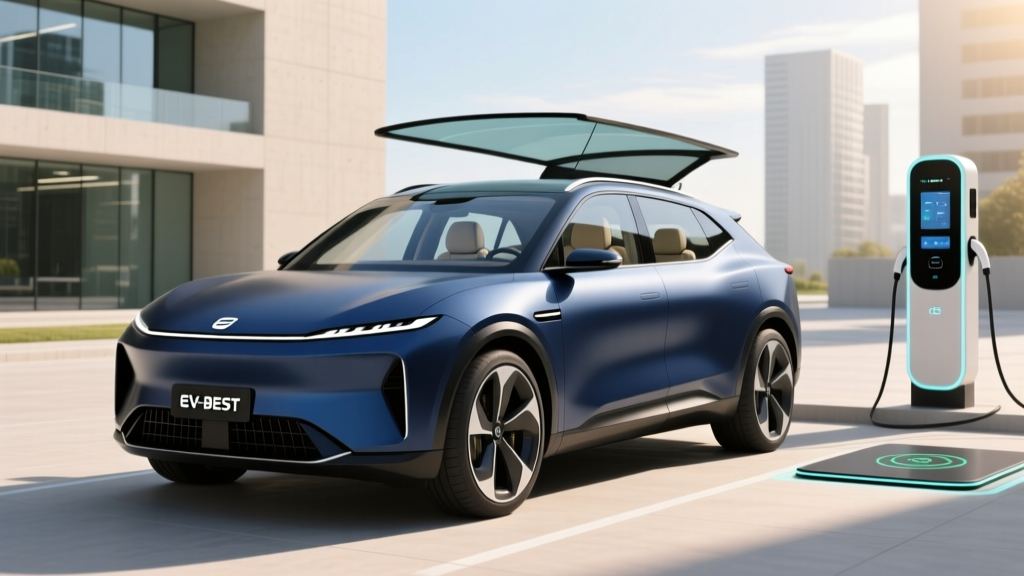
The single biggest ownership advantage of an EV is waking up to a full "tank" every morning — but only if you can charge at home. A Level 2 home charger (240V, 40–48 amps) adds roughly 25–35 miles of range per hour, meaning an overnight session fully replenishes any daily driving. Installation typically costs $800–$2,500 depending on your electrical panel capacity and the distance from panel to garage. Homes with older 100-amp panels may need a $1,500–$3,000 panel upgrade.
If you live in an apartment or lack garage/driveway access, public charging becomes your primary fuel source — and that changes the economics and convenience calculus considerably.
Common Misconceptions About Switching from an MDX to an EV
| Myth | Fact |
|---|---|
| "EVs are cheaper to own than gas cars." | Lower fuel and maintenance costs are real, but higher purchase price, insurance, and depreciation can offset savings over 5 years. Break-even often occurs at year 6–8 or with low-cost home charging. |
| "I'll get the full $7,500 tax credit." | §30D credit requires meeting income caps, MSRP caps ($80K for SUVs), and critical-mineral/battery-component sourcing rules that change annually. Some trims may qualify for a partial credit ($3,750) or none at all. Always verify at irs.gov before purchasing. |
| "Electric SUVs tow just as well as my MDX." | Most electric three-row SUVs are rated to tow 2,000–5,000 lbs, similar to the MDX (3,500–5,000 lbs depending on trim). However, towing drastically reduces EV range (by 40–50%), while the MDX's range drops only ~15–20% under load. |
| "EV batteries need replacing after a few years." | Modern NMC and LFP batteries are warrantied for 8 years/100,000 miles at ≥70% capacity retention. Real-world degradation data from fleets shows most packs retain 85–92% capacity after 100,000 miles. Full replacement costs $10,000–$20,000 but is rarely needed within normal ownership periods. |
| "I can road-trip just like I do in my MDX." | You can, but it requires planning. Expect 20–30-minute charging stops every 200–250 miles on the highway. Total trip time increases ~15–25% on a 500+ mile journey. The Tesla Supercharger and Electrify America networks cover most interstates, but rural routes remain underserved. |
Decision Framework: Should You Wait, Buy Gas, or Go Electric?
If-Then Guide for MDX Shoppers
- Choose the gas 2026 Acura MDX if: you need a three-row SUV right now, want the lowest upfront cost, regularly tow or take long road trips through areas with sparse charging infrastructure, or plan to keep the vehicle 3–4 years and want to avoid EV depreciation risk.
- Choose the Kia EV9 or Hyundai Ioniq 9 if: you have reliable home Level 2 charging, your daily commute is under 80 miles round-trip, you qualify for the full §30D tax credit (bringing effective price closer to MDX territory), and you value instant torque, silent operation, and lower per-mile fuel costs.
- Choose the Rivian R1S if: you want genuine off-road capability (8.9 inches of ground clearance, wading to 36 inches), the longest range in the segment (352 miles with Max Pack), and don't mind paying a premium starting at $83,900.
- Wait for Acura's electric SUV if: brand loyalty matters, you want the MDX driving dynamics and interior in an electric package, and your current vehicle can last another 18–24 months. Monitor Honda's "0 Series" announcements for production timelines.
Frequently Asked Questions
Will Acura make an electric MDX?
Acura has not confirmed an electric MDX by name, but Honda has announced a next-generation midsize electric SUV on its new "0 Series" platform, expected around 2026–2027. This vehicle is widely expected to slot into the MDX's market position. No production specs or pricing have been released.
Is the Acura ZDX still available?
The Acura ZDX, which was built on GM's Ultium platform alongside the Chevrolet Blazer EV, was produced for the 2024–2025 model years. Acura has ended this partnership with GM, and the ZDX is no longer in production as of 2026. Used and remaining new-inventory examples may still be available at dealers.
Which electric three-row SUV has the most range?
Among currently available models, the Rivian R1S with the Max Pack leads at 352 miles EPA. The Hyundai Ioniq 9 Long Range AWD follows at 311 miles, and the Kia EV9 at 279 miles. All fall short of the gas MDX's ~418-mile effective range between fill-ups.
Do I qualify for the $7,500 EV tax credit?
Under current IRS §30D rules, you may qualify if your adjusted gross income is ≤$300,000 (joint) / $150,000 (single), the SUV's MSRP is ≤$80,000, and the vehicle meets critical-mineral and battery-component sourcing thresholds. These thresholds tighten annually. The credit can be transferred to the dealer at point of sale for an immediate price reduction. Always confirm eligibility on irs.gov or with a tax professional before finalizing a purchase.
What does home charger installation cost?
A typical Level 2 (240V, 48-amp) home charger installation runs $800–$2,500 for the electrician labor, permit, and wiring if your panel has sufficient capacity. The charger hardware itself costs $400–$700 (e.g., ChargePoint Home Flex, Wallbox Pulsar Plus, or Tesla Wall Connector). If your home has a 100-amp electrical panel and needs an upgrade to 200 amps, budget an additional $1,500–$3,000. Always get a quote from a licensed electrician before purchasing equipment.
Is an electric SUV practical in cold climates?
Yes, with caveats. Expect 20–35% range reduction in sustained sub-freezing temperatures. Features like a heat pump (standard on the Ioniq 9, available on the EV9) reduce cabin-heating energy draw by 30–50% compared to resistive heaters. Preconditioning the battery while plugged in — a feature all three SUVs support via their apps — restores much of the lost charging speed and range. Owners in Minnesota, Maine, and Colorado report satisfactory winter EV ownership, but you should budget range accordingly and keep charging sessions planned rather than opportunistic.