The Short Answer: Which Electric 3 Row SUV Should You Buy?
If you need a true electric 3 row SUV today, your realistic choices narrow to five mainstream models: the Kia EV9 (best value and range-to-price ratio), Hyundai Ioniq 9 (most refined ride and interior), Tesla Model X (fastest charging and Supercharger access), Rivian R1S (best off-road and adventure capability), and the Cadillac Escalade IQ (luxury flagship). Expect to spend between $54,000 and $130,000+ before incentives, with EPA ranges from 270 to 460 miles depending on configuration. Most families will find the Kia EV9 at roughly $54,900 base offers the strongest combination of 300-mile range, 200 kW DC fast charging, and usable third-row space.
The Electric 3 Row SUV Landscape in 2026
The three-row electric SUV segment has matured considerably since the Kia EV9 launched for the 2024 model year. Buyers now have genuine alternatives spanning mainstream, premium, and luxury tiers. But picking the right one requires looking past marketing claims and focusing on the metrics that actually determine daily satisfaction: real-world range under load, sustained charging speeds, third-row usability, and total cost of ownership.
One critical note upfront: not all three-row EVs are created equal. Some, like the Tesla Model X and Rivian R1S, offer genuinely usable third rows for adults on short trips. Others, like early configurations of certain crossovers, treat the third row as child-only space. Cargo volume behind the third row also varies wildly — from 12 cubic feet to over 24 — which matters if you're hauling a double stroller and groceries simultaneously.
Spec Comparison: The Top Electric 3 Row SUV Models
Here's how the major contenders stack up on the numbers that matter most. All figures reflect 2025–2026 model-year data from fueleconomy.gov and manufacturer specifications.
| Model | EPA Range | Battery (kWh usable) | Peak DC Charge (kW) | 10–80% Time | 0–60 mph | Base MSRP |
|---|---|---|---|---|---|---|
| Kia EV9 (LR RWD) | 304 mi | 99.8 kWh (NMC) | 210 kW | ~24 min | 8.2 sec | $54,900 |
| Kia EV9 (GT-Line AWD) | 270 mi | 99.8 kWh (NMC) | 210 kW | ~24 min | 5.0 sec | $63,900 |
| Hyundai Ioniq 9 (LR RWD) | 320 mi (est.) | 110.3 kWh (NMC) | 220 kW | ~22 min | 7.8 sec | $56,500 |
| Tesla Model X (LR) | 335 mi | ~100 kWh (NMC) | 250 kW | ~20 min | 3.8 sec | $79,990 |
| Rivian R1S (Dual Max) | 410 mi | 149 kWh (NMC) | 220 kW | ~30 min | 4.5 sec | $79,900 |
| Cadillac Escalade IQ | 460 mi | 200+ kWh (NMC) | 350 kW (capable) | ~22 min | <4.0 sec | $129,990 |
Real-World Range Reality Check
EPA range figures assume moderate temperatures, mixed driving, and no heavy cargo load. In practice, expect the following reductions:
- Highway driving at 75 mph: subtract 10–15% from EPA range
- Cold weather (below 32°F): subtract 15–30% depending on cabin heating use and whether the vehicle has a heat pump (the EV9 and Ioniq 9 include one; the R1S uses a resistive heater in some trims, costing more range)
- Full passenger + cargo load: subtract 5–8%
- Combined worst case (cold highway road trip, fully loaded): a 304-mile EPA EV9 may deliver as little as 190–210 miles before you need to stop
This is why DC fast charging speed matters as much as battery size for family road trips.
EV vs. Gas 3-Row SUV: The Cost Breakdown
Most shoppers cross-compare electric 3 row SUVs against established gas models like the Toyota Highlander, Kia Telluride, or Ford Explorer. Here's how a representative matchup looks over five years and 75,000 miles.
| Cost Category | Kia EV9 LR RWD ($54,900) | Kia Telluride SX ($46,000) |
|---|---|---|
| Purchase Price (MSRP) | $54,900 | $46,000 |
| Est. Federal Tax Credit (§30D) | Up to $7,500* | $0 |
| Effective Purchase Price | ~$47,400 | $46,000 |
| Fuel/Energy (75k mi) | $3,750 (home charging, $0.15/kWh avg) | $9,375 (22 MPG combined, $3.50/gal) |
| Maintenance (5 yr) | $1,200 (cabin filter, tire rotation, wiper fluid) | $3,500 (oil changes, brakes, transmission fluid) |
| Insurance (5 yr avg) | $11,500 (EV premium ~15–20% higher) | $9,500 |
| 5-Year Total | $63,850 | $68,375 |
*The §30D federal tax credit has strict eligibility requirements: buyer income caps ($150K single / $300K joint AGI), vehicle MSRP caps ($80,000 for SUVs), battery critical-mineral and component sourcing rules, and the vehicle must be assembled in a manner meeting current-year requirements. Always verify eligibility on the IRS website and with your tax professional before relying on this credit. As of 2026, the Kia EV9 — assembled in West Point, Georgia — has qualified for partial or full credit depending on trim and battery sourcing updates, but this can change with supply-chain shifts.
The EV9 breaks even with the Telluride within roughly two to three years of ownership through fuel and maintenance savings, even after accounting for higher insurance premiums. The gap widens further if you have access to cheap overnight home charging or solar panels.
Charging Infrastructure: The Make-or-Break Factor
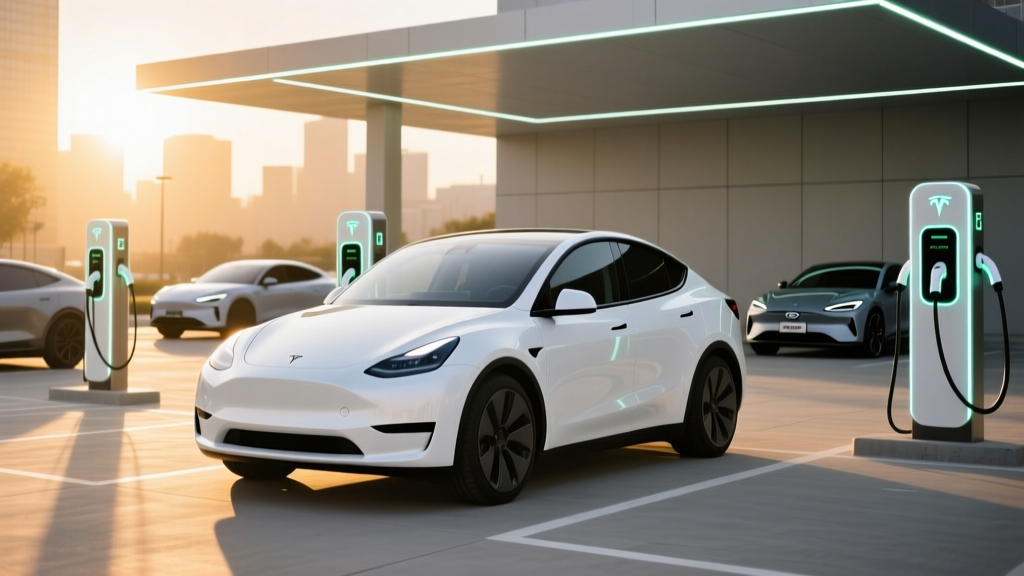
Owning an electric 3 row SUV is a fundamentally different experience depending on your charging situation. Here's what each level looks like in practice:
| Charging Level | Power (kW) | Miles Added per Hour | Typical Use Case |
|---|---|---|---|
| Level 1 (120V standard outlet) | 1.2–1.8 kW | 3–5 mi/hr | Overnight top-up; inadequate as primary for 3-row SUVs |
| Level 2 (240V home/public) | 7.2–11.5 kW | 22–38 mi/hr | Primary daily charging; full overnight recharge |
| DC Fast Charging | 50–350 kW | 150–600+ mi/hr (peak) | Road trips; 10–80% in 20–30 min |
Home charging is nearly essential for a three-row electric SUV. These are large vehicles with 100+ kWh batteries. On Level 1 alone, fully recharging a depleted Kia EV9 would take over 60 hours — completely impractical. A Level 2 home charger (typically $500–$800 for the unit plus $800–$2,500 for professional installation, depending on whether your electrical panel needs an upgrade) delivers a full overnight charge in 8–11 hours.
If you cannot install home charging — for example, in an apartment or a street-parking-only situation — you must honestly evaluate whether a 3-row EV is viable for your household. Relying solely on public DC fast charging is possible but adds $0.30–$0.50/kWh in cost (roughly doubling your energy expense vs. home charging) and requires 2–3 dedicated charging sessions per week for an average-driving family.
Connector Compatibility Matters
The industry is mid-transition from CCS1 to NACS (the Tesla connector standard). Here's where each 3-row model stands:
- Tesla Model X: Native NACS. Full Supercharger network access (~20,000+ stalls in the US).
- Kia EV9 / Hyundai Ioniq 9: CCS1 native, with NACS adapter available. Tesla Supercharger access via adapter began rolling out in 2024–2025, but verify your model year's compatibility.
- Rivian R1S: CCS1 native with NACS adapter included. Supercharger access available via adapter.
- Cadillac Escalade IQ: Built on GM's Ultium platform with NACS as the native connector.
Common Misconceptions About Electric 3 Row SUVs
| Myth | Fact |
|---|---|
| "EV batteries need replacing every 5 years and cost $20K" | Modern NMC and LFP batteries are warrantied for 8–10 years / 100,000–150,000 miles at 70%+ capacity retention. Average annual degradation is 1–2.3% based on fleet data. Most owners will sell the vehicle before meaningful range loss. |
| "You can't tow with an electric SUV" | The Rivian R1S tows up to 7,700 lbs; the EV9 tows up to 5,000 lbs (AWD). However, towing cuts range by 30–50% — plan charging stops accordingly. |
| "The third row is useless in all electric SUVs" | The EV9 and Escalade IQ offer adult-usable third rows with dedicated HVAC vents and USB-C ports. The R1S third row fits children and shorter adults. Always test the third row with your family members before buying. |
| "I'll save $7,500 no matter what" | The §30D credit has MSRP caps ($80K for SUVs), buyer income limits, and battery-sourcing requirements that change annually. Some trims qualify for $3,750, others $7,500, and some none at all. Always check the IRS qualified vehicles list. |
| "Autopilot / FSD means I don't have to pay attention" | All consumer driver-assist systems (Tesla Autopilot, FSD Supervised, Highway Driving Assist) are SAE Level 2 — the driver must remain fully engaged and responsible at all times. These are not self-driving systems. |
Real-World Ownership Considerations for Families
Beyond the spec sheet, these factors determine whether an electric 3 row SUV fits your life:
Driving Patterns
If your daily driving is under 80 miles round-trip with occasional weekend road trips of 200–300 miles, any model on this list works well with home charging. If you regularly drive 300+ miles in a single day — say, visiting family across state — prioritize the Rivian R1S (410 mi EPA) or Cadillac Escalade IQ (460 mi), or accept that you'll add 20–30 minutes for a fast-charge stop.
Climate
Cold-weather buyers in northern states should prioritize models with a heat pump (EV9, Ioniq 9, Model X) over resistive heating, which can consume 3–5 kW of battery power just for cabin warmth. Expect 20–25% range reduction at 20°F in a heat-pump-equipped vehicle, versus 30–35% with resistive heating.
Charging Deserts
While the US DC fast-charging network has expanded significantly — Electrify America, EVgo, and the Tesla Supercharger network combined now cover most interstate corridors — rural areas in the Mountain West, parts of the Great Plains, and some regions of the South remain underserved. Check PlugShare for charger density along your most common road-trip routes before committing.
Insurance Costs
EV insurance premiums run 15–25% higher than comparable gas vehicles due to higher repair costs, specialized parts, and elevated vehicle values. Get quotes from your insurer before purchasing — the difference can be $200–$500 per year.
Decision Framework: Which Electric 3 Row SUV Is Right for You?
Choose the Kia EV9 if:
- You want the best value in the segment ($54,900 starting, potential tax credit)
- 300+ miles of range and 200 kW charging meet your road-trip needs
- You need a usable third row and decent cargo space without luxury pricing
- You prefer mainstream dealer service and warranty support
Choose the Hyundai Ioniq 9 if:
- You prioritize ride comfort and interior refinement over sporty driving
- The slightly larger battery (110.3 kWh) and 320-mile range give you extra margin
- You want Hyundai's 10-year/100,000-mile powertrain warranty
Choose the Tesla Model X if:
- Seamless Supercharger network access is your top priority for road trips
- You want the fastest 0–60 performance (3.8 seconds) and best tech integration
- You accept the higher $79,990 price and polarizing interior design
Choose the Rivian R1S if:
- You need genuine off-road capability and 7,700-lb towing
- The 410-mile Max Pack range eliminates most range anxiety
- You want a vehicle that doubles as an adventure platform (camping, skiing, overlanding)
- You accept the $79,900+ price and Rivian's still-growing service network
Choose the Cadillac Escalade IQ if:
- Budget is not a primary constraint ($129,990+)
- You want flagship luxury with 460 miles of range and 350 kW charging capability
- You need the largest cargo volume and most spacious third row in the segment
Frequently Asked Questions
What does the average family need to know before buying a first electric 3 row SUV?
Three things matter most: (1) Confirm you can install a Level 2 home charger — this is non-negotiable for practical daily ownership of a 100+ kWh vehicle. (2) Verify your specific trim qualifies for the §30D tax credit on the IRS website before relying on it in your budget. (3) Take a real road trip test drive of at least 150 miles to experience charging logistics firsthand, not just a 10-minute dealer loop.
How does an electric 3 row SUV compare to a hybrid like the Toyota Grand Highlander Hybrid?
A Grand Highlander Hybrid achieves ~35 MPG combined and costs roughly $48,000, with no charging infrastructure needed and no range anxiety. Over 75,000 miles, fuel costs about $7,500 vs. $3,750 for an EV charged at home. The hybrid wins on convenience for apartment dwellers and frequent long-distance drivers in charging-desert regions. The EV wins on operating cost, performance, and emissions — but only if home charging is available.
Will the battery in an electric 3 row SUV last as long as the vehicle?
Based on current fleet data from Tesla, Hyundai-Kia, and Rivian owners, NMC batteries in liquid-cooled packs degrade approximately 1–2.3% per year under normal use. After 10 years, expect roughly 80–88% of original capacity — still 240+ usable miles in a 300-mile vehicle. All manufacturers covered here warranty their batteries for at least 8 years/100,000 miles at 70% capacity retention, per NHTSA-monitored compliance standards.
Are electric 3 row SUVs safe?
The Kia EV9 earned the IIHS Top Safety Pick+ rating with Good scores across all crash tests. The Tesla Model X earned a 5-star NHTSA overall rating. The low center of gravity from floor-mounted battery packs gives electric SUVs inherently strong rollover resistance. However, their higher weight (5,000–7,500 lbs) means longer braking distances than lighter vehicles — factor this into following-distance habits.
Can I charge a 3-row electric SUV on a regular household outlet?
Technically yes, but practically no. A standard 120V outlet delivers about 1.4 kW, adding roughly 3–5 miles of range per hour. Fully recharging a depleted 99.8 kWh EV9 battery would take over 60 hours. For daily use, a 240V Level 2 home charger is essential — budget $1,500–$3,000 total for equipment and licensed electrician installation.