The Short Answer on Electric Dune Buggies
A dune buggy electric car in 2026 typically delivers 60–150 miles of real-world off-road range from a 20–60 kWh battery pack, with peak motor output between 100–400 hp depending on the model. Expect to spend $15,000–$50,000+ depending on whether you choose a street-legal low-speed vehicle (LSV), a purpose-built off-road EV like the Polaris Ranger EV or Vanderhall Brawley, or a converted classic buggy. The biggest ownership advantage is instant torque at zero RPM—ideal for rock crawling and sand dunes—while the biggest limitation is limited DC fast-charging infrastructure in remote off-road areas. Most electric dune buggies charge exclusively on Level 1 (120V) or Level 2 (240V), meaning you need a reliable home or garage charging setup before heading to the trails.
What Is an Electric Dune Buggy and Who Is It For?
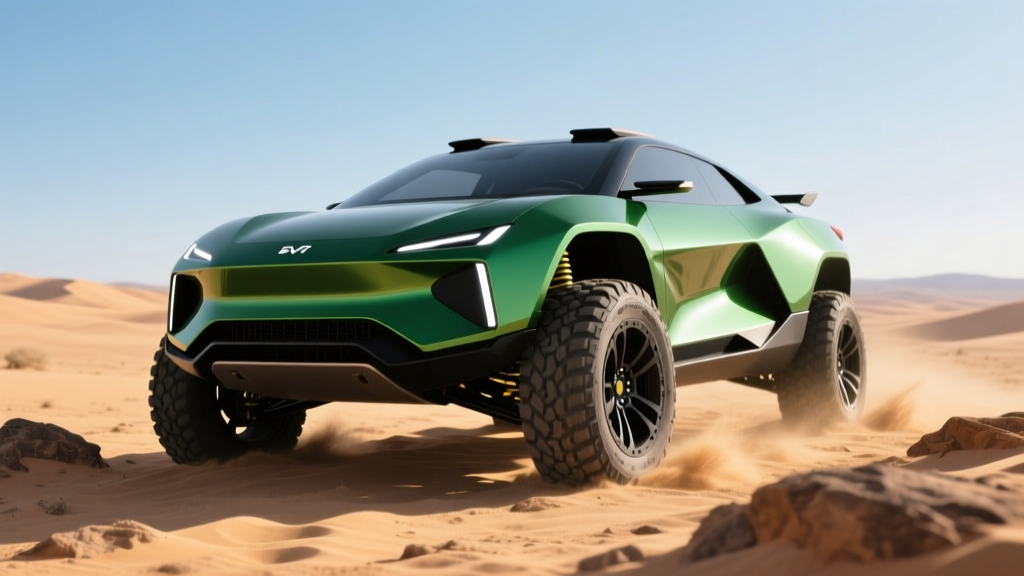
The term "dune buggy electric car" covers a surprisingly broad spectrum. At one end, you have neighborhood electric vehicles (NEVs) and LSVs styled as buggies—top speed capped at 25 mph, minimal crash protection, and range around 30–50 miles. At the other end are serious off-road EVs from manufacturers like Vanderhall, Polaris, and Ariel, as well as high-performance conversions built on classic VW Beetle chassis with modern electric drivetrains.
What unites them is the off-road or open-air ethos combined with battery-electric propulsion. For trail riders, ranchers, and dune enthusiasts, the appeal is clear: electric motors produce maximum torque from standstill, which translates to precise low-speed control on technical terrain. There's no clutch to feather, no transmission to shift, and no exhaust noise to disturb wildlife or neighbors.
Street-Legal vs. Off-Road Only
Before you buy, determine whether you need street legality. LSV-class buggies (under FMVSS 500) require a VIN, registration, and insurance in most states, but are restricted to roads with speed limits of 35 mph or less. Purpose-built off-road EVs like the Polaris Ranger EV may not be street-legal at all and are intended for private land, trails, and dunes only. This distinction affects your insurance costs, registration requirements, and federal tax credit eligibility.
Top Electric Dune Buggy Models Compared
Here's how the leading electric off-road and buggy-style vehicles stack up for 2026. Note that the off-road EV segment is still relatively niche, and many models are produced in low volumes or as conversions.
| Specification | Vanderhall Brawley (EV) | Polaris Ranger EV (2026 est.) | Classic VW Buggy EV Conversion | Gas Dune Buggy (Typical) |
|---|---|---|---|---|
| Powertrain | Dual motor AWD, BEV | Single/Dual motor, BEV | Rear motor, BEV | Flat-4 or V-twin ICE |
| Horsepower | ~300 hp | ~40–60 hp | ~100–200 hp | ~80–150 hp |
| Battery (usable kWh) | ~60 kWh (NMC) | ~14 kWh (LFP) | ~25–40 kWh (varies) | N/A (5–10 gal fuel tank) |
| Estimated Range | ~120–150 mi (mixed) | ~45–65 mi (off-road) | ~80–120 mi (mixed) | ~100–180 mi |
| Top Speed | ~110 mph | ~55 mph | ~70–90 mph | ~60–100 mph |
| Charge Time (Level 2) | ~5–7 hours (0–100%) | ~4–6 hours (0–100%) | ~6–10 hours | Refuel: 3 minutes |
| DC Fast Charge | Yes (CCS, ~50 kW peak) | No | Rarely | N/A |
| Starting Price | ~$39,950 | ~$14,000–$18,000 | ~$25,000–$45,000 | ~$8,000–$20,000 |
| Street Legal? | Yes (in select states) | No (off-road only) | Depends on build | Varies |
Sources: Manufacturer specifications, Vanderhall Motorworks, Polaris. Prices are approximate MSRP and may vary by dealer and configuration.
Electric vs. Gas Dune Buggy: Real Cost Comparison
The upfront cost of an electric dune buggy is almost always higher than a comparable gas rig. But ownership costs tell a more nuanced story, especially if you drive frequently and charge at home.
| Cost Factor | Electric Dune Buggy (Vanderhall Brawley-type) | Gas Dune Buggy (Typical V-twin) |
|---|---|---|
| Purchase Price | $39,950 | $14,000 |
| Federal Tax Credit (§30D) | $0–$7,500 (see eligibility below) | $0 |
| Annual Fuel/Energy (3,000 mi/yr) | ~$180 (home charging at $0.15/kWh) | ~$600 (at 15 mpg, $3.50/gal) |
| Annual Maintenance | ~$100 (tires, brake inspection) | ~$400 (oil, filters, belts, carb) |
| Insurance (annual avg.) | ~$1,200–$1,800 | ~$800–$1,200 |
| 5-Year Total Operating Cost | ~$7,400–$10,500 | ~$9,000–$13,000 |
| 5-Year Total Cost of Ownership | ~$37,000–$50,000 (before credit) | ~$23,000–$29,000 |
The EV's operating-cost advantage is real—roughly $400–$600 saved per year on fuel and maintenance combined. But the higher purchase price means the EV takes 5–8 years to break even purely on operating savings. If your buggy is primarily a weekend toy that sees 1,000–2,000 miles per year, the payback period stretches even further. The electric buggy makes the most financial sense when you value the driving experience (instant torque, quiet operation, zero tailpipe emissions on the trail) as much as the dollars.
Federal Tax Credit Eligibility (§30D)
Not every electric dune buggy qualifies for the federal EV tax credit. Under current IRS §30D rules, the vehicle must meet several criteria:
- MSRP cap: Vans, SUVs, and pickup trucks are capped at $80,000; other vehicles at $55,000. Many buggies may not fit standard vehicle classifications.
- Buyer income limits: Modified AGI must not exceed $300,000 (joint), $225,000 (head of household), or $150,000 (single).
- Battery sourcing: Critical minerals and battery components must meet phased-in domestic-content and free-trade-agreement thresholds.
- Manufacturer qualification: The vehicle must be produced by a qualified manufacturer and appear on the IRS's eligible vehicle list.
- Point-of-sale transfer: As of 2024+, you can transfer the credit to the dealer for an upfront price reduction.
Many low-volume off-road EVs and conversions do not appear on the IRS eligible list. Always verify on fueleconomy.gov before assuming you'll receive the credit. Consult a tax professional for your specific situation.
Charging an Electric Dune Buggy: What You Actually Need
Charging logistics are the single biggest practical consideration for electric off-road vehicles. Unlike a Tesla Model Y that can tap into 50,000+ public chargers nationwide, most dune buggy EVs rely entirely on home or base-of-trail charging.
Charging Levels Explained
| Level | Voltage | Power (kW) | Approx. Miles Added/Hour | Availability for Buggies |
|---|---|---|---|---|
| Level 1 | 120V AC | 1.2–1.9 kW | 3–5 miles | Universal (standard outlet) |
| Level 2 | 240V AC | 3.3–7.2 kW | 12–25 miles | Requires dedicated circuit |
| DC Fast Charge | 400V+ DC | 25–50 kW (typical buggy) | 60–120 miles | Rare; Vanderhall Brawley only |
kW vs. kWh reminder: kW (kilowatts) measures charging power—how fast energy flows into the battery. kWh (kilowatt-hours) measures battery capacity—how much energy the battery stores. A 60 kWh battery charging at 7.2 kW takes roughly 8+ hours from empty to full (accounting for taper above 80% State of Charge).
Home Charging Setup Costs
| Component | Cost Range |
|---|---|
| Level 2 EVSE (charger unit) | $350–$700 |
| 240V circuit installation (electrician) | $500–$2,000 |
| Electrical panel upgrade (if needed) | $1,500–$4,000 |
| Permit and inspection | $100–$400 |
| Total (typical) | $950–$3,100 |
For off-road-only buggies without DC fast charging (like most Polaris Ranger EVs and conversions), plan your trail sessions around your battery capacity. A 60-mile-range buggy with no trailside charging means you need to stay within a ~25-mile radius of your charger to ensure a safe return—off-road driving consumes significantly more energy per mile than pavement driving due to rolling resistance, elevation changes, and low-speed high-torque operation.
Real-World Range Reality
Sticker vs. Reality: An electric dune buggy rated for 120 miles of mixed-use range may deliver only 50–70 miles of continuous off-road driving in sand or on technical trails. Aggressive throttle use, steep grades, soft terrain, and cold temperatures (below 40°F) all reduce range by 30–50%. Always plan off-road routes with a 40–50% range buffer.
Common Misconceptions About Electric Dune Buggies
| Myth | Fact |
|---|---|
| "Electric buggies have no torque off-road." | Electric motors deliver peak torque at 0 RPM, making them superior to gas engines for rock crawling and low-speed technical terrain. No clutch, no stall. |
| "You can't get an electric buggy wet." | Most purpose-built off-road EVs have IP67-rated battery enclosures and sealed motors. They handle mud, water crossings (check manufacturer depth limits), and rain just like gas buggies. |
| "The battery will die in a few years." | Modern NMC and LFP batteries in off-road EVs are warrantied for 3–5 years (some up to 8 years). LFP chemistry in particular offers 2,000–5,000+ charge cycles before reaching 80% capacity. A well-maintained pack should last 10+ years in a low-mileage buggy. |
| "Electric buggies are silent, so they're less fun." | Subjective, but many off-road EV owners report that the absence of engine noise lets you hear the terrain—tire grip, suspension articulation, and surface changes—improving driving precision. |
| "I can charge at any public station on the way to the dunes." | Most off-road EVs lack DC fast-charging capability, and even those that do (like the Brawley) use CCS connectors at relatively low peak rates (~50 kW). Rural charging infrastructure near popular off-road areas remains sparse. Plan to charge fully before departure and return to base to recharge. |
Battery Chemistry and Longevity: LFP vs. NMC
Electric dune buggies use one of two dominant lithium-ion chemistries, each with trade-offs that matter for off-road use:
| Factor | LFP (Lithium Iron Phosphate) | NMC (Nickel Manganese Cobalt) |
|---|---|---|
| Energy Density | Lower (~140–160 Wh/kg) | Higher (~200–260 Wh/kg) |
| Cycle Life | 2,000–5,000+ cycles | 1,000–2,000 cycles |
| Thermal Stability | Excellent (safer in extreme heat) | Good (requires active thermal management) |
| Cold Performance | Moderate (more range loss below freezing) | Better (but still loses 15–30% in extreme cold) |
| Cost | Lower per kWh | Higher per kWh |
| Best For | Utility buggies, ranch use, frequent cycling | Performance buggies, maximum range in compact pack |
For a work-oriented buggy that gets daily use on a ranch or property, LFP is the durability champion. For a weekend performance buggy where weight and range matter more than cycle count, NMC is the typical choice.
Decision Framework: Should You Buy an Electric Dune Buggy?
Choose an Electric Dune Buggy If:
- You have reliable home or garage Level 2 charging and your off-road area is within the buggy's range.
- You value instant torque for technical terrain, rock crawling, or sand dunes.
- You want near-zero maintenance (no oil changes, carburetor rebuilds, or exhaust repairs).
- Noise restrictions apply at your local trails or property.
- You drive the buggy frequently enough (1,500+ miles/year) for operating-cost savings to matter.
Stick With a Gas Dune Buggy If:
- You regularly travel 100+ miles to remote off-road areas with no charging infrastructure.
- Your budget is under $15,000 and you need maximum range per dollar.
- You need rapid refueling between trail sessions (3 minutes vs. 5+ hours).
- You operate in extreme cold (below 20°F) frequently, where EV range loss is significant.
- You want a wide selection of aftermarket performance parts and established mechanic support.
First-Time EV Buggy Buyer Checklist
If this is your first electric vehicle of any kind, here's what you need to confirm before signing a purchase agreement:
- Electrical capacity: Have a licensed electrician verify your panel can support a dedicated 240V/40A circuit for Level 2 charging. Budget $1,500–$4,000 if a panel upgrade is needed.
- Real-world range test: Ask the dealer or manufacturer for off-road range data, not just paved-road estimates. Off-road consumption can be 2–3× higher per mile.
- Connector type: Confirm whether the buggy uses J1772 (Level 2), CCS (DC fast charge), or a proprietary connector. This determines where you can charge outside the home.
- Battery warranty: Look for minimum 3 years/36,000 miles on the battery pack, with a capacity retention guarantee (typically 70–80% of original capacity over the warranty period).
- Street legality: If you plan to drive on public roads, verify the buggy meets your state's LSV or full-vehicle registration requirements. Off-road-only vehicles cannot be made street-legal after purchase in most jurisdictions.
- Tax credit verification: Check fueleconomy.gov to confirm the specific make and model appears on the IRS eligible list before counting on a $7,500 credit.
- Insurance quote: Get a quote before purchasing. Specialty off-road EVs can carry higher premiums due to low production volume and expensive battery replacement costs.
Frequently Asked Questions
How much does it cost to charge an electric dune buggy at home?
At the national average residential electricity rate of ~$0.16/kWh (as of early 2026, per the U.S. EIA), fully charging a 60 kWh battery costs roughly $9.60. A smaller 14 kWh utility buggy battery costs about $2.24 per full charge. Compare that to $15–$25 for a tank of gas in a typical buggy.
Can I tow or haul with an electric dune buggy?
Yes, and electric buggies often excel here due to instant torque. The Polaris Ranger EV-class vehicles typically offer 500–1,000 lb payload and 1,000–1,500 lb towing capacity. However, towing and hauling significantly reduce range—expect a 30–50% reduction under heavy load.
What happens if the battery dies on the trail?
Unlike a gas buggy where you can walk back with a fuel can, a dead EV battery requires a tow or a portable charger. Some owners carry a compact gasoline generator (3–5 kW) as an emergency range extender, which can add 5–10 miles of range per hour of charging. Plan routes conservatively and always maintain a 30–40% charge buffer.
Are electric dune buggies safe?
Safety varies enormously by category. LSV-class buggies offer minimal crash protection (no airbags, minimal crumple zones). Purpose-built off-road EVs from established manufacturers like Polaris include roll cages, harnesses, and reinforced frames. Always wear a helmet and harness off-road, regardless of powertrain.
Can I convert a gas dune buggy to electric?
Yes. Conversion kits and custom shops can replace a gas engine with an electric motor and battery pack for $10,000–$30,000+ depending on desired range and power. Converted buggies typically use 25–40 kWh of battery and a 100–200 hp motor. Note that converted vehicles rarely qualify for federal tax credits and may face registration challenges depending on your state.
Do electric dune buggies qualify for any incentives?
Possibly, but it's complicated. The federal §30D credit requires the vehicle to be on the IRS eligible list, meet battery-sourcing rules, and fall under MSRP and income caps. Some states offer additional rebates for off-road EVs or LSVs. Check your state energy office and the IRS for current eligibility.