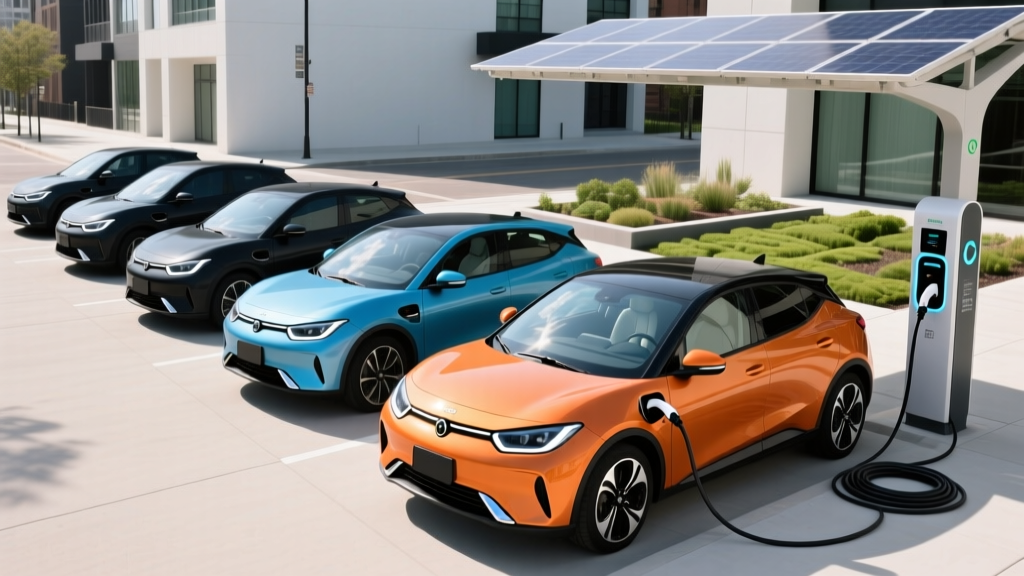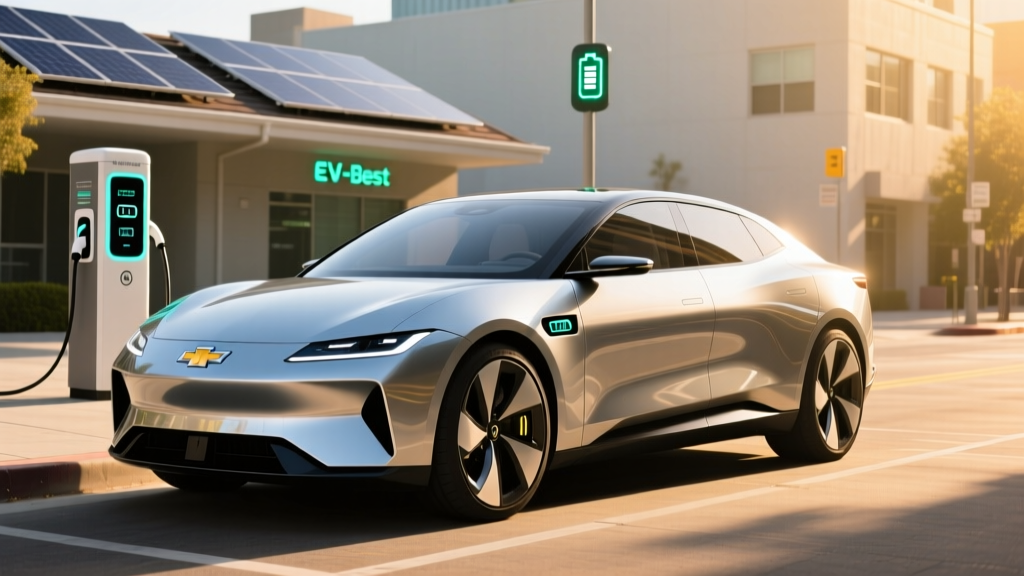
If you're searching for Chevy EV deals in 2026, you're likely weighing sticker prices against long-term savings. Chevrolet's electrified lineup — the Equinox EV, Blazer EV, and Silverado EV — has matured past early-adopter pricing into competitive territory, especially when federal and state incentives stack. But a low monthly lease ad doesn't tell the full story. Insurance premiums, charging infrastructure costs, real-world range, and depreciation all shape what you'll actually spend over five years.
This guide dissects the total cost of ownership (TCO) for Chevrolet's current EV lineup, explains exactly who qualifies for the up-to-$7,500 federal tax credit under IRS §30D, and shows where Chevy EV deals genuinely save money — and where they don't.
Current Chevy EV Lineup: 2026 Specs at a Glance
Before running the numbers, here's what Chevrolet offers for the 2026 model year. All three models ride on GM's Ultium platform with NMC (nickel manganese cobalt) battery chemistry and support DC fast charging via the NACS connector natively — meaning direct Tesla Supercharger access without an adapter.
| Spec | 2026 Equinox EV | 2026 Blazer EV | 2026 Silverado EV |
|---|---|---|---|
| Base MSRP | $33,600 (LT2) | $44,600 (LT) | $55,400 (WT) |
| EPA Range | 319 mi (LT2 FWD) | 324 mi (LT AWD) | 390 mi (WT) |
| Battery (usable) | 85 kWh NMC | 102 kWh NMC | 200 kWh NMC |
| Peak DC Fast Charge | 150 kW | 190 kW | 350 kW |
| 10–80% DCFC Time | ~32 min | ~28 min | ~22 min |
| Level 2 Rate (240V) | 11.5 kW | 11.5 kW | 19.2 kW |
| Horsepower | 213 hp (FWD) | 288 hp (AWD) | 510 hp (WT AWD) |
| 0–60 mph | 8.2 sec | 6.7 sec | 4.5 sec |
| Battery Warranty | 8 yr / 100,000 mi | 8 yr / 100,000 mi | 8 yr / 100,000 mi |
Real-world range reality: EPA estimates assume mixed driving. Expect ~10–15% range reduction on sustained highway trips above 70 mph, and 20–30% loss in sub-freezing temperatures. The Equinox EV's 319-mile EPA sticker translates to roughly 270–285 miles on a warm-weather highway drive and closer to 225–250 miles in cold Midwestern winters.
The Federal Tax Credit: Who Actually Qualifies for §30D in 2026?
The federal EV tax credit under IRS §30D remains the single largest purchase incentive available, but it is not a blanket $7,500 off every EV. Eligibility depends on your income, the vehicle's MSRP, and where the battery materials are sourced.
2026 §30D Eligibility Checklist:
- Income caps (modified AGI): $150,000 single / $225,000 head of household / $300,000 married filing jointly
- MSRP caps: ≤$55,000 for sedans/wagons; ≤$80,000 for SUVs, vans, and pickup trucks
- Critical minerals requirement: A percentage of battery minerals must be sourced from the U.S. or a free-trade-agreement partner (threshold increases annually)
- Battery component requirement: A percentage of battery components must be manufactured or assembled in North America (threshold increases annually)
- Point-of-sale transfer: You can transfer the credit to the dealer at purchase for an immediate price reduction, or claim it on your federal tax return
- Vehicle assembly: Final assembly must occur in North America
- One credit per taxpayer per year; VIN must be reported on Form 8936
How this applies to Chevy EV deals: The Equinox EV (base $33,600) and Blazer EV (base $44,600) both fall well under the $80,000 SUV MSRP cap. The Silverado EV WT at $55,400 also qualifies under the truck cap. All three are assembled at GM plants in the U.S. (Spring Hill, TN for Equinox/Blazer EV; Factory ZERO in Detroit for Silverado EV). However, the exact credit amount — up to $3,750 for critical minerals + up to $3,750 for battery components — depends on current-year sourcing thresholds. Always verify the specific VIN's credit status via the dealer and cross-reference with fueleconomy.gov before signing.
State, local, and utility incentives vary significantly. California's CVRP, Colorado's innovative motor vehicle credit, and various utility company rebates (e.g., $500–$1,500 for home charger installation) can stack on top of the federal credit. Check your state's energy office and your utility provider's EV programs — these change frequently and are jurisdiction-specific.
5-Year Total Cost of Ownership: Equinox EV vs. Gas Compact SUV
To evaluate whether Chevy EV deals genuinely save money, we need a complete 5-year/75,000-mile TCO comparison. Below, the 2026 Equinox EV LT2 is benchmarked against a comparably priced gas compact SUV (approximately $34,000 MSRP, 28 MPG combined).
| Cost Category (5 yr / 75k mi) | Equinox EV LT2 | Gas Compact SUV (28 MPG) |
|---|---|---|
| Purchase Price (after $7,500 credit) | $26,100 | $34,000 |
| Fuel / Electricity | $3,750 | $9,375 |
| Maintenance | $1,500 | $3,750 |
| Insurance (5-year total) | $10,500 | $8,250 |
| Depreciation (est. 5-yr loss) | $12,400 | $14,300 |
| Total 5-Year Cost | $54,250 | $69,675 |
Assumptions: Electricity at $0.14/kWh national average, Equinox EV efficiency of 3.0 mi/kWh; gasoline at $3.50/gallon, gas SUV at 28 MPG combined; 15,000 miles/year. Insurance assumes national EV average premium ~$2,100/yr vs. ~$1,650/yr for gas equivalent (source: industry average data). Depreciation estimated at ~47% for EV (post-credit basis) vs. ~42% for gas SUV (on higher starting price). Actual figures vary by region, driving habits, and market conditions.
Fuel Savings: Charging Cost Per Mile vs. Gasoline
The most consistent financial advantage of any Chevy EV deal is the cost-per-mile gap between electrons and gasoline. Here's the math for each 2026 Chevy EV:
| Vehicle | Efficiency | Cost per Mile (Home, $0.14/kWh) | Cost per Mile (Public DCFC, $0.40/kWh) |
|---|---|---|---|
| Equinox EV | 3.0 mi/kWh (333 Wh/mi) | $0.047 | $0.133 |
| Blazer EV | 2.7 mi/kWh (370 Wh/mi) | $0.052 | $0.148 |
| Silverado EV | 2.1 mi/kWh (476 Wh/mi) | $0.067 | $0.190 |
| Gas SUV (28 MPG) | 28 MPG | $0.125 (@ $3.50/gal) | $0.125 |
Home charging is where the savings compound. At $0.14/kWh, the Equinox EV costs roughly $0.047 per mile — less than 40% of the gas equivalent. Even the heavier Silverado EV undercuts gasoline per mile when charged at home. However, if you rely exclusively on public DC fast charging at $0.35–$0.48/kWh (common on Electrify America or EVgo networks), the Equinox EV's per-mile cost roughly matches gasoline. Home charging access is the single biggest variable in EV economics.
Maintenance Savings: What You'll Never Pay for Again
EVs eliminate entire categories of routine maintenance. The electric drivetrain in every Chevy EV has roughly 20 moving parts versus 200+ in an internal combustion engine.
| Maintenance Item | Gas Vehicle (5-yr cost) | Chevy EV (5-yr cost) |
|---|---|---|
| Oil changes (6–10 over 5 yr) | $400–$800 | $0 |
| Transmission fluid | $150–$300 | $0 |
| Spark plugs | $200–$400 | $0 |
| Brake pads (replacement) | $300–$600 | $0–$150 (regen extends life 2–3×) |
| Engine air filter | $100–$200 | $0 |
| Cabin air filter | $100–$200 | $100–$200 |
| Tire rotation & replacement | $800–$1,400 | $900–$1,600 (heavier vehicle, instant torque wear) |
| Coolant / misc. fluids | $200–$400 | $100–$200 |
| Total Estimated (5 yr) | $2,250–$4,300 | $1,100–$2,150 |
The net savings of roughly $1,500–$2,500 over five years is real but not dramatic. The biggest caveat: EV tires wear faster due to higher vehicle weight and instant torque delivery. Budget for premium tires (Michelin, Continental) at 35,000–45,000 miles rather than the 55,000–65,000 miles typical on gas vehicles.
Insurance Reality: The Cost EV Buyers Often Overlook
Insurance is consistently more expensive for EVs — typically 15–30% higher than a comparable gas vehicle. For the Equinox EV, expect average annual premiums of $1,900–$2,300 depending on your state, driving record, and coverage level, versus $1,500–$1,800 for a gas compact SUV.
Why the premium? Three factors drive it:
- Higher repair costs: EV-specific components (battery modules, power electronics, high-voltage wiring) require specialized technician certification and OEM parts. A minor rear-end collision that might cost $2,500 to repair on a gas SUV can exceed $8,000 on an EV if battery enclosure integrity must be verified.
- Total-loss thresholds: Insurers are more likely to declare an EV a total loss after battery-adjacent damage because battery replacement costs ($10,000–$25,000+) push repair estimates past vehicle value thresholds.
- Higher vehicle values: Even after incentives, the insurable value reflects the pre-credit MSRP in many actuarial models.
Mitigation strategy: Shop at least three insurers. Some carriers (notably State Farm, Progressive, and USAA) have narrowed the EV premium gap as claims data has matured. Bundling home and auto can reduce the differential to under 10%.
Depreciation and Resale Value: The Evolving Picture
EV depreciation has been volatile. In 2023–2024, aggressive Tesla price cuts cascaded through used EV values, causing some models to lose 50%+ of value in two years. By 2026, the market has stabilized somewhat, but EVs still depreciate differently than gas vehicles.
Current 5-year depreciation estimates for Chevy EVs:
- Equinox EV: ~45–50% loss (on pre-credit purchase price). The affordable starting point creates a softer floor — demand for used EVs under $20,000 is strong.
- Blazer EV: ~48–53% loss. Mid-range pricing in a competitive segment means steeper competition from both new and used alternatives.
- Silverado EV: ~40–45% loss. Electric trucks hold value better due to limited used supply and strong fleet/commercial demand.
For comparison, a typical gas compact SUV depreciates ~40–45% over five years. The gap is narrowing as battery longevity data improves and the used-EV market matures, but it hasn't closed entirely. The used EV tax credit (§25E) — up to $4,000 for qualifying pre-owned EVs under $25,000 — helps support resale values by sustaining demand in the secondhand market.
Decision Framework: Which Chevy EV Deal Makes Sense for You?
Choose the Equinox EV if: You want the lowest entry price in the Chevy EV lineup, primarily drive under 40 miles daily, have access to home Level 2 charging, and qualify for the full $7,500 federal credit. At ~$26,100 after incentives, it's one of the most affordable long-range EVs available.
Choose the Blazer EV if: You need more interior space, AWD capability, and faster DC charging (190 kW peak), and you're willing to pay a premium for a more refined ride. Best for families who road-trip 2–3 times per year.
Choose the Silverado EV if: You need truck utility (towing, bed cargo), want the longest range in the lineup (390 mi EPA), and can absorb the higher purchase price. Commercial and fleet buyers should investigate the §45W commercial credit as an alternative to §30D.
Reconsider any Chevy EV if: You lack reliable home charging access, drive in extreme cold regularly without garage parking, or your state offers no additional incentives and electricity rates exceed $0.25/kWh. In those scenarios, a Chevy PHEV or a high-MPG hybrid may deliver better economics.
Frequently Asked Questions
How much does it really cost to own a Chevy EV over 5 years?
For the Equinox EV LT2 after the $7,500 federal credit, expect approximately $54,000–$58,000 in total 5-year costs including purchase, electricity, insurance, maintenance, and depreciation. That's roughly $12,000–$15,000 less than a comparably priced gas SUV over the same period, primarily driven by fuel and maintenance savings offsetting higher insurance.
Do I qualify for the federal EV tax credit on a Chevy EV?
You likely qualify if your modified adjusted gross income is under $150,000 (single) or $300,000 (married filing jointly), and the vehicle MSRP is under $80,000 (all current Chevy EVs qualify). The credit amount — up to $7,500 — depends on battery critical-mineral and component sourcing compliance for the current year. Verify via your dealer and the IRS's official VIN lookup tool before purchasing.
How much do I save on fuel and maintenance with a Chevy EV?
With home charging at $0.14/kWh, the Equinox EV costs about $0.047 per mile versus $0.125 per mile for a 28-MPG gas SUV. Over 75,000 miles, that's roughly $5,600 in fuel savings. Add $1,500–$2,500 in maintenance savings (no oil changes, reduced brake wear), for a combined operational savings of $7,000–$8,000 over five years.
Are Chevy EVs more expensive to insure?
Yes, typically 15–30% more than gas equivalents. Expect $1,900–$2,300 annually for the Equinox EV versus $1,500–$1,800 for a gas compact SUV. Higher repair costs, specialized parts, and battery-adjacent damage risk drive the premium. Shopping multiple insurers and bundling policies can narrow the gap.
How well do Chevy EVs hold their value?
Expect 45–53% depreciation over five years depending on the model, versus ~40–45% for gas SUVs. The Silverado EV holds value best due to limited electric truck supply. The used-EV tax credit (§25E) supports secondhand demand, which helps stabilize residual values across the lineup.
Can I use Tesla Superchargers with a Chevy EV?
Yes. All 2026 Chevy EVs come equipped with the NACS connector natively, providing direct access to the Tesla Supercharger network (now open to non-Tesla EVs) without an adapter. This adds over 17,000 fast-charging stalls nationwide to your charging options alongside Electrify America, EVgo, and ChargePoint networks.